Choosing the right coffee beans can feel overwhelming when you’re staring at endless options claiming to be the best. Quality, origin, processing methods, and roasting all dramatically impact the flavor in your cup. This guide breaks down exactly what to look for when selecting high-quality coffee beans, helping you match bean characteristics to your taste preferences and brewing method. You’ll learn to identify specialty grade coffee, understand how processing shapes flavor, and confidently pick beans that deliver exceptional results at home.
Table of Contents
- Understanding Specialty Coffee And Quality Standards
- Key Factors To Consider When Choosing Coffee Beans
- How Processing Methods And Roasting Influence Coffee Flavor
- Selecting Beans That Match Your Brewing Method And Taste
- Explore Premium Coffee Beans At Z’s Coffee
- How To Choose Coffee Beans: Frequently Asked Questions
Key takeaways
| Point | Details |
|---|---|
| Look for specialty grade | Coffee scoring 80+ points on the SCA scale ensures consistent quality and complex flavors. |
| Check freshness and origin | Beans roasted within 2-4 weeks and traceable to specific farms deliver peak flavor. |
| Match processing to taste | Washed coffees offer brightness, natural processing brings fruit-forward boldness, honey processing balances sweetness. |
| Consider your brewing method | Light roasts excel in pour-over, medium to dark roasts shine in espresso and French press. |
| Buy from transparent sellers | Ethical sourcing and detailed origin information indicate higher quality and sustainability. |
Understanding specialty coffee and quality standards
The term specialty coffee gets thrown around constantly, but it has a precise definition. Specialty coffee scores 80 points or higher on the Specialty Coffee Association’s 100-point scale, with additional criteria covering sustainability and social impact. This scoring system evaluates sensory qualities like aroma, flavor, aftertaste, acidity, body, balance, and overall impression. Trained cuppers taste and rate each coffee sample using standardized protocols.
Recognizing these standards helps you identify beans that have been rigorously evaluated for quality. The SCA framework considers more than just taste. Sustainability practices, environmental stewardship, and fair labor conditions factor into specialty designation. This comprehensive approach ensures that specialty coffee standards reflect both exceptional flavor and ethical production.
When you see specialty coffee certification, you’re getting beans that passed multiple quality checkpoints. The green coffee was inspected for defects, the roasting preserved inherent characteristics, and the final product met strict sensory benchmarks. This transparency benefits you as a consumer because it removes guesswork. You know exactly what quality level you’re purchasing.
Key attributes of specialty coffee include:
- Consistent quality batch to batch
- Traceability to specific farms or regions
- Ethical sourcing with fair compensation for farmers
- Environmental sustainability in cultivation
- Complex flavor profiles without defects
Pro Tip: Look for roasters who provide cupping scores and detailed tasting notes. This information signals they’re committed to specialty standards and want you to understand what makes their coffee exceptional.
Key factors to consider when choosing coffee beans
Great coffee beans share traceability, ethical sourcing, and freshness as foundational qualities. Traceability means you can identify exactly where beans originated, often down to the specific farm or cooperative. This transparency matters because different microclimates, soil compositions, and altitudes create distinct flavor characteristics. When a roaster provides detailed origin information, they’re demonstrating confidence in their supply chain.

Ethical sourcing ensures farmers receive fair compensation and work under sustainable conditions. Direct trade relationships, Fair Trade certification, or detailed farm partnerships indicate a roaster’s commitment to responsible business practices. These relationships often result in better quality beans because farmers can invest in their crops and processing infrastructure.
Freshness dramatically impacts your coffee experience. Beans reach peak flavor 2 to 4 weeks after roasting, then gradually lose complexity and brightness. Always check the roast date, not just a generic expiration date. Coffee doesn’t spoil quickly, but it does go stale. Buying from coffee origin and sourcing focused retailers helps ensure you receive recently roasted beans.
The species matters significantly for flavor. Arabica beans grow at higher altitudes between 600 and 2200 meters above sea level, developing complex sugars and nuanced flavors during slower maturation. They tend toward sweetness, bright acidity, and varied taste notes from fruity to chocolatey. Robusta grows at lower elevations from 200 to 1000 meters, producing beans with stronger, more bitter flavors and higher caffeine content. Most specialty coffee uses Arabica exclusively or in carefully crafted blends.
Other critical factors include:
- Harvest date and crop year
- Processing method transparency
- Storage conditions at the retailer
- Packaging that protects from light and air
- Roaster reputation and expertise
Pro Tip: Buy smaller quantities more frequently rather than bulk purchasing. A 250 gram bag consumed within two weeks will taste dramatically better than a kilogram that sits for two months.
How processing methods and roasting influence coffee flavor
Processing transforms coffee cherries into green beans ready for roasting, and this stage profoundly shapes flavor. The washed process removes all fruit material before drying, emphasizing the bean’s inherent characteristics. Washed coffees are bright and clean, showcasing acidity and clarity. You’ll taste the terroir more directly with less fruit influence.
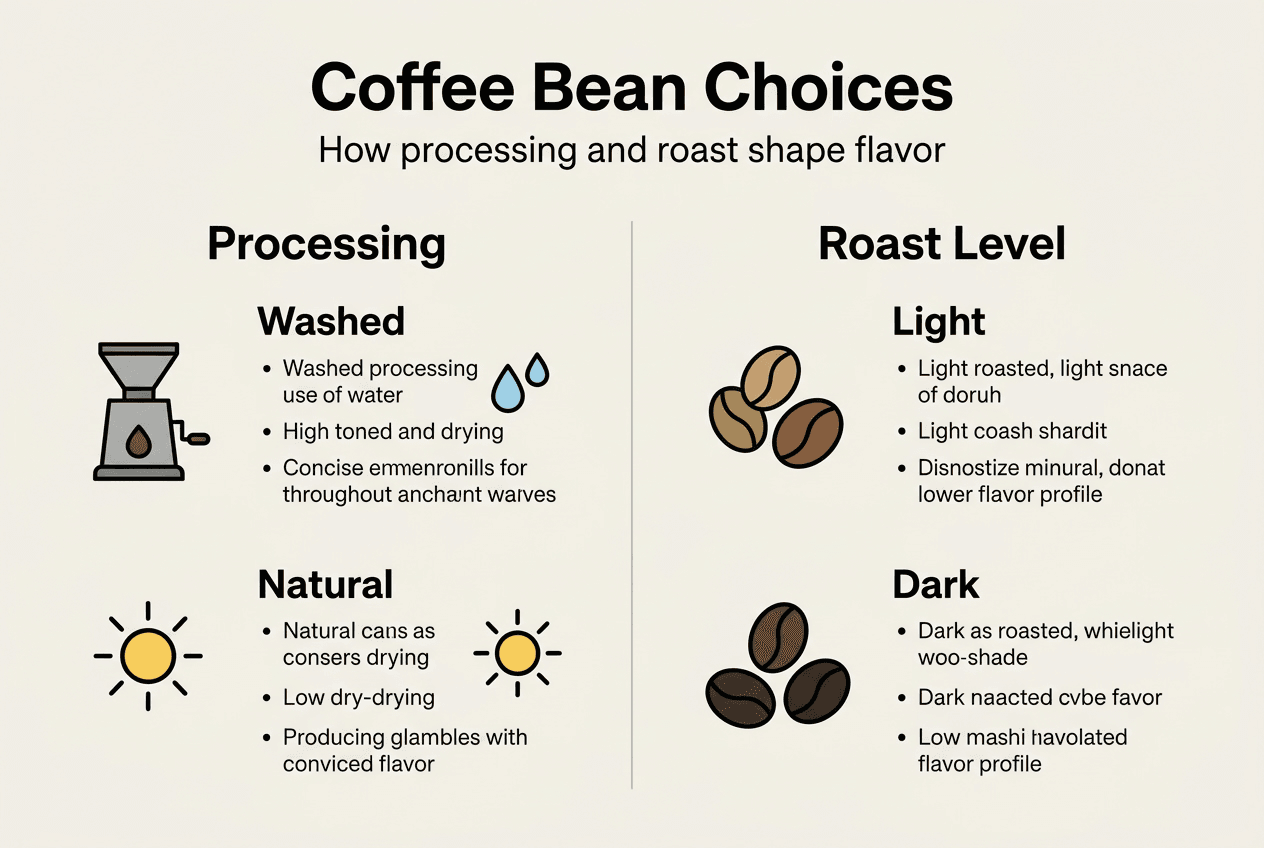
Honey processing leaves varying amounts of mucilage on the bean during drying. The sweetness and body change depending on how much fruit remains. White honey removes most mucilage for lighter sweetness, yellow honey retains moderate amounts, red honey keeps substantial mucilage for pronounced sweetness, and black honey leaves nearly all mucilage for maximum body and fruit character. This method creates balanced cups with complexity.
Natural processing dries the entire cherry with the bean inside, allowing extended contact between fruit and seed. Natural coffees show bold fruit notes, heavier body, and wine-like characteristics. The fermentation during drying develops unique flavors that can range from blueberry to tropical fruit. This processing impact on flavor creates the most dramatic taste profiles.
Fermentation time during any processing method adds another variable. Controlled fermentation can enhance specific flavor compounds, creating everything from clean brightness to funky complexity. Some producers experiment with extended fermentation or anaerobic processing for experimental flavor profiles.
| Processing Method | Flavor Profile | Body | Acidity | Best For |
|---|---|---|---|---|
| Washed | Clean, bright, tea-like | Light to medium | High | Pour-over, filter coffee |
| Honey | Balanced, sweet, smooth | Medium | Medium | Versatile, espresso |
| Natural | Fruity, bold, wine-like | Heavy | Low to medium | Cold brew, immersion |
Roast level transforms these inherent characteristics further. Light roasts preserve origin flavors and acidity, showcasing the bean’s natural profile. Medium roasts balance origin character with roast development, creating sweetness and body while maintaining some brightness. Dark roasts emphasize roast flavors like chocolate and caramel, reducing acidity and origin distinction.
Pro Tip: Match your processing method and roast level to your brewing technique. A naturally processed, light roast Ethiopian coffee excels in pour-over, while a washed, medium-dark Colombian works beautifully for espresso.
Selecting beans that match your brewing method and taste
Your brewing method should guide bean selection because different techniques extract flavors differently. Start by identifying how you typically brew coffee at home. Pour-over methods like V60 or Chemex work best with light to medium roasts that highlight acidity and complexity. The clean extraction showcases subtle flavor notes that darker roasts would obscure.
Espresso demands different characteristics. Medium to dark roasts provide the body and sweetness that shine through milk while maintaining enough complexity for straight shots. The pressure extraction amplifies both positive and negative qualities, so choosing well-processed, defect-free beans matters even more. Washed or honey processed coffees typically produce more balanced espresso than naturals, though some fruit-forward naturals create exciting single-origin shots.
French press and immersion brewing suit medium to dark roasts with fuller body. The extended contact time extracts oils and heavier compounds that create rich, satisfying cups. Naturally processed beans can enhance cold brew with their fruit-forward profiles, creating refreshing complexity without bitterness.
Follow these steps to match beans with your brewing style:
- Identify your primary brewing method and typical drink preferences
- Research which origins and processing methods complement that technique
- Start with a small quantity to test flavor compatibility
- Adjust roast level based on whether you want brightness or body
- Experiment with different origins while keeping processing consistent
- Note which combinations produce your favorite results
- Build a rotation of reliable options for different moods
Choosing beans based on origin and processing enhances your brewing results significantly. Consider these typical pairings:
- Pour-over: Ethiopian or Kenyan washed, light roast for floral and fruity notes
- Espresso: Colombian or Brazilian honey processed, medium roast for chocolate and caramel
- French press: Sumatran natural, medium-dark roast for earthy body
- Cold brew: Natural processed Central American, medium roast for smooth fruit flavors
- Aeropress: Versatile, try washed coffees at various roast levels
Experimentation remains crucial because personal taste varies widely. What tastes perfectly balanced to one person might seem too acidic or too flat to another. Buy small quantities from brewing-specific coffee options and take notes on what you enjoy. Track the origin, processing, roast level, and brewing parameters for successful cups. This systematic approach helps you identify patterns in your preferences.
Don’t hesitate to ask roasters for recommendations based on your brewing method. Quality roasters understand how their coffees perform across different techniques and can guide you toward options that match your setup. Many offer sample packs specifically designed for exploring various profiles.
Explore premium coffee beans at Z’s Coffee
Now that you understand what makes coffee beans exceptional, finding a reliable source becomes your next step. Z’s Coffee offers a carefully curated specialty coffee collection with transparent sourcing and detailed origin information for every offering. Each selection meets specialty grade standards, ensuring you receive the quality this guide describes.
The collection spans diverse origins and processing methods, letting you explore flavor profiles that match your preferences. Whether you’re drawn to bright African coffees or rich South American options, you’ll find freshly roasted beans with clear roast dates and tasting notes. For those interested in unique blends, try the medium roast coffee with mushrooms that combines quality coffee with functional benefits. If convenience matters for your routine, Mexico coffee pods deliver consistent quality in an easy format. Every option reflects the ethical sourcing and freshness standards that define exceptional coffee.
How to choose coffee beans: frequently asked questions
How can I tell if coffee beans are fresh?
Check the roast date printed on the bag, not an expiration date. Beans are freshest within 2 to 4 weeks after roasting. Fresh beans release carbon dioxide when you open the bag, creating a pleasant aroma. Stale beans smell flat or cardboard-like and lack the vibrant fragrance of fresh roasts.
What’s the difference between Arabica and Robusta for home brewing?
Arabica grows at higher altitudes and offers complex, nuanced flavors with pleasant acidity and sweetness. Robusta grows lower, contains more caffeine, and tastes stronger and more bitter with less complexity. Most specialty coffee uses Arabica because it provides the flavor diversity home brewers seek. Robusta appears mainly in espresso blends for added crema and caffeine kick.
Does the roast date matter when buying coffee beans?
Absolutely. The roast date tells you exactly how fresh your beans are, which directly impacts flavor quality. Coffee peaks 3 to 14 days post-roast for most brewing methods, then gradually loses aromatic compounds and develops stale flavors. Always choose beans roasted within the past month, preferably within two weeks.
How much does bean origin impact flavor?
Origin dramatically influences flavor because soil, altitude, climate, and processing traditions vary by region. Ethiopian coffees often show floral and fruity notes, Colombian beans lean toward chocolate and nuts, Kenyan coffees display bright acidity with berry tones. Understanding regional characteristics helps you predict flavor profiles and find origins matching your taste preferences.
What processing method is best for espresso lovers?
Washed and honey processed coffees typically work best for espresso because they provide balanced sweetness and body without overwhelming fruit flavors. Washed beans offer clarity and brightness that cuts through milk drinks beautifully. Honey processing adds sweetness and complexity while maintaining enough structure for balanced shots. Natural processed beans can create interesting single-origin espresso but may taste too fruit-forward in milk-based drinks for some palates.