Most coffee drinkers know Arabica by name, yet few realize this beloved variety emerged from a natural hybridization event 350,000 to 610,000 years ago between two wild species. Despite its popularity, Arabica carries surprisingly low genetic diversity, a legacy of bottlenecks during domestication that shaped both its vulnerability and its prized characteristics. This guide unpacks Arabica’s botanical origins, the chemistry behind its signature flavor, how altitude and processing transform your cup, and what sets it apart from Robusta. You will gain the knowledge to choose and appreciate Arabica coffee with confidence.
Table of Contents
- The Genetic Origins And Diversity Of Arabica Coffee
- What Gives Arabica Coffee Its Signature Flavor And Aroma
- How Cultivation And Processing Shape Arabica Coffee Quality 2026
- Comparing Arabica To Robusta: What Sets Arabica Apart
- Explore Premium Arabica Coffee Selections At Z’s Coffee
- Frequently Asked Questions
Key takeaways
| Point | Details |
|---|---|
| Hybrid origins | Arabica formed from a rare allotetraploid fusion of two wild coffee ancestors hundreds of thousands of years ago. |
| Low genetic diversity | Historical bottlenecks during domestication reduced variation, affecting adaptability but preserving recognizable traits. |
| Flavor chemistry | Altitude, volatile compounds, and processing methods combine to create Arabica’s clean, bright, complex profiles. |
| Processing impact | Washed methods yield clarity and acidity, while natural and honey processes enhance sweetness and body. |
| Premium positioning | Arabica commands higher prices due to cultivation challenges, lower yields, and superior sensory quality. |
The genetic origins and diversity of Arabica coffee
Arabica coffee stands apart in the botanical world as an allotetraploid species resulting from hybridization roughly 350,000 to 610,000 years ago. This rare genetic event fused diploid ancestors Coffea eugenioides and Coffea canephora, creating a new species with double the chromosome count. The fusion gave Arabica unique metabolic pathways that influence caffeine content, sugar development, and aromatic complexity. Understanding this genetic foundation helps you grasp why Arabica tastes distinct from other coffee species.
Modern cultivated Arabica shows relatively low genetic diversity due to bottlenecks during domestication. Early cultivation concentrated in Yemen and Ethiopia, where farmers selected plants with desirable traits but inadvertently narrowed the gene pool. Molecular studies using microsatellite markers reveal only 2 to 4 polymorphic bands per marker, confirming limited variation across commercial varieties. This restricted diversity makes Arabica more susceptible to diseases like coffee leaf rust, yet it also contributes to the consistent flavor profiles coffee lovers recognize and seek.
Pro Tip: When exploring Arabica coffee physical traits, look for beans that are larger, flatter, and more oval than Robusta. These morphological markers signal the genetic heritage that shapes flavor.
The domestication history of Arabica traces a path from wild Ethiopian forests to global cultivation. Wild Arabica populations in Ethiopia harbor greater genetic diversity than commercial varieties, offering a reservoir for future breeding programs. Farmers initially selected plants for yield and disease resistance, but these choices inadvertently reduced variation. Today, breeders revisit wild populations to introduce traits like drought tolerance and pest resistance, aiming to safeguard Arabica’s future while preserving its sensory excellence.
Key genetic factors influencing Arabica traits:
- Allotetraploid genome enables complex biochemical pathways for aroma and flavor development
- Limited polymorphism in SSR markers reflects historical cultivation bottlenecks
- Wild Ethiopian populations retain higher diversity, critical for breeding programs
- Genetic uniformity contributes to recognizable Arabica flavor profiles across regions
| Genetic Marker | Polymorphic Bands | Implication |
|---|---|---|
| SSR markers | 2 to 4 per locus | Low diversity limits adaptability |
| Allotetraploid structure | 44 chromosomes | Unique metabolic pathways |
| Wild vs. cultivated | Higher in wild | Breeding resource for resilience |
What gives Arabica coffee its signature flavor and aroma
Arabica’s flavor complexity stems from volatile compounds including acids, pyrazines, and phenolic compounds that develop during roasting and extraction. Altitude of cultivation strongly impacts caffeine and phenolic content, which in turn shape bitterness, antioxidant properties, and aroma intensity. Higher elevations produce beans with elevated acidity and brighter flavor notes, while lower altitudes yield heavier body and muted acidity. These chemical shifts explain why Ethiopian high-grown Arabica tastes markedly different from Brazilian lowland beans, even within the same species.

Processing methods exert profound influence on final cup quality. Washed, natural, and honey processes shape flavor clarity, sweetness, and acidity by altering how sugars, mucilage, and fermentation interact with the bean. Washed processing removes mucilage through fermentation and washing, yielding a clean, bright cup with pronounced acidity. Natural processing leaves the cherry intact during drying, allowing sugars to infuse the bean and producing fruity, wine-like notes. Honey processing splits the difference, retaining some mucilage to balance sweetness and clarity.
Pro Tip: To experience the full range of Arabica coffee aroma characteristics, sample beans from different altitudes and processing methods. You will notice how a washed Ethiopian coffee offers floral brightness while a natural Brazilian coffee delivers chocolate and berry sweetness.
Sensory differences between harvest timing and processing influence consumer preferences and emotional responses. Studies show that later harvests combined with washed processing generally yield superior flavor profiles, with higher scores for sweetness, acidity, and overall balance. Volatile aroma compounds like 2-furfurylthiol and 3-methylbutanal contribute to roasted, nutty, and caramel notes that define Arabica’s appeal. Understanding these chemical and sensory factors empowers you to select Arabica coffee that matches your flavor preferences and brewing style.
“The interplay of altitude, processing, and volatile chemistry creates the sensory diversity that makes Arabica coffee endlessly fascinating. Each cup tells a story of terroir and technique.”
Chemical components shaping Arabica flavor:
- Chlorogenic acids contribute to acidity and astringency, higher at elevated altitudes
- Pyrazines deliver nutty, earthy notes formed during roasting
- Furans and aldehydes create caramel, fruity, and floral aromas
- Caffeine and trigonelline influence bitterness and mouthfeel
Exploring regional Arabica coffee differences reveals how geography and processing combine to create distinct flavor signatures. Central American coffees often showcase bright acidity and chocolate notes, while African coffees lean toward floral and citrus profiles. Indonesian Arabicas tend toward earthy, herbal flavors due to wet-hulling processing and volcanic soils. Recognizing these patterns helps you navigate the specialty coffee landscape with confidence.
How cultivation and processing shape Arabica coffee quality 2026
Altitude, shading, and post-harvest processing interact to influence chemical composition and cup quality in Arabica coffee. Harvest time and processing method affect volatile profiles and sensory quality, with washed coffees performing better in later harvests when cherry maturity peaks. Early harvests often produce beans with underdeveloped sugars and muted acidity, while late harvests concentrate flavors and enhance sweetness. Farmers who time their harvest to coincide with optimal cherry ripeness and pair it with precise processing unlock the full potential of their Arabica crops.
Washed processing involves fermentation and careful drying to enhance acidity and clarity compared to natural or honey methods. After pulping, beans ferment in water tanks for 12 to 48 hours, breaking down mucilage and developing organic acids that brighten the cup. Drying on raised beds or patios follows, requiring constant monitoring to prevent over-fermentation or mold. This meticulous process demands more labor and water than natural methods but rewards producers with premium prices for the resulting clean, vibrant profiles.
Pro Tip: When brewing Arabica coffee cultivation varieties, adjust your grind size and water temperature to match the processing method. Washed coffees shine with slightly coarser grinds and hotter water to extract their bright acidity, while natural coffees benefit from finer grinds and cooler water to balance their sweetness.
Bad weather in major producing countries reduced Arabica supply in 2025, pushing prices higher and straining global availability. Drought in Brazil and flooding in Vietnam disrupted flowering and cherry development, leading to smaller harvests and lower quality beans. These climate challenges underscore the vulnerability of Arabica cultivation and the importance of sustainable farming practices. Growers and brewers must adapt to these shifts by diversifying sourcing, investing in resilient varieties, and supporting farmers through fair pricing.
Steps in washed coffee processing:
- Cherry harvesting at peak ripeness, typically indicated by deep red color
- Pulping to remove outer skin and expose mucilage-covered beans
- Fermentation in water tanks for 12 to 48 hours to break down mucilage
- Washing to remove fermented mucilage and residual sugars
- Drying on raised beds or patios to 10 to 12% moisture content
- Hulling to remove parchment layer before export or roasting
| Processing Method | Fermentation | Flavor Profile | Labor Intensity |
|---|---|---|---|
| Washed | Controlled, 12 to 48 hours | Clean, bright, acidic | High |
| Natural | Uncontrolled, in cherry | Fruity, sweet, heavy body | Medium |
| Honey | Partial, with mucilage | Balanced, sweet, complex | High |
Environmental factors like shade cover and soil composition also shape Arabica quality. Shade-grown coffee develops more slowly, allowing sugars to accumulate and flavors to deepen. Volcanic soils rich in minerals contribute to complexity and body, while sandy soils produce lighter, more delicate profiles. Understanding these cultivation variables helps you appreciate the craftsmanship behind each cup and make informed choices when selecting Arabica beans.
Comparing Arabica to Robusta: what sets Arabica apart
Arabica beans are generally larger, flatter, and have a sweeter, more complex flavor than Robusta. Robusta contains nearly twice the caffeine content and has a stronger, more bitter taste, making it popular in espresso blends for crema and body but less favored in specialty coffee circles. Arabica dominates global coffee production despite Robusta being more hardy and higher yielding, reflecting consumer preference for Arabica’s nuanced sensory qualities. This market dominance drives premium pricing and shapes cultivation practices worldwide.
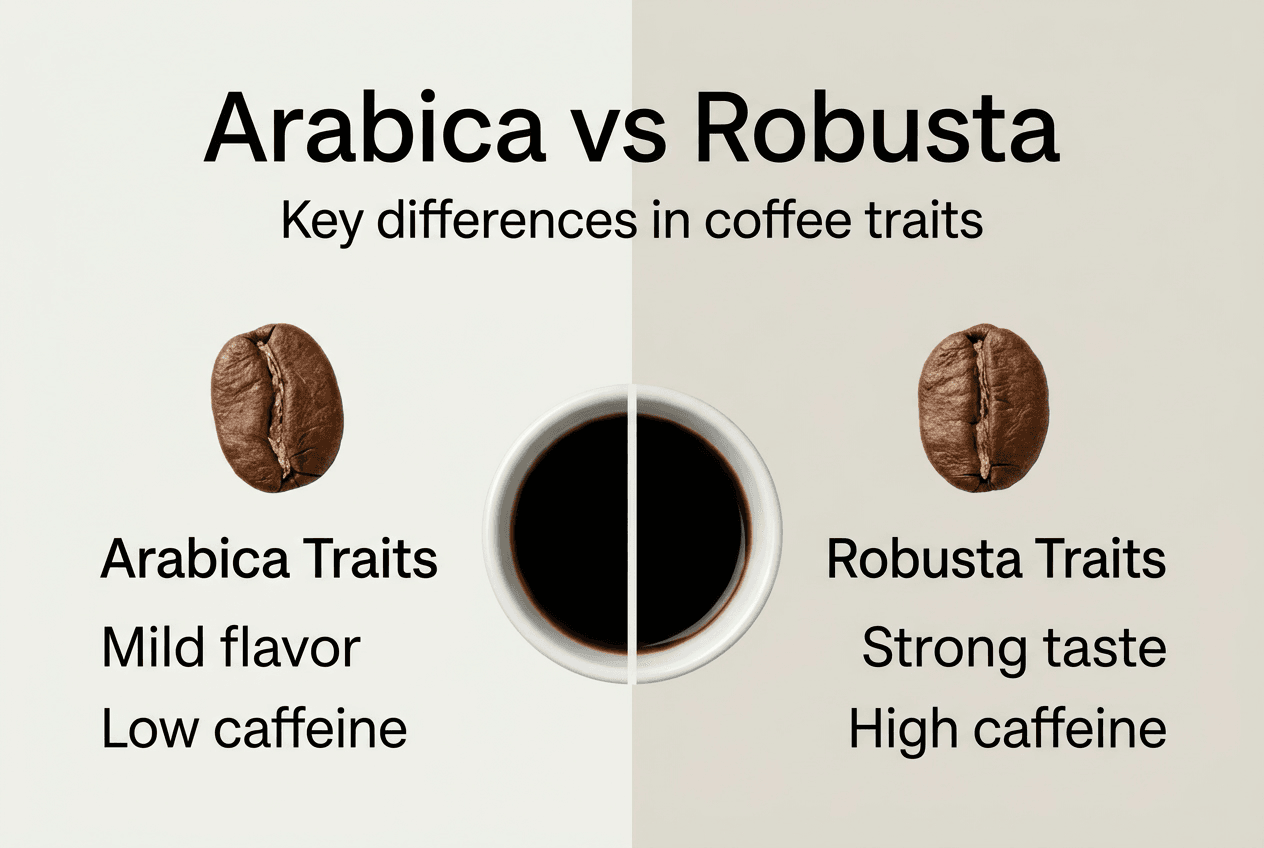
Arabica grows best at higher altitudes and cooler climates compared to Robusta’s tolerance for lower altitudes and harsher conditions. Arabica thrives between 600 and 2,200 meters above sea level, where cooler temperatures slow cherry maturation and enhance flavor development. Robusta flourishes below 600 meters, withstanding heat, humidity, and pests that would devastate Arabica crops. This altitude divide creates distinct growing regions and influences the flavor profiles consumers associate with each species.
Pro Tip: When exploring coffee varieties comparison, taste Arabica and Robusta side by side to appreciate the differences. Arabica will offer floral, fruity, and acidic notes, while Robusta delivers earthy, woody, and bitter flavors with a heavier mouthfeel.
Global market prices for Arabica are typically higher due to quality perceptions and cultivation challenges. Arabica’s lower yields, greater susceptibility to disease, and demanding growing conditions increase production costs. Specialty coffee consumers willingly pay premiums for Arabica’s aroma complexity, acidity, and balance, reinforcing its position as the preferred choice for high-end roasters and discerning drinkers. Robusta serves commodity markets and instant coffee production, where cost and caffeine content outweigh sensory refinement.
| Characteristic | Arabica | Robusta |
|---|---|---|
| Caffeine content | 1.2 to 1.5% | 2.2 to 2.7% |
| Flavor profile | Sweet, complex, acidic | Bitter, earthy, strong |
| Growing altitude | 600 to 2,200 meters | Below 600 meters |
| Market price | Higher, premium | Lower, commodity |
| Disease resistance | Lower | Higher |
Key differences between Arabica and Robusta:
- Arabica offers superior sensory complexity with floral, fruity, and acidic notes
- Robusta provides higher caffeine, crema production, and disease resistance
- Arabica demands cooler, higher altitudes while Robusta tolerates heat and low elevations
- Specialty coffee markets favor Arabica for its nuanced flavor and aroma
Specialty coffee consumers often prefer Arabica for its aroma complexity, acidity, and balance. The species’ genetic diversity, even with historical bottlenecks, allows for regional variation that creates distinct flavor signatures from Ethiopia to Colombia. Robusta’s uniformity and bitterness limit its appeal in specialty contexts, though it plays a valuable role in espresso blends and commercial products. Understanding these distinctions helps you navigate coffee offerings and make choices aligned with your taste preferences and brewing goals.
Explore premium Arabica coffee selections at Z’s Coffee
Now that you understand what makes Arabica coffee special, it’s time to experience these qualities firsthand. Z’s Coffee offers a curated selection of Arabica blends that showcase diverse flavor profiles influenced by origin and processing. Whether you prefer the bright acidity of washed Central American beans or the fruity sweetness of natural African coffees, you will find options tailored to your palate.

Try unique offerings like cold brew coffee crafted for smooth, low-acid enjoyment or coffee with mushrooms dark roast that blends Arabica’s complexity with functional benefits. Browse the specialty coffee collection to discover fresh, high-quality Arabica coffees from renowned growing regions worldwide. Each selection reflects the craftsmanship and terroir that define exceptional Arabica coffee.
Frequently asked questions
Is Arabica coffee better than Robusta?
Arabica is generally preferred for its sweeter, more complex flavor and aroma, while Robusta has higher caffeine and a stronger, harsher taste. “Better” depends on your preferences and intended use. Specialty coffee consumers favor Arabica for its sensory refinement, while Robusta serves well in espresso blends and commercial products where body and caffeine matter more than nuance.
How does altitude affect Arabica coffee flavor?
Higher altitude cultivation results in higher acidity, more volatile compounds, and brighter flavors in Arabica coffee. Cooler temperatures at elevation slow cherry maturation, allowing sugars and acids to develop fully. This produces beans with pronounced acidity, floral notes, and complexity that define premium Arabica profiles.
What are the main processing methods for Arabica beans?
Washed process involves fermentation and drying, producing clean, bright flavors, while natural retains fruity sweetness and honey balances both. Washed coffees showcase acidity and clarity, natural coffees deliver berry and wine-like notes, and honey-processed beans offer sweetness with moderate acidity. Processing directly influences sweetness, acidity, body, and aroma in your cup.
Why does Arabica coffee cost more than Robusta?
Arabica demands higher altitude, cooler climates, has lower yields and market premiums for its superior flavor complexity. Cultivation challenges, greater disease susceptibility, and consumer preference for Arabica’s sensory qualities drive higher prices. Robusta is easier to grow, more productive, and generally priced lower due to its bitter, less refined flavor profile.
Can Arabica coffee grown at different origins taste very different?
Variation in soil, altitude, climate, and processing creates diverse Arabica flavor profiles across regions. Arabica from Ethiopia differs notably from Central American coffees due to terroir and post-harvest techniques. Ethiopian coffees often showcase floral and citrus notes, while Colombian coffees lean toward chocolate and caramel. Exploring regional Arabica coffee differences reveals how the same species transforms into unique flavor experiences.
What is the significance of Arabica’s low genetic diversity?
Low genetic diversity can limit disease resistance and crop resilience but helps preserve distinctive Arabica traits. Historical bottlenecks reduced variation, making commercial Arabica more vulnerable to pests and climate stress. Breeding programs must consider diversity for sustainability, and conservation of wild Ethiopian populations is crucial for future Arabica improvement and adaptation.