What are the best Yelp alternatives for local business reviews?
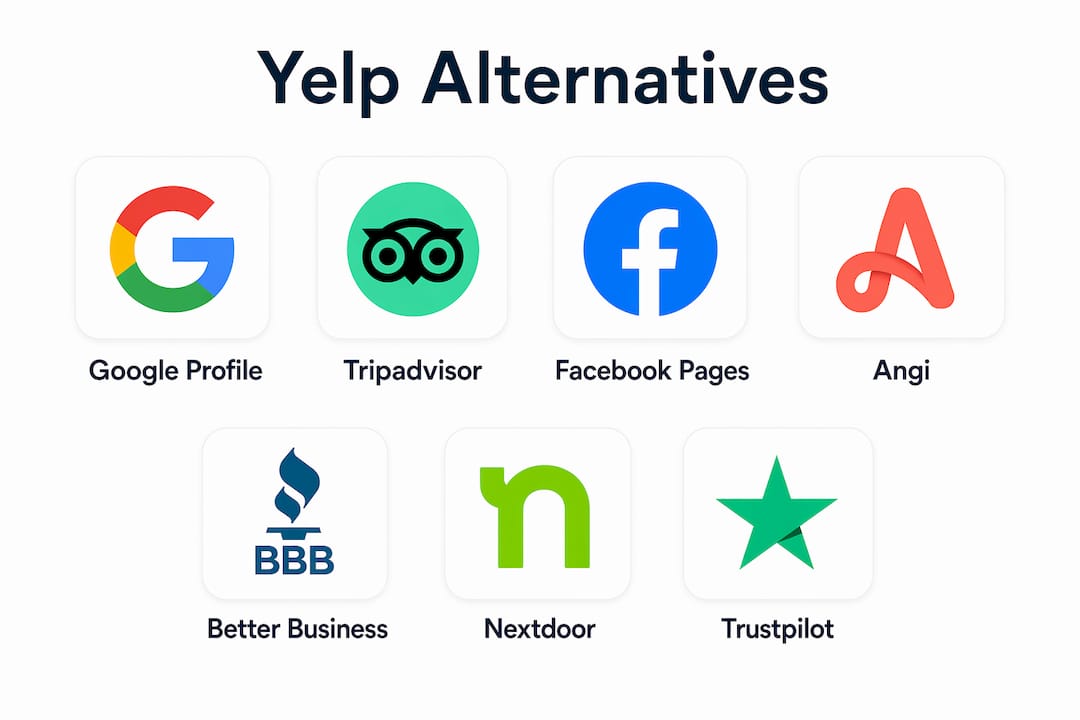
Google Business Profile is the strongest overall alternative to Yelp for local business discovery, and Tripadvisor leads for travel and dining with a large number of monthly visits as of May 2026. But the right platform depends entirely on what you are looking for. A homeowner hunting for a plumber needs Angi. A traveler picking a hotel needs Tripadvisor. A neighbor asking who fixes fences needs Nextdoor.
Here are the seven platforms that consistently outperform Yelp for specific use cases, followed by the full comparison table.
| Platform | Best For | Platform Type | Review Verification | Free to List |
|---|---|---|---|---|
| Google Business Profile | All local businesses | Generalist | Claimed listing + user reviews | Yes |
| Tripadvisor | Travel, restaurants, hotels | Vertical (hospitality) | Email + booking confirmation | Yes |
| Facebook Page reviews | Social-media-active businesses | Social/generalist | Facebook account required | Yes |
| Angi | Home services, contractors | Vertical (home services) | Verified professionals | Yes |
| Better Business Bureau | Credibility and trust verification | Credibility/directory | Complaint-based grading | Yes |
| Nextdoor | Hyperlocal, neighborhood services | Community-based | Verified address required | Yes |
| Trustpilot | Online businesses, eCommerce | Generalist/verified | Verified review invitations | Free tier |
Google Business Profile is free to claim and plugs directly into Google Search and Maps, giving businesses immediate visibility where most consumers start their search. Listing on it costs nothing, and the impact on local search rankings is direct.
Tripadvisor draws a deep audience of travelers and diners who are actively deciding where to eat or stay. Its review community is one of the most engaged in hospitality, and the platform cross-references bookings to flag suspicious submissions.

Facebook Page reviews tap into a user base that dwarfs every other platform on this list. The social sharing mechanic means a single strong review can reach a business owner’s entire local network within hours.

Angi converts discovery into action. Angi and OpenTable are classified as high-intent platforms because they facilitate actual bookings and hires, not just browsing. For contractors and service pros, that distinction is worth a lot.
Better Business Bureau works differently from every other platform here. Its A-F grades reflect how a business handles complaints, not how many stars users assign. Consumers often misread BBB ratings as crowd-sourced reviews, but they are really a measure of dispute responsiveness.
Nextdoor operates at the neighborhood level, which market analysts identify as its core advantage over Yelp’s city-wide model. A recommendation from a verified neighbor carries a different kind of weight than an anonymous online review.
Trustpilot built its reputation on verified review labels that businesses can display as badges on their own websites. That portability makes it especially useful for eCommerce brands that need trust signals off-platform.
Pro Tip: Don’t pick just one. Google Business Profile for visibility, Nextdoor for neighborhood trust, and one vertical platform for your industry is a combination that covers most consumer touchpoints.
How do the other Yelp alternatives compare across key features?
Beyond the top seven, a wider set of platforms covers everything from software procurement to restaurant reservations. Each one fills a gap Yelp was never built for.
| Platform | Best For | Platform Type | Review Verification | Free to List |
|---|---|---|---|---|
| Foursquare | Mobile, location-aware discovery | Location-based | User account + check-in | Yes |
| Glassdoor | Employer reputation, job seekers | Vertical (employment) | Work email verification | Free tier |
| HomeAdvisor | Homeowners, contractor booking | Vertical (home services) | Verified professionals | Yes |
| Judy’s Book | Neighborhood-oriented reviews | Community-based | User account | Yes |
| Manta | Small business directory | Directory | Claimed listing | Yes |
| Merchant Circle | Local business marketing | Community/directory | Claimed listing | Yes |
| OpenTable | Restaurant reservations, diners | Vertical (dining) | Verified reservation | Yes |
| Superpages | Small to medium businesses | Directory | Claimed listing | Yes |
| VendOp | Verified B2B vendor data | B2B/directory | Data verification | Yes |
| ServiceOrca.com | Service businesses, unbiased exposure | Directory | Listing review | Free |
| ConsumerAffairs | Product and service complaints | Consumer advocacy | Moderated submissions | Yes |
| Visual brands, lifestyle products | Social/visual | Account required | Yes | |
| Twitter (X) | Real-time sentiment, brand mentions | Social | Account required | Yes |
| G2 | Software and SaaS buyers | Vertical (software) | Work email + LinkedIn | Free tier |
| Capterra | Business software procurement | Vertical (software) | Verified buyer review | Free tier |
A few of these deserve more than a table row.
OpenTable ties reviews directly to confirmed reservations, which eliminates one of the most common complaints about open review platforms: people leaving feedback for restaurants they never visited. For diners, that verification is genuinely useful. For restaurant owners, it means the feedback they receive is almost always from real customers.
G2 and Capterra are the gold standard for software buyers. Both platforms require work email validation and cross-reference reviewer identity, which keeps fraudulent submissions rare. A SaaS company that ignores these two is leaving its most high-intent buyers without a trusted place to evaluate it.
Glassdoor serves a completely different purpose. It is not a consumer review site at all. Companies use it to manage their employer brand, and job seekers use it to vet workplaces before accepting offers. Listing it alongside Yelp alternatives is technically accurate, but the audience and intent are entirely distinct.
ServiceOrca.com positions itself as an ad-free, fair listing platform, which directly addresses one of Yelp’s most persistent criticisms: that paid advertising influences which businesses get prominent placement. For service providers who want unbiased exposure, that pitch has real appeal.
ConsumerAffairs leans into complaint resolution rather than discovery. Consumers who land there are usually already frustrated, which shapes the tone of reviews on the platform. Businesses that respond well to complaints on ConsumerAffairs can actually turn a negative into a credibility signal.
Foursquare pioneered the check-in mechanic that later influenced how Google Maps and Apple Maps display location data. Its current focus is more on location intelligence for businesses than on consumer-facing reviews, but the discovery layer still exists for mobile users.
How do you choose the best Yelp alternative for your needs?
The right platform comes down to three questions: What type of business or service are you researching? What do you want to do after reading reviews? And how local does the recommendation need to be?
Match the platform to the industry. Home services belong on Angi or HomeAdvisor. Restaurants and hotels belong on Tripadvisor or OpenTable. Software belongs on G2 or Capterra. Using a generalist platform for a niche need usually means thinner, less reliable reviews from people who are not the core audience for that category.
Decide between discovery and transaction. Google Business Profile and Facebook are discovery platforms. You find a business, read reviews, and then contact them separately. Angi and OpenTable are transactional. You find a business and book or hire directly in the same session. If you want to act fast, start with a transactional platform.
Consider how local you need to go. Nextdoor operates at the neighborhood level, which no other platform on this list replicates. For hyperlocal services like a dog walker, a handyman, or a house cleaner, a Nextdoor recommendation from a verified neighbor is often more useful than a hundred anonymous Yelp reviews from across the city.
Here are the key criteria to evaluate before committing to a platform:
- Review verification: Does the platform confirm that reviewers actually used the business? OpenTable, G2, and Angi do. Many others rely on self-reported accounts.
- Platform activity: A platform with outdated reviews is worse than no reviews. Check the dates on recent submissions before trusting the aggregate rating.
- Geographic coverage: Some platforms are strong in major metros but thin in smaller markets. Superpages and Manta tend to have broader geographic reach for smaller towns.
- Business owner tools: Platforms like Trustpilot let businesses embed review widgets on their own sites. Google Business Profile lets owners respond to reviews publicly. These features matter if you are a business owner, not just a consumer.
- Pricing and access: Most platforms offer free listings. Paid tiers on Trustpilot and Angi unlock additional visibility and lead generation features, but the free versions are functional for most consumers.
Pro Tip: Check when the most recent reviews were posted before trusting a platform’s aggregate score. A 4.8-star rating built on reviews from three years ago tells you almost nothing about what the business is like today.
For coffee shops and cafes specifically, diversifying beyond Yelp is worth exploring. Zscoffee has covered Tripadvisor alternatives for coffee retailers looking to expand their online presence across multiple platforms.
What types of review platforms exist beyond Yelp?
Not all review platforms work the same way, and understanding the categories helps you pick the right one faster.
Generalist platforms accept reviews for almost any business type. Google Business Profile and Facebook Page reviews fall here. They have the largest user bases, the broadest geographic coverage, and the lowest barrier to entry for both businesses and reviewers. The tradeoff is that review quality varies widely, and verification is often minimal.
Vertical-specific platforms focus on a single industry and attract users who are already deep in that category. Examples include:
- Tripadvisor and OpenTable for hospitality and dining
- Angi and HomeAdvisor for home services
- G2 and Capterra for software and SaaS
- Glassdoor for employment and workplace culture
Because the audience is self-selected, reviews on vertical platforms tend to be more detailed and more useful for decision-making in that category.
Community-based platforms rely on geographic identity rather than industry focus. Nextdoor verifies users by home address, which creates a fundamentally different trust dynamic. Judy’s Book and Merchant Circle also lean into local community engagement, though neither matches Nextdoor’s address verification rigor.
Credibility and advocacy platforms serve a different purpose entirely. The BBB grades businesses on complaint responsiveness using an A-F scale, not star ratings. ConsumerAffairs tracks complaints and resolutions. Neither is a traditional review site, but both influence consumer trust, especially for businesses in regulated or high-stakes categories.
Social platforms like Instagram and Twitter (X) generate informal reviews through user-generated content and organic mentions. A tagged photo of a great meal or a tweet about a bad customer service experience can reach thousands of people without any formal review structure. For visual brands and lifestyle products, Instagram’s photo and video content often carries more persuasive weight than a written review.
The practical takeaway: no single platform covers every need. A coffee shop benefits from Google Business Profile for local search, Tripadvisor for travelers, and Instagram for visual discovery. A software company needs G2 and Capterra. A contractor needs Angi. Loyalty programs can also complement review platforms by turning satisfied customers into repeat visitors. The FiveStars loyalty program is one example of how coffee shops specifically have used structured loyalty tools alongside review platforms to build a consistent customer base.
Zscoffee: a direct path to specialty coffee without the review search
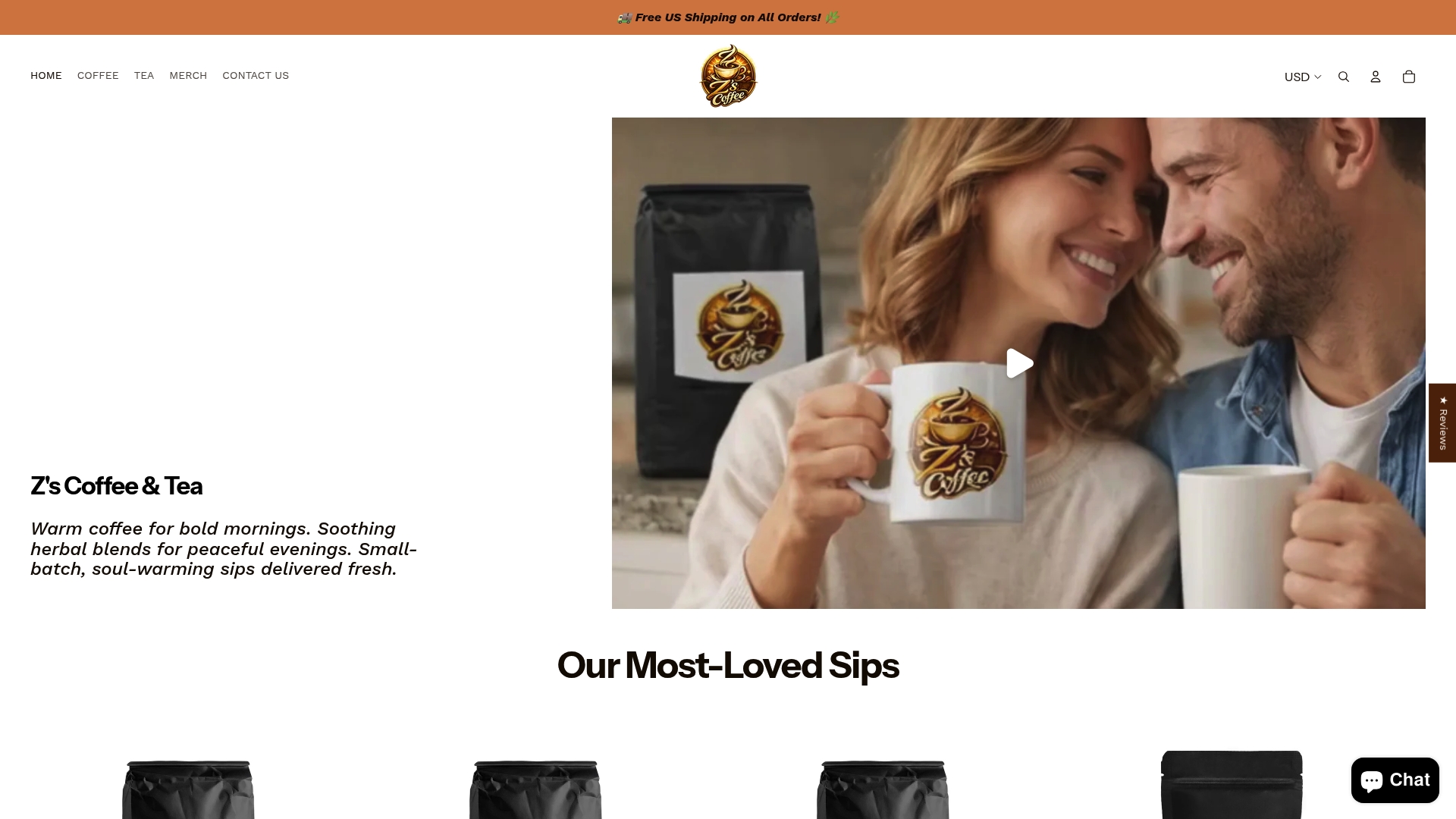
Review platforms help you find businesses, but sometimes you already know exactly what you want. If specialty coffee is on your list, Zscoffee skips the search entirely and puts the product in front of you directly. No ads, no aggregated ratings to sort through, just a curated selection of coffee and tea products available to order from wherever you are.
Zscoffee serves coffee enthusiasts, baristas, and specialty buyers across multiple countries, with regional customization built into the shopping experience. You can browse by region and currency, which makes it practical for international buyers who are tired of platforms that only serve the US market. The catalog covers coffee beans, brewing accessories, and related products, all in one place.
For coffee lovers who have spent time reading reviews on Yelp or Tripadvisor trying to find the right roast or the right gear, Zscoffee offers a different route: buy directly from a specialty retailer that has already done the curation work.
Key Takeaways
Google Business Profile is the strongest starting point for most consumers, but the best Yelp alternative is always the one built for your specific use case, industry, and location.
| Point | Details |
|---|---|
| Google leads for local visibility | Google Business Profile is free to claim and directly affects local search rankings on Maps and Search. |
| Vertical platforms outperform generalists for niche needs | G2 and Capterra for software, Angi for home services, and Tripadvisor for hospitality deliver more relevant, verified reviews than broad platforms. |
| Review verification separates trustworthy platforms | Platforms like OpenTable, G2, and Angi confirm reviewer identity or purchase, reducing fake submissions that undermine open platforms. |
| BBB grades complaint handling, not user sentiment | BBB’s A-F ratings reflect how businesses respond to disputes, not crowd-sourced star averages. |
| Zscoffee offers direct specialty coffee access | For coffee buyers, Zscoffee provides a curated, region-customized storefront as an alternative to searching review sites for the right product. |