You might think all coffee bags are the same, but packaging is one of the most critical factors determining whether your morning cup bursts with vibrant flavors or tastes flat and stale. The materials, sealing methods, and protective features used in coffee packaging directly influence how well your beans or grounds maintain their aromatic compounds and oils from roast to brew. Understanding these packaging elements helps you select better coffee products and store them properly, ensuring every cup delivers the rich, complex flavors you expect from specialty coffee.
Table of Contents
- Why Packaging Matters For Coffee Freshness
- Common Coffee Packaging Types And Their Benefits
- Innovations In Coffee Packaging To Extend Shelf Life
- How To Store Packaged Coffee For Maximum Freshness
- Discover Fresh Coffee Packaged For Quality
- Frequently Asked Questions About Coffee Packaging And Freshness
Key takeaways
| Point | Details |
|---|---|
| Packaging materials matter | The right barrier materials and sealing methods prevent oxygen, moisture, light, and heat from degrading coffee quality. |
| One-way valves preserve freshness | These specialized valves allow carbon dioxide to escape while blocking oxygen entry, extending shelf life significantly. |
| Storage practices extend flavor life | Keeping coffee in original sealed packaging and avoiding environmental stressors maintains peak aroma from roast to cup. |
| Innovation improves shelf life | Technologies like nitrogen flushing and advanced valve designs help coffee stay fresher longer with minimal quality loss. |
| Packaging choice affects your brew | Selecting properly packaged coffee and understanding storage needs directly improves your daily brewing results and flavor experience. |
Why packaging matters for coffee freshness
Freshly roasted coffee is remarkably vulnerable to environmental factors that rapidly degrade its quality. Exposure to oxygen degrades coffee flavor quickly through oxidation, breaking down the delicate aromatic oils and flavor compounds that give coffee its distinctive character. Within hours of roasting, coffee beans begin releasing carbon dioxide while simultaneously becoming susceptible to oxygen infiltration. This exchange process makes packaging timing and method absolutely crucial for preserving what you paid for.
Moisture represents another serious threat to coffee freshness. Even small amounts of humidity can accelerate staling, create off flavors, and in extreme cases, promote mold growth that makes coffee unsafe to consume. Light exposure similarly harms flavor compounds, particularly in ground coffee where increased surface area makes degradation happen faster. Heat speeds up all these deterioration processes, which is why you see coffee stored in cool, dark locations at quality cafes and roasteries.
Packaging acts as your first line of defense against these four enemies of freshness. The barrier materials, sealing techniques, and protective features built into quality coffee packaging create a controlled microenvironment that slows degradation dramatically. Without effective packaging, even the finest single origin beans would lose their distinctive terroir notes and nuanced flavors within days of roasting.
Pro Tip: Check the roast date on your coffee packaging and aim to consume beans within three to four weeks of that date for optimal flavor, regardless of the stated expiration date.
Consider these primary threats to coffee freshness:
- Oxygen exposure causes oxidation that flattens flavor profiles and creates stale, cardboard-like tastes
- Moisture infiltration leads to premature staling and potential contamination issues
- Light breaks down aromatic compounds, especially in clear or translucent packaging
- Heat accelerates all chemical degradation processes, compounding other freshness problems
Common coffee packaging types and their benefits
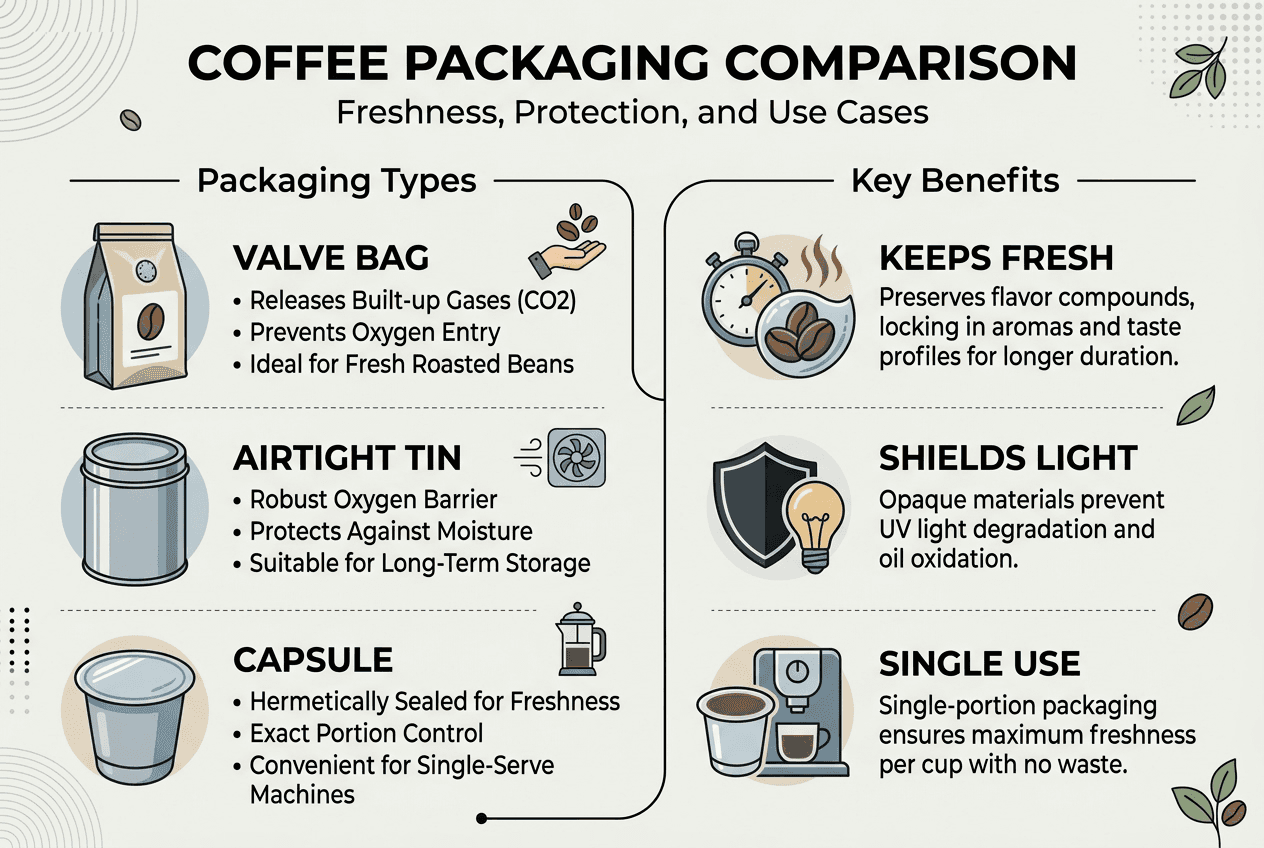
Bags with one-way valves have become the gold standard for whole bean and ground coffee packaging in the specialty market. One-way valves allow carbon dioxide out while preventing oxygen from entering, solving the challenge of degassing freshly roasted beans without compromising the protective seal. These valves typically consist of a flexible membrane that opens under internal pressure from escaping CO2 but remains sealed against external atmospheric pressure. This elegant solution means roasters can package coffee immediately after roasting without waiting for degassing, preserving maximum freshness.
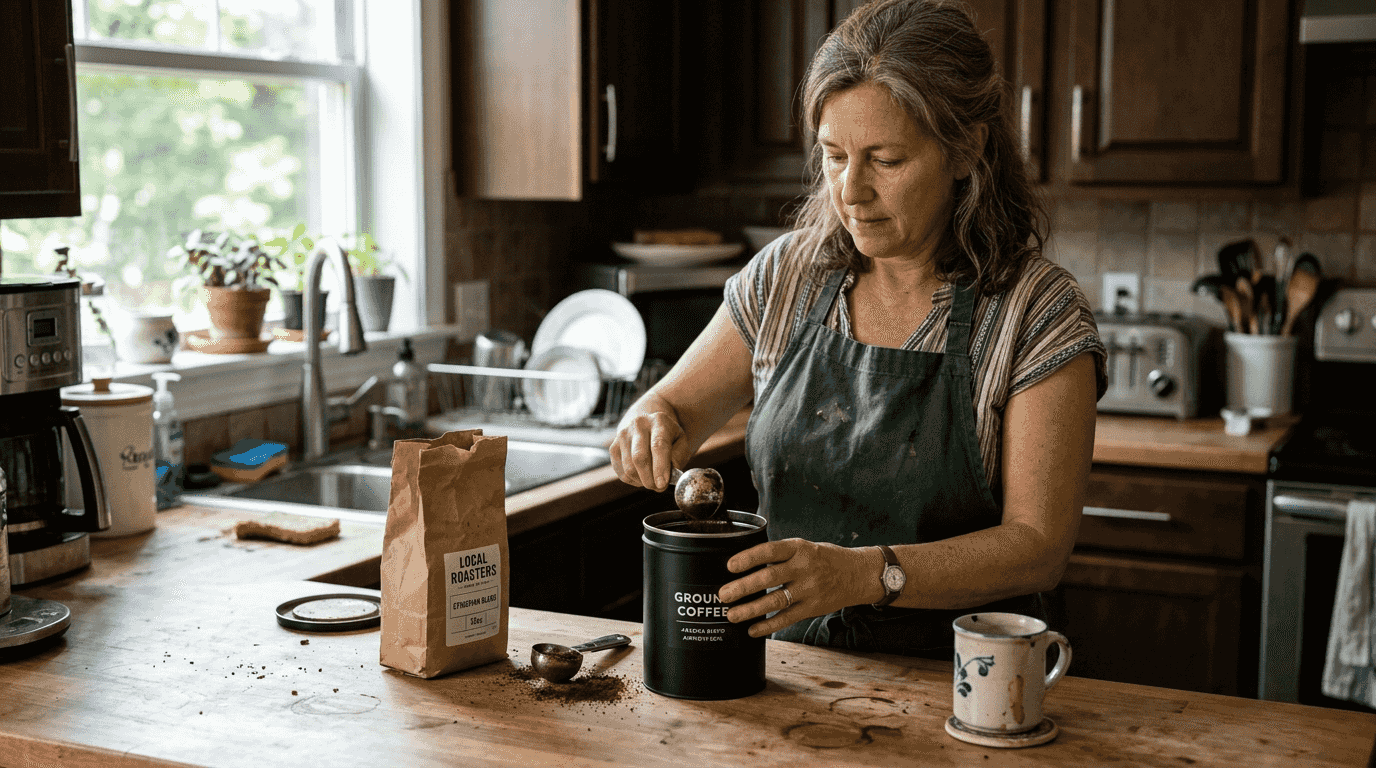
Airtight tins and canisters offer excellent long-term protection once you open the original packaging. Metal tins block light completely and provide superior barrier properties against oxygen and moisture compared to most bag materials. However, they lack the one-way valve feature, making them better suited for post-purchase storage rather than initial packaging from the roaster. Some premium coffee brands use nitrogen-flushed tins that displace oxygen before sealing, combining the benefits of inert atmosphere with robust physical protection.
Single-serve coffee capsules represent the ultimate in per-serving freshness preservation. Each capsule creates an individual sealed environment that protects coffee from all degradation factors until the moment you brew. The hermetic seal and often nitrogen-flushed interior mean the coffee inside can maintain peak freshness for months, far longer than opened bags of whole beans. This packaging innovation has revolutionized convenience without forcing consumers to sacrifice quality, though environmental concerns around capsule waste continue driving improvements in recyclable and compostable options.
| Packaging Type | Freshness Duration | Key Advantage | Best For |
|---|---|---|---|
| Valve bags | 2-4 weeks opened | Allows degassing while sealed | Whole beans, daily brewing |
| Airtight tins | 1-2 weeks opened | Complete light blocking | Post-purchase storage |
| Single-serve capsules | 6-12 months sealed | Individual portion protection | Convenience, variety |
Pro Tip: Look for bags with degassing valves positioned away from seams, as valve placement affects how well the package maintains its protective seal over time.
Each packaging type balances different priorities. Valve bags excel at preserving freshness from roaster to consumer while allowing necessary degassing. Tins provide excellent secondary storage but require more material and shipping weight. Capsules maximize individual serving freshness but generate more packaging waste per cup, though advanced packaging technologies continue improving sustainability.
Innovations in coffee packaging to extend shelf life
Nitrogen flushing has transformed how premium coffee maintains freshness during storage and shipping. This process involves displacing oxygen inside the package with inert nitrogen gas before sealing, creating an atmosphere where oxidation cannot occur. New materials and nitrogen flushing help keep coffee fresher by eliminating the primary cause of flavor degradation. The nitrogen remains inert and harmless, simply providing a protective blanket around your coffee until you break the seal.
Advanced one-way valve technology continues evolving with improved materials and designs. Modern valves feature multiple layers that respond more precisely to pressure differentials, preventing any back-flow while efficiently releasing CO2. Some newer valve designs incorporate antimicrobial materials that prevent contamination around the valve area, addressing a potential weak point in package integrity. These improvements mean today’s valve bags can maintain freshness standards that would have been impossible just a decade ago.
Sustainability innovations are reshaping coffee packaging without compromising freshness protection. Biodegradable films made from plant-based materials now offer barrier properties comparable to traditional petroleum-based plastics. Compostable single-serve capsules made from materials like cornstarch or sugarcane break down in industrial composting facilities while still providing the hermetic seal needed for long-term freshness. These developments prove that environmental responsibility and quality preservation can coexist.
Pro Tip: When trying new sustainable packaging options, verify they include proper barrier properties and valves, as some early eco-friendly materials sacrificed freshness for environmental benefits.
Key packaging innovations improving coffee freshness in 2026:
- Multi-layer barrier films that block oxygen, moisture, and light more effectively than single-layer materials
- Precision valve designs with improved pressure response and contamination resistance
- Plant-based biodegradable materials offering comparable protection to traditional plastics
- Smart packaging with freshness indicators showing real-time quality status
- Recyclable aluminum capsules with plant-based filter components
The packaging industry continues investing in innovative solutions that balance freshness, convenience, and environmental impact. Expect ongoing improvements in how effectively packaging preserves coffee quality while reducing waste.
How to store packaged coffee for maximum freshness
Keeping coffee in its original sealed packaging until you’re ready to use it provides the best protection against freshness loss. Manufacturers design packaging specifically to maintain optimal conditions, and transferring coffee prematurely exposes it to oxygen and moisture unnecessarily. Once you open a package, reseal it carefully after each use, pressing out excess air before closing the top. Many valve bags include resealable zippers or tin ties that help maintain the protective environment even after initial opening.
Avoid exposing your coffee to heat, moisture, and sunlight after opening the package. Store it in a cool, dry cabinet away from your stove, dishwasher, or any appliances that generate heat. Never refrigerate or freeze opened coffee packages, as temperature fluctuations create condensation that introduces moisture and accelerates staling. The ideal storage temperature stays consistently between 60-70°F with low humidity levels.
If you must transfer coffee to another container, choose an airtight vessel made from opaque materials like ceramic or dark glass. Ensure the container is completely dry and clean before adding coffee, as residual moisture or oils from previous batches will contaminate fresh coffee. Fill the container as full as possible to minimize air space, which reduces oxygen exposure. Proper storage of packaged coffee at cool, dry places prolongs peak aroma and flavor far beyond what careless handling allows.
Pro Tip: Buy coffee in quantities you’ll consume within two to three weeks rather than bulk purchasing, as even perfect storage cannot match the freshness of recently roasted, properly packaged coffee.
Best practices for maintaining packaged coffee freshness:
- Store in original packaging until opening to leverage manufacturer’s protective design
- Keep coffee in a cool, dark cabinet away from heat sources and sunlight
- Avoid refrigeration or freezing, which introduces moisture through condensation
- Use airtight, opaque containers if repackaging becomes necessary
- Purchase amounts matching your consumption rate for consistent freshness
These storage practices work together with quality packaging to ensure your coffee delivers its intended flavor profile every time you brew. The combination of effective packaging and proper handling gives you complete control over your coffee’s freshness journey from roaster to cup.
Discover fresh coffee packaged for quality
Experience the difference that expert packaging makes in your daily coffee ritual. Z’s Coffee offers a curated specialty coffee collection featuring beans and grounds packaged with one-way valves and protective barrier materials that lock in freshness from roast to brew. Each selection arrives sealed to preserve the complex flavors and aromatic compounds that make specialty coffee extraordinary.
Explore options ranging from rich cold brew coffee designed for smooth, concentrated flavor to convenient single-serve coffee capsules that deliver consistent quality cup after cup. Every product reflects a commitment to packaging excellence that protects your investment in premium coffee, ensuring the flavors you expect are the flavors you taste.
Frequently asked questions about coffee packaging and freshness
What is a one-way valve and why is it important?
A one-way valve is a specialized component in coffee packaging that allows carbon dioxide gas to escape while preventing oxygen from entering. Freshly roasted coffee releases CO2 for several days after roasting, and without a valve, this gas would inflate the package or require delayed packaging. The valve solves this problem while maintaining the oxygen-free environment needed to preserve flavor compounds and aromatic oils.
How long does packaged coffee stay fresh?
Sealed coffee with proper valve packaging typically maintains peak freshness for three to four weeks after roasting when stored correctly. Once opened, coffee begins losing flavor more rapidly, with whole beans staying fresh for two to three weeks and ground coffee for one to two weeks. Single-serve capsules can maintain freshness for six to twelve months due to their hermetic individual seals and often nitrogen-flushed interiors.
Can I repack my coffee to keep it fresh?
You can transfer coffee to an airtight container if the original packaging is damaged, but this should be your last resort rather than standard practice. Original packaging from quality roasters includes specialized barrier materials and valves designed specifically for coffee preservation. If repackaging is necessary, use an opaque, airtight container and minimize air space by filling it as full as possible.
Does packaging affect coffee flavor?
Packaging dramatically affects coffee flavor by controlling exposure to oxygen, moisture, light, and heat that degrade aromatic compounds and oils. Poor packaging allows oxidation that creates flat, stale, or cardboard-like flavors, while quality packaging with proper barriers and valves preserves the nuanced flavor notes and vibrant aromatics that define specialty coffee. The difference between well-packaged and poorly packaged coffee becomes obvious within days of roasting.
Are single-serve capsules better for freshness?
Single-serve capsules excel at maintaining per-serving freshness over extended periods because each portion is individually sealed in an oxygen-free environment. This makes them ideal for occasional coffee drinkers or those wanting variety without committing to full bags. However, freshly roasted whole beans in quality valve bags and consumed within a few weeks can offer comparable or superior freshness for regular coffee drinkers who brew daily.
Recommended
- Flavored Coffees Sample Pack – Z’s Coffee
- 12 Pack Single Serve Coffee Capsules – Z’s Coffee
- 60 Pack Single Serve Coffee Capsules – Z’s Coffee
- Master perfect coffee at home: brewing guide for 2026 – Z’s Coffee
- Why buy whole bean coffee for premium flavor in 2026 – House Coffee
- How to Identify Single Origin Beans for Premium Coffee – House Coffee