TL;DR:
- The ambiance of a coffee shop, including lighting, sound, scent, and layout, significantly influences customer satisfaction and loyalty. Proper multisensory design can extend dwell times, increase spending, and foster emotional attachment, making ambiance a vital business strategy. Focusing on controllable elements like lighting, sound, scent, and spatial arrangement enhances overall customer experience and operational success.
Coffee shop ambiance factors are the multisensory elements, including lighting, sound, scent, spatial layout, and visual design, that shape how customers feel, how long they stay, and whether they return. Research confirms that café atmosphere is the strongest predictor of customer satisfaction, mediating 60.3% of the effect on purchase decisions. That single finding reframes ambiance from decoration to business strategy. A multisensory spatial design study of 328 urban users confirms that coordinated sensory environments directly boost dwell time, revisit intention, and emotional attachment. For patrons, this explains why some cafés feel magnetic. For entrepreneurs, it is the clearest argument for treating every sensory detail as an investment.
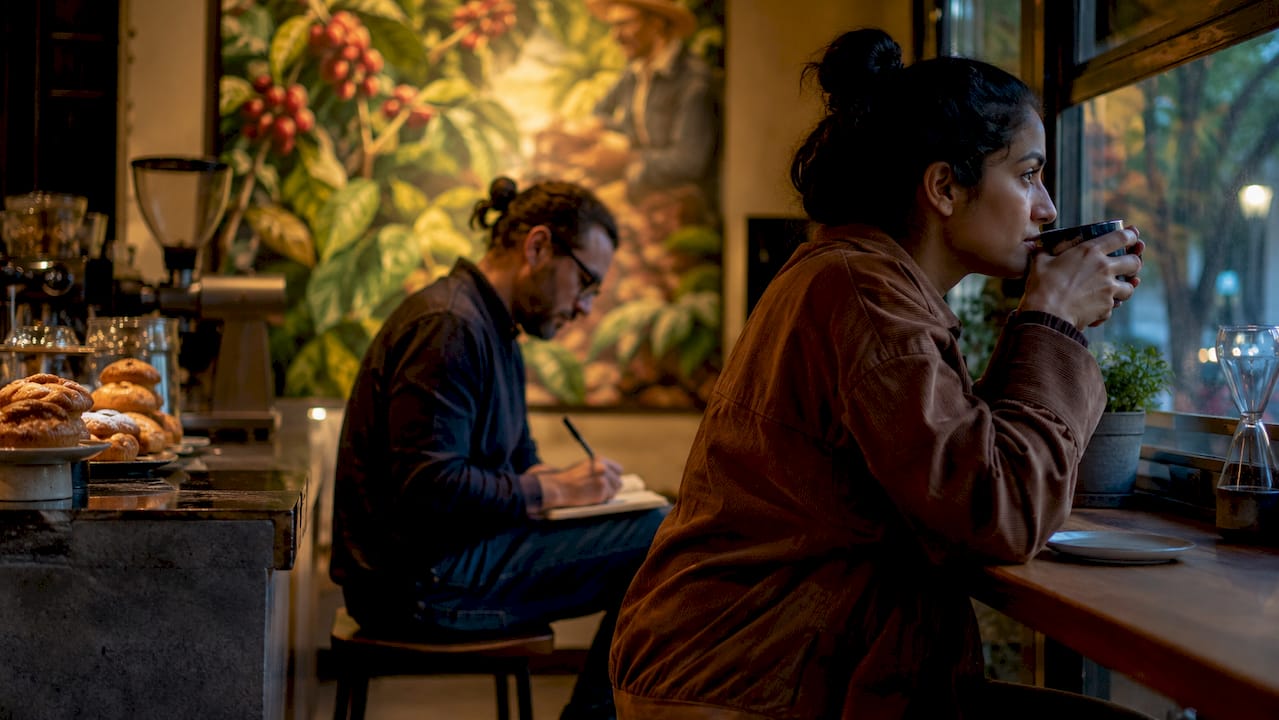
1. What are the core coffee shop ambiance factors?
The term “ambiance factors” maps closely to what hospitality researchers call the servicescape, a concept covering all physical and sensory elements of a service environment. In coffee shops, the servicescape includes lighting, acoustics, scent, spatial layout, furniture, color, and temperature. Each element works on customers both consciously and unconsciously. Physical elements strongly impact hedonic value and spending behavior, meaning the way a space feels shapes what customers are willing to pay before they even look at the menu. Entrepreneurs who understand this can design spaces that generate revenue beyond the cup.
2. How does lighting impact café atmosphere and customer behavior?
Lighting is the single most controllable ambiance variable in any café. Its three key characteristics are brightness (measured in lux), color temperature (measured in Kelvin), and glare control. Each one affects how customers feel and how long they stay.
Warm, dim lighting for lingering
Relaxed cafés targeting dwell time should aim for 150–300 lux with warm color temperatures in the 2,200–2,700K range. Well-calibrated ambient lighting can increase average ticket size by 10–15% and triple the likelihood of customers purchasing extras in dimmed settings. That is not a minor effect. It means the right bulb choice directly adds to your bottom line.
Cool, bright lighting for turnover
Cafés running a fast lunch rush benefit from bright, cool lighting above 4,000K. That color temperature signals efficiency and subtly discourages lingering. It is the same principle fast-food chains have used for decades, applied to the specialty coffee context.
Seating zones as the lighting priority
Customers prioritize adequate illuminance and warm light specifically in seating zones. The research hierarchy runs: illuminance and color perception first, glare control second, uniformity third. Entrepreneurs should light seating areas before worrying about counters or display cases.
Pro Tip: Install dimmable LED systems with a warm color temperature in seating zones. You can shift from bright morning service to a relaxed afternoon atmosphere without rewiring anything, and the investment pays back through longer visits and higher per-ticket spending.
3. What role does sound and music play in shaping café atmosphere?
Sound is the ambiance factor most owners underestimate and most customers notice immediately. A café that sounds like a train station loses customers regardless of how good the coffee is. Soft music and sound-absorbing materials reduce noise-induced discomfort and encourage customers to linger longer. Background music slows perceived time, which means guests feel less rushed and order more.
Researchers describe a phenomenon called the “coffee shop effect,” where moderate ambient noise, roughly 65–70 decibels, boosts creative thinking and social energy. This is why so many remote workers and writers seek out cafés over silent libraries. The noise level is stimulating without being distracting.
Practical sound management breaks into two categories:
- Music selection: Acoustic, jazz, and lo-fi genres work well for relaxed environments. Uptempo playlists suit morning rush periods. Volume should sit low enough that two people can hold a conversation without raising their voices.
- Acoustic materials: Upholstered seating, rugs, curtains, and acoustic ceiling panels absorb sound. Hard surfaces like concrete floors and bare walls create echo. A mix of soft and hard surfaces produces the best balance.
Pro Tip: Play music at a volume where it is audible but not identifiable. If customers can clearly make out every lyric, it is too loud. That threshold is where music shifts from background comfort to distraction.
4. How do scent and tactile elements influence the café experience?
Scent is the most emotionally direct of all the senses, and in a coffee shop, you already have the best possible scent working for you. Coffee and baked goods aromas enhance perceived quality and guest satisfaction without the need for artificial scent machines. Natural aromas create an upward bias across all sensory perceptions, meaning the space smells good, so the coffee tastes better, the seating feels more comfortable, and the lighting seems warmer.
The biggest scent mistake is introducing competing odors. Harsh cleaning chemicals, synthetic air fresheners, or strong food smells from the kitchen can override the natural coffee aroma and signal the wrong things to customers. Protect the natural scent environment by ventilating properly and avoiding fragrance diffusers near seating areas.
Tactile elements work alongside scent to create physical comfort:
- Seating: Cushioned chairs and sofas signal that lingering is welcome. Hard wooden stools signal quick visits. Match your seating to your business model.
- Table surfaces: Warm wood textures feel more inviting than cold glass or metal. Texture also communicates quality.
- Temperature: A room that is too cold or too warm overrides every other positive sensory signal. Aim for 68–72°F as a baseline.
Pro Tip: Never place a scented candle or diffuser near the espresso bar. The coffee aroma is your most powerful sensory asset. Protect it.
5. Why is spatial layout and seating design vital for café ambiance?
Layout determines whether a café feels welcoming or chaotic. The best coffee shop interiors use distinct zones to serve different customer types simultaneously. Designers describe seating zones as “continents connected by passages” to handle contrasts in user behavior. A quiet corner for solo workers, a communal table for groups, and a quick-visit counter for takeaway customers can all coexist in the same space when the layout is intentional.
Poor spatial flow creates friction. Customers who have to squeeze past others to reach their seats feel uncomfortable before they have even sat down. Table spacing matters as much as table count. Tighter spacing increases revenue per square foot but decreases perceived comfort, which reduces dwell time and revisit intention.
Balancing quiet corners and social tables addresses diverse customer needs and enhances space inclusivity. This is not just a design preference. It is a revenue strategy. A café that serves only one customer type leaves money on the table.
| Seating type | Best use | Customer profile |
|---|---|---|
| Cushioned armchairs | Long stays, reading, remote work | Solo visitors, regulars |
| Communal tables | Group meetings, social visits | Friends, coworkers |
| Bar counter stools | Quick coffee, people-watching | Commuters, solo drop-ins |
| Booth seating | Private conversations, small groups | Couples, small teams |
| Outdoor patio | Casual visits, fair weather | Families, dog owners |
For entrepreneurs exploring different coffee shop concepts, the layout should follow the business model, not the other way around.
6. How do color, texture, and decor shape the visual atmosphere?
Visual design is the first impression a customer forms before they smell the coffee or hear the music. Warm colors like terracotta, amber, and deep green create a cozy, welcoming feel. Cooler tones like gray and white signal modernity and efficiency. Neither palette is universally correct. The right choice depends on the brand identity and the customer experience you are building.
A memorable visual signature builds brand recognition faster than any marketing campaign. Think of the exposed brick and Edison bulbs that became shorthand for “artisan café” in the 2010s. Today, biophilic design, incorporating plants, natural wood, stone, and natural light, is the strongest visual trend in specialty coffee spaces. It connects customers to natural environments and reduces stress, which extends dwell time.
Consumer well-being and hedonic value fully mediate how physical ambiance influences willingness to pay more. That means customers who feel good in a space are willing to spend more, and visual design is a primary driver of that feeling. Entrepreneurs who invest in decor are not spending on aesthetics. They are investing in price tolerance.
Pro Tip: Use natural materials wherever your budget allows. Wood, stone, linen, and plants cost more upfront but signal quality and authenticity in ways that printed wallpaper and plastic furniture never can. Customers notice the difference even when they cannot articulate it.
For practical ideas on translating these principles into real spaces, the coffee shop decor guide at Zscoffee covers design tips that directly connect visual choices to sales outcomes.
Key takeaways
A coffee shop’s atmosphere is not decoration. It is the primary driver of satisfaction, spending, and loyalty, and every sensory element either adds to or subtracts from that outcome.
| Point | Details |
|---|---|
| Atmosphere drives purchases | Café atmosphere mediates 60.3% of the effect on purchase decisions, making it the top business lever. |
| Lighting pays for itself | Warm, dim lighting at 150–300 lux increases average ticket size by 10–15% in relaxed settings. |
| Sound needs active management | Soft music and acoustic materials reduce discomfort and extend customer dwell time. |
| Scent is your free asset | Natural coffee and baked goods aromas bias all other sensory perceptions upward at no extra cost. |
| Layout serves multiple customers | Distinct seating zones for solo, group, and quick-visit customers maximize revenue across the full day. |
What I have learned about ambiance that most owners get wrong
I have spent years thinking about what separates a café people return to from one they forget. The answer is almost never the coffee. It is the way the space makes them feel, and that feeling is built from dozens of small decisions that most owners treat as afterthoughts.
Lighting and sound are the two most underrated operational assets in any café. Owners spend months sourcing beans and training baristas, then install whatever light fixtures came with the lease. That is a mistake. Dimmable warm lighting is among the highest-return investments in café ambiance, influencing dwell time, guest comfort, and revenue with minimal ongoing cost.
The other thing I would push back on is the idea that loyalty comes from habit. Long-term loyalty requires more than frequent visits. It depends on balancing transactional efficiency with consistent sensory quality and personalized service. A customer who comes in every day out of convenience will leave the moment a competitor opens nearby. A customer who comes in because the space genuinely makes them feel good is far harder to lose.
My honest advice for entrepreneurs: design for contrast. Give people a quiet corner and a lively communal table. Give them warm light and a view of the street. Give them the smell of fresh coffee and a seat they do not want to leave. That combination is what creates the spaces people talk about.
— zachary
Discover the coffee that completes the atmosphere
Great ambiance sets the stage, but the coffee in the cup has to match. At Zscoffee, the product line is built for people who take both seriously. The cold brew coffee is a strong starting point, smooth, clean, and the kind of drink that fits perfectly in a well-designed space. Whether you are stocking a café or building a home setup that rivals your favorite shop, Zscoffee’s specialty coffee collection gives you the quality that makes every other ambiance detail worth the effort. Explore the full range and find the coffee that belongs in your space.
FAQ
What are the most important coffee shop ambiance factors?
Lighting, sound, scent, spatial layout, and visual design are the five core café atmosphere elements. Research shows that atmosphere as a whole is the strongest predictor of customer satisfaction and purchase decisions.
How does lighting affect customer behavior in coffee shops?
Warm, dim lighting at 150–300 lux increases dwell time and can raise average ticket size by 10–15%. Bright, cool lighting above 4,000K encourages faster turnover, making it better suited for high-volume morning service.
Does music really influence how long customers stay?
Yes. Soft background music slows perceived time, which makes customers feel less rushed and encourages longer visits. Sound-absorbing materials like upholstered seating and rugs reduce noise discomfort and reinforce that effect.
Why does scent matter so much in a café?
Natural coffee and baked goods aromas create an upward bias across all sensory perceptions. Customers in a space that smells good rate the coffee, service, and environment higher, even when those elements have not changed.
How should a coffee shop layout be designed for different customers?
Use distinct zones: quiet corners for solo workers, communal tables for groups, and counter seating for quick visits. Designers describe this as “continents connected by passages,” a structure that serves contrasting customer needs without making the space feel fragmented.