TL;DR:
- Thoughtful café decor influences customer dwell time, spending, and loyalty more than the quality of the coffee alone.
- Prioritizing strategic seating, layered warm lighting, and acoustic treatments creates an inviting atmosphere that encourages longer stays.
Your café could serve the best espresso in the city and still lose customers to a competitor with better atmosphere. Research consistently shows that coffee shop decor ideas are not just about aesthetics — they directly influence how long customers stay, how much they spend, and whether they come back. The difference between a forgettable café and one that builds a loyal following often comes down to intentional design choices: the right seat at the right light in the right acoustic environment. This article breaks down the exact decisions that matter most, with input from design experts and real construction data.
Table of Contents
- Set the foundation with strategic seating and layout
- Create ambience with layered, warm lighting that encourages lingering
- Master acoustics to keep conversations clear and create a welcoming soundscape
- Choose durable, stylish flooring and materials that age gracefully under heavy traffic
- Decor elements comparison: flooring, lighting, seating for optimal impact
- Our take: the mistake most café owners make with decor
- Elevate the whole experience with great coffee to match
- Frequently asked questions
Key Takeaways
| Point | Details |
|---|---|
| Varied seating | Mix lounge seating and high tables to serve different visitor types and boost dwell time. |
| Layered lighting | Use warm ambient and focused task lighting to create intimate, inviting café atmospheres. |
| Acoustic comfort | Incorporate sound-absorbing materials to maintain pleasant noise levels that encourage longer stays. |
| Durable flooring | Choose porcelain tile or polished concrete with rugs for hard-wearing, stylish surfaces. |
| Intentional layout | Design floor plans that separate quick visits from lingering customers to improve comfort and flow. |
Set the foundation with strategic seating and layout
Most café owners choose seating by how many tables fit in the room. That is the wrong starting point. The better question is: what kind of visits do you want to attract? A barista training center needs different seating than a neighborhood café where people work remotely for three hours on a single latte.
Strategic interior design with varied seating boosts dwell time by mixing lounge seating for long stays with high tables for quick visits. This is not just about customer comfort. It is about revenue per square foot. A lounge chair takes up more space but converts a 20-minute visit into a 90-minute one, with two or three additional orders along the way.
A smart floor plan physically separates the speed-focused customers from the linger-and-work crowd. Put bar stools and high tables near the counter and windows facing the street. Reserve the back corners and alcoves for softer seating. This separation reduces congestion at the counter while giving slower guests the privacy they want.
Here are the seating categories that belong in most café layouts:
- High stools and counter seating for solo visitors grabbing a quick drink
- Two-top tables for pairs on short breaks or casual meetings
- Lounge chairs and sofas for remote workers and long-stay guests
- Banquettes along walls to maximize seating without crowding the floor
- Communal tables for social energy and efficient use of large square footage
One detail most designers overlook: power outlets. Equip roughly 30% of your seats with accessible outlets, and you will double the average visit length for remote workers. This is not a luxury feature anymore. It is a basic expectation in modern cafe interior design.
Pro Tip: Mark your floor plan into zones before buying a single piece of furniture. Label each zone by visit type (quick, medium, long) and choose furnishings accordingly. Buying one sofa and six identical chairs creates visual monotony and misses half your potential customers.
You can find inspiring setups for cafés that translate these layout principles into real-world examples worth studying before your next redesign.
Create ambience with layered, warm lighting that encourages lingering
Lighting is probably the most underinvested element in café design, and also the one with the fastest return. Bad lighting drives customers out. Great lighting makes them forget to leave.
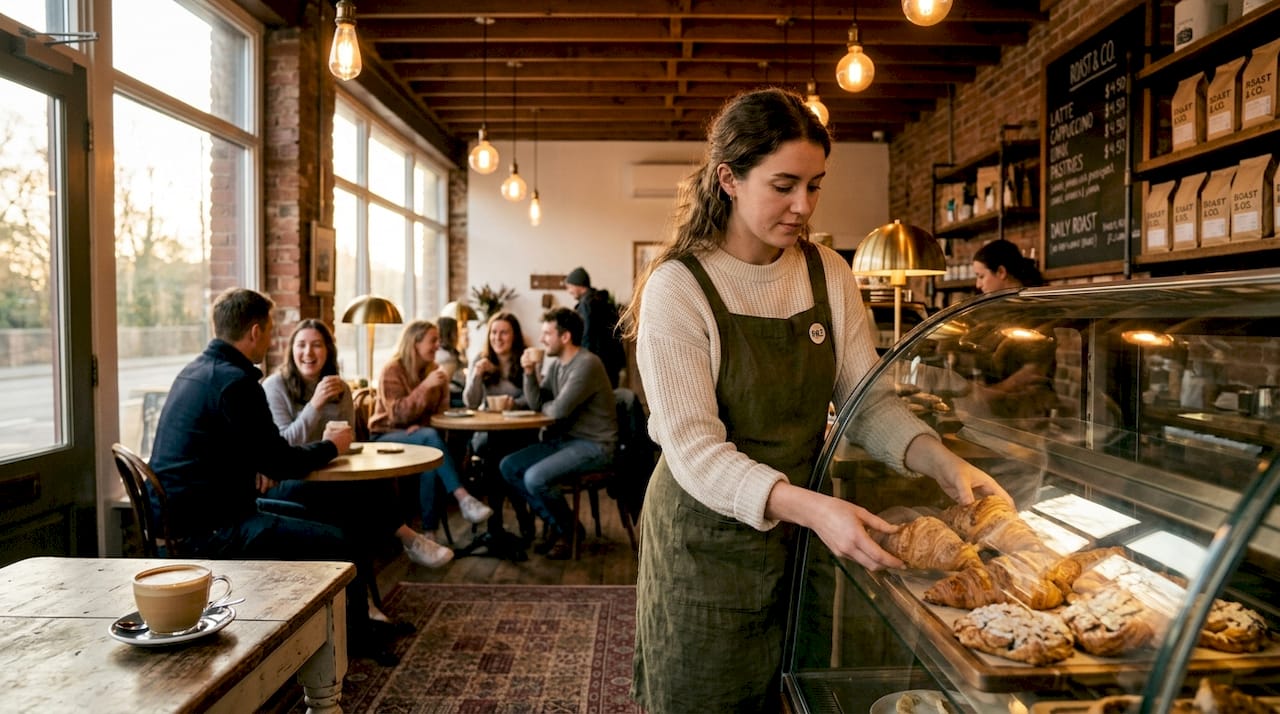
Warm lighting between 2700K and 3000K with layered ambient, task, and accent fixtures creates warmth and encourages customers to stay. The color temperature number refers to how “warm” or “cool” the light appears. Anything above 3500K starts to feel clinical, like a hospital waiting room. Below 2700K and the space can feel dim and murky. The sweet spot is right in that 2700 to 3000 range.
Layering means you are not relying on a single overhead source to do everything. Here is how to structure your lighting:
- Ambient lighting provides the overall base level of illumination for the whole room
- Task lighting goes directly over counters, preparation areas, and work tables
- Accent lighting highlights architectural details, art, shelving, or the bar itself
The technique that separates good cafés from genuinely beautiful ones is the pool of light concept. “Pools of light” with narrow beam angles between 15 and 24 degrees on tables boost intimacy and dwell time. When a table has its own defined circle of light, it feels like a private space even in a busy room. Customers feel less exposed and more settled.
Avoid harsh overhead downlights aimed straight down at seated guests. These create deep shadows under the eyes and make people look tired and unflattering. Interior designers call this the “raccoon eye” problem, and it is a fast way to make your café feel uncomfortable without knowing why.
Program your lighting to shift through the day. Bright and energizing at 8 AM for the morning rush. Warm and slightly dimmer by early afternoon. By 5 PM, dial it down further for a calm, intimate feel. Smart LED systems make this easy and often pay for themselves in reduced energy costs within 18 months.
Check out these cozy lighting ideas for practical layouts that apply these principles to real café spaces.
Master acoustics to keep conversations clear and create a welcoming soundscape
Walk into a café with bare concrete walls, exposed ceilings, and hard floors. Within ten minutes, the noise level forces you to raise your voice. Within twenty, you are exhausted. This is noise fatigue, and it is one of the leading reasons customers leave cafés earlier than they intended.
Controlling noise around 60 to 70 decibels with absorptive materials keeps customers comfortable and lingering. At 65 decibels, a normal conversation is easy and clear. Above 75, people start unconsciously tensing up and looking toward the exit.
The materials that absorb sound without looking industrial:
- Upholstered seating absorbs mid and high frequencies naturally
- Felt ceiling baffles hang vertically and are now available in colors and shapes that serve as art
- Acoustic ceiling tiles that mimic plaster or wood texture at a fraction of the install cost
- Heavy curtains and drapes on windows that double as visual warmth
- Rugs and runners on hard floors that immediately reduce echo and reverberation
Without acoustic panels, grinder noise echoes disrupt group conversations and acoustic treatment in zones reduces turnover loss significantly. The solution is not expensive. A single row of felt baffles above a seating cluster costs a few hundred dollars and changes the feel of that area completely.
Create two distinct acoustic zones. A quiet zone near the back or a side room works for solo workers and readers. A more energetic social zone near the front or communal tables suits groups and casual conversations. This zoning approach is a key element of cozy cafe ambiance because it gives every customer the environment they came for.
Pro Tip: Clap your hands once, sharply, in your empty café. If you hear a long, ringing echo, you have an acoustic problem that will drive customers away even if everything else is perfect. Fix the ceiling first — it is the largest reflective surface in the room.
Choose durable, stylish flooring and materials that age gracefully under heavy traffic
Flooring in a coffee shop takes punishment that most residential materials cannot handle. Spilled milk, constant foot traffic, moving chairs 200 times a day, and aggressive mopping. The wrong choice looks wrecked within two years. The right choice looks better with age.
Porcelain tiles with a PEI rating of 4 to 5 offer superior durability and slip resistance for high-traffic café areas. The PEI rating measures how well tile resists surface wear. A PEI 4 handles moderate to heavy foot traffic. PEI 5 is the top of the scale, rated for the heaviest commercial use. For a café that sees 200 to 500 people daily, PEI 4 is the minimum you should consider.
Polished concrete floors cost between $3 and $8 per square foot and paired with rugs reduce noise in open spaces. Concrete reads as modern coffee shop style when done well, but it is acoustically punishing without rugs and it can feel cold in both temperature and atmosphere.
Pro Tip: Before you commit to a flooring material, get a sample and drag a metal chair leg across it 50 times. If it scratches or scuffs visibly, it will look terrible within six months of daily use. This one test eliminates most cheap laminates immediately.
Here is how the main flooring options stack up:
| Material | Cost per sq ft | Maintenance | Acoustics | Comfort | Best use |
|---|---|---|---|---|---|
| Porcelain tile (PEI 4-5) | $4–$12 | Low | Poor alone | Moderate | Entry, service area |
| Polished concrete | $3–$8 | Low to medium | Poor alone | Low | Open floor with rugs |
| Luxury vinyl tile (LVT) | $3–$7 | Very low | Moderate | High | Seating zones |
| Hardwood (engineered) | $8–$15 | Medium | Good | High | Lounge areas |
Luxury vinyl tile is often dismissed as a budget option, but modern LVT mimics wood convincingly, handles spills without warping, and has a slight give underfoot that makes standing more comfortable for baristas. For seating areas in particular, it is an intelligent choice.
Decor elements comparison: flooring, lighting, seating for optimal impact
Choosing between design elements is easier when you see them side by side rather than evaluating each in isolation. Here is a comparison across the three major categories where coffee shop decor decisions carry the most weight.
Warm lighting at 2700K to 3000K with layered fixtures is the consistent preference for increasing dwell time across multiple studies and real-world café implementations.
| Element | Best option | Moderate option | Avoid |
|---|---|---|---|
| Lighting color | 2700K–3000K warm LED | 3000K–3500K neutral | 4000K+ cool white |
| Beam angle | 15°–24° spot for tables | 36° for ambient wash | Wide flood for entire ceiling |
| Seating (long stay) | Lounge chairs with cushions | Padded banquettes | Hard wooden seats only |
| Seating (quick visit) | Stool and counter height | Small bistro table | Sofa (wastes quick-service space) |
| Floor (service area) | Porcelain tile PEI 4-5 | Polished concrete with rug | Cheap laminate or thin vinyl |
| Acoustic treatment | Ceiling baffles plus upholstery | Rugs plus curtains | Bare hard surfaces throughout |
The pattern across all three categories is the same: the best option is not always the most expensive, but it is always the most intentional. A felt baffle that costs $80 outperforms $2,000 of exposed concrete in terms of customer experience. An LED bulb with the right color temperature makes a $300 pendant look like a designer piece.
Our take: the mistake most café owners make with decor
Here is the uncomfortable truth about café design: most owners spend their budget backward. They invest heavily in the espresso machine (visible, respected) and the signage (obvious marketing), then run out of money before addressing lighting, acoustics, and seating quality. The result is a café with a $10,000 machine behind a counter that customers leave after 15 minutes because the hard chairs and echo make them uncomfortable.
The cafés that build cult followings have something in common. They feel like a place you want to inhabit, not just visit. That quality is not accidental, and it is not primarily about coffee shop themes or a coherent Instagram aesthetic. It comes from the basic sensory experience: warm light on your face, a comfortable seat under you, and a sound level that lets you hear the person across the table.
We have seen the industrial coffee decor trend do real damage to small café businesses. Exposed pipes, concrete walls, metal stools, and warehouse lighting look striking in photos. In reality, they create cold, loud, uncomfortable spaces where the average visit is under 20 minutes. The customers who linger longest, order the most, and bring friends are almost always sitting somewhere warm, soft, and quiet.
If you are about to redesign your café or open a new one, spend your first design dollar on lighting. Then acoustics. Then seating comfort. The aesthetic layer — coffee house furnishings, wall art, tile patterns, plant arrangements — comes last and costs the least. When the fundamentals are right, even simple decor choices look intentional.
Elevate the whole experience with great coffee to match
A beautifully designed café deserves coffee that performs at the same level. At Z’s Coffee, we supply specialty coffee beans and brewing accessories to café owners worldwide who understand that the cup matters as much as the chair. Whether you are stocking a new location or upgrading your espresso program, our global coffee catalog includes single-origin beans, blends, and brewing equipment built for commercial and home use. Pair your redesigned space with coffee that gives customers one more reason to come back.
Frequently asked questions
What seating mix encourages customers to stay longer in a coffee shop?
Varied seating like lounge areas and high tables increases dwell time by serving different visit lengths, giving each customer the right environment for how long they plan to stay.
How does lighting affect customer behavior in cafes?
Layered warm lighting with focused pools of light on tables using narrow beam angles creates a sense of privacy and intimacy that naturally encourages customers to linger longer and order more.
What flooring materials are best for high-traffic coffee shop areas?
Porcelain tiles with a PEI 4 to 5 rating provide the best combination of durability, slip resistance, and design flexibility for busy café service areas.
How important is acoustic design in a coffee shop?
Proper acoustics with absorptive materials and zoned seating prevent noise fatigue, which is one of the primary reasons customers cut visits short and do not return.