TL;DR:
- Proper placement near outlets and good lighting is essential for a functional coffee bar.
- Combining style and practicality ensures the coffee station remains enjoyable and easy to use.
- Small space solutions like bar carts and wall shelves maximize usability without sacrificing design.
Designing a home coffee bar sounds simple until you’re standing in a kitchen corner with a French press, a grinder, and nowhere to put them. The real challenge is building something that looks like it belongs in a magazine but actually works at 6 a.m. when you’re half awake. Style and function are both non-negotiable, and finding the balance between them is where most people get stuck. This guide cuts through the noise by giving you real criteria, smart furniture picks, space-saving hacks, and practical appliance advice so you can build a coffee bar that fits your life and your home.
Table of Contents
- Start with smart setup: Space, lighting, and power
- Essential appliances and accessories for home coffee bars
- Furniture and style: Cabinets, carts, and stand-out surfaces
- Coffee bar ideas for small spaces and unique layouts
- Why balancing style and function makes your home coffee bar unforgettable
- Upgrade your coffee bar with specialty brews and accessories
- Frequently asked questions
Key Takeaways
| Point | Details |
|---|---|
| Plan your layout | Pick a convenient spot with outlets, smart lighting, and comfortable access for your coffee bar. |
| Stock essential tools | Equip your bar with must-have appliances, storage, and accessories for seamless brewing. |
| Choose stylish surfaces | Select furniture and finishes that fit your decor and are durable for daily use. |
| Adapt to your space | Creative solutions like bar carts or wall-mounted shelves let anyone fit a coffee bar into any home. |
| Balance form and function | Blending good looks and usability creates a home coffee bar you’ll love to use every day. |
Start with smart setup: Space, lighting, and power
The first decision you make about your home coffee bar, where to put it, shapes everything else. A beautiful setup in a dark corner with no outlets nearby will frustrate you every single morning. Coffee bar setup tips confirm that dedicated space near outlets and good lighting is the non-negotiable foundation, whether you use a console table, a cabinet, or a bar cart as your base.
Think about traffic patterns first. You want your bar in a spot that doesn’t create a bottleneck when multiple people are moving through the kitchen in the morning. A quiet corner of the dining room or a built-in kitchen nook can work just as well as a dedicated counter section, especially if you run a power strip along the wall and add a few well-placed hooks.
Here’s a quick checklist for your setup:
- At least one standard outlet within reach (two is better for grinder and kettle simultaneously)
- Natural or warm overhead lighting to avoid eye strain early in the morning
- A flat, stable surface at a comfortable working height
- Enough clearance above for your tallest appliance
- Easy-to-clean flooring or a small mat underneath
“A coffee bar placed near good light and a power source transforms a simple corner into a genuine morning ritual spot.” Thoughtful placement is the first upgrade most people skip.
Pro Tip: Install a USB outlet or a smart plug at your coffee bar station. You can schedule your kettle to pre-heat before your alarm goes off, which saves real time during rushed mornings.
Furniture choices matter here too. A console table with a lower shelf gives you extra storage without taking up floor space. A vintage cabinet with doors hides clutter when guests come over. A bar cart on wheels gives you the flexibility to roll your setup onto a sunny balcony on weekends. Each option solves a different problem, so think about your daily routine before committing.
Essential appliances and accessories for home coffee bars
Once your location is locked in, it’s time to think about what actually goes on the bar. The goal is a setup that makes excellent coffee without turning your counter into an obstacle course. Recommended appliances include the essentials: coffee maker, grinder, mugs, storage for beans and accessories, with a counter height of 36 inches being ideal for comfortable workflow.
Here are the core appliances and accessories worth having:
- Coffee maker (drip, espresso, or pour-over depending on your preference)
- Burr grinder for consistent grind size and better flavor extraction
- Electric kettle with temperature control for precision brewing
- Mugs and cups stored within arm’s reach
- Airtight canisters to keep beans fresh and away from light
- Tamper, spoon rest, and knock box if you’re pulling espresso shots
| Appliance | Function | Recommended space |
|---|---|---|
| Espresso machine | Pulls concentrated shots | 12-18 inches wide |
| Drip coffee maker | Brews full pots | 10-14 inches wide |
| Burr grinder | Grinds beans fresh | 6-10 inches wide |
| Electric kettle | Boils water precisely | 6-8 inches wide |
| Milk frother | Steams and froths milk | 4-6 inches wide |
For smaller setups, dual-purpose items are a smart investment. A frother that also steams milk for lattes means one less device taking up real estate. A canister set that doubles as a decorative element adds style while doing practical work. Explore essential coffee accessories to see which tools actually improve your brew versus which ones just look good on the shelf.
Pro Tip: Arrange your appliances in the order you use them, kettle and grinder toward the back, your cup and brewer toward the front. This simple workflow adjustment cuts your morning prep time noticeably and keeps the bar feeling organized.
If you want to go deeper on technique, learning to master home brewing steps helps you understand why placement and order matters as much as the equipment itself.
Furniture and style: Cabinets, carts, and stand-out surfaces
Your furniture sets the entire tone. A sleek marble-top cabinet says something completely different than a warm Scandinavian wood console or a breezy boho rattan shelf unit. The good news is that all three can work beautifully depending on your home’s existing aesthetic. Bar cabinet inspiration highlights that marble-top cabinets and wood consoles are among the most popular and durable choices, especially for surfaces that need to handle daily spills and heat.
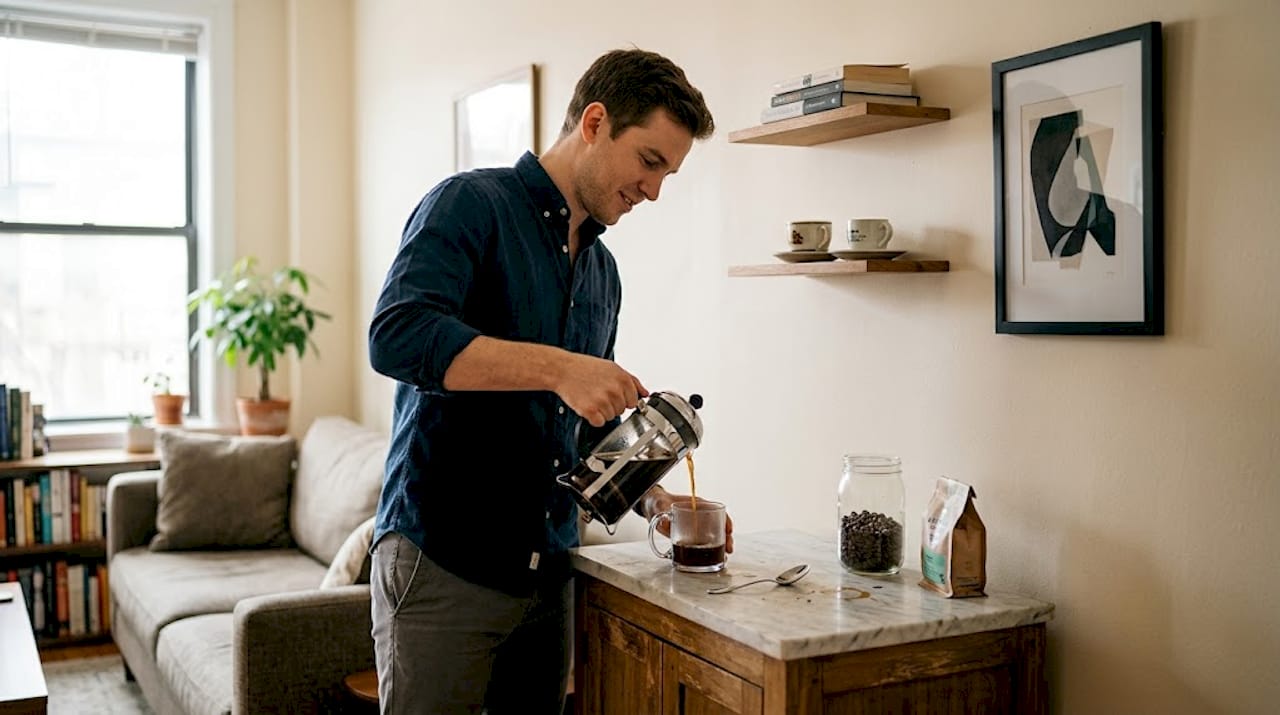
Here’s how the most common materials compare:
| Material | Style fit | Durability | Ease of cleaning |
|---|---|---|---|
| Marble | Modern, luxe | High | Easy (seal annually) |
| Solid wood | Warm, classic | Very high | Moderate |
| Rattan | Boho, relaxed | Moderate | Easy |
| Laminate | Minimalist | High | Very easy |
| Butcher block | Rustic, cozy | High | Moderate |
Most surface stains wipe off in under 30 seconds on sealed marble or laminate, which matters more than people realize when you’re dealing with daily coffee grounds and drips. Durability and quick cleaning are the two practical checkboxes that often get overlooked in the excitement of choosing a pretty surface.
Beyond the furniture itself, decorative touches are what make your coffee bar feel intentional rather than thrown together. Consider these elements:
- A framed piece of art or a small chalkboard menu above the bar
- A small tray to corral loose items and create visual order
- A single potted plant (a small herb or succulent works well in low-light kitchens)
- Matching mugs displayed on hooks or a small mug tree
- A linen hand towel draped neatly over the bar edge
Even one or two of these additions shift the bar from functional to genuinely inviting. The goal is a space that makes you want to spend time there, not just a counter where appliances live.
Coffee bar ideas for small spaces and unique layouts
Not everyone has a spacious kitchen with open counter real estate. That’s fine. Some of the most creative and functional coffee bars exist in tight spaces, and honestly, constraints often push you toward smarter decisions. Space-saving coffee bar ideas confirm that bar carts for mobility and under-cabinet hidden stations are among the most effective solutions, and that even 12 extra inches of workspace can dramatically change how usable your setup feels.
Here are five specific solutions for small or unconventional spaces:
- Bar cart setup. A rolling cart with two or three shelves gives you a complete station that tucks into a corner or rolls out when needed. It’s the most flexible option for renters or people who like to rearrange.
- Corner nook conversion. Dead corners are underused in most kitchens. A small L-shaped shelf unit or a compact cabinet fits neatly into a corner and uses space that would otherwise collect clutter.
- Wall-mounted floating shelves. Go vertical. Two or three staggered shelves above a narrow counter hold mugs, canisters, and decorative items without using any floor or counter space.
- Under-cabinet pullout station. A shallow pullout drawer or slide-out shelf under existing cabinets creates a hidden prep area that disappears when not in use. Great for minimalist kitchens.
- Closet conversion. A small hallway or pantry closet with the door removed becomes a stunning built-in coffee nook. Add a light strip, a few shelves, and an outlet and it looks completely intentional.
Pro Tip: Think in vertical zones. Bottom shelf for heavy items like spare beans and equipment, middle for daily-use appliances, top for mugs and decorative pieces. This keeps your most-used items at eye level and reduces daily reaching and bending.
If you’re building out your bar and want to expand your drink options, learning to make cold brew at home is a natural next step. And if you want your results to improve, choosing coffee beans thoughtfully makes more difference than most equipment upgrades.
Why balancing style and function makes your home coffee bar unforgettable
Here’s something we’ve noticed across hundreds of coffee setups: the most beautifully styled bars are often the most frustrating to use. Someone chooses a gorgeous marble cabinet, fills it with matching ceramics, and then realizes they have no room for a grinder and nowhere to rest a portafilter. They bought a piece of furniture and called it a coffee bar. That’s not the same thing.
The bars that people actually love, and keep using years later, are the ones where every design decision also solves a problem. The tray that corrals loose items also makes the bar look curated. The open shelving that shows off mugs also makes them accessible in seconds. Style and function aren’t in competition. They’re the same conversation.
Focusing on selecting coffee accessories that serve both purposes is one of the smartest moves you can make early in the process. Start with small upgrades that improve your daily mood and your daily routine at the same time, and the rest of the bar will take shape around them naturally.
Upgrade your coffee bar with specialty brews and accessories
You’ve thought through the layout, the furniture, the workflow. Now comes the most enjoyable part: filling your bar with coffee worth brewing.

At Z’s Coffee, we carry premium coffee beans sourced from regions known for exceptional flavor, so your bar always has something worth waking up for. If convenience is part of your morning routine, our instant coffee options deliver real specialty quality without the extra steps. For warm-weather mornings, our cold brew selections pair perfectly with the small-space bar setups covered above. Explore the full collection and find the beans, brews, and accessories that make your coffee corner truly yours.
Frequently asked questions
What is the best location for a home coffee bar?
Choose a spot near power outlets and good lighting, such as a kitchen corner or dining room nook, for easy access and comfort. Near outlets and lighting is the single most important placement factor for daily usability.
How much space do I need for a coffee bar?
A coffee bar can fit in as little as 24 inches of counter space, but 36 inches is ideal for workflow and storage. Even adding 12 inches of workspace makes a noticeable difference in how comfortable the setup feels.
What are some affordable coffee bar furniture options?
Bar carts for mobility are a top pick for budget-friendly setups, along with repurposed console tables and durable laminate cabinets that offer great style without high cost.
Which accessories are essential for every home coffee bar?
The non-negotiables are a coffee maker, a burr grinder, mugs within reach, and organized storage for beans and brewing tools to keep your counter clean and your workflow smooth.
Recommended
- Essential coffee accessories list for perfect brewing 2026 – Z’s Coffee
- Step by step coffee making: master home brewing – Z’s Coffee
- Master perfect coffee at home: brewing guide for 2026 – Z’s Coffee
- Brew perfect espresso at home: expert guide 2026 – Z’s Coffee
- Най-новите трендове при кафета за повече енергия и фокус – Neurofuel™️