TL;DR:
- Experimental coffee processing involves intentionally manipulating fermentation conditions and microbial populations to create complex flavor profiles. It emphasizes active control over fermentation as a means to design flavor, with techniques like anaerobic fermentation and microbial inoculation doubling ester production and enhancing sensory qualities. Successful implementation requires precise documentation, adjusted roasting profiles, and consistent practices to ensure repeatability and quality.
Experimental coffee processing is defined as the intentional manipulation of fermentation conditions, microbial populations, and environmental variables to produce distinct and complex flavor profiles in green coffee beans. Unlike washed, natural, or honey methods, experimental processing treats fermentation as a precision tool rather than a passive step. Researchers at institutions like UNSW Sydney and ZHAW, alongside specialty coffee educators like The Way to Coffee, have pushed defining experimental coffee processes into mainstream specialty discourse. The result is a category where science and sensory craft meet directly on the cupping table.
How do experimental processes differ from traditional methods?
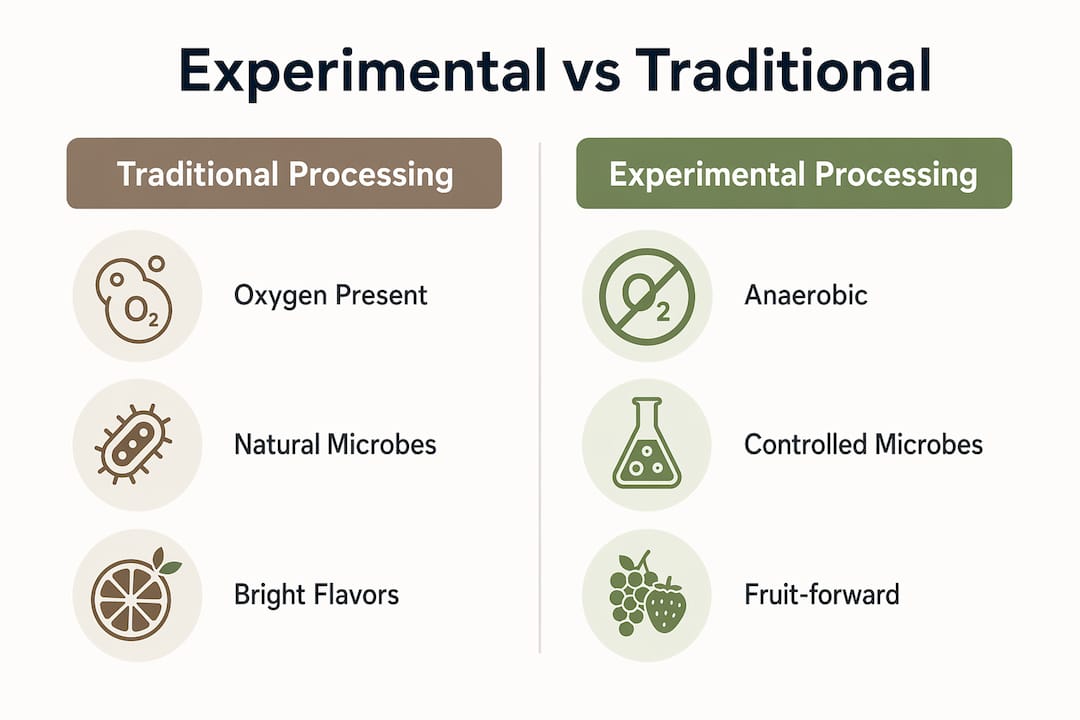
The defining difference between traditional and experimental coffee processing is intentional microbial engineering to shape flavor precursors before roasting. Traditional methods rely on ambient microbes and natural conditions. Experimental methods take direct control.
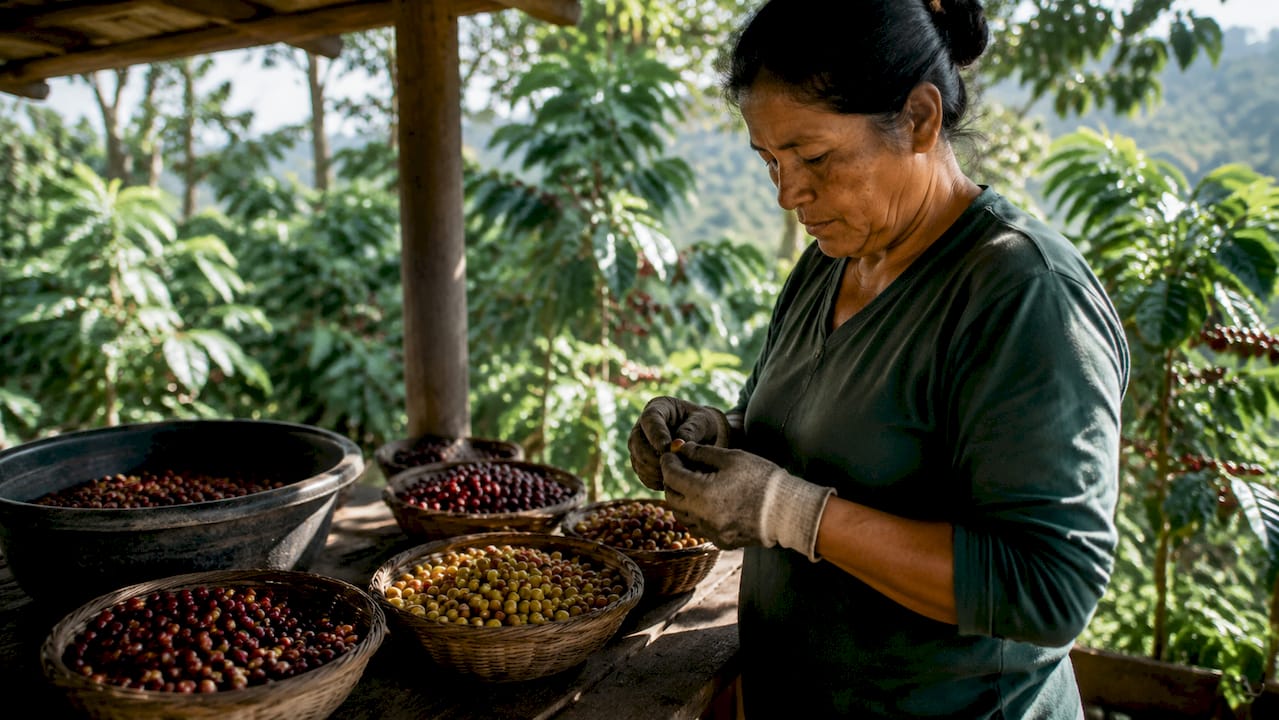
Washed processing strips the cherry and mucilage before fermentation, producing clean, bright cups with high acidity. Natural processing dries the whole cherry, allowing ambient fermentation to add fruit-forward sweetness. Honey processing sits between those two, leaving varying amounts of mucilage on the bean during drying. All three methods are defined by what producers allow to happen. Experimental processing is defined by what producers make happen.
Traditional washed methods represent about 60% of specialty coffee production. Experimental techniques like anaerobic fermentation are a growing segment, driven by consumer demand for complexity. That shift reflects a broader move in specialty coffee from terroir-only thinking toward process-driven flavor design.
The comparison below shows how these methods differ across key variables:
| Processing Method | Oxygen Presence | Microbial Control | Typical Flavor Profile |
|---|---|---|---|
| Washed | High | None | Clean, bright, high acidity |
| Natural | High | None | Fruity, sweet, wine-like |
| Honey | Moderate | None | Balanced, mild sweetness |
| Anaerobic Fermentation | None (sealed) | Partial | Tropical fruit, wine, funk |
| Carbonic Maceration | CO2-rich | Partial | Perfumed, floral, complex esters |
| Microbial Inoculation | Variable | Full | Repeatable, targeted flavor notes |
Pro Tip: When selecting an experimental coffee, ask the producer for fermentation duration and the microbial strains used. That information tells you more about expected flavor than the origin alone.
What are the main types of experimental coffee processing?
Experimental coffee processing covers several distinct techniques, each manipulating fermentation in a different way. Understanding these methods helps you predict what will be in your cup before you ever open the bag.
-
Anaerobic fermentation: Coffee cherries or depulped beans are sealed in oxygen-free tanks. Fermentation lasts 48–120+ hours, with restricted oxygen steering yeast and bacteria metabolism toward tropical fruit and wine-like compounds. The longer the fermentation, the more intense and unusual the flavor profile becomes.
-
Carbonic maceration: Borrowed directly from winemaking, this method places intact coffee cherries in a CO2-rich environment. Fermentation occurs intracellularly inside the cherry before the skin breaks down. The result is a highly aromatic cup with complex, perfumed esters that no other method reliably produces. The terms “anaerobic” and “carbonic maceration” are frequently confused. Carbonic maceration specifically requires intact cherries and intracellular fermentation under CO2. Anaerobic fermentation can use depulped beans in sealed tanks.
-
Controlled microbial inoculation: Producers introduce specific yeast and bacterial cultures, such as Lactiplantibacillus plantarum and Saccharomyces cerevisiae, at defined points in fermentation. This approach produces repeatable flavor modulation via ester production, which is something ambient fermentation cannot guarantee. It is the most science-driven method in the experimental category.
-
Thermal shock processing: Rapid temperature changes are applied during or after fermentation to halt microbial activity at a precise moment. This preserves volatile aromatic compounds that would otherwise degrade. Producers use thermal shock to lock in specific flavor states before the bean moves to drying.
Each of these methods produces a fundamentally different sensory outcome. Anaerobic lots tend toward bold, fruit-forward intensity. Carbonic maceration delivers floral complexity. Microbial inoculation offers consistency and targeted flavor design. Thermal shock focuses on aroma preservation.
How do processing innovations shape coffee quality?
Science is now directly informing how experimental coffee methods are designed and evaluated. The research coming out of institutions like UNSW Sydney and ZHAW shows that flavor is not just a product of origin. It is a product of process decisions made at every stage from cherry to cup.
Controlled microbial inoculation can nearly double acetate ester production, improving cupping scores by up to 2 points. That is a significant measurable gain from a single process variable. Acetate esters are responsible for fruity, floral top notes in coffee, so doubling their concentration directly translates to a more complex and appealing sensory experience.
UNSW Sydney researchers demonstrated that ultrasonic extraction uses acoustic cavitation to extract espresso-strength coffee at room temperature in under 3 minutes, reducing energy consumption by 75%. That finding matters for experimental processing because it shows how physical variables, not just biological ones, can reshape extraction outcomes without heat-driven degradation of delicate aromatics.
ZHAW research on extract chilling found that room-temperature chilling surfaces can match or outperform frozen ones for volatile aroma retention. Coffee brewed over room-temperature spheres retained equal or better volatile compounds than frozen alternatives. This challenges the assumption that colder is always better when preserving aroma, and it has direct implications for how experimental lots should be served and evaluated.
Microbial metabolism during fermentation produces organic acids, alcohols, and esters that are absorbed into the bean before roasting. These compounds become the raw material for roast aroma and taste. Controlling which microbes are active, and for how long, is the core lever that experimental processing pulls to shape the final cup.
Pro Tip: When cupping an experimental lot for the first time, evaluate it at multiple temperatures. Many of the volatile aromatics unlocked by anaerobic or carbonic maceration methods express most clearly as the cup cools from 160°F to 120°F.
What challenges do producers and roasters face?
Working with experimental coffees is not a plug-and-play upgrade from traditional processing. It introduces new variables that require discipline, documentation, and calibration at every stage.
Producers and roasters who work seriously with these methods follow a consistent set of practices:
-
Document fermentation parameters precisely. Record tank temperature, pH at regular intervals, microbial strains used, and total fermentation duration. Without this data, replicating a successful lot is nearly impossible.
-
Control ambient temperature during fermentation. Even a 5°F shift in tank temperature can change microbial activity enough to alter the flavor profile significantly. Producers in tropical climates often ferment at night or use insulated tanks to manage this.
-
Adjust roast profiles for experimental lots. Anaerobic coffees respond differently to heat, requiring lower charge temperatures and extended development time to avoid overdevelopment. Roasters who apply standard profiles to experimental lots often destroy the very compounds the producer worked to create.
-
Source with supply consistency in mind. Experimental lots are typically small-batch and seasonal. Roasters building menus around these coffees need direct relationships with producers to secure consistent supply across harvest cycles.
-
Educate your customers. Experimental coffees can taste unfamiliar, even off-putting, to drinkers expecting a conventional cup. Clear tasting notes and processing explanations on packaging reduce returns and build loyalty among curious buyers.
The coffee processing methods that produce the most exciting results also carry the highest risk of inconsistency. That tension is the central challenge for anyone working seriously in this space.
Key takeaways
Experimental coffee processing delivers measurable flavor gains when fermentation variables are controlled with precision and roasting profiles are adjusted to match the process.
| Point | Details |
|---|---|
| Fermentation is the core lever | Controlling atmosphere, microbes, and duration shapes flavor precursors before roasting begins. |
| Microbial inoculation doubles esters | Using Lactiplantibacillus plantarum and Saccharomyces cerevisiae can nearly double acetate ester production. |
| Carbonic maceration is distinct | It requires intact cherries and intracellular fermentation under CO2, not just an oxygen-free tank. |
| Roasting requires recalibration | Anaerobic and experimental lots need lower charge temperatures and longer development time. |
| Documentation enables repeatability | Recording pH, temperature, and microbial strains is the only way to replicate a successful experimental lot. |
The part of experimental coffee that most guides skip
I have spent years tasting experimental lots from producers across Ethiopia, Colombia, and Guatemala, and the thing that consistently surprises me is how often the process story is more interesting than the cup itself. That is not a criticism. It is an observation about where the real value of experimental processing lives.
The flavor gains from anaerobic fermentation or carbonic maceration are real. The ZHAW and UNSW research confirms what experienced cuppers have been saying for years: process decisions create measurable, repeatable sensory outcomes. But the deeper shift happening in specialty coffee is not just about flavor complexity. It is about accountability. When a producer documents their fermentation parameters and inoculates with specific microbial cultures, they are making a claim about their craft that can be verified. That changes the relationship between producer and roaster, and between roaster and consumer.
What I find most exciting about this category is not the wildest anaerobic lot on the market. It is the producers who are using controlled inoculation to make experimental processing consistent. Consistency at the experimental level is genuinely hard. It requires infrastructure, knowledge, and discipline that most small farms do not have access to yet. The producers who crack that problem will define what specialty coffee looks like in the next decade.
If you are a roaster or enthusiast just entering this space, start with carbonic maceration lots from established producers before chasing the most extreme anaerobic fermentations. The flavor logic is cleaner, the sensory education is faster, and the cups are more immediately rewarding.
— zachary
Explore experimental and specialty coffees at Zscoffee
Zscoffee carries a curated selection of specialty and experimental coffee lots sourced from producers who document their fermentation methods and prioritize flavor precision. Whether you are looking for your first carbonic maceration experience or want to compare anaerobic lots side by side, the specialty coffee collection at Zscoffee gives you direct access to process-driven coffees from around the world.

Zscoffee also stocks brewing accessories built for the kind of careful extraction that experimental coffees deserve. Explore the full product range to find everything from precision brewing tools to travel gear that keeps your cup at the right temperature for volatile aroma expression. Experimental coffee rewards careful brewing. Zscoffee makes it easy to get both the coffee and the tools in one place.
FAQ
What is experimental coffee processing?
Experimental coffee processing is the intentional control of fermentation variables, including atmosphere, microbial populations, and duration, to produce distinct flavor profiles in green coffee beans. It differs from traditional methods by treating fermentation as an active design tool rather than a passive step.
How does anaerobic fermentation differ from carbonic maceration?
Anaerobic fermentation seals depulped beans or whole cherries in oxygen-free tanks for 48–120+ hours. Carbonic maceration specifically requires intact cherries placed in a CO2-rich environment, where fermentation begins intracellularly before the cherry skin breaks down.
Can microbial inoculation improve cupping scores?
Yes. Controlled inoculation using Lactiplantibacillus plantarum and Saccharomyces cerevisiae can nearly double acetate ester production and improve cupping scores by up to 2 points, according to research cited by The Way to Coffee.
Why do roasters need to adjust profiles for experimental lots?
Anaerobic and other experimental coffees respond differently to heat than washed or natural lots. Lower charge temperatures and extended development time are required to avoid overdeveloping the volatile compounds that experimental processing creates.
Does extract chilling help preserve experimental coffee aromas?
ZHAW research found that extract chilling preserves volatile aroma compounds effectively, and room-temperature chilling surfaces can match or outperform frozen ones. For experimental lots with delicate aromatic profiles, chilling immediately post-extraction is worth testing as a standard brewing variable.