Most coffee lovers spend time obsessing over origin, roast level, or grind size. But there’s a step that happens long before the roaster ever touches the bean, and it shapes your cup just as powerfully. Coffee processing, the series of steps that transform a ripe cherry into a dried green bean, is one of the most overlooked variables in specialty coffee. Understanding it changes how you shop, how you taste, and how you talk about coffee. This guide breaks down what processing actually is, the three major methods, and how you can start tasting the difference in every brew.
Table of Contents
- What is coffee processing?
- The three main coffee processing methods
- How processing shapes flavor and quality
- Choosing and appreciating processed coffees
- Explore specialty coffees and gear to enhance your tasting journey
- Frequently asked questions
Key Takeaways
| Point | Details |
|---|---|
| Processing shapes flavor | How coffee is processed after harvest determines clarity, body, and taste more than most realize. |
| Three main methods | Washed, natural, and honey processing offer distinct flavor profiles and environmental impacts. |
| Know what you’re tasting | Understanding processing helps you choose beans and brewing methods for your favorite cup. |
| Application at home | Use processing info to shop smarter and appreciate new flavors with confidence. |
What is coffee processing?
Coffee processing covers everything that happens between picking a ripe coffee cherry and delivering a dried, stable green bean ready for roasting. The coffee cherry is a fruit, and like any fruit, it has layers: skin, pulp, mucilage (a sticky layer), parchment, and finally the seed we call the bean. Processing removes those layers in different ways, and each approach leaves a distinct fingerprint on the final flavor.
Here are the core steps involved in most processing methods:
- Harvesting: Ripe cherries are picked by hand or machine.
- Sorting: Damaged or unripe cherries are removed.
- Pulping: The outer skin and sometimes the pulp are stripped away.
- Fermentation: Natural or controlled fermentation breaks down remaining fruit layers.
- Washing: Water removes fermented residue from the bean surface.
- Drying: Beans are dried on raised beds or patios until moisture stabilizes.
Not every method uses all these steps. That’s exactly what makes processing so interesting.
“Processing impacts flavor, body, and acidity; common methods include washed, natural, and honey, influenced by climate and market demand.”
Think of processing as the bridge between the farm and the roaster. Just as coffee origin impact shapes the raw potential of a bean, processing determines how much of that potential reaches your cup. And just like coffee varietals and brewing choices, the processing method is a creative decision with real consequences for taste.
The three main coffee processing methods
With a sense of what coffee processing is, let’s explore the three most widely used methods and how each one influences your coffee experience.
1. Washed (wet) processing
- Cherries are pulped to remove the outer skin.
- Beans ferment in water tanks to loosen the mucilage.
- Beans are thoroughly washed with large amounts of water.
- Clean beans are dried on raised beds or patios.
Washed coffees are known for their clarity. The fruit is removed early, so what you taste is almost purely the bean itself, bright, clean, and often high in acidity.
2. Natural (dry) processing
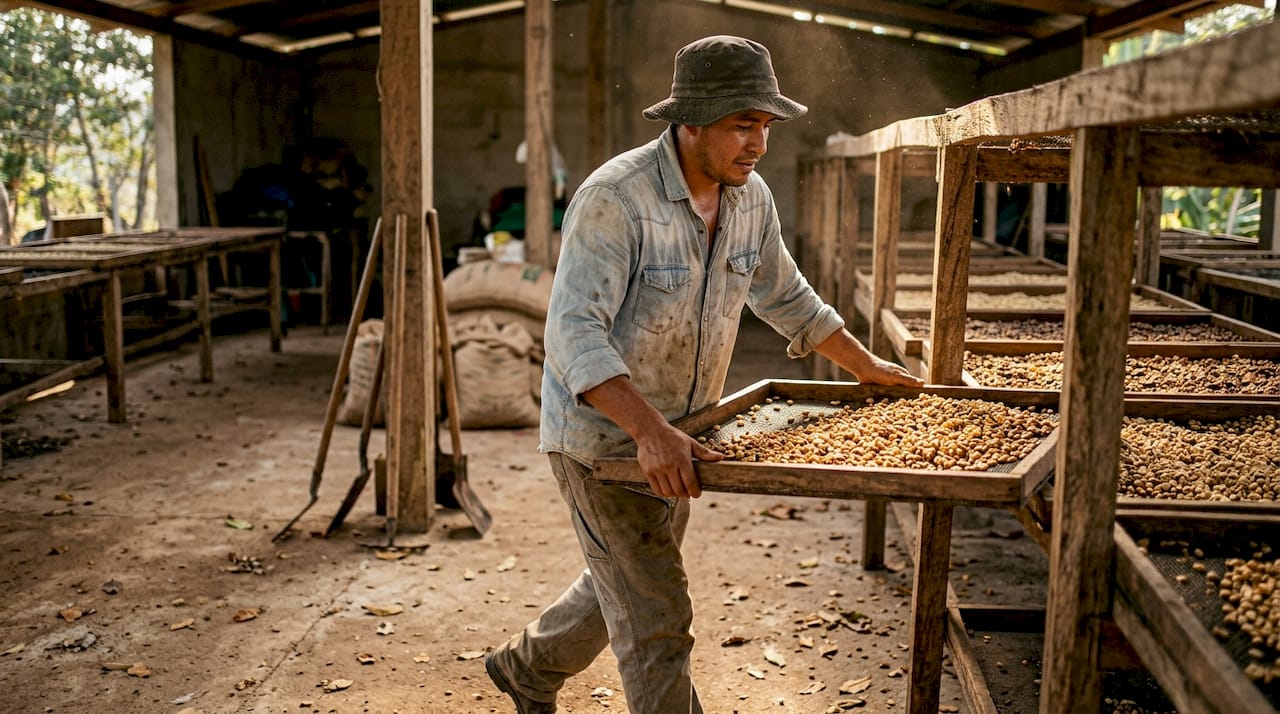
- Whole cherries are spread out to dry in the sun, fruit intact.
- Cherries are turned regularly to prevent mold.
- After weeks of drying, the dried fruit is hulled away mechanically.
- Beans are sorted and bagged for export.
Natural processing uses no water at all. The bean absorbs sugars and flavors from the drying fruit, producing heavy body, low acidity, and intense sweetness.
3. Honey processing
- The outer skin is removed, but some or all of the mucilage is left on.
- Beans dry with this sticky layer still attached.
- The amount of mucilage left determines the “color” (yellow, red, or black honey).
- Dried beans are hulled and sorted.
Honey processing sits between washed and natural. It offers sweetness and body without the full fruit intensity of a natural.
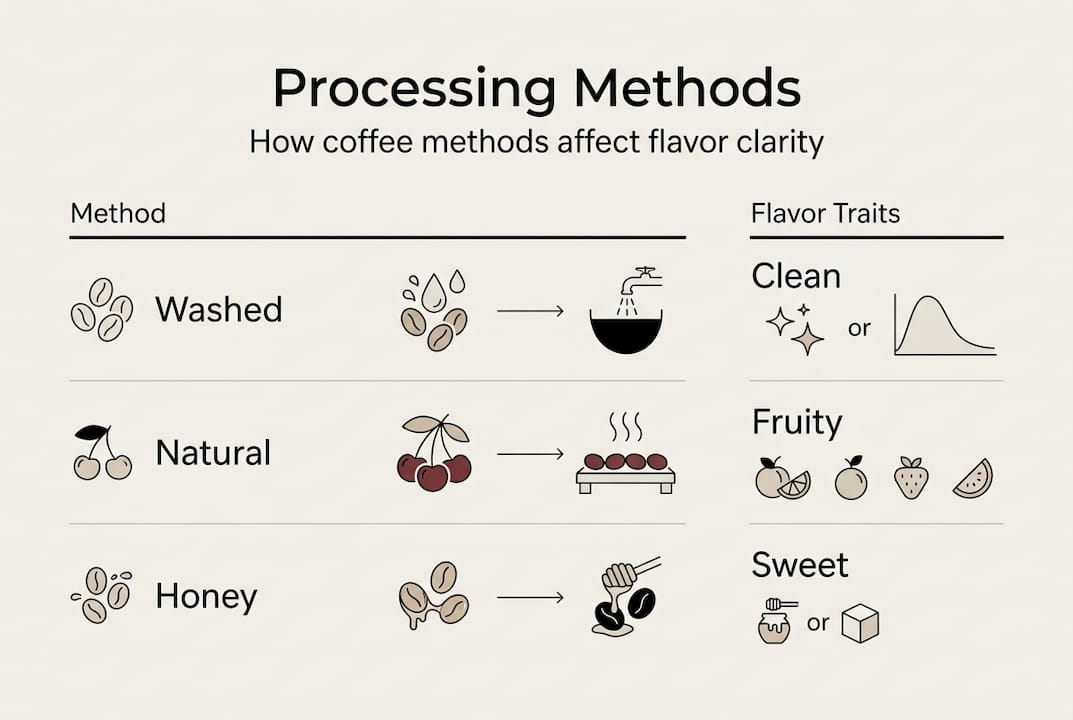
Here’s a quick comparison to make the differences concrete:
| Feature | Washed | Natural | Honey |
|---|---|---|---|
| Water use | High | None | Low |
| Body | Light to medium | Full | Medium to full |
| Acidity | High | Low | Medium |
| Sweetness | Low to medium | High | Medium to high |
| Flavor clarity | Very high | Lower | Moderate |
| Complexity | Bean-forward | Fruit-forward | Balanced |
Regions choose their method based on practical realities. Ethiopia and Kenya favor washed processing because water is available and markets reward clean, bright cups. Brazil and Ethiopia also produce naturals because dry climates make sun drying reliable. Costa Rica pioneered honey processing as a way to save water while still developing sweetness. As noted, washed uses significant water while natural uses none, and honey balances both based on water access and market demand.
Pro Tip: If you care about environmental impact, natural and honey processed coffees use far less water than washed. But flavor experimentation is just as valid a reason to try all three. Start with a washed Ethiopian and a natural Brazilian side by side to feel the contrast immediately.
For a deeper look at how these choices connect to coffee quality standards, it helps to understand that processing is evaluated as part of the specialty grading process. Exploring different coffee flavor profiles becomes much easier once you know which processing method produced them. And if you’re curious about how processing interacts with species, check out how coffee bean types respond differently to each method.
How processing shapes flavor and quality
Once you know the basic methods, it’s eye-opening to see how those choices directly transform coffee’s aroma and taste.
The processing choice drives clarity, acidity, body, and sweetness more than most consumers realize. Many people assume origin is everything, but two coffees from the same farm, processed differently, can taste like completely different beverages.
Here’s what each method highlights in your cup:
- Washed: Bright acidity, clean finish, floral or citrus notes, lighter body. The terroir of the bean shines through without fruit interference.
- Natural: Blueberry, strawberry, or tropical fruit notes, heavy body, wine-like complexity, lower acidity. The drying fruit essentially ferments around the bean.
- Honey: Stone fruit sweetness, smooth body, mild acidity, caramel or brown sugar undertones. A crowd-pleasing middle ground.
Processing also affects coffee aroma in a big way. Natural processed coffees often have a fermented, almost boozy aroma that surprises first-time drinkers. Washed coffees tend toward clean, tea-like aromatics. Honey processed coffees often smell warm and sweet before you even brew them.
Statistic callout: Processing can have as much impact on flavor as the coffee’s country of origin or genetic variety. This is why specialty roasters always list the processing method alongside origin on their bags.
Pro Tip: You can identify processing by flavor cues alone. If your coffee tastes like blueberries or red wine with a thick, syrupy body, it’s almost certainly a natural. If it’s crisp, bright, and almost tea-like, it’s likely washed. Honey processed coffees often taste like ripe peaches or apricots with a smooth, round finish. Use these cues as your personal flavor map.
Pairing your knowledge of processing with coffee flavor pairing ideas opens up a whole new dimension of enjoyment. You’ll start matching your coffee to food, mood, and brewing method with much more intention.
Choosing and appreciating processed coffees
Armed with a sense of how processing changes flavor, let’s get practical. How can you use this information to shop smarter and taste with more intention?
First, learn to read the label. Specialty roasters almost always list the processing method on the bag or product page. Look for words like “washed,” “natural,” “honey,” “wet-hulled” (a method common in Sumatra), or “anaerobic” (a newer experimental style). If the label doesn’t mention processing, that’s a signal the roaster may not prioritize transparency.
Here’s a step-by-step approach to tasting with processing in mind:
- Choose one variable at a time. Buy two coffees from the same country but different processing methods.
- Brew them identically. Same grind, same water temperature, same ratio.
- Smell before you sip. Note the aroma differences first.
- Taste side by side. Focus on acidity, sweetness, body, and finish.
- Write it down. Even a few words help you build a personal flavor vocabulary.
When choosing coffee based on your preferred flavor profile, consider this:
- Love bright, clean, complex cups? Go washed.
- Prefer sweet, fruity, full-bodied coffee? Try natural.
- Want something balanced and approachable? Honey is your starting point.
- Curious about earthy, bold, low-acid coffee? Look for wet-hulled Sumatran beans.
As noted, processing is often selected according to climate, resources, and market demand, which means the method on your bag tells a story about the farm’s environment and priorities. That context makes every cup more interesting.
Pairing the right brewing accessories with your chosen processing style matters too. A pour-over highlights the clarity of a washed coffee beautifully, while a French press suits the heavy body of a natural. Also pay attention to coffee freshness packaging, because even the best processed coffee loses its character if stored poorly. And if you want to go deep on origin stories, single origin coffee is where processing knowledge really pays off.
Explore specialty coffees and gear to enhance your tasting journey
Ready to taste the difference for yourself? The best way to understand processing is to experience it directly, cup by cup.

At Z’s Coffee, we carry a curated selection of specialty coffees that represent different processing methods, so you can build your palate with intention. If you want something truly unexpected, our coffee with mushrooms medium roast brings a unique earthy depth that pairs beautifully with the sweetness of honey processed beans. And for those who want to take their tasting ritual on the road, our travel mug with a handle keeps your brew at the perfect temperature wherever you go. Explore, compare, and let your taste buds lead the way.
Frequently asked questions
Is coffee processing the same as roasting?
No. Coffee processing covers steps after picking the cherry on the farm, while roasting is a separate stage that transforms the dried green bean much later in the supply chain.
Which coffee processing method is considered best?
There is no single best method. Washed, natural, and honey each emphasize different flavors, and the choice depends on environment and consumer preference rather than one being objectively superior.
Does processing affect caffeine levels in coffee?
Not significantly. Processing affects taste but has a negligible effect on caffeine levels, which depend mostly on the coffee variety and species.
How can I tell which processing method my coffee underwent?
Look for details on the bag or product description. Specialty roasters typically list washed, natural, or honey directly on the label, and flavor cues like fruit intensity and body can also point you in the right direction.