TL;DR:
- Natural process coffee retains the fruit, pulp, and fermentation, producing complex and fruity flavors.
- Proper drying and environmental control are crucial to prevent mold, off-flavors, and ensure quality.
- Tasting and brewing natural process coffee highlights its wild, unpredictable character and unique terroir.
Most coffee drinkers assume processing is an invisible step, something that happens between the farm and their cup without meaningful consequence. That assumption sells the natural process dramatically short. Natural process coffee, sometimes called dry process, can taste like biting into a ripe blueberry, sipping a fruit wine, or catching a whiff of tropical flowers — all from a single cup of black coffee. Whether you’ve stumbled across the term at a specialty roaster or spotted it on a bag at a farmers market, this guide will walk you through exactly what the natural process is, why it creates such remarkable flavor, and how to brew it in a way that makes those flavors sing.
Table of Contents
- What is natural process coffee?
- How the natural process shapes coffee flavor
- Environmental factors and quality challenges
- Choosing, brewing, and enjoying natural process coffee
- A nuanced view: the artistry and unpredictability of natural process coffee
- Explore natural process coffees and premium brews with Z’s Coffee
- Frequently asked questions
Key Takeaways
| Point | Details |
|---|---|
| How natural process works | Coffee cherries are dried whole, developing unique and fruity flavors. |
| Flavor differences | Natural process yields bolder, wine-like notes compared to washed coffee’s cleaner taste. |
| Quality challenges | Weather and precise drying are critical to prevent mold and off-flavors in natural process coffee. |
| Brewing best practices | Choose methods like pour over or French press to accentuate natural process coffee’s complexity. |
What is natural process coffee?
The natural process is one of the oldest and most straightforward methods for transforming a coffee cherry into a brewable bean. Unlike processing methods that strip the fruit away before drying, the natural process keeps everything intact. That simple distinction has enormous consequences for what ends up in your cup.
Here is how the natural process works from start to finish:
- Harvesting: Ripe coffee cherries are hand-picked or strip-harvested from the tree. The ripeness of the cherry at harvest matters more in this process than almost any other, because unripe or overripe cherries will directly affect the flavor of the finished bean.
- Sorting and floating: Freshly picked cherries are sorted by density, often using water floatation tanks. Cherries that float are discarded since they tend to be underdeveloped or damaged.
- Spreading on raised beds or patios: The whole cherries, with fruit skin and pulp completely intact, are spread in thin, even layers on raised drying beds or cement patios. This is where most of the magic happens.
- Drying: The cherries dry slowly under the sun for anywhere from 3 to 6 weeks. During this time, the fruit sugars and fermentation compounds permeate the parchment layer and directly influence the seed inside.
- Hulling: Once fully dried, the desiccated fruit skin and parchment are removed mechanically to reveal the green bean underneath.
- Milling and export: The green bean is graded, sorted again for defects, and prepared for roasting.
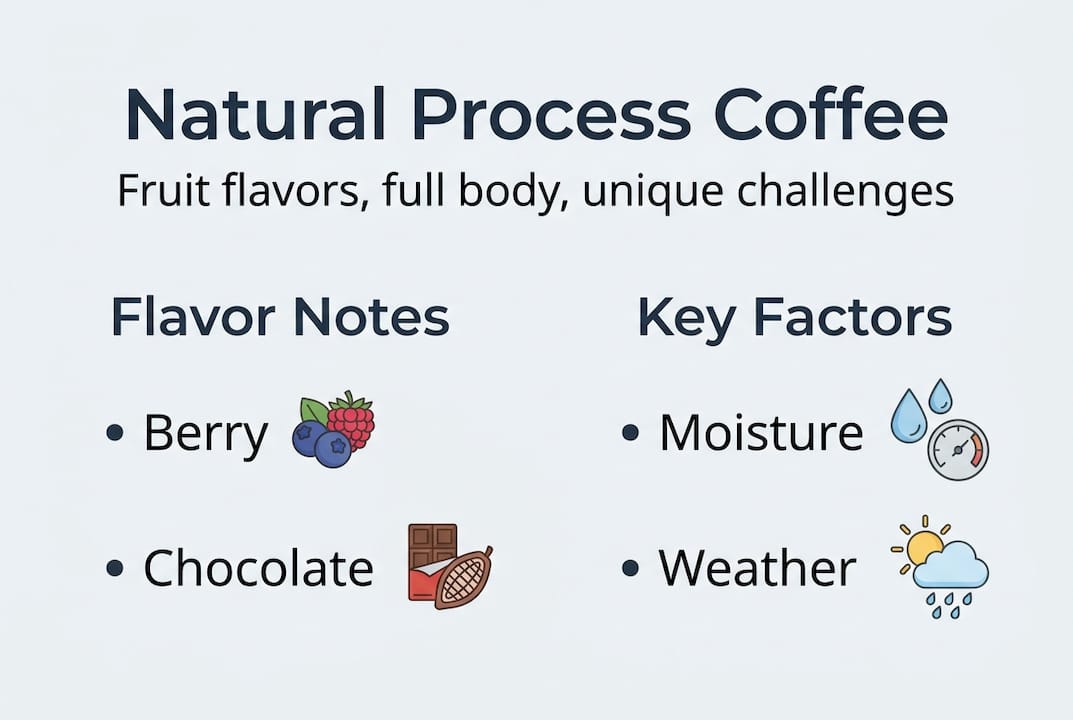
Drying targets 10-12% moisture content in green beans to prevent mold and ensure stability, measured with moisture meters. Hitting that window is a precise science, not guesswork.
Specialty coffee producers, particularly those focused on single origin coffee, favor the natural process because it showcases the terroir and variety of a specific farm in a way that washed processing sometimes masks. When done well, it meets and even exceeds the quality benchmarks set by specialty coffee standards, scoring high on complexity, sweetness, and uniqueness.
Pro Tip: When you see the words “natural” or “dry process” on a coffee bag, look for additional information about the specific farm, lot, and the producer’s drying practices. That traceability signals a producer who treats the natural process as a craft, not just a cost-saving shortcut.
How the natural process shapes coffee flavor
Understanding the basic process sets the stage for exploring the rich flavors natural coffee fans cherish. The most important thing happening during those weeks on the drying bed is fermentation. While the cherry dries, naturally occurring yeasts and bacteria on the fruit skin begin breaking down sugars. Because the seed sits inside this fermenting mass, it absorbs a range of flavor compounds that would never be present in a washed coffee.
The result is a cup that tastes more like a fruit bowl than what most people picture when they think of coffee. Common tasting notes in well-executed natural process coffees include:
- Blueberry and blackberry: Especially prominent in Ethiopian naturals, this note is often so vivid it surprises first-time drinkers.
- Strawberry and cherry: Found in Brazilian and Yemeni naturals, adding a rounded sweetness.
- Tropical fruit: Mango, papaya, and pineapple notes appear in naturals from countries like Colombia and Honduras.
- Wine and grape: The fermentation process can produce wine-like complexity and a pleasant tartness reminiscent of red wine.
- Chocolate and caramel: Particularly in natural Brazilians, the fruit notes blend with deep sweetness and low acidity.
The contrast with washed coffees is striking. Here’s a quick comparison to show you what you’re working with:
| Attribute | Natural process | Washed process |
|---|---|---|
| Body | Full, heavy | Light to medium |
| Sweetness | Intense, fruity | Subtle, clean |
| Acidity | Low to medium | Bright, crisp |
| Flavor notes | Fruity, wine-like, floral | Citrus, herbal, tea-like |
| Complexity | Layered, wild | Clear, structured |
| Risk of defects | Higher without care | Lower with good technique |
A washed coffee comparison makes it clear: both methods can produce exceptional coffee, but they’re telling completely different stories about the same bean.
That complexity comes with a trade-off, though. Weather-dependent drying risks like rain and humidity can cause mold, rot, and OTA mycotoxins; uneven drying or poor sorting leads to off-flavors like sourness or alcohol. Producers mitigate this through thin layers, frequent turning, rain protection, and airflow management. When a roaster does this right, the payoff is extraordinary. When they cut corners, you taste it immediately.
Different coffee bean varieties also respond to the natural process differently. Heirloom Ethiopian varieties, for example, tend to produce explosive fruit and floral complexity, while Bourbon and Catuai varieties from Brazil lean into chocolate and nut. The variety is the canvas; the natural process is the painter’s technique.

Environmental factors and quality challenges
With an appreciation for flavor, it’s important to understand what makes this process so challenging and variable in the real world. Natural process coffee does not happen in a controlled environment. It happens outside, on a hillside farm in Ethiopia, a plateau in Brazil, or a valley in Yemen, exposed to everything the atmosphere decides to throw at it.
“Weather-dependent conditions, including rain and humidity, can cause mold, rot, and OTA mycotoxins. Inconsistency from uneven drying or poor sorting leads to off-flavors. Mitigation requires thin layers, frequent turning, rain protection, and airflow.” Coffee Fermentation: From Field to Flavor
OTA (ochratoxin A) is a mycotoxin, a toxic compound produced by mold, that can develop in coffee that gets too wet during drying. Reputable producers take this seriously, which is why the best natural process lots have detailed processing notes attached.
Here are the key steps a skilled producer takes to manage quality during the drying phase:
- Spread cherries in thin, even layers. A pile of cherries traps heat and moisture in the center, creating ideal conditions for uneven fermentation and mold.
- Turn or rake the cherries multiple times per day. This promotes even drying, regulates fermentation speed, and prevents the cherries from sticking together or developing hot spots.
- Monitor moisture levels regularly. Moisture content targets of 10-12% are measured using handheld moisture meters throughout the drying period, not just at the end.
- Use rain covers and shade nets. Sudden rain or excessive UV exposure can ruin a drying lot. Shade nets slow drying to prevent case hardening, where the outside dries too fast and traps moisture inside.
- Sort continuously. Any cherry showing mold, cracking, or discoloration gets removed immediately before it contaminates neighboring fruit.
One of the most fascinating aspects of natural process coffee is that even two lots from the same farm can taste noticeably different from one year to the next. Altitude, seasonal rainfall, and ambient temperature all shift slightly, which changes the fermentation activity and ultimately the flavor compounds that develop. This is part of what makes natural process coffees so exciting to follow across harvests.
The connection between environment and cup quality is why understanding coffee terroir is so valuable. Terroir encompasses the complete environmental picture behind a coffee’s flavor, and nowhere is that picture more vivid than in a well-executed natural process lot.
Pro Tip: When you’re buying natural process coffee, ask your roaster whether they have drying and humidity control data from the producer. A roaster who can answer that question is sourcing from farms that are serious about quality, not just exporting whatever is available.
Choosing, brewing, and enjoying natural process coffee
Knowing the risks and rewards, let’s bring this home — how can you find and enjoy natural process coffee in your daily cup? The first step is selecting the right beans, and not every bag labeled “natural” is worth your time or money.
Here is what to look for when choosing beans:
- Roast date: Natural process coffees are at their most vibrant between 7 and 30 days post-roast. Beyond 45 days, those distinctive fruit notes start fading fast.
- Farm or lot details: A bag that specifies the farm, altitude, and variety is a strong indicator of traceability and producer intention. Vague labels like “blend” or “African natural” without more detail are red flags.
- Tasting notes on the bag: Look for descriptors like blueberry, strawberry, wine, tropical fruit, or chocolate. These signal the roaster has profiled the coffee with the natural process in mind.
- Specialty grade indication: A score above 80 on the SCA (Specialty Coffee Association) scale means the coffee passed quality control and is free from serious defects.
Once you have good beans, the brew method matters. The right brewing approach can either showcase or smother the natural process character.
The best methods for natural process coffee:
- Pour over (V60, Origami): Clarity and control. A pour over allows the fruity acidity and floral aromas to express themselves cleanly. Use a slightly coarser grind and water around 93-94°C to keep from over-extracting.
- Chemex: The thicker filter restrains some of the heavier body while letting the bright fruit notes shine. Great for drinkers who want the fruitiness without too much fullness.
- French press: For those who love a heavy, wine-like cup, French press keeps the oils and body fully intact. Expect a thick, luscious result that feels almost dessert-like.
A few practical tips to get the most from your natural:
- Grind slightly coarser than usual. Natural process beans often extract faster because of the fermentation’s effect on bean structure. Going coarser prevents bitterness.
- Reduce your water temperature slightly. Temperatures above 96°C can blow out the delicate fruit notes and leave you with an astringent cup.
- Use a 1:15 or 1:16 coffee-to-water ratio to let the flavors open up without crowding them.
- Keep a tasting journal. Log the origin, roast date, brew method, and your flavor impressions. Over time, you’ll identify patterns and develop preferences that guide your next purchase.
Because moisture content of 10-12% in the green bean is so critical to the quality you receive in the bag, it’s worth appreciating that the care taken on the farm directly impacts every cup you brew at home. You are tasting the result of weeks of precision work.
A nuanced view: the artistry and unpredictability of natural process coffee
Most guides treat natural process coffee as a destination. Get the right beans, dial in your brew, enjoy the blueberries. But there’s something that gets skipped over constantly: the natural process is fundamentally about surrendering control, and that’s actually its greatest lesson.
We live in an era obsessed with consistency. Specialty coffee culture sometimes falls into the same trap, chasing repeatable, predictable results as if the goal is to produce the same cup forever. Natural process coffees resist this completely. A great producer doesn’t eliminate variability — they manage it thoughtfully and accept that some of the best cups come from batches that surprised even them.
For home brewers, this perspective is liberating. If your first bag of Ethiopian natural doesn’t taste exactly like the tasting notes say it should, that’s not a failure. It’s information. Coffee quality standards give us useful benchmarks, but they don’t tell you how to feel about a cup that tastes wilder than expected. The best natural process enthusiasts we’ve seen are curious rather than frustrated when a cup surprises them. They adjust, re-brew, take notes, and learn. The natural process rewards that curiosity more than any other method.
Explore natural process coffees and premium brews with Z’s Coffee
If this guide has you eager to taste these layered, fruit-forward flavors for yourself, Z’s Coffee has you covered with a curated selection of specialty coffees and brewing accessories designed for enthusiasts who take their cup seriously.

Whether you’re after a vibrant natural process single origin or something ready to brew right now, explore our instant specialty coffee for a fast, no-fuss introduction to specialty flavors. If you prefer a smooth, ready-to-drink experience, our cold brew options bring out rich, chocolatey depth without any bitterness. And when you’re ready to explore freshly roasted beans and premium brewing gear, our full range at Z’s Coffee is built to support every step of your coffee journey.
Frequently asked questions
How does natural process coffee differ from washed coffee?
Natural process coffee dries with the fruit skin intact, which produces bolder, fruitier, and more complex flavors. Washed coffee removes the fruit before drying, resulting in a cleaner, brighter cup with more defined acidity.
What are the challenges farmers face with natural process coffee?
The natural process is highly weather-dependent, and rain or humidity can cause mold, rot, or harmful mycotoxins. Farmers must monitor drying conditions closely and use techniques like frequent turning and rain covers to prevent off-flavors.
What equipment is recommended for brewing natural process coffee at home?
Pour over methods like the V60 or Chemex showcase the vibrant fruit notes with clarity, while a French press produces a fuller, wine-like body that highlights the natural process richness.
How does moisture content affect natural process coffee quality?
Maintaining 10-12% moisture in green beans prevents mold growth, preserves bean integrity, and ensures the coffee remains stable and safe from harvest through storage and into your grinder.