TL;DR:
- Freshness and transparency are key to a great coffee experience in 2026.
- Single origin offers unique flavors, while blends provide consistency for everyday drinking.
- Expert grading through SCA standards helps identify top-quality, specialty coffee.
You pull open a fresh bag of coffee, brew a careful cup, and it tastes flat. Disappointing. You paid good money, followed the instructions, and still ended up with something forgettable. This happens to more coffee lovers than you’d think, and the culprit is almost never the brewing method. It’s the beans. In 2026, the specialty coffee market has never been more exciting or more confusing, with thousands of options, competing labels, and bold claims on every bag. This guide cuts through the noise so you can confidently pick, buy, and enjoy exceptional coffee every single time.
Table of Contents
- What to know before you buy coffee in 2026
- Choosing beans: Single origin or blend?
- Expert protocols: How quality is defined in 2026
- Buying smart: Where to purchase coffee for top quality and freshness
- Our take: Why most coffee buying advice is outdated in 2026
- Find your next favorite at Z’s Coffee
- Frequently asked questions
Key Takeaways
| Point | Details |
|---|---|
| Freshness is crucial | Always check for roast dates and prefer whole beans from reputable sources. |
| Single origin vs. blends | Choose single origins for adventure and blends for reliable, daily enjoyment. |
| Quality is scored | SCA scores and Q Grader standards guide you to exceptional coffee. |
| Know your sources | Buy from local or specialty online roasters, and avoid supermarket shelves for the best taste. |
What to know before you buy coffee in 2026
Before you spend another dollar on coffee that disappoints, it helps to understand what actually separates a great cup from a mediocre one. Freshness is the single biggest factor most buyers overlook. Coffee is an agricultural product, and like bread or produce, it has a peak window. Once roasted, beans begin releasing carbon dioxide and slowly losing their aromatic compounds. Most experts agree that coffee tastes best between 5 and 30 days after roasting.
The problem with supermarket coffee is simple: you almost never know when it was roasted. Bags sit in warehouses, then on shelves, often for months. By the time you brew it, the flavor is a shadow of what it could be. For the best results, buying amazing coffee beans from local roasters or specialty online shops gives you access to fresher stock and far more variety than any grocery aisle.
Understanding labels is also essential. Here’s what to look for on any bag:
- Roast date: The most important piece of information. If it’s missing, that’s a red flag.
- Single origin: Beans from one specific farm, region, or country. Flavor is distinctive and traceable.
- Blend: A mix of beans from multiple origins, often roasted to create a balanced, consistent cup.
- Process: Washed, natural, or honey. This affects sweetness, body, and clarity of flavor.
- Variety: Arabica, Robusta, or rarer cultivars like Geisha. Each has distinct flavor characteristics.
Familiarity with coffee quality standards helps you decode these labels faster and shop with confidence. Knowing the difference between commodity coffee (mass-produced, price-driven) and specialty coffee (quality-scored, traceable) is the foundation of smarter buying. To go deeper on this, explore the full breakdown of types of coffee beans and how each one affects your cup.
Pro Tip: Always buy whole beans and grind them just before brewing. Pre-ground coffee loses its best flavors within days of opening, while whole beans stay fresh significantly longer.
Choosing beans: Single origin or blend?
Now that you know what to look for, it’s time to pick the type of beans that fit your taste. This is where many buyers get stuck, and the answer depends more on how you drink coffee than on any objective ranking.
Single origin coffees are sourced from one specific location, whether that’s a single farm in Ethiopia, a cooperative in Colombia, or a region in Guatemala. The appeal is traceability and flavor distinction. A well-sourced Ethiopian natural process coffee might taste like blueberries and dark chocolate. A Kenyan washed coffee could be bright, juicy, and almost wine-like. These are not exaggerations. When you want to experience what coffee can truly taste like, single origin is the way to go. Check out our single origin coffee guide for a deeper look at what makes these coffees special.
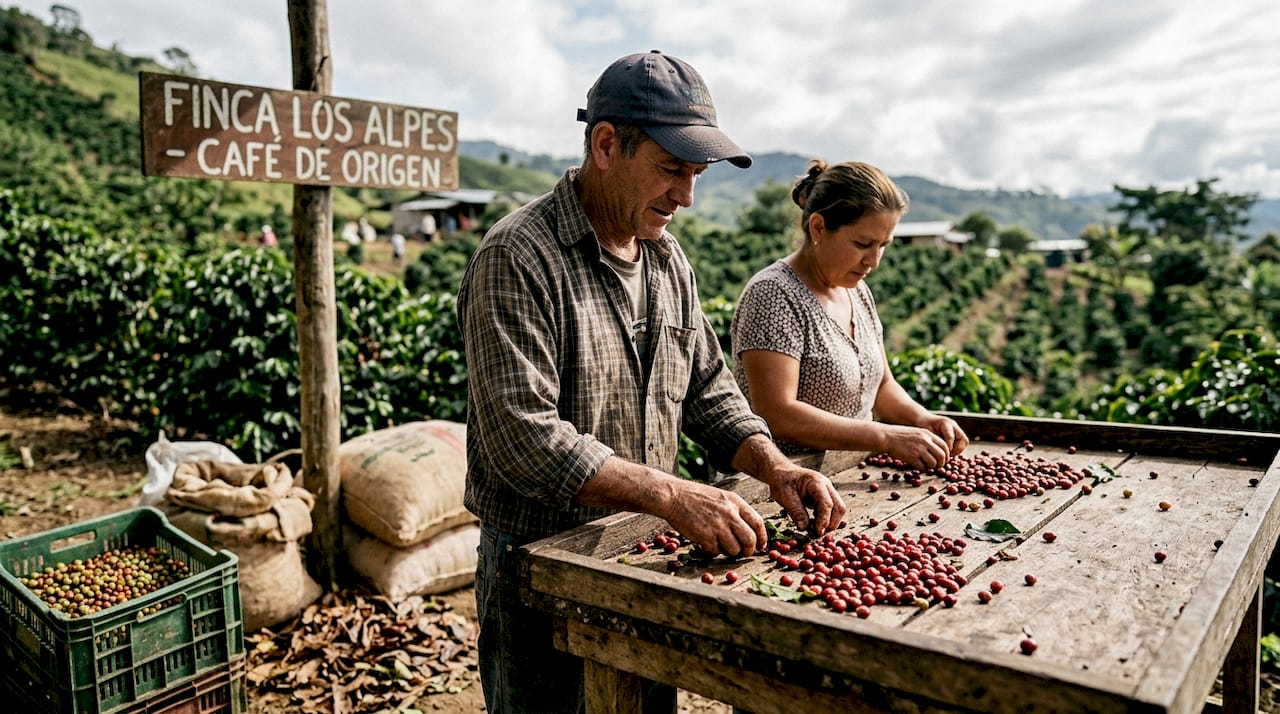
Blends, on the other hand, are crafted for consistency. A skilled roaster combines beans from multiple origins to hit a reliable flavor profile, cup after cup. This makes blends ideal for espresso, where small variations in flavor can throw off a whole drink. Blends also tend to be more forgiving across different brewing methods. For daily use, especially in households where multiple people have different preferences, a well-made blend is often the smarter choice. Learn more about understanding coffee blends and how roasters build them.
Here’s a quick comparison to help you decide:
| Feature | Single origin | Blend |
|---|---|---|
| Flavor profile | Distinctive, complex | Balanced, consistent |
| Best use | Pour-over, filter, sipping | Espresso, milk drinks, daily brew |
| Traceability | High | Moderate to low |
| Price | Often higher | Usually more affordable |
| Best for | Special occasions, exploration | Everyday reliability, gifting |
As a general rule, single origin for nuance, blends for consistency is the framework professionals use. Neither is superior. They serve different moments. The coffee origin impact on flavor is real and measurable, and understanding it helps you shop with intention rather than guessing.
Expert protocols: How quality is defined in 2026
Understanding your options means knowing how experts judge and score coffee quality. In 2026, the gold standard for coffee evaluation is the Specialty Coffee Association (SCA) cupping protocol, administered by certified Q Graders.
Q Graders are licensed professionals who evaluate coffee using a standardized scoring system. They assess attributes like fragrance, flavor, aftertaste, acidity, body, balance, and uniformity. Each attribute receives a score, and the total determines the coffee’s grade. A score of 80 or above on a 100-point scale qualifies a coffee as “specialty grade.” Anything below that is considered commodity coffee, regardless of how it’s marketed.
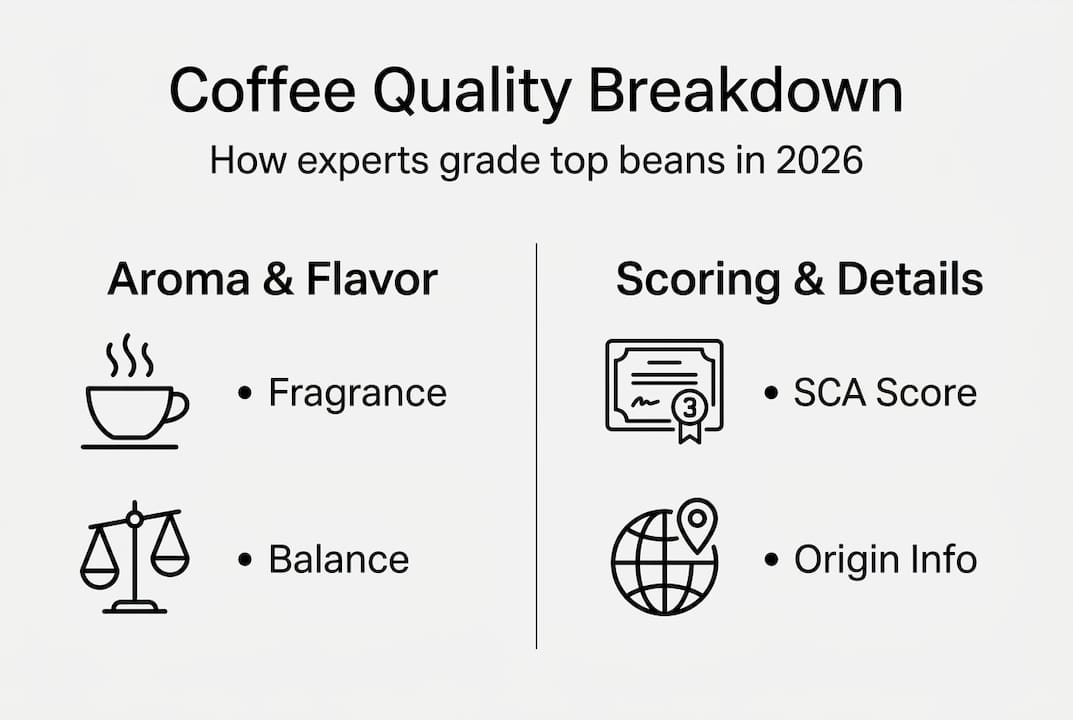
Here’s how the grading breaks down:
| Score range | Grade | What it means |
|---|---|---|
| 90 to 100 | Outstanding | Rare, exceptional lots; collector-level |
| 85 to 89 | Excellent | Top specialty; complex and memorable |
| 80 to 84 | Very good | Specialty grade; solid quality |
| Below 80 | Below specialty | Commodity or commercial grade |
Beyond scoring, roasting has evolved significantly. Profile-driven roasting, where the roaster adjusts heat and airflow throughout the process based on real-time data, has largely replaced the old endpoint temperature method. This means two bags labeled “medium roast” can taste completely different depending on who roasted them and how. SCA protocols in 2026 also increasingly reward direct trade relationships, where roasters pay premiums directly to farmers, funding better farming practices and more resilient supply chains.
“Direct trade premiums don’t just improve coffee quality. They build the kind of long-term relationships that make exceptional lots available year after year.”
When you shop for specialty coffee standards, look for roasters who share sourcing details and cup scores. Our coffee grading explained resource walks you through exactly what these numbers mean in practice.
Pro Tip: Ask your roaster for the coffee’s SCA score. Any roaster worth buying from will know it and share it willingly. It’s the fastest shortcut to knowing you’re getting genuine quality.
Buying smart: Where to purchase coffee for top quality and freshness
Once you know what defines quality, here’s how to practically find and buy top-notch coffee. Your purchasing channel matters almost as much as the coffee itself.
Specialty online shops and local roasters consistently provide fresher stock and more variety than supermarkets. Subscriptions from reputable roasters are another excellent option, often delivering coffee within days of roasting on a schedule you control. Supermarkets remain the least reliable option for freshness, though some now carry specialty brands worth exploring.
Here’s a step-by-step process for ordering coffee online with confidence:
- Check the roast date first. If the product listing doesn’t show one, contact the seller before buying.
- Read the sourcing details. Look for farm name, region, altitude, and process. Vague descriptions are a warning sign.
- Check shipping speed. Freshly roasted coffee should ship within 1 to 3 days of roasting and arrive within a week.
- Look at packaging. One-way valve bags (with a small circular valve) preserve freshness far better than standard sealed bags.
- Read reviews for consistency. One glowing review means little. Look for patterns across dozens of purchases.
- Start with a sampler or smaller bag. Don’t commit to a large subscription before you know you love the roaster’s style.
For best coffee beans for home brewing, matching the bean to your method also matters. Espresso machines, pour-over setups, and French presses each extract differently, and your coffee brewing advice should reflect that.
Pro Tip: Try sampler packs before committing to a full subscription. Most specialty roasters offer them, and they’re the most efficient way to discover what you genuinely enjoy.
Our take: Why most coffee buying advice is outdated in 2026
Most coffee buying guides still tell you to look for “freshly roasted” and “single origin” as if those two phrases guarantee a great cup. They don’t. In 2026, those labels have become marketing shorthand, and they can still disappoint you if the sourcing, roasting, and handling aren’t right.
What’s actually changed is the relationship between buyers and roasters. Climate shifts have made certain origins less predictable, and technology now allows roasters to share real-time crop data, lot-level information, and even live farm updates with customers. This means the most valuable thing you can do isn’t read more labels. It’s ask more questions.
Build a relationship with one or two roasters you trust. Ask where a specific lot came from, what the SCA score was, and how they approached the roast. A roaster who answers those questions with enthusiasm is one worth supporting. The best coffee experiences we’ve had didn’t come from the most expensive bag on the shelf. They came from curiosity and conversation.
When choosing coffee beans in 2026, go beyond the bag. Your palate is the final judge, and the only way to develop it is to keep trying, keep asking, and keep brewing.
Find your next favorite at Z’s Coffee
Ready to put what you’ve learned into action? Z’s Coffee makes it easy to explore exceptional coffee without the guesswork.
Our curated collection covers everything from bold cold brew options to convenient instant coffee selection, plus single origins, artisan blends, and variety packs perfect for exploring new flavors. Every product is chosen with freshness and quality in mind, so you’re never guessing about what’s in the bag. Whether you’re building your first specialty coffee routine or expanding an already passionate collection, browse all coffee at Z’s Coffee and find something worth waking up for.
Frequently asked questions
How can I tell if coffee is truly fresh in 2026?
Check for a printed roast date on the bag and buy from specialty roasters or trusted online shops. If no roast date is listed, the coffee is likely not fresh.
Are blends or single origins better for most coffee drinkers?
Single origins offer nuance and unique flavors, while blends deliver consistency and reliability. Your best choice depends on whether you prefer exploration or a dependable daily cup.
What does an SCA score mean for coffee buyers in 2026?
An SCA score above 80 indicates specialty grade coffee, meaning it passed rigorous professional evaluation for flavor, balance, and overall quality.
Where is the best place to buy quality coffee nowadays?
Specialty online shops and local roasters are your best options for freshness and variety, followed by reputable subscription services that ship shortly after roasting.