TL;DR:
- Coffee ceremonies are elaborate cultural rituals that foster community, spirituality, and hospitality beyond just drinking coffee. These traditions vary globally, with Ethiopian and Eritrean ceremonies emphasizing social bonds through multiple rounds, and Senegal’s Cafe Touba serving as spiritual and anti-colonial symbolism. Despite differences in practice, all ceremonies focus on slowing time, building trust, and creating meaningful connections through carefully prepared coffee.
Coffee ceremonies are defined as structured, multi-step cultural rituals in which brewing and serving coffee carries deep social, spiritual, and hospitality meaning far beyond the drink itself. The most recognized example is the Ethiopian and Eritrean Habesha ceremony, which unfolds across three named rounds and can last 2–3 hours. Yet dozens of other traditional coffee rituals exist worldwide, from Senegal’s spiritually charged Cafe Touba to Brazil’s street-corner cafezinho culture. Each of these examples of coffee ceremonies reveals something true about the people who practice them: coffee is a language, and the ceremony is the conversation.
1. The Ethiopian and Eritrean coffee ceremony: ritual steps and cultural meaning
The Ethiopian and Eritrean Habesha ceremony is the world’s most elaborate traditional coffee ritual. It is performed by the woman of the household and lasts 2–3 hours, covering three distinct rounds from raw green beans to the final blessed cup.
The process begins with roasting. Green coffee beans are placed in a flat pan over an open flame and shaken continuously until they darken. The host then carries the pan to each guest so they can inhale the aroma directly. Sharing the roasting aroma is a deliberate act of hospitality, not a side detail. The beans are then ground with a traditional mortar and pestle and brewed in a clay pot called a jebena.
The three rounds each carry a name and a meaning. The first round, Abol, is the strongest. The second, Tona, uses the same grounds with added water and is slightly milder. The third, Baraka, means “blessing” in Arabic and is the lightest pour. Each round represents a progressive stage of hospitality, conversation, and communal blessing. Guests are expected to stay for all three.
Leaving before Baraka is a serious social breach. Skipping the final round is considered a rejection of the blessing and is believed to invite bad luck. This rule alone tells you everything about how seriously the ceremony is taken as a social contract.
Barista Magazine describes the Ethiopian ceremony as a “three-act play” where the slow, deliberate preparation signals that the guest’s presence matters more than efficiency. That framing captures the ceremony’s core purpose precisely.
Pro Tip: If you are invited to an Ethiopian coffee ceremony, accept every round. Declining any cup, especially Baraka, reads as a social rejection of your host.
2. Latin American coffee rituals: Costa Rica, Mexico, Brazil, and Colombia
Latin America holds some of the most varied cultural coffee practices in the world. These rituals range from legally protected daily social breaks to street-corner coffee culture built on tiny, sweet cups. The common thread is that coffee serves as a social lubricant and a sign of hospitality across every regional variation.
Here are four distinct examples from the region:
-
Costa Rica’s café de la tarde. Costa Ricans treat afternoon coffee time as a protected social mealtime between lunch and dinner. Meetings are avoided during this window. The practice reflects a ceremonial respect for coffee as a moment of community bonding rather than a quick caffeine fix.
-
Mexico’s café de olla. This traditional brew is made in a clay pot with cinnamon and piloncillo (unrefined cane sugar). The clay vessel is not decorative. It subtly changes the flavor of the coffee, giving it an earthy, slightly mineral quality that a standard pot cannot replicate. The ritual of brewing in clay connects the drink to pre-industrial Mexican kitchen traditions.
-
Brazil’s cafezinho. The word means “little coffee,” and the cup is exactly that: a small, intensely sweet shot served throughout the day in homes, offices, and restaurants. Refusing a cafezinho is considered rude. Declining coffee in many Latin American cultures signals a rejection of friendship or connection, not just a preference for water.
-
Colombia’s tinto. Tinto is strong black coffee sold by street vendors from thermoses, typically sweetened and served in small paper cups. It is the working person’s ceremony: no ceremony space, no special vessel, but a deeply embedded daily social ritual that connects strangers on a street corner.
These four examples show that traditional coffee rituals do not require elaborate equipment or hours of preparation. The ceremony lives in the intention and the social context, not the complexity of the steps.
3. Cafe Touba in Senegal: spiritual and anti-colonial tradition
Cafe Touba is West Africa’s most distinctive coffee ceremony, and it differs from every other example in one critical way: it was born from religious resistance. The drink originated with Sufi saint Sheikh Amadou Bamba and carries explicit spiritual and anti-colonial symbolism that is inseparable from the cup itself.
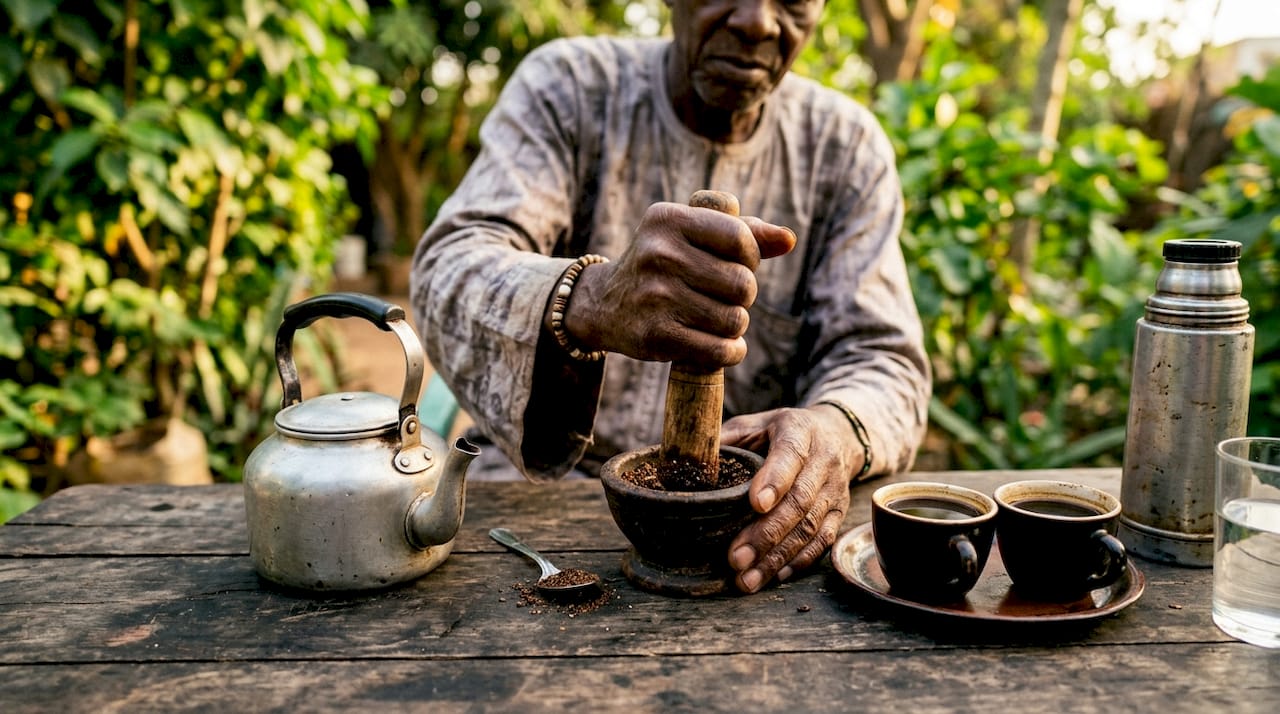
The recipe includes grains of Selim, also called guinea pepper, ground and mixed directly into the coffee. The spice gives Cafe Touba a warm, peppery depth that no other coffee tradition replicates. The drink is prepared and consumed as a form of spiritual stamina, particularly during prayer and religious observance. It is not a leisure drink in the European sense. It is fuel for devotion.
Cafe Touba’s presentation is minimal compared to the Ethiopian ceremony. There is no elaborate multi-round structure, no incense, no communal roasting ritual. The power of the tradition lives in the ingredient and the intention. Cafe Touba functions as spiritual fuel and anti-colonial expression, a direct contrast to the colonial-era European café culture that was imposed across West Africa.
Pro Tip: If you want to recreate Cafe Touba at home, source whole grains of Selim from West African or specialty spice retailers. Grind them fresh and add to your coffee grounds before brewing.
4. Common themes across different coffee ceremonies worldwide
Every coffee ceremony type, regardless of geography, shares a set of core functions. Coffee ceremonies across cultures are designed to slow down time, build community bonds, and communicate hospitality through a shared cup. The differences lie in how each culture expresses those functions.
| Ceremony | Region | Key vessel | Rounds or measures | Distinctive element |
|---|---|---|---|---|
| Habesha ceremony | Ethiopia and Eritrea | Jebena (clay pot) | Three rounds (Abol, Tona, Baraka) | Fresh roasting shared with guests |
| Cafe Touba | Senegal | Standard pot | Single serving | Grains of Selim (guinea pepper) |
| Café de la tarde | Costa Rica | Standard cup | One protected daily session | Socially protected time block |
| Café de olla | Mexico | Clay pot | Single serving | Cinnamon and piloncillo |
| Cafezinho | Brazil | Small cup | Multiple throughout the day | Sweetened, served constantly |
Several elements recur across these traditions. Fresh roasting appears in Ethiopian practice and in many Arabian coffee ceremonies. Specific brewing vessels, whether a jebena, a clay olla, or a traditional dallah, carry cultural weight beyond their function. Serving in rounds or small measures controls the pace of conversation and signals that the host values the guest’s time.
Gender roles and accompanying elements also vary. The Ethiopian ceremony is traditionally led by women. Incense, grass, and popcorn often accompany the Ethiopian ritual. Cafe Touba is tied to male religious leadership. Brazilian cafezinho culture is largely gender-neutral and informal.
Modern practitioners sometimes use electric stoves instead of open flames while preserving the communal structure of the ceremony. That adaptation shows the ceremonies are alive, not museum pieces. The social function survives even when the tools change. You can explore more about global coffee customs to see how these traditions connect across continents.
5. How to conduct a traditional coffee ceremony at home
Recreating a traditional coffee ceremony at home is achievable with basic equipment and a clear understanding of the steps. The goal is not perfect replication. The goal is honoring the social intention behind the ritual.
Here is a practical framework based on the Ethiopian model, which is the most fully documented of all coffee ceremony types:
- Gather your equipment. You need a clay pot or jebena (available from specialty retailers), a small charcoal burner or stovetop, a mortar and pestle, and small handleless cups called cini. If a jebena is not available, a small ceramic teapot works as a substitute.
- Source green coffee beans. Roasting pre-roasted beans defeats the purpose. Green Ethiopian beans, particularly from the Yirgacheffe or Sidama regions, are the most authentic choice. Zscoffee carries single-origin options that work well for this purpose.
- Roast the beans. Place green beans in a dry pan over medium heat. Stir constantly for 8–12 minutes until the beans reach a medium to dark roast. Carry the pan to each guest and invite them to inhale the aroma before grinding.
- Grind and brew. Grind the roasted beans coarsely with a mortar and pestle. Add the grounds to your jebena with cold water and bring to a slow boil. Pour through a fine strainer into the cups.
- Serve in three rounds. Brew the first round (Abol) strong. Add water to the same grounds for Tona, then again for Baraka. Add sugar between rounds if guests prefer.
- Set the atmosphere. Burn incense if available. Place fresh grass or small flowers near the serving area. These sensory details are part of the hospitality signal, not decoration.
Pro Tip: Serve popcorn or roasted barley alongside the coffee, as is traditional in Ethiopian ceremonies. The snack slows the pace of drinking and extends the social time, which is the whole point.
Timing matters as much as technique. A ceremony rushed through in 20 minutes misses the point entirely. Block at least 90 minutes and treat the preparation as part of the event, not a prelude to it. For more ideas on brewing methods at home, Zscoffee’s brewing guides offer practical depth.
Key takeaways
Coffee ceremonies worldwide are defined by their social function: slowing time, building trust, and communicating hospitality through a shared, carefully prepared cup.
| Point | Details |
|---|---|
| Ethiopian ceremony is the most structured | Three named rounds (Abol, Tona, Baraka) over 2–3 hours carry distinct social and spiritual meaning. |
| Latin American rituals vary widely | From Costa Rica’s protected afternoon break to Brazil’s all-day cafezinho, the social core is consistent. |
| Cafe Touba carries spiritual weight | Senegal’s Sufi-origin ceremony uses grains of Selim and functions as religious fuel, not leisure. |
| Declining coffee signals rejection | In many cultures, refusing a cup communicates social withdrawal, not just a personal preference. |
| Modern adaptation preserves function | Electric stoves and urban settings change the tools but not the communal purpose of the ceremony. |
What coffee ceremonies have taught me about time
The first time I sat through a full Ethiopian coffee ceremony, I kept checking my watch. That impulse faded around the second round. By Baraka, I had stopped entirely. The ceremony does something that no productivity framework can: it makes waiting feel like the point.
What strikes me most across all these traditions is that the ceremony is the product. The coffee is almost secondary. In Brazil, the cafezinho is objectively a simple drink. In Senegal, Cafe Touba is not technically complex. What makes these rituals powerful is the agreement between host and guest that this moment matters. That agreement is increasingly rare, and that is exactly why these traditions deserve more attention, not less.
I also think the Western tendency to reduce coffee to a delivery mechanism for caffeine has made us worse at hospitality. When you hand someone a paper cup and keep walking, you are communicating something. When you roast beans in front of a guest and serve three rounds over two hours, you are communicating something entirely different. Both messages land.
My honest recommendation: do not wait for a trip to Addis Ababa or Dakar to experience these rituals. Recreate one at home. Invite people who matter to you. Follow the steps slowly. The ceremony will teach you something about patience and connection that no article can fully convey.
— zachary
Quality coffee worth building a ritual around

A ceremony is only as good as the coffee at its center. Zscoffee sources quality beans and brewing accessories designed for coffee lovers who take the cup seriously. Whether you are recreating an Ethiopian three-round ceremony or building your own daily ritual, the right coffee makes the difference between going through the motions and actually experiencing something worth repeating.
Zscoffee’s cold brew coffee offers a smooth, concentrated option for those who want ceremonial depth without a long brew time. The instant coffee line suits modern adaptations of daily rituals when time is short but the intention is real. For coffee lovers who carry their ritual with them, the travel mug with a handle keeps every cup at the right temperature wherever the ceremony happens to take place.
FAQ
What are the most well-known examples of coffee ceremonies?
The Ethiopian and Eritrean Habesha ceremony is the most documented, featuring three rounds called Abol, Tona, and Baraka over 2–3 hours. Senegal’s Cafe Touba and Latin American traditions like Brazil’s cafezinho and Mexico’s café de olla are also widely recognized cultural coffee rituals.
How long does a traditional coffee ceremony take?
The Ethiopian ceremony typically lasts 2–3 hours from roasting through the final Baraka round. Latin American rituals like Costa Rica’s café de la tarde are shorter but still treated as protected social time, not a quick break.
What does it mean to leave an Ethiopian coffee ceremony early?
Leaving before the Baraka round is considered a social breach and a rejection of the host’s blessing. It is believed to invite bad luck, which reflects how deeply the ceremony functions as a spiritual and communal contract.
Can I conduct a coffee ceremony at home without traditional equipment?
Yes. A small ceramic teapot substitutes for a jebena, and a standard mortar and pestle works for grinding. The social intention and multi-round structure matter more than having every traditional tool.
What makes Cafe Touba different from other coffee ceremonies?
Cafe Touba includes grains of Selim (guinea pepper) and originates from Sufi saint Sheikh Amadou Bamba. It functions as spiritual fuel during prayer and carries anti-colonial symbolism, making it fundamentally different from leisure-focused coffee traditions.