TL;DR:
- Coffee customs around the world reveal how cultures value social connection, ritual, and hospitality.
- Understanding these traditions enhances respectful travel and deepens appreciation for global diversity.
Global coffee customs are the rituals, social rules, and serving traditions that define how each culture experiences coffee beyond the drink itself. From the coffee culture traditions of Ethiopia’s three-round ceremonies to Italy’s 90-second espresso at a standing bar, these practices reveal how communities bond, signal hospitality, and mark time. The global coffee trade reached $50.3 billion in 2024, which shows just how central coffee is to daily life across continents. Understanding these customs makes you a more respectful traveler and a far more curious coffee drinker.
1. What makes Ethiopian coffee ceremonies unique?
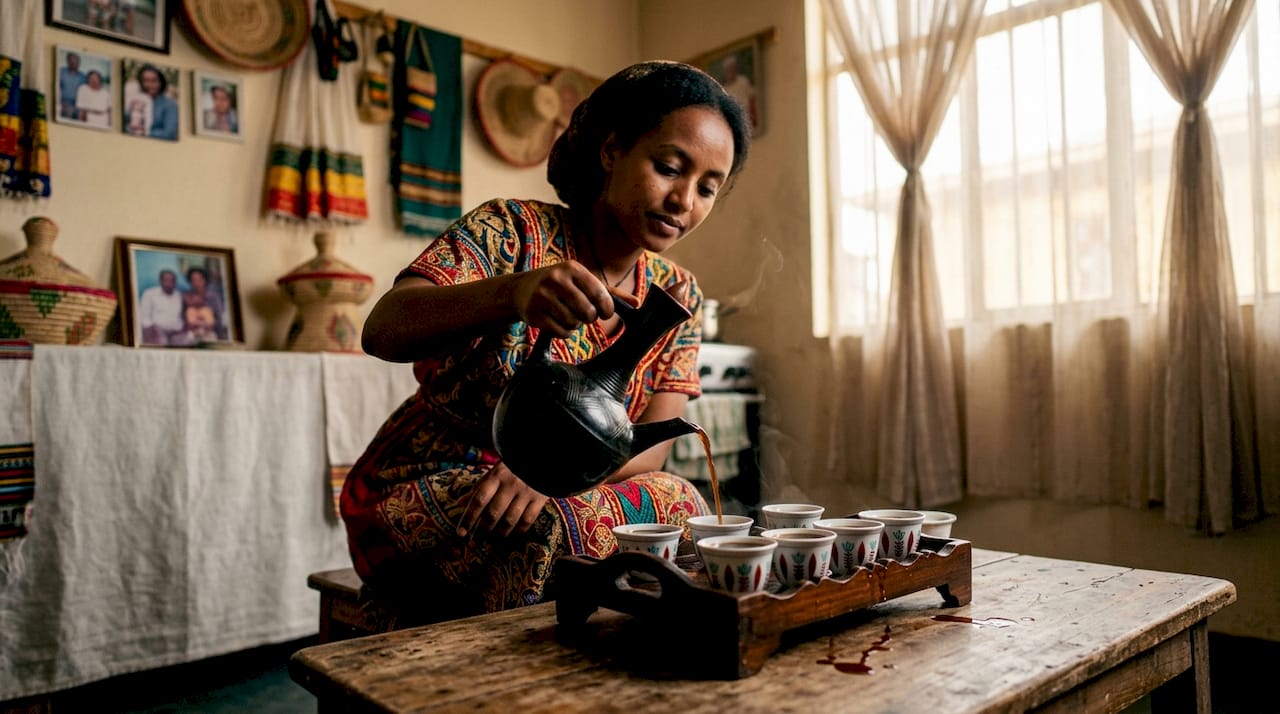
The Ethiopian coffee ceremony is the most elaborate coffee ritual in the world. It is a multi-stage event that can last two to three hours, and skipping out early is considered rude. Coffee represents 45.5% of Ethiopia’s exports, so the drink carries deep national and spiritual weight.
The ceremony follows a precise sequence:
- Green coffee beans are washed and roasted over an open flame in a flat pan
- Roasted beans are ground using a wooden mortar called a mukecha
- Ground coffee is brewed in a clay pot called a jebena, then poured through a strainer
- Coffee is served in three rounds: the first called abol, the second tona, and the third baraka (meaning blessing)
- Incense burns throughout, and snacks like popcorn or bread accompany each round
The three rounds are not optional. Rushing or skipping a round is impolite and signals disrespect to the host. Each round grows progressively lighter in strength, and the final cup is believed to carry a spiritual blessing.
Pro Tip: If you are invited to an Ethiopian coffee ceremony, arrive with time to spare and accept all three rounds. Refusing the third cup is considered bad manners.
2. How does Italian coffee culture differ from the rest of the world?
Italian coffee culture runs on speed and simplicity. Espresso is consumed in under 90 seconds while standing at the bar, and that pace is a feature, not a flaw. The bar is a social hub where regulars exchange quick words with the barista before heading back to work.
The pricing system surprises most visitors. Coffee costs more if you sit at a table than if you stand at the bar. The difference can be significant in tourist-heavy cities like Rome or Florence. Most locals never sit down for a quick espresso.
Italian coffee etiquette includes several unwritten rules:
- Cappuccino and other milky drinks are morning drinks only, never ordered after lunch
- Ordering a “latte” means a glass of plain milk, not the espresso drink common in the United States
- Espresso is the default afternoon and after-dinner drink
- Lingering at the bar is fine, but the visit is brief by design
Pro Tip: Stand at the bar, order a caffè, and pay at the register first if the café requires it. You will pay less and drink like a local.
3. What are Nordic coffee customs, and what is fika?
Nordic coffee customs center on intentional slowness. Fika is the Swedish practice of taking a coffee break with something sweet, but it is more than a snack pause. It is a scheduled social ritual that prioritizes connection over productivity. Sweden, Norway, and Finland all share this cultural emphasis on coffee as a reason to stop and be present.
Finland takes coffee consumption further than any other country. Finns drink an average of 4.4 cups of coffee per day, placing Finland at the top of global per capita consumption rankings. That number reflects a culture where coffee is woven into every part of the day, not just mornings.
| Nordic country | Key coffee custom | Defining feature |
|---|---|---|
| Sweden | Fika | Scheduled social coffee break with pastries |
| Finland | Kahvitauko | Multiple daily breaks, highest per capita consumption |
| Norway | Kaffeselskap | Coffee gatherings as formal social events |
Pro Tip: When invited to fika in Sweden, bring a pastry to share. Showing up empty-handed is technically fine, but bringing something signals that you understand the social spirit of the custom.
4. How has South India developed its own coffee ritual with filter kaapi?
South Indian filter coffee, called kaapi in the local dialect, is one of the most distinct regional coffee styles in the world. Its origins trace back to the 17th century, when a Sufi saint named Baba Budan smuggled seven coffee beans out of Yemen and planted them in the hills of Karnataka. Those hills, now known as Chikmagalur, remain a major coffee-growing region today.
The brewing method is specific and non-negotiable for traditionalists:
- A metal filter device with two chambers brews a thick decoction overnight or for several hours
- The decoction mixes with hot milk, never water, in a ratio that varies by household
- South Indian filter coffee blends contain 20–40% chicory, which adds body and a slightly bitter depth
- The drink is poured back and forth between a tumbler and a wide-bottomed metal cup called a davara to cool it and create froth
- It is served hot, often in the morning, and shared communally at the table
Coffee time in South India carries the same social weight as a meal. Coffee is treated as sacred communal time, and interrupting it for non-urgent matters is considered impolite. Modern specialty coffee shops have arrived in cities like Bangalore and Chennai, but filter kaapi holds its ground as the cultural standard.
5. What other fascinating coffee customs showcase cultural diversity?
Coffee drinking traditions worldwide range from meditative to theatrical. Three customs stand out for their depth and distinctiveness.
Turkish coffee and the cezve ritual
Turkish coffee is brewed in a small long-handled pot called a cezve, using very finely ground beans and cold water brought slowly to a near-boil. The grounds settle at the bottom of the cup and are never filtered out. In Turkey, reading the leftover grounds as a form of fortune-telling is a genuine social practice, not a tourist gimmick. Offering Turkish coffee to a guest signals respect, and refusing it is a social slight.
Japanese kissaten culture
Japan’s kissaten are old-style coffee houses that emerged in the early 20th century. They operate as quiet, unhurried spaces designed for reading, thinking, or conversation. The coffee is brewed with precision, often using a pour-over method called hand drip, and the atmosphere is deliberately calm. Kissaten culture contrasts sharply with the speed of Italian espresso bars, reflecting Japan’s value of focused, deliberate experience.
Viennese coffee house tradition
Vienna’s coffee houses are UNESCO-recognized cultural institutions. Viennese cafés encourage prolonged visits for reading, writing, and debate. A guest can order one coffee and sit for hours without being rushed. Historically, these cafés served as gathering places for writers, philosophers, and artists, including Sigmund Freud and Stefan Zweig. The waiter brings a glass of water with every coffee, a tradition that continues today.
| Custom | Country | Pace | Social function |
|---|---|---|---|
| Cezve ritual | Turkey | Slow | Hospitality and fortune-telling |
| Kissaten | Japan | Slow | Reflection and quiet socialization |
| Viennese café | Austria | Very slow | Intellectual and social gathering |
| Espresso bar | Italy | Fast | Quick social connection |
| Fika | Sweden | Moderate | Scheduled communal pause |
Coffee consumption in China has also surged by 150% over the last ten years, signaling that new coffee customs are forming rapidly in markets that once had no coffee culture at all. That shift is worth watching for anyone tracking how global coffee markets evolve.
Key takeaways
Coffee is rarely a solitary drink across cultures. It is a proxy for social connection, hospitality, and shared time, and every custom covered here reflects that truth.
| Point | Details |
|---|---|
| Ethiopian ceremony | Three rounds of coffee are required; leaving early or skipping a round is impolite. |
| Italian espresso etiquette | Stand at the bar, pay less, and never order a milky drink after lunch. |
| Nordic fika | Finland leads global per capita consumption at 4.4 cups daily; fika is a scheduled social pause. |
| South Indian filter kaapi | Chicory blends and communal serving make this one of the most distinct regional coffee styles. |
| Global diversity | Turkish, Japanese, and Viennese customs each reflect distinct cultural values around pace and hospitality. |
What traveling with coffee customs has taught me
The first time I sat through an Ethiopian coffee ceremony in Addis Ababa, I kept checking my watch. That instinct was the problem. The ceremony was not slow. I was just impatient. By the third round, I had stopped thinking about time entirely, and that was exactly the point.
Most travelers treat coffee as fuel. The cultures that have built rituals around it treat it as an event. Italy’s espresso bar is not about the coffee. It is about the two minutes you spend standing next to a stranger and exchanging something human before the day takes over. Fika is not about caffeine. It is a social contract that says: this moment matters more than the next task.
What I have found, after traveling with coffee as a guide, is that the custom tells you more about a culture than almost any other single practice. How a culture serves coffee reveals what it values: speed, hospitality, intellect, community, or ritual. Respecting those customs is not just good manners. It is the fastest way to connect with people on their own terms.
My honest advice: before you travel anywhere, look up how they drink coffee. Then do it their way, without modification, at least once.
— zachary
Specialty coffee for your next cultural adventure
Coffee customs around the world inspire a deeper appreciation for what ends up in your cup at home.

Zscoffee carries specialty products that match the curiosity of travelers and coffee enthusiasts alike. The cold brew coffee is a smooth, versatile option that works whether you are recreating a slow morning ritual at home or need something ready before a long travel day. For those who take their coffee on the road, the travel mug with a handle keeps your brew at the right temperature through airports, train stations, and morning markets. Zscoffee ships internationally, so wherever your next destination takes you, quality coffee travels with you.
FAQ
What are global coffee customs?
Global coffee customs are the culturally specific rituals, social rules, and serving traditions that define how different countries prepare and drink coffee. They range from Ethiopia’s three-round ceremonial brewing to Italy’s standing espresso bar culture.
Which country has the most unique coffee ritual?
Ethiopia’s coffee ceremony is widely considered the most elaborate, involving roasting, grinding, and three rounds of brewing in a clay pot, a process that can take two to three hours.
Why do Italians drink espresso standing up?
Standing at the bar is the traditional and cheaper way to drink espresso in Italy. Coffee prices are tiered based on whether you stand or sit, and most locals prefer the quick, social experience at the counter.
What is fika and where does it come from?
Fika is a Swedish cultural practice of taking a coffee break with something sweet, treated as a scheduled social pause rather than a casual habit. It reflects a broader Nordic value of intentional rest and community connection.
How is South Indian filter coffee different from regular coffee?
South Indian filter coffee uses a metal drip filter, hot milk instead of water, and a blend that typically contains 20–40% chicory, giving it a distinct body and flavor that sets it apart from espresso or drip coffee styles.