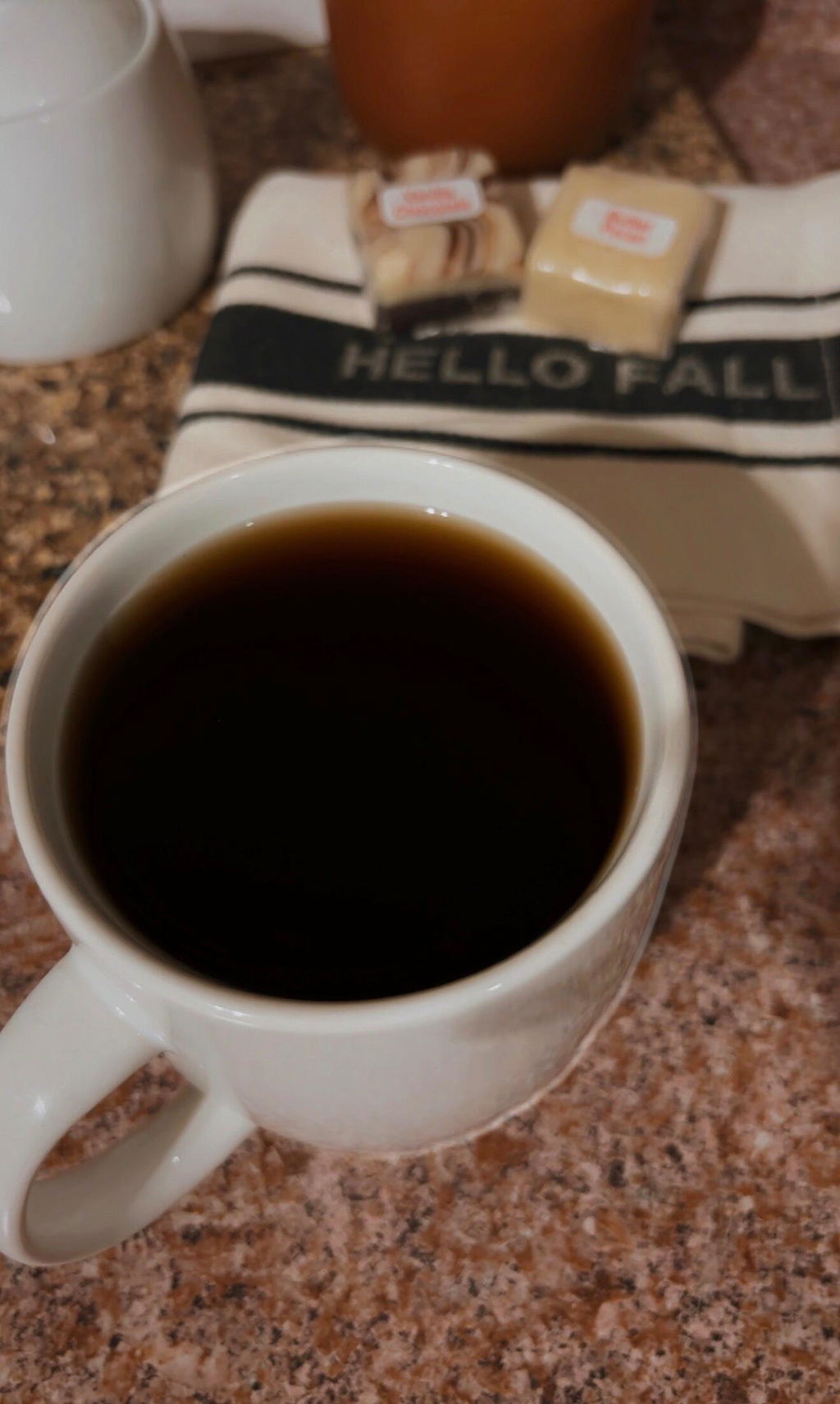
TL;DR:
- Coffee culture encompasses diverse traditions that deepen appreciation beyond taste, involving rituals, materials, and scientific principles. Ethiopian Buna Tirttu transforms brewing into an extended social ceremony, while Japanese methods like nel drip and siphon highlight technical precision and flavor nuances. Scientific research confirms that factors such as vessel material, brewing method, and time of day significantly influence coffee enjoyment and perception.
Coffee is far more than a morning ritual. Across more than 70 countries, the way people grow, brew, and share coffee tells a story about identity, hospitality, and sensory preference that goes well beyond caffeine. From hour-long Ethiopian ceremonies to the precise vapor-pressure mechanics of Japanese siphon brewing, the global coffee experience is layered with cultural meaning and scientific depth. This article walks you through some of the most fascinating traditions and research-backed insights that make coffee culture one of the richest topics any enthusiast can explore.
Table of Contents
- Ethiopian Buna Tirttu: A ritual lasting up to two hours
- Japanese kissaten: Nel drip and siphon brewing for unique flavor
- Turkish coffee: Ancient method with extra-fine grounds
- How science explains coffee liking and brewing methods
- Immersion vs. percolation: Physics behind flavor extraction
- Why coffee culture is deeper than taste: Lessons from global rituals
- Discover coffee traditions and products you’ll love
- Frequently asked questions
Key Takeaways
| Point | Details |
|---|---|
| Ceremonies shape coffee experience | Ethiopian and Turkish coffee traditions show how ritual and sequence influence flavor and social meaning. |
| Material affects flavor | Japanese kissaten demonstrates that cloth vs. paper filters can noticeably change your coffee’s taste. |
| Science optimizes enjoyment | Studies reveal that the best coffee experience comes from the right cup material, serving time, and quantity. |
| Brewing methods matter | Immersion and percolation techniques yield distinct flavors and require different controls and preferences. |
| Explore and personalize | Global coffee culture offers inspiration to try new methods, materials, and traditions at home. |
Ethiopian Buna Tirttu: A ritual lasting up to two hours
If you think your morning pour-over takes time, consider Ethiopia’s Buna Tirttu. This is arguably the world’s most ceremonial coffee experience, and it transforms the simple act of brewing into a multi-stage social ritual that can run anywhere from one to two hours.
Ethiopia’s Buna Tirttu ceremony takes 1 to 2 hours and marks special occasions like welcoming guests, celebrating milestones, or honoring visitors. The ceremony unfolds in three sequential rounds, each with a distinct name and symbolic meaning. The first round, called “Abol,” is the strongest and is meant to represent respect. The second, “Tona,” is softer. The third, “Baraka,” means blessing. Each successive pour uses the same grounds, so the flavor gradually lightens while the social conversation deepens.
The sequence itself is as important as the coffee. Green beans are first washed and dry-roasted over an open flame right in front of guests. The aroma of roasting becomes part of the experience. After roasting, the beans are ground with a wooden mortar and pestle, then brewed in a clay pot called a jebena. The finished coffee is poured into small handleless cups and often served with sugar, salt, or butter depending on the region.
What makes this tradition so striking is that the physical process of understanding coffee processing methods becomes communal and visible. Nothing is hidden. The transformation from raw bean to final cup happens in front of everyone present.
“The Buna Tirttu is not about speed. It is about presence. The time spent together is the gift.”
Pro Tip: You can host your own simplified version of this ceremony at home. Roast green beans in a dry skillet, grind just before brewing, and serve in three small rounds to guests. The experience changes how people relate to the cup in front of them.
- Wash and dry-roast green beans over medium heat until they turn dark brown
- Grind immediately after roasting for maximum aroma
- Brew in a French press or clay pot using hot (not boiling) water
- Serve in three small rounds, with each successive pour slightly weaker
Japanese kissaten: Nel drip and siphon brewing for unique flavor
Japan’s coffee culture developed along a different path. The word kissaten refers to traditional Japanese coffee houses that became popular after World War II, and they are still found across Japan today. These spaces are defined by meticulous attention to brewing technique, often using methods not commonly seen in Western coffee culture.
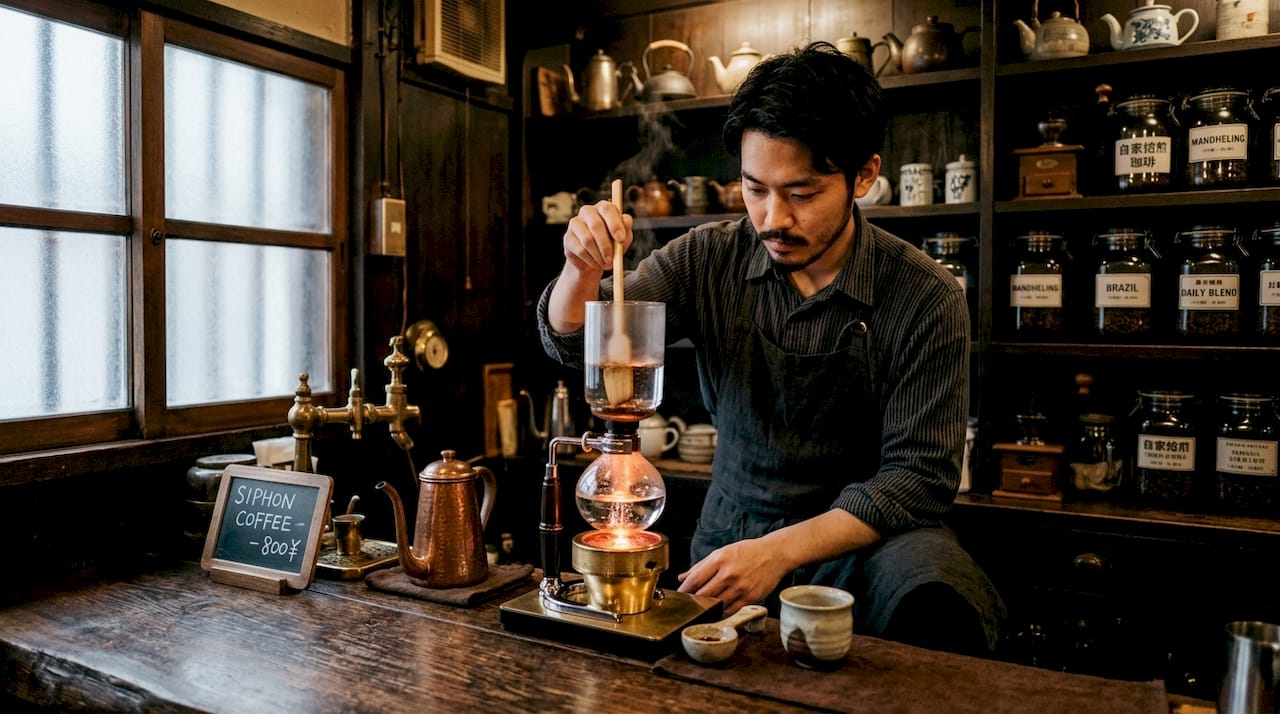
Nel drip uses a cloth filter, creating a softer, rounder cup compared to paper filters. Paper filters absorb oils and fine particles. Cloth filters, by contrast, allow more of the bean’s natural oils to pass through, which rounds out bitterness and produces a body that feels almost silky. If you’ve ever found pour-over coffee slightly harsh or thin, nel drip is a genuine revelation.
Siphon brewing operates on vapor pressure. Water in a lower chamber is heated until it vaporizes and rises into an upper chamber where the grounds sit. Once heat is removed, the brewed coffee is drawn back down through a filter. The result is a strikingly clean cup with bright clarity. Understanding coffee extraction science helps explain why the siphon produces such a distinctive taste. The controlled temperature and unique extraction dynamic preserve delicate floral and citrus notes that other methods can mask.
The coffee bloom science behind pre-infusion also plays a role here. Even in siphon brewing, allowing the grounds to degas before full extraction improves the final cup significantly.
| Feature | Nel drip | Siphon | Traditional pour-over |
|---|---|---|---|
| Filter material | Cloth | Glass/cloth | Paper |
| Body | Full, round | Clean, bright | Light to medium |
| Oil retention | High | Medium | Low |
| Bitterness | Soft | Balanced | Can be sharp |
| Brew time | 4 to 6 minutes | 5 to 8 minutes | 3 to 4 minutes |
| Skill level | Intermediate | Advanced | Beginner to intermediate |
Pro Tip: If you want to try nel drip at home, rinse your cloth filter with hot water before each use to remove any fabric taste, and replace it every 2 to 3 weeks for best results.
Turkish coffee: Ancient method with extra-fine grounds
Turkish coffee is one of the oldest brewing traditions still practiced at scale today, and its method has changed remarkably little over centuries.
Turkish coffee is brewed with extra-fine grounds in a small pot called a cezve (also spelled ibrik), slowly heated over low heat or hot sand. The grind is finer than espresso. Water is added cold along with the grounds and often sugar before any heat is applied. This cold-start process allows for a gradual extraction that develops a characteristic thick texture and a layer of dense foam on top.
The steps look deceptively simple:
- Add cold water to the cezve, measured to match your cup size
- Add one heaped teaspoon of extra-fine coffee per cup, plus sugar if desired
- Stir gently before applying heat
- Heat over low flame until foam rises but does not boil
- Pour carefully to preserve the foam layer in each cup
Turkish coffee holds UNESCO intangible cultural heritage status, reflecting how deeply it is woven into social life across Turkey, Greece, Bosnia, and the broader Middle East and Balkans. Serving Turkish coffee to a guest signals respect and warmth. The grounds left in the cup after drinking are also used for tasseography (fortune telling), which adds a uniquely playful cultural dimension.
If you enjoy evaluating the full sensory complexity of your cup, a coffee cupping guide can help you identify what makes Turkish coffee’s texture and aroma so distinct from other methods.
Pro Tip: To make Turkish-style coffee at home without a traditional cezve, a small saucepan and a fine-mesh strainer work well. The key is always low heat and never letting it reach a rolling boil.
How science explains coffee liking and brewing methods
Cultural traditions reveal what people value. Science reveals why. Recent research has started quantifying the exact conditions under which people enjoy coffee most, and the results are genuinely surprising.
An empirical study on coffee preference finds that liking is highest for black coffee consumed in spring, during morning hours, from ceramic cups, with an optimal consumption of 4 to 5 cups per day. That’s a precise snapshot. Ceramic retains heat evenly and does not transfer metallic or plastic taste to the liquid. The morning preference aligns with circadian cortisol patterns, which make the sensory system more alert and receptive to aroma.
A separate scientific literature review confirms that brewing method shapes the cup’s chemical, physical, and sensory attributes, including aroma profile, pH, acidity, solids, lipids, viscosity, and crema stability. In other words, how you brew is just as scientifically significant as what you brew.
“The variables that determine whether someone loves or merely tolerates their coffee are measurable. And most people have never thought to measure them.”
| Condition | Optimal value | Effect on liking |
|---|---|---|
| Coffee type | Black (no additives) | Highest liking score |
| Time of day | Morning | Sharpened sensory perception |
| Season | Spring | Taste sensitivity peaks |
| Cup material | Ceramic | Neutral taste transfer, even heat |
| Daily cups | 4 to 5 | Optimal quantity-to-preference ratio |
| Brewing factor | Method-dependent | Affects pH, aroma, viscosity, crema |
Knowing what conditions optimize your experience helps you make better choices. Using a coffee tasting guide to evaluate aroma, acidity, and body systematically can help you understand not just what you like, but why. For a deeper orientation, exploring coffee flavor profiles across different origins gives you a vocabulary to describe what you are already experiencing.
Key sensory drivers worth understanding:
- Aroma: Volatile compounds released during brewing; peaks during first 30 seconds of pouring
- Acidity: Brightness and perceived freshness, often tied to origin and roast level
- Crema: CO2-based foam layer on espresso; signals freshness and affects mouthfeel
- Viscosity: Body or weight of the liquid; shaped by dissolved solids and lipid content
- pH: Lower pH means more perceived acidity; brewing method shifts this measurably
Immersion vs. percolation: Physics behind flavor extraction
Every brew method fits into one of two fundamental categories: immersion or percolation. Knowing the difference changes how you think about your entire brewing toolkit.
Immersion brewing is static, reaching equilibrium quickly, while percolation maintains efficient extraction through continual solvent renewal. Each method is sensitive to different variables. In immersion, water and grounds share the same space until extraction equilibrates. French press and cold brew are classic examples. In percolation, fresh water constantly moves through the grounds, keeping the concentration gradient steep and extraction ongoing.
This physics difference produces real taste outcomes. Immersion tends to create a heavier, more uniform body because all grounds are treated equally throughout the brew. Percolation creates more complexity because different compounds extract at different rates as water flows through.
| Factor | Immersion | Percolation |
|---|---|---|
| Extraction mechanism | Equilibrium-based | Continual solvent renewal |
| Grind size sensitivity | Lower | Higher |
| Flavor outcome | Uniform, full body | Complex, layered |
| Control variables | Time, ratio | Grind, flow rate, temperature |
| Common examples | French press, cold brew | Pour-over, espresso, siphon |
| Best for | Consistency, richness | Nuance, brightness |
Understanding this distinction gives you real control over your cup. Want a richer, more forgiving brew? Choose immersion. Want brighter, more origin-forward flavors? Percolation is your tool. The full depth of what each method delivers is explained well in this coffee extraction guide.
Pro Tip: If your percolation brews taste uneven or hollow, the most common fix is a more consistent grind. Percolation is far more sensitive to grind uniformity than immersion. A burr grinder makes a larger difference here than any other equipment upgrade.
- Immersion: focus on water temperature and steep time for maximum control
- Percolation: prioritize grind consistency and even water distribution
- Both methods benefit from freshly roasted beans with adequate degassing time
- Ceramic or glass brewing vessels support the most neutral flavor results
Why coffee culture is deeper than taste: Lessons from global rituals
Most conversations about coffee eventually focus on flavor. Light roast versus dark, fruity versus chocolatey, single origin versus blend. But the traditions explored in this article suggest that flavor is actually only one layer of what makes coffee meaningful.
The Ethiopian ceremony teaches something important: the sequence of an experience shapes how it is felt. Three rounds of coffee from the same grounds tastes different not because the chemistry changed dramatically, but because the social and temporal context shifted. The act of waiting together, smelling the roasting beans, and participating in the preparation creates a perceptual frame that makes the cup taste like more than it would in isolation.
Japan’s material choices tell a similar story. The switch from paper to cloth is not just technical. It reflects a philosophy that small details accumulate into something distinctly different. Nel drip coffee requires more care and cleaning than a paper filter, but kissaten culture embraces that labor as part of the value. The effort is visible in the cup.
Science backs this up without undermining the tradition. The research finding that ceramic cups optimize coffee liking confirms what generations of coffee culture already knew intuitively: the vessel matters. Coffee origin and quality are foundational, but the entire context around the cup, including material, time of day, and brewing method, shapes whether great coffee actually tastes great.
Where we think most coffee enthusiasts get stuck is in treating these as separate conversations. Ritual is cultural. Brewing physics is scientific. Flavor is personal. But the most satisfying coffee experiences tend to happen when all three overlap. The Buna Tirttu does not succeed despite its two-hour length. It succeeds because of it. The Turkish cezve does not create great coffee by accident. Its cold-start method and fine grind are precise responses to what that tradition valued in a cup.
The takeaway for us: depth in coffee culture comes from paying attention to the whole chain from origin to vessel, not just the roast profile on the bag.
Discover coffee traditions and products you’ll love
You have just crossed five continents in a single read, from Ethiopian clay pots to Japanese siphon chambers to the physics of percolation. That kind of curiosity is exactly what drives the best coffee experiences.

At Z’s Coffee, we stock products designed for coffee lovers who want to go deeper. Whether you are exploring new brewing methods or looking for something convenient without sacrificing quality, our coffee and tea collection covers a wide range of origins, roast profiles, and brewing styles suited to every tradition discussed in this article. For those mornings when ritual has to wait, our instant coffee options deliver genuine flavor without compromise. Browse our full selection and find the products that match where your coffee journey is headed next.
Frequently asked questions
What makes Ethiopian coffee ceremonies unique?
Ethiopian Buna Tirttu lasts 1 to 2 hours, follows a strict three-round sequence, and marks special occasions by transforming the brewing process itself into a shared, multi-stage social ritual.
Why do Nel drip filters create a different flavor?
Nel drip yields less papery bitterness because the cloth filter retains fewer oils than paper, resulting in a softer, fuller-bodied cup with noticeably less harshness.
How does cup material affect coffee enjoyment?
Studies find that liking is highest with ceramic cups because they retain heat evenly and introduce no off-flavors, particularly when serving black coffee in the morning.
What’s the best daily coffee consumption for enjoyment?
Optimal liking and quantity align at 4 to 5 cups per day according to empirical research, balancing sensory satisfaction with manageable intake.
What’s the main difference between immersion and percolation brewing?
Immersion reaches equilibrium quickly and stops extracting, while percolation continuously renews the water-to-grounds contact, keeping extraction active throughout the entire brew.