Choosing coffee by flavor can feel overwhelming when faced with thousands of varieties. Every bean offers a unique sensory experience shaped by origin, roast, and processing. The Coffee Taster’s Flavor Wheel standardizes 110 attributes to help you navigate this complexity with precision. This guide delivers a comprehensive list of coffee flavor profiles, explains how flavor wheels organize taste descriptors, and shows you practical ways to identify and enjoy your ideal cup. Whether you prefer bright fruity notes or deep roasted tones, understanding flavor profiles transforms your brewing experience from guesswork into confident selection.
Table of Contents
- Key takeaways
- Understanding the coffee flavor wheel: your tasting roadmap
- Distinct flavor profiles of Arabica and Robusta coffee
- How roasting, terroir, and processing shape coffee flavor profiles
- Practical tips for exploring and evaluating coffee flavor profiles at home
- Discover coffee flavors with Z’s Coffee offerings
- FAQ
Key Takeaways
| Point | Details |
|---|---|
| Flavor wheel structure | The Coffee Taster’s Flavor Wheel standardizes 110 attributes in a hierarchical layout that moves from broad center categories to concrete outer descriptors, guiding you from general impressions to specific notes. |
| Robusta flavor wheel | Robusta has its own flavor wheel with about 103 descriptors, emphasizing roasted and earthy notes. |
| Roast and origin influence | Roasting levels and origin shape how base profiles express themselves, with light roasts highlighting fruity and floral notes and dark roasts intensifying chocolatey and nutty tones. |
| Communication and precision | Using a standardized flavor wheel improves communication among tasters and increases tasting precision during cupping and brewing. |
Understanding the coffee flavor wheel: your tasting roadmap
The Coffee Taster’s Flavor Wheel contains 110 attributes developed by the Specialty Coffee Association and World Coffee Research. It organizes flavors from broad categories at the center to specific descriptors around the outer edge. This hierarchical structure lets you narrow down what you taste step by step, moving from general impressions like “fruity” to precise notes like “blueberry” or “raspberry.”
The wheel standardizes subjective flavor terms so enthusiasts and professionals communicate consistently. When you describe coffee as having “citrus” notes, the wheel provides shared vocabulary that others understand immediately. Official cupping protocols use the wheel to evaluate fragrance when coffee is dry, aroma after adding hot water, and taste during sipping. This systematic approach removes guesswork from flavor identification.
You calibrate your palate by referencing everyday items found in supermarkets. If the wheel lists “almond,” you compare the coffee’s taste to actual almonds. This practical method trains your sensory memory and sharpens recognition over time. Major flavor categories include fruity, floral, roasted, nutty, spicy, and sweet, each branching into dozens of specific descriptors.
Pro Tip: Print a flavor wheel and keep it near your brewing station. Reference it during every tasting session to build faster recognition of subtle notes.
The wheel works best when you explore types of coffee beans for richer flavor diversity. Different bean varieties express distinct flavor potentials that the wheel helps you identify and appreciate. Start with the center categories and work outward as your palate develops. This progression builds confidence and deepens your tasting skills naturally.
- Begin at the wheel’s center with broad categories like fruity or roasted
- Move outward to subcategories such as berry or chocolate
- Identify specific descriptors like blackberry or dark chocolate at the outer edge
- Use reference foods to confirm your flavor perceptions
- Practice regularly to strengthen sensory memory and recognition speed
Distinct flavor profiles of Arabica and Robusta coffee
Arabica coffee’s flavor wheel centers on complex fruity and floral notes that define specialty coffee. You’ll encounter descriptors like jasmine, lemon, and berry across light to medium roasts. These delicate flavors emerge from Arabica’s higher sugar content and lower caffeine compared to Robusta. The wheel guides you through nuanced profiles that reward careful brewing and fresh beans.
Robusta’s flavor wheel features 103 descriptors with top categories including roasted, caramel, dark chocolate, and almond. This species delivers bold, earthy flavors with pronounced bitterness and body. Robusta’s wheel emphasizes roasted notes because the beans naturally contain more chlorogenic acids and less sugar than Arabica. You’ll find Robusta in espresso blends where its crema and intensity balance Arabica’s brightness.
Roasting levels modify how these baseline profiles express themselves. Light roasts highlight Arabica coffee origins and flavor traits like floral and citrus notes. Dark roasts bring forward Robusta’s chocolatey and nutty characteristics while mellowing acidity. Understanding these differences helps you select beans matching your preferred intensity and sweetness.
| Species | Descriptor Count | Dominant Flavors | Best Roast Level |
|---|---|---|---|
| Arabica | 110 | Fruity, floral, sweet | Light to medium |
| Robusta | 103 | Roasted, nutty, earthy | Medium to dark |
Arabica thrives at higher altitudes where cooler temperatures slow cherry maturation, concentrating sugars and acids. This produces the bright, complex profiles coffee enthusiasts prize. Robusta grows at lower elevations in hotter climates, developing robust flavors and higher caffeine that acts as natural pest defense. These growing conditions directly shape the flavor wheels for each species.
- Arabica offers wine-like acidity and tea-like body with fruit-forward notes
- Robusta provides full body and low acidity with grain and wood undertones
- Blends combine both species to balance complexity with strength
- Single-origin Arabica showcases terroir-driven flavor variation
- High-quality Robusta reveals surprising sweetness and clean finish
How roasting, terroir, and processing shape coffee flavor profiles
Roasting, terroir, and processing alter profiles in dramatic ways that determine your final cup. Roasting level shifts flavor emphasis and intensity more than any other factor. Light roasts preserve origin characteristics and highlight fruity Arabica notes like berry and citrus. Medium roasts balance origin flavors with caramelization, developing sweetness and body. Dark roasts create roasted and chocolatey notes while reducing acidity and origin distinction.
Terroir encompasses soil composition, altitude, rainfall, and temperature that give each region signature flavors. Ethiopian coffees often express blueberry and jasmine notes from volcanic soil and high elevation. Brazilian beans develop chocolate and nut flavors from lower altitudes and mineral-rich earth. Understanding coffee origin impact on flavor helps you predict taste profiles before brewing.
Processing methods transform cherry into green bean while profoundly affecting flavor. Washed processing removes fruit before drying, producing clean acidity and bright notes. Natural processing dries whole cherries, imparting fruity sweetness and wine-like complexity. Honey processing leaves some fruit mucilage during drying, creating balanced sweetness between washed and natural profiles. Each method interacts with terroir and roast to create distinct flavor outcomes.
Light roasts stop development before second crack, preserving delicate aromatics and origin-specific acids. You’ll taste the terroir clearly in these roasts. Dark roasts continue past second crack, developing oils and roasted flavors that dominate origin characteristics. The Maillard reaction and caramelization create new flavor compounds that mask subtle fruity notes while enhancing body and bitterness.
Pro Tip: Buy small batches of the same origin at different roast levels. Taste them side by side to understand how roasting transforms baseline flavors.
- Light roasts maximize floral and fruity Arabica characteristics
- Medium roasts develop caramel sweetness and balanced acidity
- Dark roasts emphasize roasted and chocolatey Robusta-like notes
- Washed processing highlights clean acidity and tea-like body
- Natural processing adds berry sweetness and wine-like complexity
- Honey processing creates caramel notes and syrupy mouthfeel
Practical tips for exploring and evaluating coffee flavor profiles at home
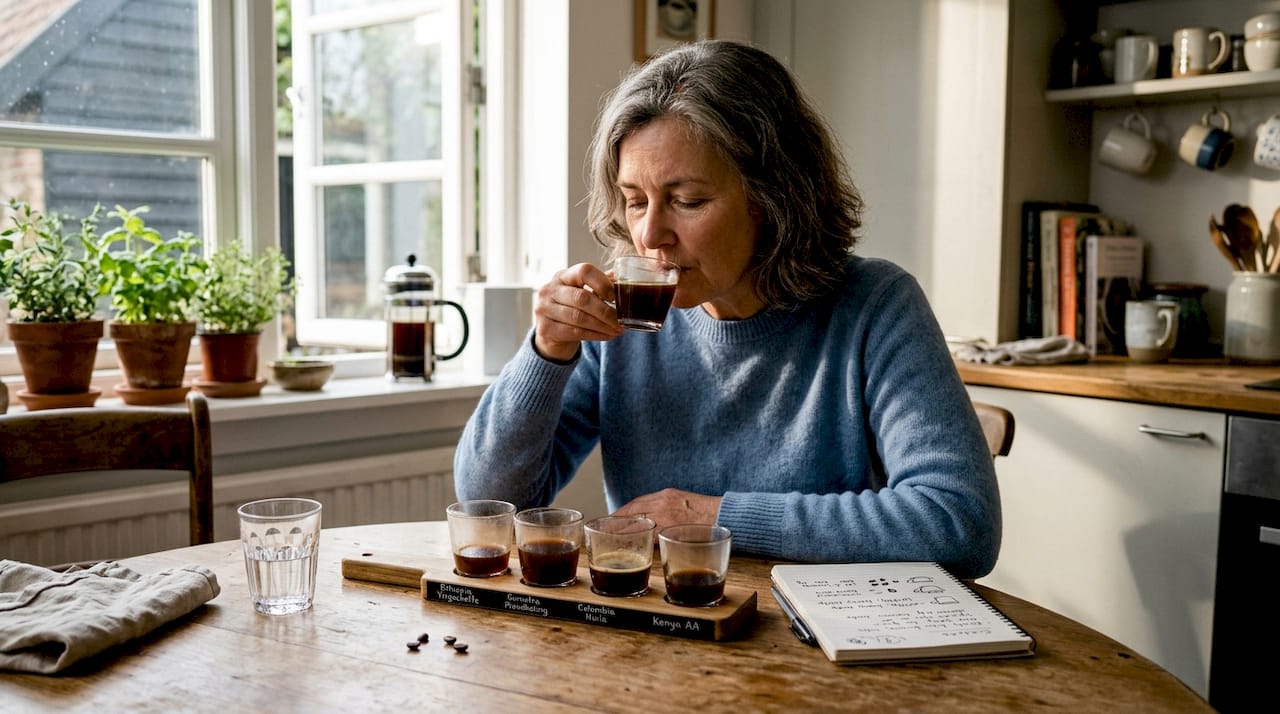
Follow systematic cupping steps to identify flavors consistently. Start by noting the dry fragrance of freshly ground coffee, then add hot water and observe the wet aroma as gases release. Break the crust after four minutes and inhale deeply to capture peak aromatics. Finally, slurp the coffee to spray it across your palate, activating all taste receptors simultaneously. This method reveals flavors you’d miss with casual sipping.
Use the flavor wheel as a reference during each tasting session. Keep it visible and work from center categories outward as you identify notes. Start broad with “fruity” or “nutty,” then narrow to specific descriptors like “cherry” or “hazelnut.” This structured approach trains your palate faster than random guessing. Reference the wheel after every sip until pattern recognition becomes automatic.
Cupping scores use scales rating attributes like uniformity and clean cup to quantify quality objectively. You can adopt simplified versions at home. Rate each coffee on sweetness, acidity, body, and flavor intensity using a 1-10 scale. Track these scores in a tasting journal alongside brewing parameters and flavor notes. Patterns emerge that guide future purchases and brewing adjustments.
Keep a dedicated tasting journal with date, origin, roast level, brew method, and detailed flavor observations. Note which descriptors you identified easily and which remained elusive. Over weeks, you’ll see your palate developing and vocabulary expanding. This record becomes invaluable when selecting new coffees or troubleshooting brewing issues.
Try different roast levels and origins systematically to expand your palate. Don’t limit yourself to familiar profiles. Sample a bright Ethiopian natural, then contrast it with a chocolatey Brazilian pulped natural. Experience how Indonesian coffees differ from Central American offerings. Each tasting builds sensory memory that makes future identification faster and more accurate.
- Grind coffee and note the dry fragrance before adding water
- Pour hot water and observe the wet aroma as it blooms
- Break the crust at four minutes and inhale the released aromatics
- Slurp coffee to spray it across your entire palate
- Reference the flavor wheel to identify specific notes
- Score the coffee on sweetness, acidity, body, and flavor
- Record observations in your tasting journal immediately
- Compare multiple coffees side by side to highlight differences
Pro Tip: Brew the same coffee using your perfect coffee brewing guide with different water temperatures. Hotter water extracts more bitterness; cooler water emphasizes sweetness and acidity.
Discover coffee flavors with Z’s Coffee offerings
Now that you understand flavor profiles and tasting techniques, put your knowledge into practice. Z’s Coffee offers carefully selected beans that showcase the diversity you’ve learned about. Our cold brew coffee collection delivers smooth, low-acid profiles perfect for identifying subtle chocolate and nut notes. For enthusiasts seeking bold roasted flavors, try our coffee with mushrooms dark roast that combines deep cocoa notes with functional benefits.
Explore our complete coffee collection featuring origins from Ethiopia to Brazil, each with distinct flavor profiles waiting for your discovery. Every selection helps you apply the flavor wheel concepts and refine your palate. Start your tasting journey with expert-curated beans that make identifying fruity, floral, and roasted notes effortless and enjoyable.
FAQ
What is the coffee flavor wheel and why use it?
The coffee flavor wheel is a standardized chart organizing 110 taste and aroma descriptors from broad categories to specific notes. It helps you identify flavors systematically and communicate your tasting experiences using shared vocabulary. Professionals and enthusiasts use it during cupping to evaluate coffee quality objectively. The wheel trains your palate by providing a structured framework that transforms vague impressions into precise flavor identification.
How do roasting levels affect coffee flavor profiles?
Light roasts preserve origin characteristics and emphasize fruity, floral notes with bright acidity. Medium roasts develop caramel sweetness and balanced body through Maillard reactions. Dark roasts create roasted, chocolatey flavors while reducing acidity and masking subtle origin notes. Each level offers different flavor experiences from the same green beans, letting you choose intensity and complexity that match your preferences.
Can I taste different coffee origins with the same brew method?
Yes, coffee origin matters for flavor even when brewing identically. Soil composition, altitude, and climate create unique flavor signatures in each region’s beans. Ethiopian coffees express blueberry and jasmine notes while Brazilian beans deliver chocolate and nut flavors, regardless of your brew method. Consistent brewing actually highlights these origin differences more clearly by removing variables that might obscure terroir-driven characteristics.
What are some tips for identifying coffee flavor notes at home?
Smell coffee when it’s dry ground, then again after adding hot water to capture different aromatic compounds. Use a printed flavor wheel beside you during tastings, working from center categories outward to specific descriptors. Keep detailed tasting notes comparing different coffees, recording which flavors you identified easily. Practice your perfect coffee brewing guide techniques to ensure consistent extraction that reveals true flavor potential without over or under-extraction interference.