TL;DR:
- Coffee auctions serve as the primary method for discovering the true value of high-quality specialty coffee through competitive bidding based on cup excellence. They connect producers with international buyers, offering premiums far above commodity prices and encouraging quality improvements. These platforms promote transparency, long-term relationships, and market access, which benefit producers and traders alike.
Coffee auctions are competitive bidding events where the highest-quality lots are sold to international buyers at prices determined entirely by quality, not commodity indexes. The role of coffee auctions in specialty coffee trade is to create a transparent, merit-based marketplace that rewards producers for excellence and gives roasters and traders direct access to verified premium lots. Programs like Cup of Excellence and the Nairobi Coffee Exchange (NCE) have made this system the backbone of the global specialty coffee economy. For producers, roasters, and traders, understanding how these auctions work is not optional. It is the difference between commodity pricing and transformational income.
What is the role of coffee auctions in specialty trade?
Coffee auctions function as the primary price discovery mechanism for specialty coffee outside the commodity futures market. Where the C-market sets a floor price based on volume and grade, auctions set a ceiling based on cup quality alone. That distinction matters enormously for producers who invest in micro-lot preparation, careful processing, and farm-level traceability.
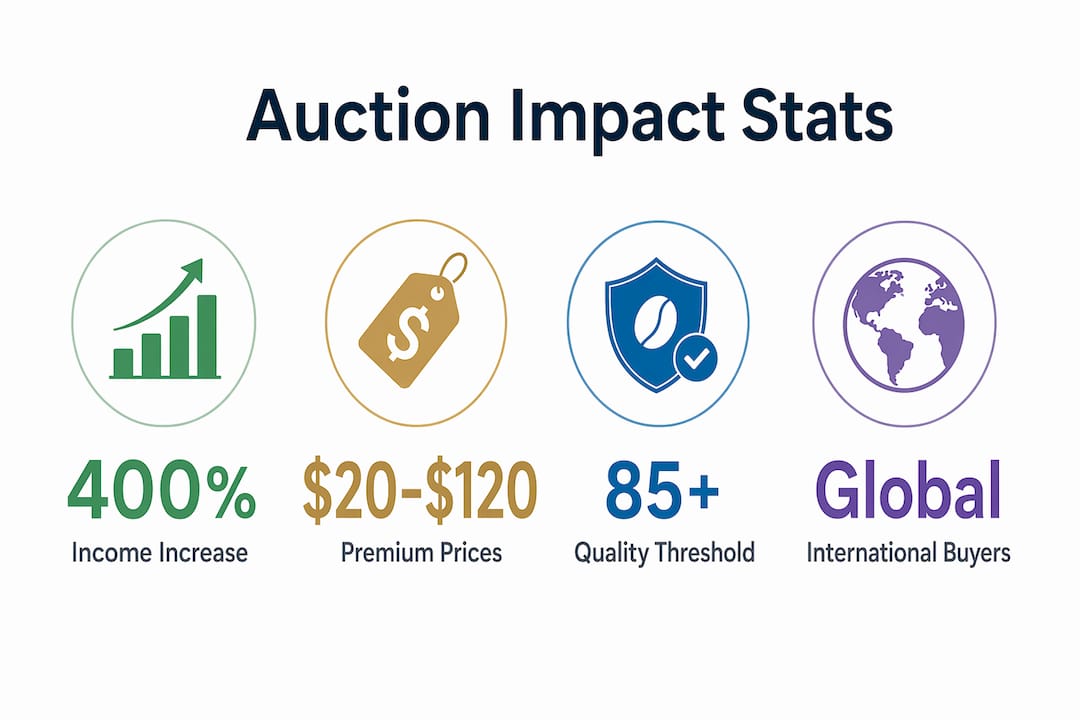
Auction-winning coffees fetch 5 to 100 times commodity market prices, with top Kenyan lots reaching $120 per kilogram. That is not a rounding error. It reflects a structural shift in how quality is valued when buyers compete openly for a finite supply.
Auctions also serve as a discovery mechanism. They connect smallholder producers in Ethiopia, Colombia, and Kenya with roasters in Tokyo, Copenhagen, and New York who would never find those farms through traditional export channels. The transparent pricing platform auctions provide directly incentivizes farm-level investment and creates market access that commodity chains cannot replicate.
How do coffee auctions work from submission to sale?
The auction process follows a structured sequence. Each stage filters for quality and builds trust between producers and buyers.
-
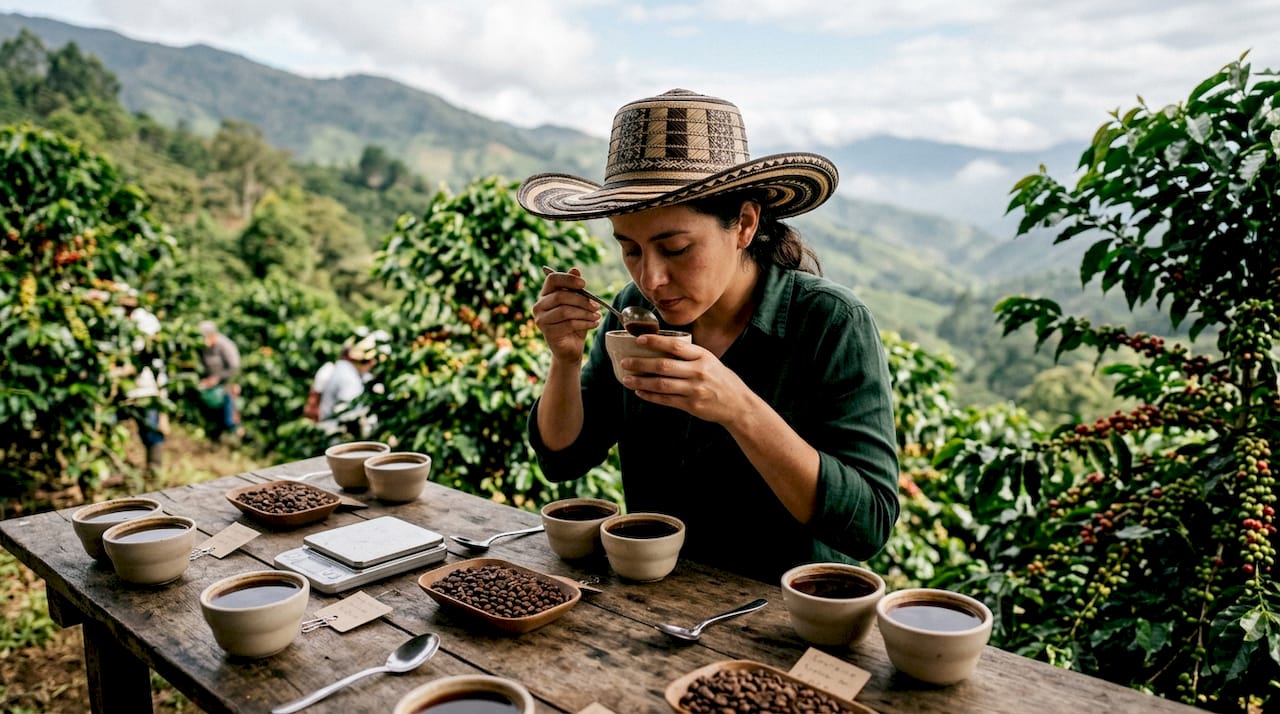
Submission and scoring. Producers submit coffee samples for evaluation. Panels score each lot using the Specialty Coffee Association (SCA) cupping protocol. Only the top 3–8% of submitted lots qualify, typically those scoring 85 points or above. At a 2026 Kenyan digital auction, 300 samples produced only 22 auctioned lots. That selectivity is the point.
-
Blind cupping panels. Qualified lots go through blind evaluation by licensed Q-graders. No producer names or farm details appear during scoring. This removes bias and ensures the cup quality alone determines selection.
-
Buyer registration and pre-auction access. Registered buyers receive sample sets weeks before the auction date. They cup independently, take notes, and set their bidding limits. Buyers bid in USD, which standardizes pricing across international participants.
-
Live or digital bidding. Auctions run on timed clocks. Bids reset the clock when placed near the deadline, preventing last-second sniping and building genuine competitive momentum. The NCE operates under Capital Markets Authority oversight, adding regulatory accountability to the process.
-
Coffee Warrants and logistics. Winning buyers receive Coffee Warrants, which are legal documents confirming ownership of the physical lot. Post-auction logistics cover export documentation, shipping, and quality verification to confirm the delivered coffee matches the auctioned sample.
Pro Tip: If you are a producer preparing for auction submission, cup your own samples against the SCA 85-point threshold before paying entry fees. Self-evaluation against a known standard saves money and sharpens your quality targets.
Why do auctions create better prices and market transparency?
Commodity markets price coffee by weight, grade, and origin category. Auctions price coffee by what a competitive room of informed buyers is willing to pay for a specific cup. The gap between those two systems is where producer income either grows or stagnates.
Price premiums and what they signal
Producers winning auctions see average income increases of 400% in the same year. That figure reflects not just the auction price but the downstream contracts, roaster relationships, and brand recognition that follow a winning lot. The auction price is the headline. The long-term contracts are the real prize.
The table below shows how auction pricing compares to commodity market pricing across key producing regions.
| Region | Commodity price range (per kg) | Auction premium range (per kg) |
|---|---|---|
| Kenya | $2–$4 | $20–$120 |
| Ethiopia | $2–$3.50 | $15–$80 |
| Colombia | $2.50–$4 | $18–$60 |
| Honduras | $1.80–$3 | $10–$45 |
These premiums are not guaranteed. They reflect top-scoring lots in competitive auction cycles. But they demonstrate the ceiling that quality-focused producers can reach when the right platform connects them to the right buyers.
Market transparency as a quality incentive
Auctions publish results publicly. Every producer in a given country can see what a 90-point lot from their region sold for. That visibility creates a quality benchmark that ripples through the entire supply chain. Farms that previously sold undifferentiated parchment to local intermediaries now have a concrete target: score above 87, qualify for auction, and access international buyers directly.
Transparent price discovery also promotes direct trade. Roasters who buy at auction often return to the same producer the following season through private contracts, bypassing the auction entirely. The auction functions as the introduction. The relationship does the rest.
Pro Tip: Roasters attending auctions for the first time should cup every available pre-auction sample, not just the lots within their budget. Understanding the full quality range in a given origin sharpens your palate and your bidding strategy.
What are the real benefits and challenges for producers?
The income gains from auction participation are real and well-documented. They are also concentrated. Auction success requires scoring above 87 points and delivering post-auction coffee that matches the cupping profile exactly. Most producers who submit do not qualify. That is not a flaw in the system. It is the system working as designed.
Benefits that extend beyond the auction floor
Winning a Cup of Excellence auction or placing in the top lots at the NCE does more than generate a single high-value sale. It creates a provenance narrative that roasters use in their marketing for years. It establishes the farm as a verified source of exceptional coffee. It opens doors to importers, green coffee buyers, and specialty retailers who would not otherwise know the farm exists.
Long-term contracts with roasters often result from auction visibility, even when auction prices fluctuate season to season. The auction is the marketing event. The contract is the business outcome.
Common pitfalls to avoid
- Submitting underprepared lots. Entry fees and sample preparation costs add up. Submitting a lot that scores below 85 wastes both.
- Ignoring post-auction logistics. Delivering coffee that fails to match the auctioned sample damages your reputation with the buyer and with the auction program.
- Treating the auction as a one-time event. Producers who use auction visibility to build direct relationships see compounding returns. Those who treat it as a single sale miss the larger opportunity.
- Underestimating preparation costs. Micro-lot sorting, cupping equipment, and sample shipping are real expenses. Budget for them before committing to submission.
- Skipping the feedback loop. Auction programs often provide cupping scores and notes to non-qualifying producers. That feedback is free quality consulting. Use it.
Pro Tip: Producers should treat their first auction submission as a learning exercise, not a revenue event. The cupping feedback alone is worth the entry cost if you use it to improve the following season’s lot.
How are coffee auctions evolving in 2026?
The auction format that dominated specialty coffee for two decades is changing fast. Digital platforms have removed the geographic barrier that once limited buyer participation to those who could travel to origin or attend in-person events in major trading cities.
The 2026 Cup of Excellence platform now includes earlier buyer engagement, clearer auction timelines, and a dynamic clock designed to build bidding momentum rather than reward last-second bids. These changes increase participation and create a stronger emotional connection between buyers and the producers behind each lot.
Key trends shaping auctions in 2026:
- Digital-first platforms that allow buyers in any time zone to participate without traveling to origin
- Producer storytelling integrated into auction listings, giving buyers context on farm practices, processing methods, and community impact
- Dynamic bidding clocks that reset on late bids, creating genuine competitive tension and higher final prices
- Expanded auction calendars with more frequent cycles to accommodate growing global demand for traceable specialty lots
- Auction programs as marketing platforms that enhance provenance narratives and legitimize producer brands beyond the sale itself
Auction platforms are evolving to tell producer stories and foster buyer engagement, creating a richer experience that goes well beyond a simple transaction. For producers, this means the auction catalog entry is now a marketing asset. For buyers, it means more context and confidence in every purchase decision.
Key Takeaways
Coffee auctions are the most effective mechanism specialty coffee has for connecting quality-driven producers with international buyers at prices that reflect actual cup value.
| Point | Details |
|---|---|
| Price discovery at scale | Auction-winning lots reach 5–100 times commodity prices, with top Kenyan lots at $120 per kilogram. |
| Strict quality thresholds | Only the top 3–8% of submitted lots qualify, requiring scores of 85 points or above on SCA cupping protocols. |
| Long-term relationship value | Auction visibility leads to direct trade contracts with roasters, often worth more than the auction sale itself. |
| Post-auction delivery risk | Failing to match the auctioned sample on delivery damages producer reputation and future auction eligibility. |
| Digital auctions expanding access | Platforms like Cup of Excellence now use dynamic clocks and earlier buyer engagement to increase global participation. |
Why I think auctions are undervalued as business tools
Most producers I talk to see coffee auctions as a lottery. Score high enough, win big, move on. That framing misses the point entirely.
The real value of auction participation is not the check you receive after the hammer falls. It is the catalog entry, the cupping notes published online, the roaster in Berlin who cups your lot, does not win the bid, and then emails you directly in march asking about next season’s harvest. That email is worth more than the auction premium.
Auctions function as the most credible form of third-party validation the specialty coffee industry has. A Cup of Excellence placement tells every buyer in the world that an independent panel of Q-graders scored your coffee above 87 points in a blind evaluation. No marketing budget buys that. No trade show booth replicates it.
The challenge is that producers often enter auctions without a plan for what comes after. They win, they ship, they cash the check, and they return to selling through the same intermediaries the following year. The producers who transform their businesses are the ones who treat the auction as the opening move in a longer game. They follow up with every buyer who cupped their lot. They build a mailing list. They document their farm story and make it easy for roasters to share.
For roasters and traders, the lesson is similar. Auctions are not just sourcing events. They are the best intelligence tool in the market. The lots that score 90+ points at Cup of Excellence tell you exactly where quality is being produced, what processing methods are working, and which origins deserve deeper investment. Use that information.
— zachary
Specialty coffee worth exploring at Zscoffee
Understanding how auctions shape quality standards changes how you think about every bag of coffee you buy or sell. At Zscoffee, the focus is on making that quality accessible to coffee producers, roasters, and traders who want to connect with the best the specialty market has to offer.
Zscoffee carries a curated selection of specialty coffee products sourced with traceability and quality in mind. Whether you are a roaster looking to understand auction-grade benchmarks or a producer researching what buyers expect, the resources and products at Zscoffee are built for serious coffee people. You can also explore the full coffee awards landscape to see how auction programs fit within the broader specialty coffee recognition system.
FAQ
What is the role of coffee auctions in specialty trade?
Coffee auctions are the primary price discovery mechanism for specialty coffee, connecting quality-focused producers with international buyers through competitive bidding. They reward cup quality with premiums that commodity markets cannot provide.
How do producers qualify for a coffee auction?
Producers submit samples that are scored by blind cupping panels using SCA protocols. Only lots scoring 85 points or above typically qualify, representing the top 3–8% of all submissions.
What are the main coffee auction benefits for producers?
Winning producers see average income increases of 400% in the auction year, plus long-term benefits including direct trade contracts, international brand recognition, and roaster relationships that extend well beyond the auction event.
How does the Cup of Excellence auction process work?
Cup of Excellence runs a multi-round blind cupping process, followed by a digital auction where registered international buyers bid in USD. The 2026 platform includes a dynamic clock and earlier buyer engagement to increase competition and transparency.
What are the biggest risks in coffee auction participation?
The main risks are entry costs with no guarantee of qualifying, and the reputational damage that comes from delivering post-auction coffee that does not match the auctioned sample. Consistent quality management from harvest through export is non-negotiable.