TL;DR:
- Specialty baristas enhance coffee experiences through knowledge, technical skill, and customer education.
- They focus on craft, origin, and flavor nuances rather than just volume and speed.
- Investing in their training and recognizing their value improves café loyalty and quality.
Most people think a barista’s job is to push buttons and pour milk. That assumption is costing you some of the best coffee experiences you could be having. In specialty coffee, the barista is the final link in a chain that starts on a farm, travels through processing and roasting, and ends in your cup. Every decision they make, from grind size to water temperature to how they talk to you about a bean’s origin, shapes what you taste. This guide breaks down what specialty baristas actually do, the skills they build, and why understanding their role makes you a sharper, more satisfied coffee drinker.
Table of Contents
- What really sets specialty baristas apart?
- Daily responsibilities: Beyond the espresso shot
- Barista skills and training: A craft with certification
- Baristas as educators: Creating exceptional customer experiences
- Why the true value of baristas is still underestimated
- Elevate your specialty coffee journey with Z’s Coffee
- Frequently asked questions
Key Takeaways
| Point | Details |
|---|---|
| Specialty baristas go beyond basics | Baristas in specialty coffee are trained craftspeople who manage equipment, educate customers, and deliver tailored flavors. |
| Training and certification matter | SCA certifications help ensure baristas maintain high standards and continually improve their skills. |
| Education elevates experience | Great baristas actively guide consumers through the nuances of coffee origin, flavor, and brewing. |
| Invisible value, visible results | Much of a barista’s value happens behind the scenes but leads to better coffee and stronger customer loyalty. |
What really sets specialty baristas apart?
Walk into a chain café and the goal is simple: get your drink right and get you out the door fast. Walk into a specialty café and something different happens. The barista might ask what flavors you enjoy, explain why a particular Ethiopian natural process tastes like blueberries, or adjust the grind on the spot because the humidity shifted. That gap is not accidental. It reflects a fundamentally different philosophy about what coffee is and what a barista’s job actually means.
Specialty baristas see themselves as the bridge between the farmer and the drinker. As Craft Coffee Guru explains, baristas enhance consumer experience by bridging farm-to-cup, educating on origins and flavors, and customizing through precise mechanics, turning routine drinks into sensory journeys. That framing matters. It positions every cup as something worth paying attention to, not just consuming.
“The best baristas don’t just make drinks. They make you understand why that drink tastes the way it does.”
The contrast with chain models is stark. Chain cafés like Starbucks emphasize volume, consistency, and speed, while specialty cafés focus on craft, nuance, and education. Neither is wrong for its context, but they are genuinely different jobs. A specialty barista also integrates newer tools like precision scales, refractometers, and temperature-controlled kettles, while staying current on sustainable sourcing and ethical supply chains.
Here is what defines a specialty barista’s approach:
- Deep knowledge of coffee origin and quality and how terroir affects flavor
- Mastery of sensory analysis, including identifying acidity, body, sweetness, and finish
- Ability to explain coffee varietals and brewing methods to curious customers
- Commitment to dialing in each espresso shot rather than relying on preset programs
- Awareness of sustainability and direct trade practices
This combination of craft knowledge, technical skill, and genuine customer engagement is what separates a specialty barista from someone who just operates a machine.
Daily responsibilities: Beyond the espresso shot
The part of a barista’s day most customers never see is often the most important. Before the first customer walks in, a skilled specialty barista has already checked water temperature, calibrated the grinder, purged the espresso machine, and tasted a shot to confirm the extraction is dialed in. That pre-service ritual is not optional. It is what makes the difference between a good cup and a forgettable one.
Key responsibilities include equipment maintenance, workflow optimization to minimize unnecessary movement, inventory management, hygiene standards, and customer service tasks like educating on bean origins and customizing drinks. That list covers a wide range of skills, and most of it happens invisibly.
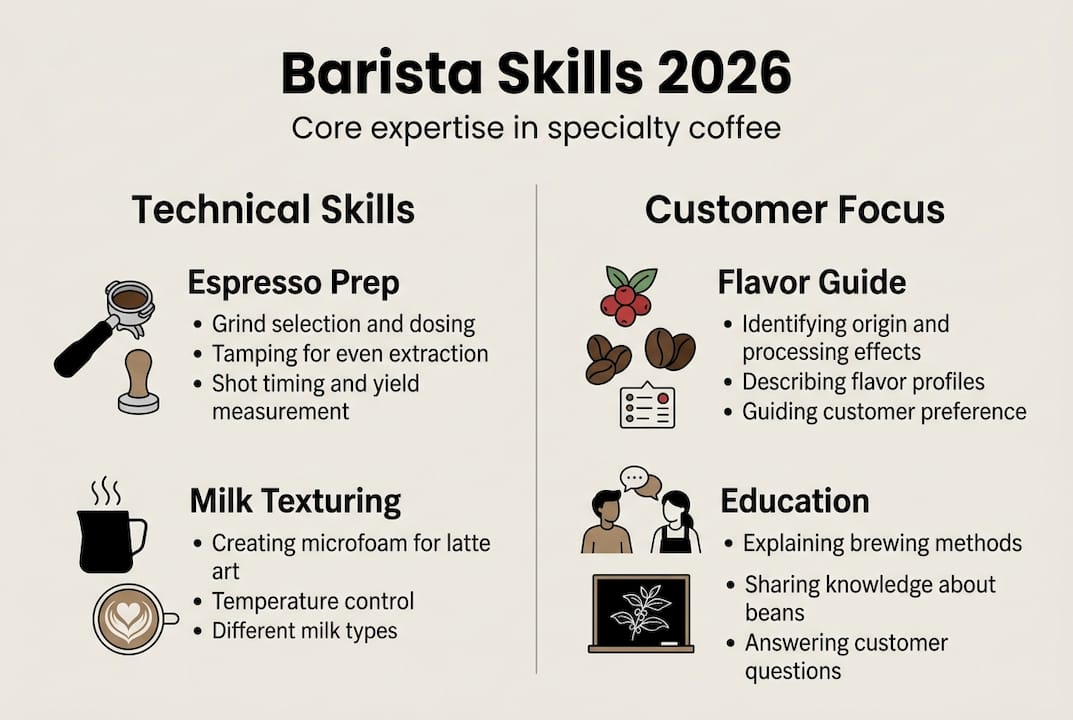
On the customer-facing side, baristas regularly clean equipment, precisely grind beans, steam milk to exact textures, and often guide customers toward specialty drinks that match their preferences. Milk texturing alone, the process of creating microfoam with a consistent, velvety texture, takes weeks of practice to get right.
Here is a breakdown of what a specialty barista manages in a typical shift:
- Pre-service: Grinder calibration, machine warm-up, shot dialing, milk temperature checks
- During service: Order accuracy, espresso extraction timing, milk steaming, latte art, customer interaction
- Between rushes: Equipment cleaning, restocking supplies, updating product knowledge
- Post-service: Deep cleaning, end-of-day inventory checks, equipment shutdown protocols
Pro Tip: Consistency in grinder prep is the single most controllable variable in espresso quality. Even a small drift in grind size changes extraction time, which changes flavor. Great baristas check this constantly, not just at opening.
For home brewers who want to replicate this level of care, investing in the right essential coffee accessories makes a measurable difference in your daily cup.
Barista skills and training: A craft with certification
Mastery in action requires more than strong routines. It calls for skills honed through intentional training. Specialty baristas do not just pick things up on the job. Many pursue formal certification through the Specialty Coffee Association (SCA), the global body that sets professional standards for the industry.
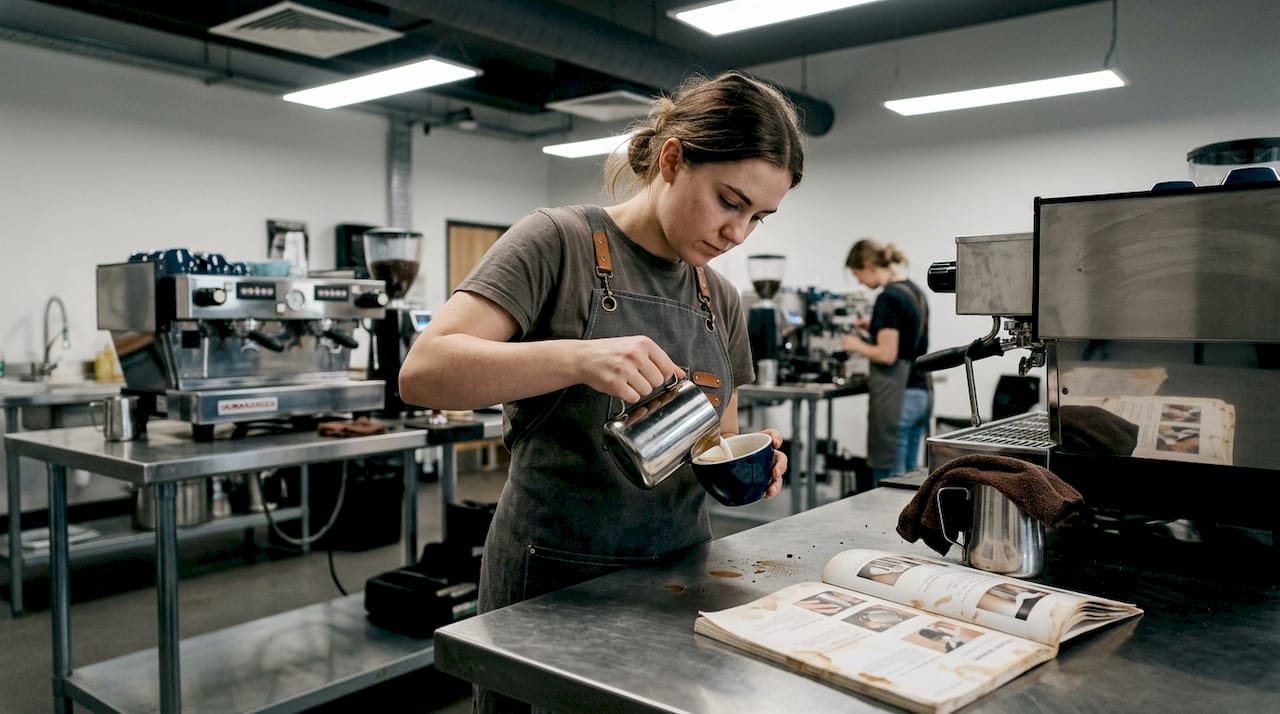
SCA Barista Skills certifications come in three levels: Foundation, Intermediate, and Professional. Each level covers sensory analysis, dialing in grinders, latte art standards, milk foam quality, and business practices. The Professional level is genuinely demanding, requiring candidates to demonstrate both technical precision and the ability to explain their decisions under pressure.
Here is a quick look at what each level covers:
| Level | Focus areas | Who it suits |
|---|---|---|
| Foundation | Basic espresso, milk steaming, hygiene | New baristas |
| Intermediate | Grinder calibration, sensory skills, workflow | Working baristas |
| Professional | Advanced extraction, business acumen, latte art | Senior baristas |
Beyond certification, the skills that define a top specialty barista include:
- Sensory analysis: Identifying flavor notes, defects, and extraction quality by taste and smell
- Grinder calibration: Adjusting grind size based on dose, yield, and time targets
- Milk texturing: Creating microfoam at precise temperatures for different drinks
- Customer communication: Translating technical knowledge into plain, engaging conversation
- Equipment care: Keeping machines in peak condition to protect drink quality
Pro Tip: Initial training is only a foundation. The baristas who improve fastest are those who seek out mentorship and treat every shift as a practice session, not just a production run.
Competitions like the World Barista Championship also push the craft forward, setting new benchmarks for what is technically and creatively possible in a single cup.
Baristas as educators: Creating exceptional customer experiences
Skillful prep alone is not enough. Baristas also shape customer understanding and coffee appreciation in ways that go far beyond the transaction. Think about the last time someone explained exactly why your coffee tasted the way it did. That moment, when a barista connects a flavor in your cup to a specific farm, altitude, or processing method, is what specialty coffee is actually about.
Baristas bridge farm-to-cup by educating on origins and flavors, turning routine drinks into sensory journeys. That educational role is not a bonus feature. It is core to the specialty coffee value proposition.
Here is how educational barista service compares to a purely transactional approach:
| Transaction-only service | Educational barista service |
|---|---|
| Takes order, makes drink | Asks about flavor preferences first |
| No explanation of origin | Shares farm or region story |
| Same recommendation for everyone | Customizes based on taste profile |
| Customer leaves with a drink | Customer leaves with new knowledge |
The questions a great barista can answer for you include: Why does this washed Ethiopian taste so clean and floral? How does coffee processing methods affect what ends up in your cup? What is the difference between a natural and a honey process? These are not trivial questions. They are the entry points to a much richer relationship with coffee.
Understanding coffee flavor profiles becomes much easier when a knowledgeable barista walks you through what to expect before you take your first sip. That guidance builds confidence, repeat visits, and genuine loyalty to a café.
Why the true value of baristas is still underestimated
Here is an uncomfortable truth: most coffee shop owners still treat barista roles as entry-level positions to fill quickly and cheaply. That is a strategic mistake, and the specialty coffee industry’s own growth is the evidence against it.
Industry growth in the specialty sector points directly to rising barista demand, yet many operators still underinvest in training and retention. The invisible labor of a skilled barista, the calibration, the sensory checks, the customer education, rarely shows up in a cost analysis. But it absolutely shows up in repeat business and brand loyalty.
We think the framing needs to shift. A skilled barista is not a cost center. They are a revenue driver who turns a one-time visitor into a regular. The coffee extraction insights that a trained barista applies every single shift are the difference between a café that builds a following and one that competes purely on price.
As a coffee drinker, you have real power here too. When you ask your barista about the bean, acknowledge their craft, or choose a specialty café over a chain, you are voting for a culture that values skill. That matters more than most people realize.
Elevate your specialty coffee journey with Z’s Coffee
Understanding what goes into a great specialty coffee experience changes how you approach your own daily ritual. Whether you are pulling shots at home or simply want to taste the difference that careful sourcing makes, the right products are your starting point.
At Z’s Coffee, every product in our artisan coffee selection is curated to reflect the same care and craft that skilled baristas bring to their work. If you want a quick, high-quality option without sacrificing flavor, our instant specialty coffee delivers that in seconds. For those who take their brew on the road, the specialty travel mug keeps your coffee at the right temperature from first sip to last. Explore the full range and bring the barista experience home.
Frequently asked questions
What are the top skills a specialty barista should have?
Specialty baristas excel at grinder calibration, milk texturing, sensory analysis, and customer education. The SCA certifications at Foundation, Intermediate, and Professional levels test all of these competencies in a structured, measurable way.
Why do baristas focus so much on coffee origins and processing?
Origins and processing methods directly shape the flavors in your cup, so baristas who understand them can guide customers to flavors that best match their personal taste preferences.
How is a specialty barista different from a chain café barista?
Specialty baristas prioritize craft, education, and beverage customization, while chain café baristas are trained to prioritize speed and consistency across a high volume of orders.
What certifications are available for aspiring specialty baristas?
The SCA offers Foundation, Intermediate, and Professional Barista Skills certifications, each valid for three years and covering technical, sensory, and business competencies.