What is carbon-neutral coffee, exactly?
Carbon-neutral coffee is coffee produced so that the net carbon dioxide released across its entire lifecycle equals zero. Producers get there by cutting emissions at the source, then offsetting whatever remains through verified environmental projects. The result is a cup with no net contribution to atmospheric warming.
Three elements make it real rather than just a marketing claim:
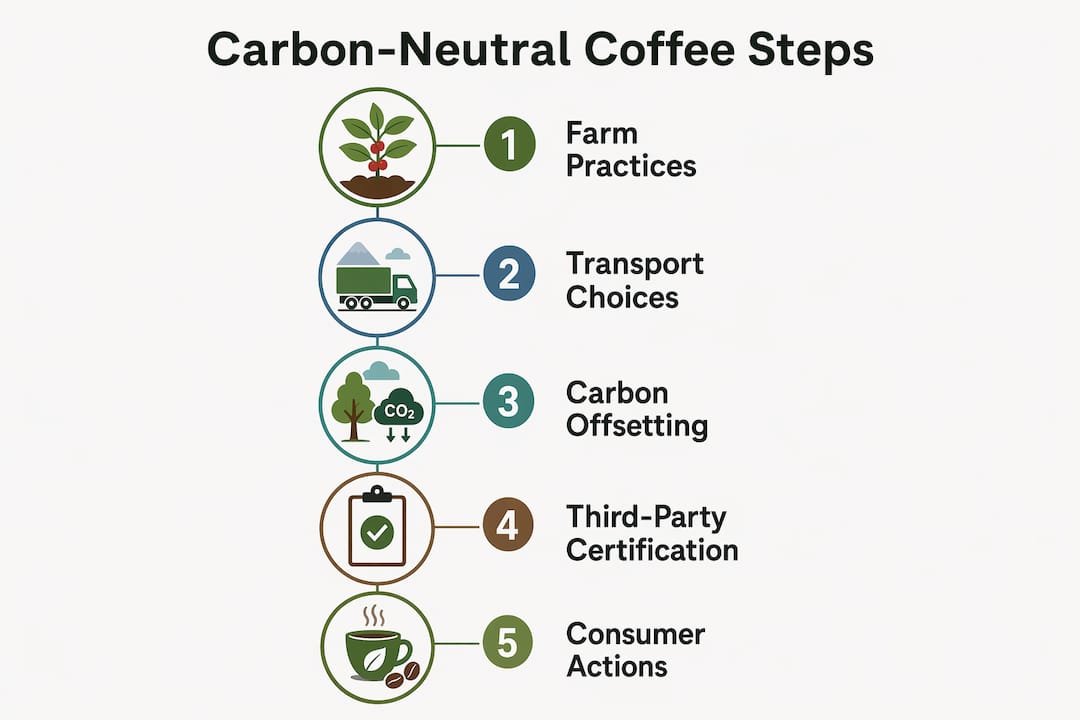
- Sustainable farming practices such as agroforestry, organic fertilizers, and minimal chemical inputs that reduce emissions before they happen
- Carbon offsetting or insetting through tree planting, reforestation, or renewable energy projects that compensate for unavoidable emissions
- Third-party certification from bodies like Climate Active or the Carbon Reduction Institute that independently verify the math
Brands like Dean’s Beans, Grounds for Change, and Presto Coffee have built their identities around this approach, combining farm-level sustainability with verified offset programs. The stakes are real: coffee production generates greenhouse gas emissions at every stage, from fertilizer manufacturing to the energy your kettle uses at home.
How carbon-neutral coffee is produced sustainably
Getting to net zero in coffee requires action at multiple points along the supply chain, not just one feel-good initiative.
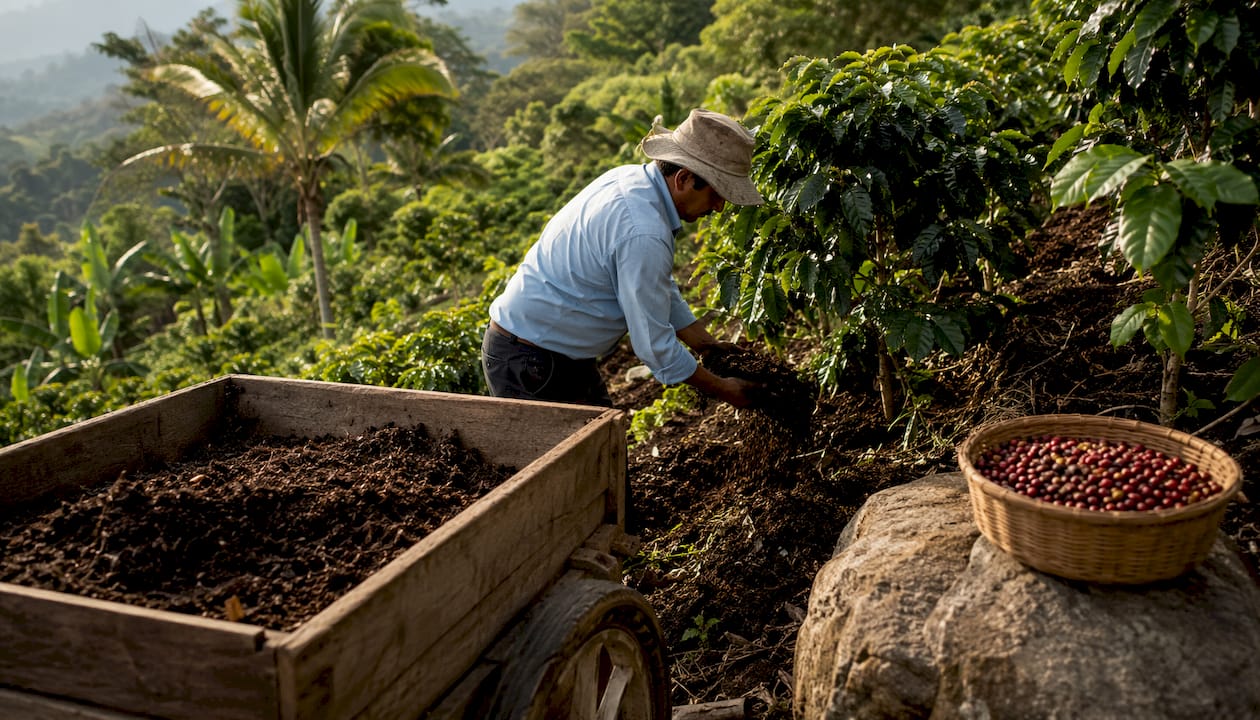
At the farm, the biggest lever is fertilizer. Manufacture and application of nitrogenous fertilizers account for 65%–100% of total emissions in primary coffee production. Switching to organic nitrogen sources and composted inputs cuts that number sharply. Agroforestry systems, where coffee grows under a canopy of shade trees, go further: they sequester carbon while producing coffee, with median removal rates of 17,676 kg CO2 per hectare per year compared to far lower rates in unshaded monoculture. Organic and sustainable farming methods also carry carbon footprints less than half those of conventional unshaded systems.
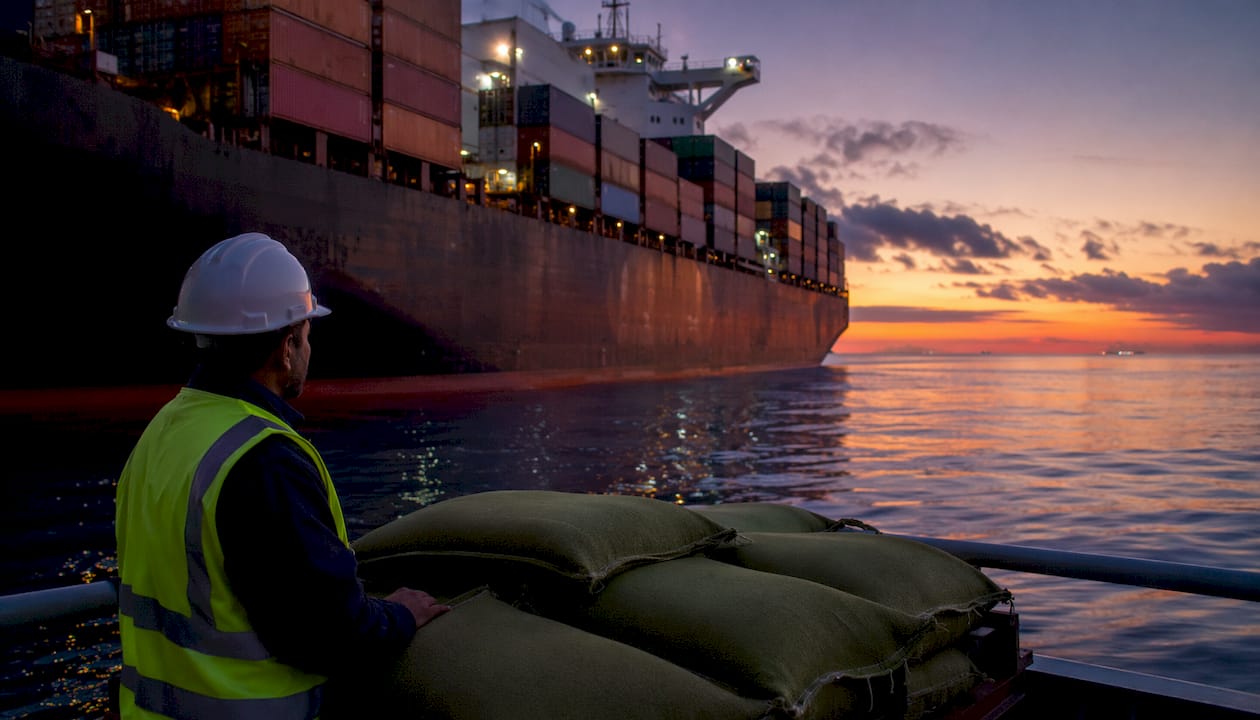
Across the supply chain, transport choices matter more than most people realize. Shipping green beans by sea rather than air freight dramatically reduces the footprint before the coffee even reaches a roaster. Packaging decisions count too; compostable or recyclable coffee bags reduce the end-of-life emissions that lifecycle assessments often overlook.
For unavoidable emissions, producers turn to carbon offsetting or insetting. Offsetting purchases carbon credits from external projects like reforestation in Brazil. Insetting plants trees directly within the coffee supply chain, benefiting farmers and local ecosystems at the same time. Nespresso planted 5 million native trees since 2014 as part of its insetting approach, and it advocates for this model through the International Platform for Insetting.
Certification closes the loop. A third-party body measures total emissions, verifies offset or insetting claims, and issues a certificate. Without that independent check, a carbon-neutral label is just a self-assessment.
Pro Tip: True carbon neutrality is not a one-time achievement. Emissions profiles shift as farming practices, transport routes, and energy sources change, so producers need ongoing lifecycle assessments to keep their claims credible.
The consumer’s role is often underestimated. Energy used during brewing adds meaningfully to a cup’s total footprint. Using an energy-efficient brewer, avoiding over-boiling water, and choosing a reusable cup all contribute to the full picture.
Why carbon-neutral coffee matters for the planet and your wallet
The environmental case is straightforward. Raw material acquisition accounts for 69%–97% of a coffee cup’s total carbon emissions, which means farm-level changes have the greatest impact on the overall footprint. Agroforestry and organic practices protect soil health, support biodiversity, and reduce chemical runoff into local waterways. These are not side benefits; they are core outcomes of the same practices that cut carbon.
Economically, carbon-neutral coffee commands a premium that flows back to farmers. Up to 75% of millennials say they will pay more for sustainable products, giving roasters a real market incentive to invest in cleaner supply chains. Farmers who improve yield quality through better soil management can also increase their annual income, which historically has been very low in many producing regions.
The market trend is accelerating. Consumer demand for sustainable coffee options has pushed major roasters to set net-zero targets, which in turn pressures the entire supply chain to measure and reduce emissions. That ripple effect reaches farms that might otherwise have no financial reason to change practices.
75% of millennials express willingness to pay more for sustainable coffee, according to research cited by industry experts, signaling a durable market shift rather than a passing trend.
What experts and research say about carbon-neutral coffee
The science behind carbon-neutral coffee is more complex than most labels suggest, and researchers are candid about the gaps.
Insetting beats offsetting, according to most experts. Investing in carbon reduction within the supply chain, such as planting trees on coffee farms, delivers direct benefits to farmers and local ecosystems that external carbon offsets simply cannot replicate. Offsets compensate numerically but do nothing for the communities growing your coffee.
Consumer awareness remains a weak link. Research shows that carbon-neutral labels alone do not change behavior without accompanying education. Labeling needs education to connect the symbol on a bag to the actual practices behind it. Most consumers cannot distinguish a verified certification from a self-declared claim.
Lifecycle assessments vary widely, which makes comparing carbon-neutral claims across brands difficult. The methodology used, what stages are included, and how land-use change is accounted for all affect the final number. Carbon credit purchases often fill the gap between a brand’s measured footprint and zero, but the quality of those credits varies considerably.
Carbon-negative coffee is the next frontier. Agroforestry systems can remove more CO2 than the farm produces, making the coffee genuinely carbon-negative rather than merely neutral. That distinction matters for producers who want to go beyond compensation and actually restore atmospheric balance.
Pro Tip: When evaluating a carbon-neutral claim, look for third-party certification from a named body, a published lifecycle assessment, and specifics about the offset or insetting projects used. Vague language like “we care about the planet” with no verification is a red flag. Zscoffee’s guide on coffee certifications breaks down what each label actually means.
Explore sustainable coffee at Zscoffee

Zscoffee sources and sells coffee for drinkers who care about what’s in their cup and how it got there. Whether you’re looking for a cold brew option with a lighter footprint or browsing the full coffee and tea range, Zscoffee makes it easy to shop with your values in mind.
Key Takeaways
Carbon-neutral coffee requires verified emission reductions at the farm level, not just offset purchases, with agroforestry and organic inputs delivering the largest measurable cuts.
| Point | Details |
|---|---|
| Fertilizer is the top emission source | Nitrogenous fertilizers account for 65%–100% of farm-level coffee emissions; organic inputs cut this sharply. |
| Agroforestry sequesters carbon actively | Agroforestry systems achieve median CO2 removal of 17,676 kg per hectare per year, far above unshaded production. |
| Insetting outperforms external offsets | Planting trees within the supply chain benefits farmers directly, unlike purchasing credits from unrelated projects. |
| Consumer demand is driving change | Up to 75% of millennials will pay a premium for sustainable coffee, creating real market incentive for producers. |
| Certification requires independent verification | Third-party bodies like Climate Active measure and verify claims; self-declared labels carry no comparable credibility. |