TL;DR:
- Organic coffee is grown without synthetic chemicals and must meet strict certification standards.
- Farming methods like shade-growing and composting improve soil health and flavor complexity.
- Choosing organic supports environmental sustainability, healthier beans, and fair practices for farmers.
Most coffee drinkers assume a bag of beans is a bag of beans. It isn’t. Organic coffee differs from conventional coffee in ways that reach far beyond the label, touching on how the soil is managed, how farmers are paid, what ends up in your cup, and how the land recovers after each harvest. The gap between a mass-produced commodity coffee and a certified organic single-origin lot is enormous. This guide walks you through everything you need to know: what organic certification actually means, how farming practices shape flavor, the health and ethical case for going organic, and how to find and brew the best options at home.
Table of Contents
- What makes coffee truly organic?
- How organic coffee is grown: Farming methods and environmental impact
- Health, taste, and ethical benefits of organic coffee
- Sourcing, selecting, and brewing organic coffee at home
- The untold challenge: Why not all organic coffees are equal
- Discover premium organic coffee with Z’s Coffee
- Frequently asked questions
Key Takeaways
| Point | Details |
|---|---|
| Certified organic matters | True organic coffee requires meeting strict farming and certification standards. |
| Health and environment benefits | Organic methods boost soil health and may reduce your exposure to unwanted chemicals. |
| Ethics beyond organic | Pairing organic with fair trade ensures positive impact for both farmers and the planet. |
| Taste and quality edge | Organic coffees often offer richer, cleaner flavors thanks to natural cultivation. |
| Smart sourcing guides great brews | Look for certified labels and trusted retailers for a premium, ethical cup at home. |
What makes coffee truly organic?
Organic coffee isn’t just coffee grown in a field without a factory nearby. It’s a rigorously defined category with legal weight behind it. To carry an organic label, coffee must be grown without synthetic pesticides, herbicides, or fertilizers, and without any genetically modified organisms. The farm itself must meet strict standards covering soil health, pest management, and physical separation from non-organic crops to prevent contamination.
Certification bodies like the USDA National Organic Program, the EU Organic Regulation, and Japan Agricultural Standard each set their own benchmarks, but the core principles overlap. Farms undergo regular inspections, and any violation can strip a producer of their certification. This isn’t a one-time stamp. It’s an ongoing commitment.
Here’s where it gets nuanced. Organic certification is not the same as Fair Trade, Rainforest Alliance, or Bird-Friendly certification. These programs address different concerns:
- Organic: Focuses on farming inputs and soil practices
- Fair Trade: Addresses price floors and farmer income
- Rainforest Alliance: Covers biodiversity and ecosystem protection
- Bird-Friendly: Requires shade-grown canopy and habitat preservation
A coffee can be organic but not fair trade. It can be fair trade but not organic. Understanding coffee quality standards helps you decode what each label actually promises.
“Organic farming methodologies include natural soil management, shade-growing, and integrated pest management.”
One common myth worth busting: words like “natural,” “artisan,” or “small-batch” carry no regulatory meaning. A roaster can print those on any bag. Only an official organic seal with a certifier’s name behind it carries legal accountability. For a deeper look at what separates quality tiers, the specialty coffee standards framework is worth exploring alongside organic criteria.
Smallholder farmers face a real challenge here. Certification costs money, requires documentation, and demands a transition period of up to three years during which the farm must operate organically but cannot yet sell as certified organic. This financial gap pushes many small farms toward sustainable sourcing models that support the transition costs.
Now that you know why organic coffee isn’t just a buzzword, let’s dig deeper into the unique farming methods and environmental impact.
How organic coffee is grown: Farming methods and environmental impact
Understanding what “organic” means sets the stage for appreciating the care put into each crop. The farming choices behind organic coffee don’t just protect the environment. They directly shape what ends up in your cup.
Organic coffee farms rely on a toolkit of techniques that work with natural systems rather than overriding them. Compost and worm castings replace synthetic fertilizers. Crop rotation prevents nutrient depletion. Shade-growing under a canopy of native trees slows cherry ripening, which concentrates sugars and deepens flavor complexity. Natural pest controls, including beneficial insects and plant-derived repellents, replace chemical sprays.
The environmental payoff is measurable. Organic soils show 19 to 42% more organic carbon and higher microbial diversity compared to conventional farms, with a Soil Quality Index of 0.98 versus 0.87 for conventional plots. Healthier soil means better water retention, less erosion, and reduced chemical runoff into local waterways.
| Factor | Organic farming | Conventional farming |
|---|---|---|
| Soil carbon content | 19-42% higher | Baseline |
| Microbial diversity | Significantly higher | Lower |
| Pesticide residue | None (synthetic) | Present |
| Shade canopy | Common | Rare |
| Disease incidence | 89-93% lower | Higher |
Biodiversity thrives under organic canopy systems. Birds, insects, and soil organisms all benefit, and that ecological richness feeds back into the farm’s resilience. According to a sustainable food systems study, organic plots consistently outperform conventional ones on long-term soil health metrics.
Organic coffee trees also yield an average of 1.12 kg more per tree and experience 89 to 93% less disease pressure when managed well. That’s a counterintuitive finding for anyone who assumes organic farming means lower productivity.
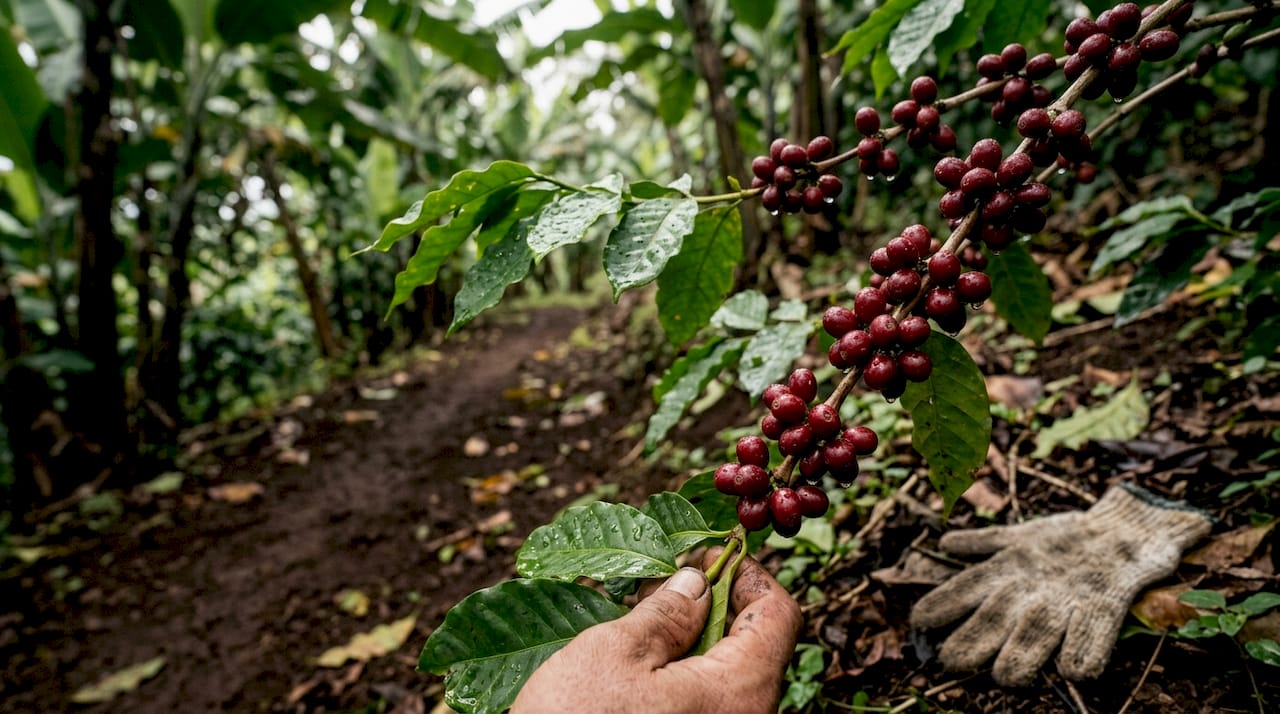
Pro Tip: When shopping for organic coffee, look for “shade-grown” on the label alongside the organic seal. Shade-grown beans ripen more slowly, which often translates to a sweeter, more layered cup. The connection between coffee origin and flavor is real, and farming method is a big part of that story.
From a cup quality perspective, slower ripening under a shade canopy means the coffee cherry has more time to develop its full sugar profile. The result is a bean with greater sweetness, more pronounced acidity, and a wider range of tasting notes than a sun-grown, conventionally farmed counterpart.
Health, taste, and ethical benefits of organic coffee
As farming choices shape the beans, they impart distinct sensory qualities and meaningful ethical differences.
Let’s start with taste. Organic coffee often delivers a cleaner, more nuanced cup. Natural farming and strict input controls mean fewer off-flavors from chemical residues. Shade-grown beans tend toward fruit-forward, floral, and complex profiles. The processing methods used after harvest amplify these differences further, with washed and natural processed organic coffees each offering their own distinct character.
On the health side, the news is reassuring. Ochratoxin A (OTA) is a naturally occurring mold toxin that can appear in coffee during drying and storage. Organic coffee OTA levels average 3.21 μg/kg, well below the regulatory safety limit. Organic farming’s stricter drying and storage protocols likely contribute to this lower contamination rate.
Beyond what’s in the cup, choosing organic supports the people who grow it. Certified organic farms must meet labor and environmental standards that protect workers from chemical exposure. When you pair organic with Fair Trade or Rainforest Alliance certification, you’re also supporting price floors that help smallholder farmers stay financially viable even when global commodity prices drop.
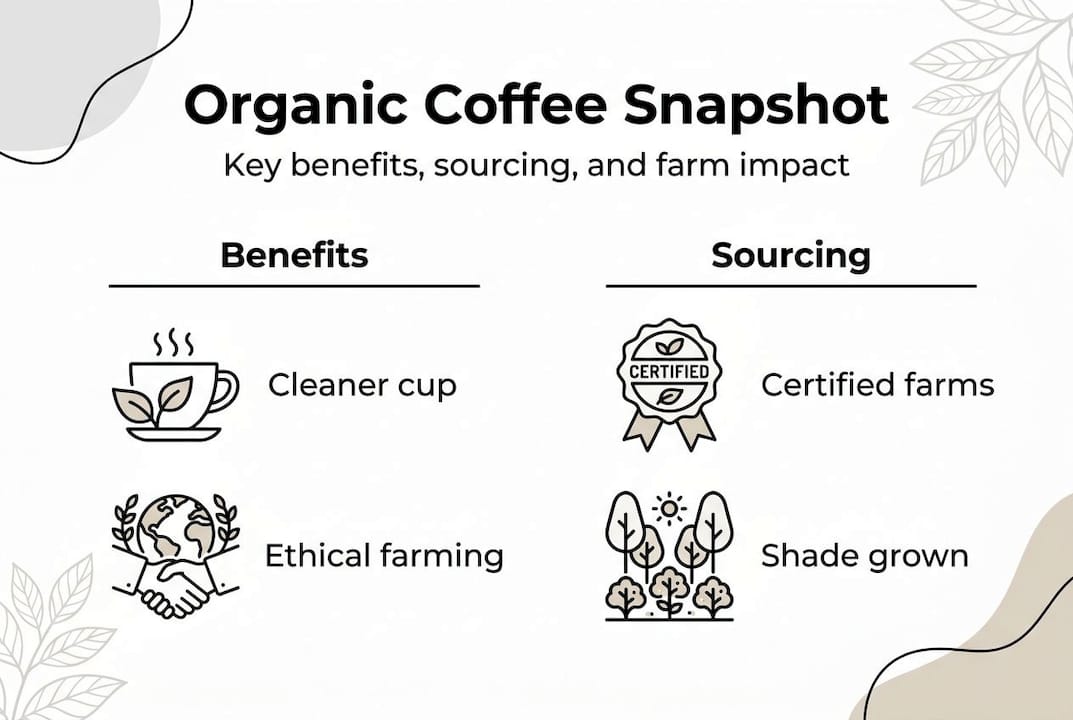
Here’s a quick summary of the core benefits:
- Taste: Cleaner, more complex flavor from natural inputs and slower ripening
- Wellness: Lower synthetic residue exposure, OTA within safe limits
- Ethics: Supports farmer health and fair market conditions
- Environment: Reduced chemical runoff, higher biodiversity, healthier soil
- Transparency: Certification requires documentation and third-party verification
The origin and quality of a bean shapes every dimension of your experience. Organic certification, when combined with strong origin transparency, gives you the fullest picture of what you’re drinking and where it came from.
Sourcing, selecting, and brewing organic coffee at home
Knowing the value of organic coffee, here’s how you can upgrade your daily ritual and make each cup count.
Finding certified organic coffee is easier than it was a decade ago. The global organic coffee market reached $10 billion in 2024 and is projected to grow to $13 billion by 2030, driven by a 7.7% compound annual growth rate. That growth means more options at grocery stores, direct from roasters, and through specialty online retailers.
When reading labels, look for:
- An official organic seal (USDA, EU Organic, or equivalent) with the certifier’s name
- The country or region of origin (transparency is a quality signal)
- Roast date, not just a “best by” date (freshness matters enormously)
- Additional certifications like Fair Trade or Rainforest Alliance for ethical layering
- Roast level that suits your brewing method (lighter roasts preserve origin character)
For brewing, organic beans reward methods that highlight their natural complexity. Pour-over and AeroPress let you dial in water temperature and contact time to coax out floral and fruit notes. French press works beautifully for fuller-bodied organic lots. If you want to evaluate a new bean properly, coffee cupping techniques give you a structured way to assess aroma, acidity, body, and finish.
Pro Tip: Don’t overlook single-origin lots from small farms. These coffees often carry the most distinctive flavor profiles and the clearest supply chain story. A bag from a 50-acre cooperative in Oaxaca or a family farm in Sumatra tells you exactly what you’re drinking and who grew it. Our guide to choosing coffee beans walks through how to match bean characteristics to your preferred brewing style.
For home brewing refinements, the home brewing tips resource covers grind size, water quality, and extraction variables that make the difference between a good cup and a great one.
The untold challenge: Why not all organic coffees are equal
Here’s something most guides skip over. The organic label is a floor, not a ceiling. It tells you what wasn’t used in the growing process. It says very little about how well the farmer was paid, how transparent the supply chain is, or whether the coffee was actually grown with the care and skill that produces exceptional flavor.
We’ve tasted plenty of certified organic coffees that were mediocre. The certification was real, but the processing was sloppy, the roast was stale, and the sourcing story was vague. Meanwhile, some of the most ethically and environmentally responsible farms in the world haven’t completed the costly certification process yet.
The real signal is a combination of factors. Organic certification ensures verifiable sustainable practices, but pairing it with Fair Trade or Rainforest Alliance certification gives you the most complete ethical picture. Beyond that, look for roasters who publish farm-level sourcing data, share harvest years, and name the producers they work with.
A single origin story that connects you to a specific farmer, altitude, and processing method is worth more than a generic organic blend with no sourcing detail. The best organic coffees aren’t just clean. They’re traceable, fairly traded, and grown by people whose names you can look up.
Discover premium organic coffee with Z’s Coffee
Ready to taste the difference of organic coffee for yourself?
At Z’s Coffee, we’ve curated a selection of premium organic and sustainably sourced coffees that go beyond the label. Whether you’re drawn to the smooth, slow-steeped character of our cold brew organic or want to explore the full depth of our organic coffee selection, you’ll find options backed by real sourcing transparency. Single-origin lots, specialty roasts, and globally sourced varieties are all waiting. Head over to Z’s Coffee and find the organic coffee that matches your palate and your values.
Frequently asked questions
Is organic coffee really pesticide-free?
Organic coffee is grown without synthetic pesticides, but some plant-derived pest controls may still be used as part of integrated pest management.
Does organic coffee taste better than regular coffee?
Many coffee lovers report a cleaner, more nuanced flavor from organic beans, since farming practices influence cup quality and taste complexity in measurable ways.
Are organic coffees always fair trade or ethically sourced?
Not automatically. Organic certification covers farming inputs, not pricing or labor conditions. Pair with Fair Trade or Rainforest Alliance for fuller ethical assurance.
How can I tell if coffee is truly organic?
Look for an official organic seal with a named certifier, such as USDA Organic, on the packaging. Vague terms like “natural” or “clean” carry no legal weight.
Where can I buy authentic organic coffee?
Specialty shops, direct roasters, and reputable online retailers are your best options. The organic coffee market reached $10 billion in 2024, meaning quality certified options are more accessible than ever.
Recommended
- Coffee Origins Explained: Regions, Processing & Flavor – Z’s Coffee
- Single origin coffee: taste, quality, and story in 2026 – Z’s Coffee
- Coffee processing methods for better flavor clarity – Z’s Coffee
- Coffee blends explained: Unlock richer flavors in 2026 – Z’s Coffee
- Roasted Organic Whole Coffee Beans - 1kg - RAWGORILLA – Granavitalis