Coffee lovers know that first whiff from a freshly brewed cup can be magical, but few realize that coffee aroma consists of over 1,000 volatile organic compounds working together to create what you perceive as flavor. These chemical compounds don’t just smell good. They account for roughly 80% of what your brain registers as taste. Understanding coffee aroma transforms how you select beans, appreciate quality, and experience every sip. This article breaks down the chemistry behind those aromatic molecules, explains how they shape sensory perception, and shows you how to use this knowledge to enjoy richer, more satisfying coffee.
Table of Contents
- Key takeaways
- The chemistry behind coffee aroma: volatile compounds and formation
- How coffee aroma influences flavor and sensory experience
- Variations and nuances in coffee aroma: roast levels, bean types, and defects
- Applying aroma knowledge: tips for choosing and enjoying coffee with rich aroma
- Discover rich aromas with Z’s Coffee blends
- Frequently asked questions
Key Takeaways
| Point | Details |
|---|---|
| Over 1000 volatile compounds | Coffee aroma consists of more than a thousand volatile compounds that influence how you perceive flavor. |
| Aroma drives flavor perception | Aroma accounts for about 80 percent of the flavor you experience. |
| Roasting creates aroma compounds | Maillard reactions, Strecker degradation, caramelization, and lipid oxidation generate the aromatic molecules from sugars, amino acids, and lipids. |
| Roast level matters | Light, medium, and dark roasts emphasize different aromas from fruity floral to bold roasted notes. |
The chemistry behind coffee aroma: volatile compounds and formation
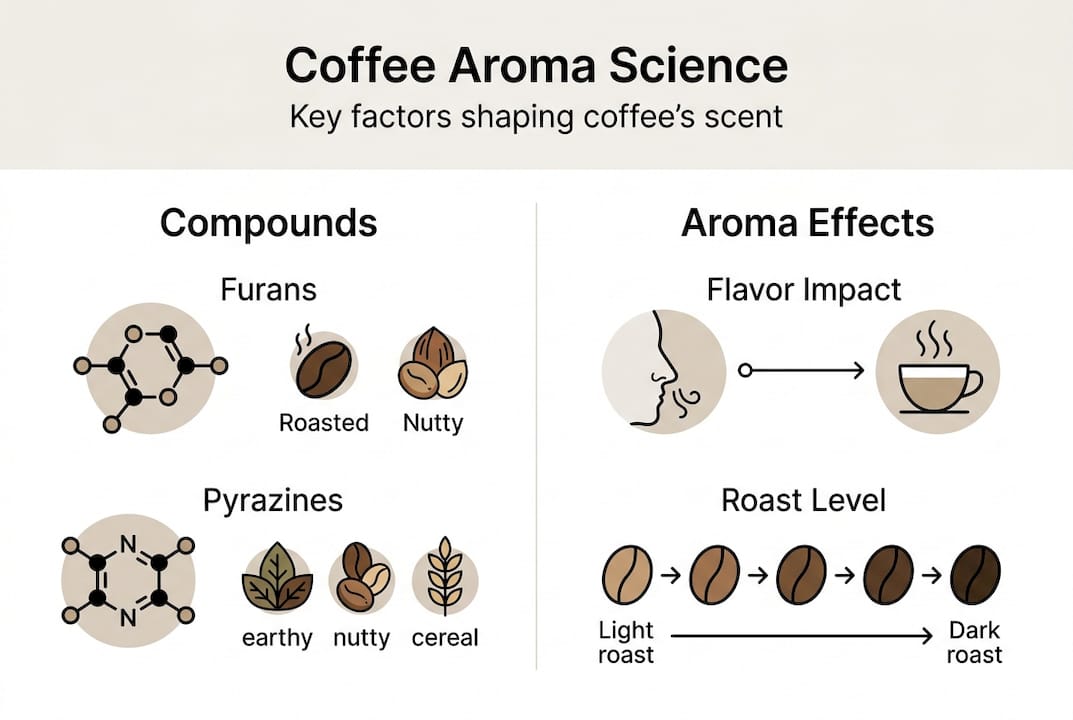
Coffee aroma stems from an intricate mix of volatile organic compounds that evaporate at room temperature and trigger your olfactory receptors. Scientists have identified key aroma-active compound families including furans, pyrazines, ketones, aldehydes, phenols, and sulfur compounds, each contributing distinct sensory notes. Furans deliver caramel and nutty qualities, while pyrazines create roasty, earthy tones. Ketones add buttery or fruity characteristics, aldehydes bring green or fruity notes, phenols contribute spicy and smoky elements, and sulfur compounds provide roasty, savory depth.
These compounds don’t exist in green coffee beans. They form primarily during roasting through several chemical reactions. Maillard reactions, Strecker degradation, caramelization, and lipid oxidation transform sugars, amino acids, and lipids into the aromatic molecules you smell. Maillard reactions occur when amino acids react with reducing sugars at high temperatures, generating hundreds of flavor compounds. Strecker degradation breaks down amino acids further, creating aldehydes with distinctive aromas. Caramelization happens when sugars decompose under heat, producing sweet, caramel notes. Lipid oxidation contributes additional complexity by breaking down fatty acids into aromatic compounds.
The roasting temperature and duration directly control which compounds form and in what quantities. Light roasts preserve more enzymatic compounds from the bean’s origin, yielding fruity and floral notes. Medium roasts balance enzymatic and thermal compounds for complexity. Dark roasts emphasize thermal reactions, creating bold, roasted aromas but potentially destroying delicate origin characteristics. Understanding these chemical pathways helps explain why types of coffee beans for richer flavor respond differently to various roast profiles.
Major aroma compound families and their sensory attributes:
- Furans: caramel, sweet, nutty, toasted bread
- Pyrazines: roasted, earthy, nutty, chocolate
- Ketones: buttery, creamy, fruity, sweet
- Aldehydes: fruity, green, grassy, floral
- Phenols: spicy, smoky, medicinal, woody
- Sulfur compounds: roasted, savory, meaty, sulfurous
| Compound Family | Primary Aromas | Formation Process |
|---|---|---|
| Furans | Caramel, nutty | Maillard reactions, caramelization |
| Pyrazines | Roasty, earthy | Maillard reactions |
| Ketones | Buttery, fruity | Strecker degradation |
| Aldehydes | Fruity, green | Strecker degradation, lipid oxidation |
| Phenols | Spicy, smoky | Thermal decomposition |
| Sulfur compounds | Roasty, savory | Maillard reactions |
Pro Tip: Smell your coffee beans before grinding. Fresh, high-quality beans release vibrant aromas immediately when you open the bag, signaling that volatile compounds remain intact and haven’t degraded from oxidation or staleness.
How coffee aroma influences flavor and sensory experience
Your perception of coffee flavor relies heavily on smell, not just taste buds. Research shows that aroma drives 80% of flavor perception through retronasal olfaction, where volatile compounds travel from your mouth to nasal receptors as you swallow. Your tongue detects only five basic tastes: sweet, sour, bitter, salty, and umami. Everything else you experience as flavor comes from aroma molecules reaching your olfactory system. This explains why food tastes bland when you have a stuffy nose.
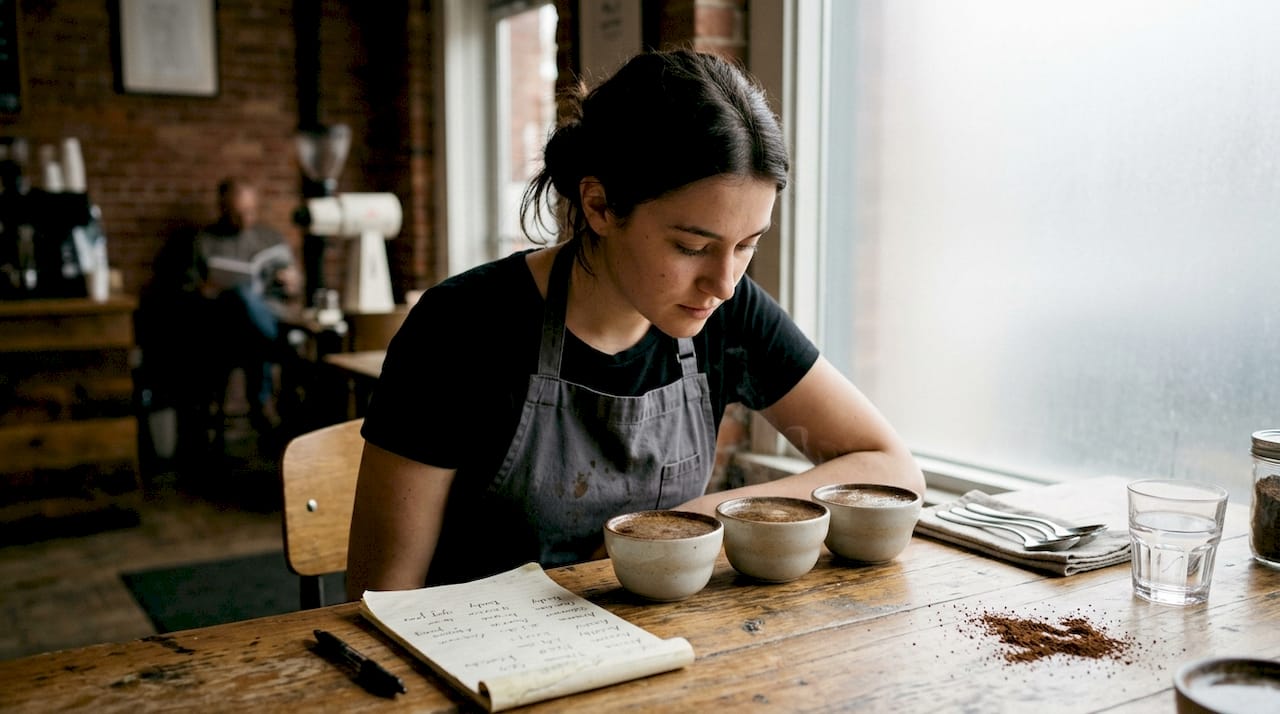
Coffee professionals use standardized tools to evaluate aroma systematically. The SCA Coffee Taster’s Flavor Wheel standardizes sensory evaluation by organizing aromas hierarchically from broad categories like Fruity, Floral, Nutty, and Roasted down to specific notes such as blueberry, jasmine, hazelnut, or dark chocolate. This framework helps cuppers identify and communicate precise aroma attributes. During cupping sessions, professionals evaluate coffee at multiple stages to capture the full aromatic profile.
Cupping protocols involve smelling dry grounds, wet grounds after adding hot water, and breaking the crust of floating grounds to release trapped aromatics. Methodologies include cupping at 50-75°C and using GC-MS for volatile analysis to quantify specific compounds. Cuppers slurp coffee to spray it across the palate and enhance retronasal olfaction, maximizing aroma detection. Gas chromatography-mass spectrometry identifies individual volatile compounds, while odor activity values measure which compounds contribute most to perceived aroma based on their concentration relative to detection thresholds.
The sensory aroma profile reflects the entire coffee supply chain. Processing methods, growing conditions, and coffee origin matters for flavor by determining which precursor compounds exist in green beans. Roasting transforms these precursors into aromatic volatiles. Brewing extracts and releases these compounds into the cup. Each stage influences the final aroma, making it a comprehensive quality indicator.
Key stages of aroma evaluation in cupping:
- Dry aroma: smell freshly ground coffee to detect initial fragrance
- Wet aroma: smell grounds immediately after adding hot water
- Break crust: stir and smell released aromatics from floating grounds
- Slurp: spray coffee across palate to maximize retronasal olfaction
- Cool down: evaluate aroma changes as coffee cools to room temperature
“Understanding Arabica coffee flavor traits requires recognizing how origin-specific aromatics interact with roast development to create the final sensory profile.”
Pro Tip: When tasting coffee, take a moment to smell it before your first sip. Close your eyes and identify three distinct aromas. This practice trains your palate and deepens your appreciation for quality differences.
Variations and nuances in coffee aroma: roast levels, bean types, and defects
Roast level creates dramatic shifts in aroma composition and intensity. Light roasts preserve enzymatic compounds formed during cherry development and processing, yielding bright, fruity, floral, and acidic aromas. Medium roasts balance enzymatic and thermal compounds, creating complexity with both origin character and roasted sweetness. Dark roasts emphasize thermal reactions, producing bold, roasted, caramelized, and sometimes smoky aromas while diminishing origin-specific notes. Each roast level appeals to different preferences and brewing methods.
Coffee variety significantly impacts aromatic potential. Arabica has higher VOC diversity with fruity and complex profiles, while Robusta tends toward roasted, earthy notes with its own flavor wheel containing 103 descriptors. Arabica typically contains more lipids and sugars, providing more precursors for aromatic compound formation during roasting. Robusta has higher caffeine and chlorogenic acid content, contributing to more bitter, astringent, and earthy characteristics. These chemical differences explain why specialty coffee markets favor Arabica for its aromatic complexity.
Roasting defects destroy aroma quality and signal poor technique. Underroasting produces grassy, sour aromas while overroasting causes burnt, ashy notes that mask origin character and create unpleasant bitterness. Scorching occurs when beans contact overheated drum surfaces, creating burnt spots that release acrid aromas. Baking happens when insufficient heat causes beans to stall during roasting, resulting in flat, bread-like aromas without sweetness or complexity. Tipping and facing are surface burns that create smoky, charred notes.
Recognizing these defects helps you choose coffee beans for best brew quality. Specialty roasters minimize defects through precise temperature control, proper airflow, and careful monitoring. When you encounter grassy, sour, burnt, or flat aromas, you’re likely experiencing roasting faults rather than intentional flavor profiles. High-quality coffee should smell inviting and balanced, not harsh or one-dimensional.
| Roast Level | Dominant Aromas | Chemical Profile |
|---|---|---|
| Light | Fruity, floral, acidic, tea-like | High enzymatic compounds, low thermal compounds |
| Medium | Balanced, sweet, nutty, caramel | Moderate enzymatic and thermal compounds |
| Dark | Roasted, smoky, bitter, chocolate | Low enzymatic compounds, high thermal compounds |
Common roasting defects and their aromatic signatures:
- Underroasting: grassy, sour, vegetal, astringent
- Overroasting: burnt, ashy, acrid, charcoal
- Scorching: smoky, harsh, burnt rubber
- Baking: flat, bread-like, cardboard, lacking sweetness
- Tipping: charred, smoky spots, inconsistent flavor
Pro Tip: Compare the same coffee roasted to different levels side by side. Smell each one and notice how light roasts emphasize origin character while dark roasts showcase roast development. This exercise reveals how roasting transforms aromatic potential.
Applying aroma knowledge: tips for choosing and enjoying coffee with rich aroma
Selecting coffee with exceptional aroma starts with understanding your preferences and recognizing quality markers. Look for specialty coffees that balance enzymatic and thermal compounds rather than focusing solely on total volatile count. Quality is better judged by emission levels of pleasant aroma compounds rather than sheer quantity, since some volatiles contribute off-flavors. Specialty roasters publish detailed tasting notes that describe expected aromas, helping you match coffees to your taste preferences.
Choose roast level based on the aromatic experience you want. Lighter roasts deliver fruity, floral, and bright aromas that highlight origin terroir and processing methods. These work exceptionally well for pour-over and filter brewing, where clarity matters. Darker roasts provide roasted, caramelized, and chocolate aromas that shine in espresso and milk-based drinks, where body and intensity complement the brewing method. Medium roasts offer versatility with balanced complexity suitable for most brewing approaches.
Proper storage preserves aromatic compounds and prevents degradation. Store whole beans in airtight containers away from light, heat, and moisture. Oxygen exposure triggers oxidation, breaking down volatile compounds and creating stale, cardboard aromas. Grind immediately before brewing to maximize freshness, since ground coffee loses aromatics rapidly due to increased surface area. Buy quantities you’ll consume within two to three weeks for peak aroma.
Brewing technique directly affects aroma extraction and perception. Use water temperature appropriate for your roast level: 195-205°F for most coffees, slightly cooler for light roasts to avoid extracting harsh acids, slightly hotter for dark roasts to ensure adequate extraction. Adjust grind size to control extraction time and efficiency. Proper extraction releases pleasant aromatics while avoiding over-extraction of bitter compounds or under-extraction that leaves coffee weak and sour. Techniques like brewing perfect espresso at home require precise control over these variables.
Practice aroma-focused tasting to develop your sensory skills and appreciation. Smell beans before grinding, grounds after grinding, and coffee at various temperatures during consumption. Identify specific notes using the flavor wheel as a reference. Notice how aromas evolve as coffee cools, revealing different compounds at different temperatures. This mindful approach transforms casual coffee drinking into an engaging sensory experience.
Steps for maximizing coffee aroma enjoyment:
- Select fresh, specialty-grade beans from reputable roasters with detailed tasting notes
- Store beans in airtight containers away from light, heat, and oxygen
- Grind immediately before brewing to preserve volatile compounds
- Use appropriate water temperature and grind size for your brewing method
- Smell coffee at multiple stages: dry grounds, wet grounds, first sip, and as it cools
- Compare different origins, roast levels, and processing methods to train your palate
- Keep notes on aromas you detect to track preferences and develop sensory vocabulary
Pro Tip: Understanding how packaging preserves coffee freshness helps you evaluate whether a roaster prioritizes aroma retention. Look for one-way valve bags that allow CO2 to escape while preventing oxygen entry, signaling attention to quality preservation.
Discover rich aromas with Z’s Coffee blends
Now that you understand the science and sensory impact of coffee aroma, you can make informed choices that elevate your daily coffee ritual. Z’s Coffee offers carefully crafted blends designed to showcase the aromatic complexity discussed throughout this article. Each blend balances enzymatic and thermal compounds for rich, satisfying flavor profiles.

Explore the Z’s Coffee blends collection to find options ranging from bright, fruity light roasts to bold, chocolatey dark roasts. Try the medium roast coffee with mushrooms for a unique aromatic experience that combines coffee’s natural complexity with functional ingredients. For smooth, concentrated aromatics, the cold brew coffee product delivers rich flavor with lower acidity. Each option provides an opportunity to experience the aromatic principles covered here in your own cup.
Frequently asked questions
What chemical compounds create coffee aroma?
Coffee aroma comes from over 1,000 volatile organic compounds including furans, pyrazines, ketones, aldehydes, phenols, and sulfur compounds. These form during roasting through Maillard reactions, Strecker degradation, caramelization, and lipid oxidation. Each compound family contributes distinct sensory notes ranging from fruity and floral to roasted and smoky.
How does roast level affect coffee aroma?
Light roasts preserve enzymatic compounds that create fruity, floral, and acidic aromas from the bean’s origin. Dark roasts emphasize thermal compounds that produce roasted, caramelized, and smoky notes while reducing origin character. Medium roasts balance both compound types for aromatic complexity that showcases origin and roast development equally.
Why does coffee aroma influence flavor more than taste?
Aroma accounts for approximately 80% of flavor perception through retronasal olfaction, where volatile compounds travel from your mouth to nasal receptors. Your tongue detects only five basic tastes, while your nose identifies hundreds of aromatic compounds. This explains why coffee tastes flat when you can’t smell it properly.
What is the difference between Arabica and Robusta aroma profiles?
Arabica exhibits higher volatile compound diversity with fruity, floral, and complex aromatic profiles due to more lipids and sugars. Robusta tends toward earthy, roasted, and woody aromas with a separate 103-descriptor flavor wheel. These differences stem from distinct chemical compositions affecting which aromatic precursors exist in green beans.
How can I preserve coffee aroma at home?
Store whole beans in airtight containers away from light, heat, and moisture to prevent oxidation that degrades volatile compounds. Grind immediately before brewing since ground coffee loses aromatics rapidly. Buy quantities you’ll consume within two to three weeks and use proper brewing temperatures to extract pleasant aromatics without over-extraction.
What brewing factors enhance coffee aroma extraction?
Water temperature between 195-205°F optimizes extraction of aromatic compounds without pulling harsh, bitter notes. Proper grind size controls extraction time and efficiency. Fresh grinding maximizes volatile compound availability. Techniques like slurping during tasting spray coffee across the palate, enhancing retronasal olfaction for fuller aroma perception.