Most coffee drinkers assume that all coffee tastes roughly the same or that professional tasting techniques are reserved for trained experts. The truth is that coffee cupping, a standardized method for evaluating flavor profiles, is accessible to anyone who wants to deepen their appreciation and make smarter purchasing decisions. This guide breaks down what coffee cupping is, how professionals use it to score quality, and how you can practice it at home to refine your palate and choose beans that match your taste perfectly.
Table of Contents
- What Is Coffee Cupping? Understanding The Basics
- How Professional Coffee Cupping Works: Protocols And Scoring
- Using Coffee Cupping At Home: Simple Methods And Practical Tips
- Flavor Profiles And What Cupping Reveals About Coffee Quality
- Explore Specialty Coffee With Z’s Coffee
- Frequently Asked Questions About Coffee Cupping
Key takeaways
| Point | Details |
|---|---|
| Definition and purpose | Coffee cupping is a standardized tasting method to evaluate aroma, flavor, and quality systematically. |
| Simple home setup | You only need bowls, spoons, a scale, and fresh coffee to start cupping at home. |
| Professional vs home cupping | Professionals follow strict SCA protocols and scoring systems, while home enthusiasts can adapt methods for personal preference. |
| Cupping scores and quality | Scores below 80 indicate defects, while scores above 85 signal specialty-grade coffee worth exploring. |
| Practical benefits | Regular cupping helps you identify flavor profiles, avoid poor quality beans, and improve brewing techniques. |
What is coffee cupping? Understanding the basics
Coffee cupping is a standardized method for tasting coffee to evaluate its flavor, aroma, body, and overall quality. Professionals developed this practice decades ago to help buyers, roasters, and producers assess beans objectively before committing to large purchases. Over time, enthusiasts adapted cupping for home use, discovering that the same techniques help anyone choose better coffee and understand what makes each origin unique.
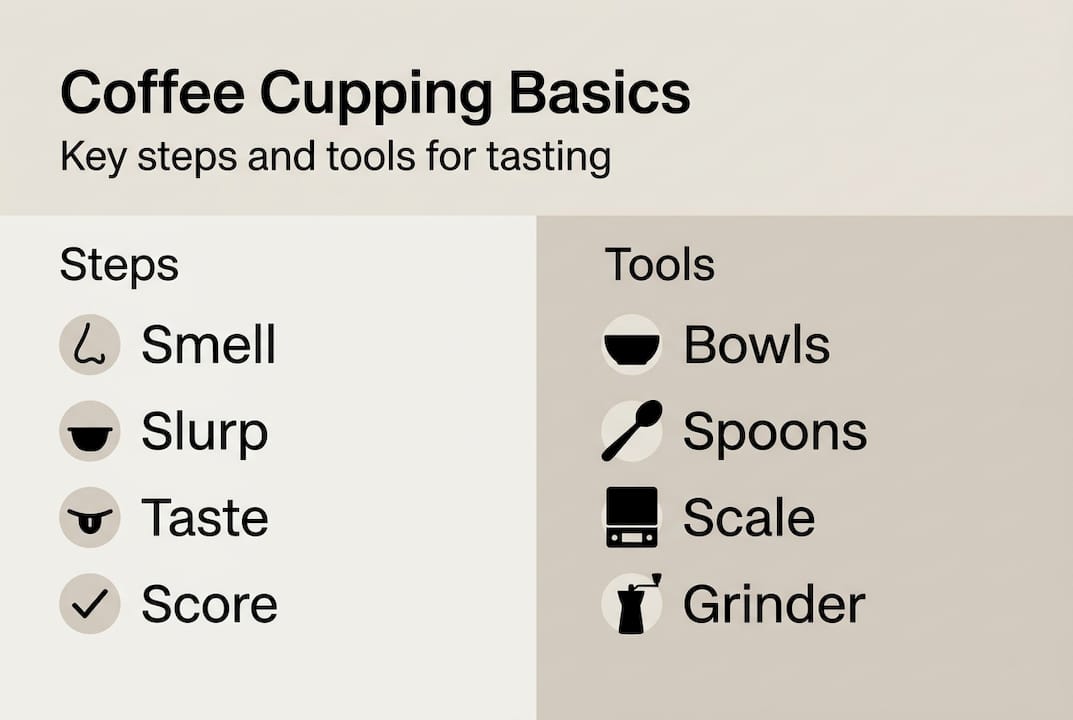
A typical cupping session involves several controlled steps. You start by smelling freshly ground coffee to capture the dry aroma. Next, you add hot water and wait a few minutes before breaking the crust of grounds that forms on the surface, releasing intense aromas. Finally, you slurp the coffee loudly from a spoon to spray it across your palate, which helps you detect subtle flavor notes and mouthfeel. This slurping technique might feel awkward at first, but it aerates the liquid and amplifies taste perception dramatically.
Essential tools for cupping are surprisingly simple and likely already in your kitchen:
- Cupping bowls or small ceramic bowls (6 to 8 ounces each)
- Cupping spoons or soup spoons with deep bowls
- A digital scale for precise coffee measurements
- A grinder set to medium-coarse consistency
- A kettle for heating water to around 200°F
- Fresh coffee beans from different origins or roast levels
You do not need expensive equipment to start. Choosing coffee beans becomes much easier once you understand how different origins and processing methods affect flavor. A home cupping setup requires minimal investment, with bowls, spoons, and a scale being the only essentials. Comparing three to four diverse origins side by side enhances your ability to distinguish flavor profiles and improves both brewing and selection skills over time.
The beauty of cupping lies in its simplicity and repeatability. By following the same steps each time, you create a controlled environment that isolates variables and lets the coffee speak for itself. This consistency is what makes cupping such a powerful tool for both professionals and home enthusiasts who want to move beyond guesswork and truly understand what they are drinking.
How professional coffee cupping works: protocols and scoring
Professional cuppers follow the Specialty Coffee Association protocol, which standardizes every detail from grind size to water temperature. This precision ensures that evaluations remain consistent across different locations, roasters, and tasting panels. The protocol specifies exact coffee-to-water ratios, typically 8.25 grams of coffee per 150 milliliters of water, and dictates brewing times down to the minute. By removing variables, cuppers can compare coffees fairly and identify quality differences that might otherwise go unnoticed.
Two primary scoring systems dominate professional cupping today. The traditional 100-point scale has been the industry standard for years, with scores calibrated globally to reflect quality tiers. Coffees scoring 80 to 84.99 points are considered good, while those above 85 qualify as specialty grade and command premium prices. The newer CVA system separates descriptive assessment from affective scoring, using a 9-point hedonic scale that accommodates diverse personal preferences alongside objective quality markers. This dual approach recognizes that a coffee can be technically excellent yet not appeal to every palate.
Defects play a critical role in scoring and can disqualify otherwise promising coffees. Over-roasted or under-roasted beans misrepresent a coffee’s true potential, while defects like phenolic or moldy flavors automatically push scores below 80. Professional cuppers spit samples after tasting to avoid palate fatigue during long sessions with dozens of coffees. Home cuppers, by contrast, often swallow since they typically evaluate only a few samples at a time and may prefer the full tasting experience.
Here is how the two scoring systems compare:
| System | Scale | Focus | Best For |
|---|---|---|---|
| Traditional SCA 100-point | 0 to 100 | Objective quality attributes like acidity, body, balance | Professional grading and quality control |
| CVA affective scoring | 1 to 9 hedonic | Personal preference and enjoyment | Consumer preferences and product development |
The step-by-step professional cupping procedure unfolds in a precise sequence:
- Grind coffee samples to a medium-coarse consistency just before cupping to preserve volatile aromatics.
- Smell the dry grounds in each bowl and note the fragrance intensity and character.
- Add hot water at 200°F and start a timer for four minutes.
- Break the crust by pushing a spoon through the grounds while leaning in to smell the released aromas.
- Skim off floating grounds and oils from the surface.
- Wait until the coffee cools slightly, then slurp from a spoon to evaluate flavor, acidity, body, and aftertaste.
- Record scores for each attribute and calculate a final total.
Pro Tip: Focus on aroma and mouthfeel during the first few samples to catch subtle notes before palate fatigue sets in. Your sensitivity to delicate flavors decreases after tasting multiple coffees, so prioritize the most nuanced evaluations early in the session.
Understanding these protocols helps you appreciate why professional scores matter and how you can adapt the same rigor to your home practice. Even without formal training, applying structured methods will sharpen your palate faster than casual tasting ever could. The key is consistency, attention to detail, and a willingness to challenge your assumptions about what good coffee should taste like.
Using coffee cupping at home: simple methods and practical tips
Setting up a home cupping session requires nothing more than common kitchen tools and a curious mindset. Start by selecting three to four coffees from different origins or roast profiles. This variety gives you contrasting flavors to compare and helps train your palate to recognize distinct characteristics. Single-origin coffees work best because they showcase regional terroir without the complexity of blends masking individual notes.
Here are the basics for a successful home cupping session:
- Measure 8 to 10 grams of coffee per bowl using a digital scale for accuracy.
- Grind each coffee to a medium-coarse consistency just before brewing to preserve freshness.
- Heat water to around 200°F, slightly below boiling, to avoid scalding the grounds.
- Pour water over the grounds and let them steep for four minutes.
- Break the crust by gently pushing a spoon through the grounds and inhale deeply to capture the aroma.
- Skim off floating grounds and wait for the coffee to cool to a comfortable tasting temperature.
- Slurp from a spoon, pulling air along with the liquid to spray it across your entire palate.
Keeping notes is essential for tracking your impressions and building a reference library of flavors. You do not need to use professional scoring forms. A simple notebook where you jot down aroma, flavor, body, and aftertaste observations works perfectly. Over time, you will notice patterns in which origins or roast levels you prefer, making future purchasing decisions much easier. Home cupping with minimal setup comparing diverse origins directly enhances both your brewing technique and selection skills.
The benefits of regular home cupping extend beyond just identifying favorite coffees. You develop a deeper understanding of how processing methods, roast levels, and freshness affect flavor. This knowledge translates directly into better brewing because you learn which coffees benefit from longer extraction times, higher temperatures, or specific grind sizes. You also become more discerning when shopping, able to spot quality indicators on packaging and ask informed questions at specialty shops.
Pro Tip: Try blind cupping with friends to eliminate bias and improve sensory skills. Have someone else label the bowls with letters or numbers so you taste without knowing the origin or roast level. This forces you to rely purely on your senses rather than preconceived notions about what a particular region or roaster should taste like. Blind cupping reveals surprising preferences and trains you to trust your palate over marketing claims.
Another practical tip is to cup the same coffee multiple times as it ages. Buy a bag of freshly roasted beans and cup a sample every week for a month. You will notice how flavors evolve, peak, and eventually fade, giving you a clear sense of optimal freshness windows. This experiment alone will transform how you store and consume coffee at home, ensuring you always brew beans at their best.
Home cupping does not require perfection or professional-level precision. The goal is to engage with coffee intentionally, build your sensory vocabulary, and have fun exploring the incredible diversity that specialty coffee offers. Every session sharpens your skills and deepens your appreciation, turning each cup into an opportunity for discovery rather than just a caffeine delivery system. For more guidance on brewing techniques, check out the perfect coffee at home guide to complement your cupping practice.
Flavor profiles and what cupping reveals about coffee quality
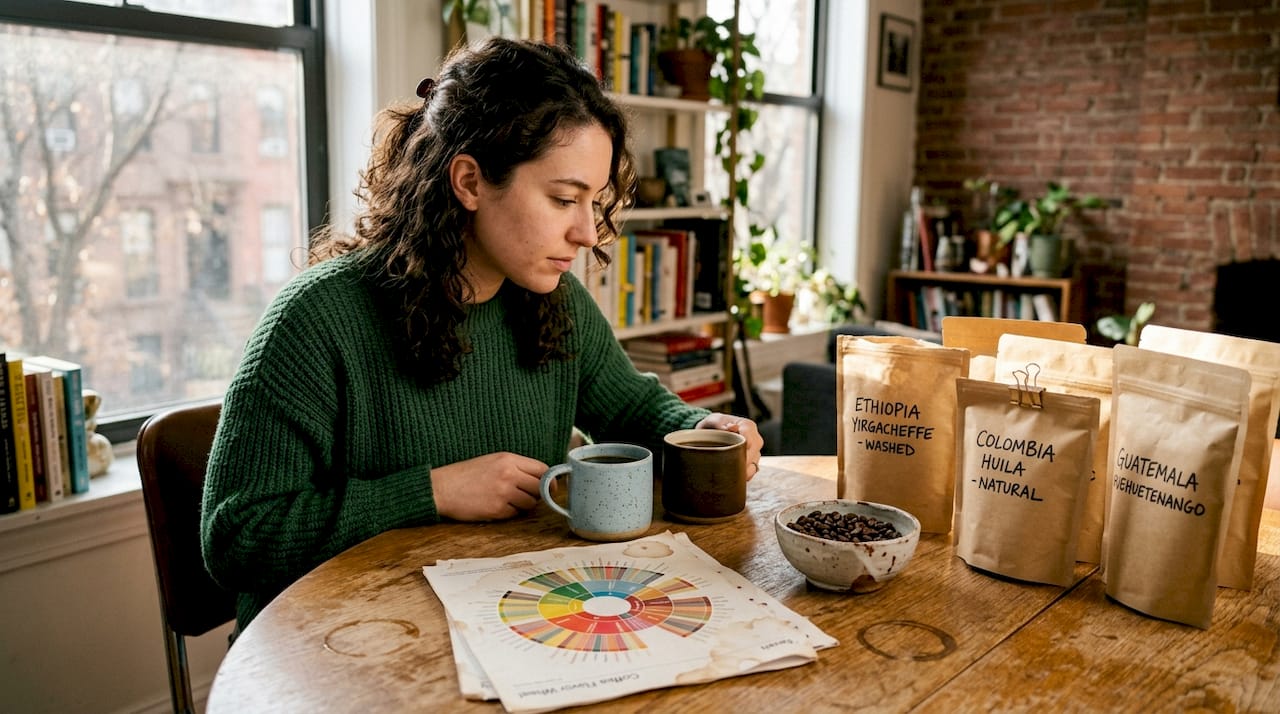
Coffee cupping reveals a stunning range of flavor and aroma notes that many casual drinkers never notice. Depending on origin, processing method, and roast level, you might detect fruity notes like blueberry or citrus, floral hints reminiscent of jasmine, nutty undertones similar to almond, or rich chocolatey flavors. These characteristics are not added artificially but emerge naturally from the coffee’s terroir and how it was grown, processed, and roasted.
Roasting level has a profound influence on flavor profiles and potential defects. Light roasts preserve origin characteristics and acidity, showcasing bright, complex flavors. Medium roasts balance origin traits with developed sweetness and body. Dark roasts emphasize roast character over origin, often highlighting bittersweet chocolate and caramel notes while masking more delicate flavors. Over-roasted or under-roasted coffees fail to represent a bean’s true potential, with defects like phenolic or moldy flavors dragging scores below 80 points.
Here is a comparison of common flavor descriptors versus undesirable defect profiles:
| Quality Attribute | Flavor Descriptor | Defect Profile | Likely Cause |
|---|---|---|---|
| Acidity | Bright citrus, apple, berry | Sour, vinegary, fermented | Over-fermentation or improper processing |
| Body | Silky, creamy, syrupy | Thin, watery, astringent | Poor growing conditions or under-extraction |
| Aroma | Floral, fruity, caramel | Phenolic, moldy, musty | Contaminated beans or storage issues |
| Aftertaste | Sweet, lingering, clean | Bitter, harsh, chemical | Over-roasting or defective beans |
Identifying defects during cupping helps you avoid poor quality coffee and understand what went wrong in production or roasting. Follow these steps to spot defects systematically:
- Smell the dry grounds for any off-putting aromas like mustiness or chemical odors that signal contamination.
- Evaluate the wet aroma after adding water, checking for phenolic notes that smell medicinal or plastic-like.
- Taste for balance and clarity, noting whether any harsh, bitter, or sour flavors dominate inappropriately.
- Assess the aftertaste for lingering unpleasantness that does not fade cleanly.
Professional cuppers train extensively to distinguish between quality attributes and faults. For example, a bright acidity in a Kenyan coffee is a desirable trait, while a sour vinegar note in the same coffee indicates a processing defect. This distinction requires experience and repeated exposure to both excellent and flawed coffees. Home cuppers can develop this skill by deliberately tasting a wide range of quality levels and paying close attention to how different characteristics feel on the palate.
Recognizing these traits has practical impact beyond just scoring. When you understand what makes a coffee taste clean, balanced, and complex, you can choose beans that match your personal preferences and avoid those with hidden defects. You also become better at diagnosing brewing issues. If your coffee tastes sour, you can determine whether the problem lies in under-extraction or a defect in the beans themselves. This diagnostic ability saves money and frustration, ensuring every cup you brew reaches its full potential.
For more insight into how origin affects flavor, explore why coffee origin matters for flavor and quality. Understanding regional characteristics helps you predict flavor profiles before you even open a bag, making cupping sessions more focused and educational. The more you cup, the more these patterns become second nature, transforming you from a passive consumer into an informed enthusiast who knows exactly what to look for in every bag.
Explore specialty coffee with Z’s Coffee
Now that you understand how cupping works and what it reveals about coffee quality, it is time to put your skills into practice. Z’s Coffee offers a diverse selection of single-origin, flavored, and cold brew coffees that are perfect for cupping sessions at home. Sampling different coffees from the Z’s Coffee collection lets you compare flavor profiles side by side and discover which origins and roast levels match your preferences.

Whether you are exploring bright African coffees, rich South American blends, or unique flavored options from the flavored coffees sample pack, each tasting session sharpens your palate and deepens your appreciation. You can also experiment with cold brew coffee to see how brewing method influences flavor perception compared to hot cupping. Every coffee you taste builds your sensory vocabulary and helps you make smarter purchasing decisions in the future.
Frequently asked questions about coffee cupping
How does coffee cupping differ from everyday coffee tasting?
Coffee cupping follows a standardized protocol with precise measurements, timing, and evaluation steps to ensure consistency. Everyday tasting is casual and subjective, while cupping isolates variables to objectively assess quality and flavor attributes.
What equipment is essential for home cupping sessions?
You need cupping bowls or small ceramic bowls, spoons, a digital scale, a grinder, and a kettle. These basic tools let you replicate professional cupping methods without expensive specialized equipment.
How often should I practice cupping to improve my palate?
Cupping once or twice a week with three to four different coffees accelerates palate development. Consistent practice builds your sensory vocabulary faster than occasional tasting, helping you recognize subtle flavor differences.
Can coffee cupping help identify the best beans for personal taste?
Yes, cupping lets you compare multiple coffees side by side and identify patterns in what you enjoy. Over time, you will recognize which origins, processing methods, and roast levels consistently appeal to your preferences.
Is spitting necessary or optional during cupping?
Professional cuppers spit to avoid palate fatigue when evaluating dozens of samples. Home cuppers can swallow if they are tasting only a few coffees and prefer the full flavor experience without concern for fatigue.