TL;DR:
- Peaberry coffee results from a natural mutation where only one seed develops in a coffee cherry, forming a small, round bean. It is not a distinct varietal but a rare occurrence, comprising about 5% of harvests, and requires separate sorting and roasting processes. Peaberry beans offer a brighter, more aromatic flavor profile and often command a premium price due to labor-intensive handling.
Most coffee lovers assume peaberry is a rare single-origin variety grown on some remote hillside. It’s not. What is peaberry coffee, really? It’s a natural mutation that occurs inside the coffee cherry when one seed forms instead of two, producing a small, round bean instead of the usual flat-sided pair. This distinction matters because it shapes everything from how the bean roasts to what ends up in your cup. If you’ve ever wondered whether peaberry lives up to the hype or spotted it on a specialty menu and felt curious, this guide covers the biology, flavor, and buying reality behind it.
Table of Contents
- Key takeaways
- What is peaberry coffee, and where does it come from?
- Flavor profile and roasting behavior
- How peaberry coffee is sorted and sold
- Peaberry vs. regular coffee beans
- My honest take on peaberry coffee
- Explore peaberry and specialty coffee at Zscoffee
- FAQ
Key takeaways
| Point | Details |
|---|---|
| Not a varietal | Peaberry is a natural mutation, not a distinct coffee species or cultivar. |
| Occurs in ~5% of beans | Only a small fraction of any harvest produces peaberry beans, making them rare by default. |
| Distinct roasting needs | Peaberry beans require a separate roast profile due to their shape and density. |
| Brighter flavor profile | Most tasters report heightened brightness and complexity compared to flat beans from the same origin. |
| Premium pricing applies | Labor-intensive sorting and low yield push peaberry coffee into higher price territory. |
What is peaberry coffee, and where does it come from?
To understand peaberry, you need a quick look inside a coffee cherry. A typical cherry contains two seeds facing each other flat-side down. Those flat sides develop because each seed is pressed against the other as the cherry matures. When the cherry only develops one seed, that seed has no neighbor to flatten against. It grows into a small, round, oval shape. That is a peaberry bean.
This natural mutation is not engineered or cultivated. Farmers do not plant peaberry trees. The condition can occur on any coffee tree, in any region, with any varietal. You might find peaberry beans in a Guatemalan lot, an Ethiopian natural, or a Colombian washed coffee. However, certain origins have built their reputations around them. Tanzania and Kona are the two most recognized peaberry producing regions, and both market their peaberry lots as premium offerings.
The table below breaks down the physical differences between a standard flat bean and a peaberry bean.
| Feature | Standard flat bean | Peaberry bean |
|---|---|---|
| Shape | Flat on one side, curved on other | Round, oval, fully curved |
| Seeds per cherry | Two | One |
| Occurrence in crop | ~95% | ~5% of harvest |
| Size | Larger, more variable | Smaller, more uniform |
| Roasting behavior | Standard drum behavior | Different heat absorption pattern |
| Common origins marketed | All regions | Tanzania, Kona, Kenya |
One thing worth clarifying: peaberry is not a separate varietal. It is a random occurrence across the entire coffee plant species. Calling peaberry a coffee type is like calling a double-yolk egg a separate breed of chicken. The origin, soil, processing, and varietal still determine most of what you taste. The peaberry shape is simply a factor layered on top.
To see how origin shapes the broader flavor picture, the Zscoffee guide on coffee origins and flavor is worth your time.
Flavor profile and roasting behavior
Here is where peaberry gets genuinely interesting, and where the myths start piling up. The reported flavor characteristics of peaberry coffee compared to flat beans from the same origin include:
- Brighter acidity: Peaberry tends to present a more pronounced, lively brightness in the cup.
- Higher aromatic complexity: Many tasters pick up more layered notes, particularly florals and fruits.
- Lighter body: The mouthfeel is often described as cleaner and less heavy than its flat-bean counterpart.
- Concentrated sweetness: Because nutrients may have concentrated into one seed rather than splitting between two, some tasters note a slightly sweeter, more intense flavor.
- Greater consistency within the lot: Since peaberry beans are more uniform in size, the roast can be dialed in with more precision.
Now, the myth. A popular claim says peaberry beans roll better inside a roasting drum due to their round shape, leading to a more even roast. That sounds convincing. But no credible research supports it. The roasting drums used in commercial and specialty roasting move beans through convection and conduction, not by relying on bean shape alone. The real reason peaberries often taste different comes down to density and surface area, not rolling physics.
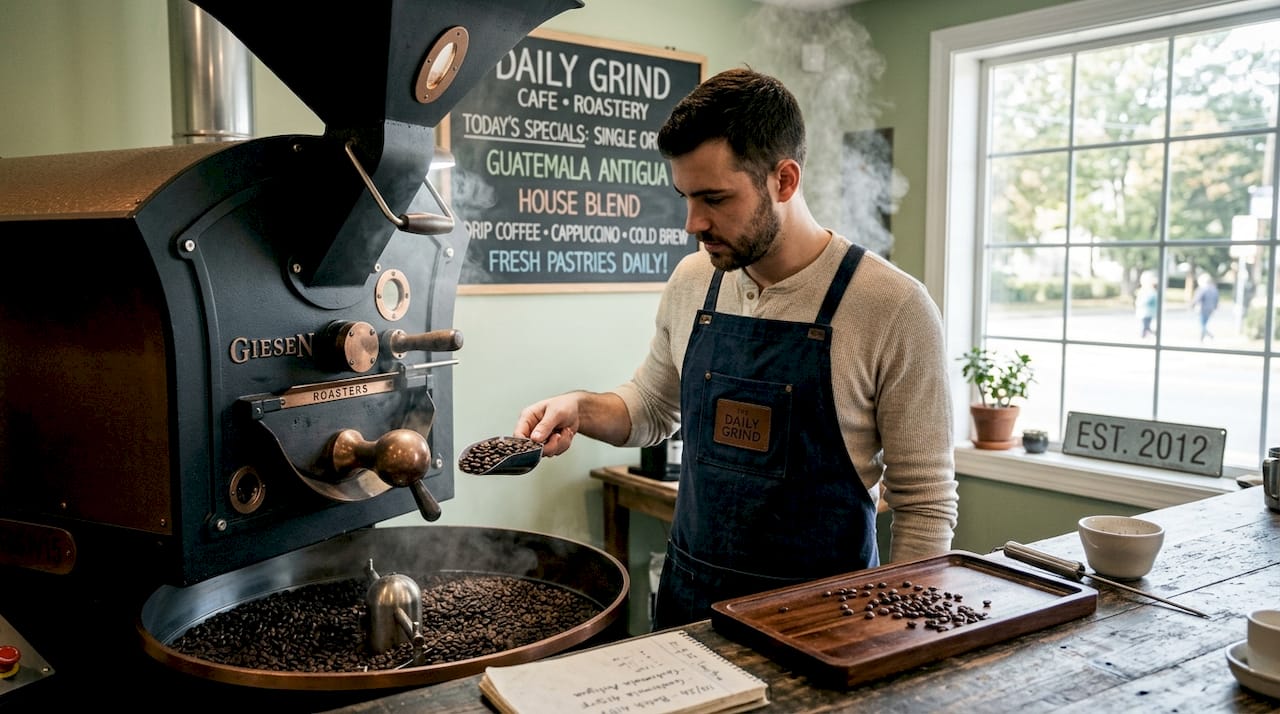
What does matter is that peaberry beans absorb heat differently. Their shape and density change how the roast curve develops. A skilled roaster who applies the same profile they use for flat beans will likely underperform the peaberry’s potential. The best peaberry roasts come from roasters who treat the lot as its own separate challenge, adjusting charge temperature, drum speed, and development time specifically for those beans.
Pro Tip: If you can get peaberry and flat beans from the same origin and roaster, brew them side by side using the same method and dose. That comparison strips away origin and roast variables and lets you isolate what the peaberry shape itself actually contributes to the cup.
For a deeper look at how sensory notes map across different coffees, the coffee flavor profiles list at Zscoffee gives you a solid reference point.
How peaberry coffee is sorted and sold
Peaberry beans do not sort themselves out. They have to be physically separated from the rest of the harvest, and that process is where most of the added cost comes from. Here is how it works in practice:
- Initial screen sorting: After drying, coffee goes through vibrating screens with graded hole sizes. Peaberry beans, being round and smaller, fall through holes that flat beans do not, separating the two groups mechanically.
- Hand sorting follow-through: Vibration screens are not perfectly accurate. Most specialty producers follow up with hand sorting to catch the round beans that slipped through or the flat beans that did not. This step adds significant labor time.
- Lot separation before roasting: Once sorted, the peaberry beans are kept as a distinct lot. Roasters treat the lot separately with its own profile rather than mixing them back with the flat beans for a combined roast.
- Independent quality evaluation: Because flavor behavior differs, tasters cup the peaberry lot on its own. Graders evaluate peaberry batches independently rather than assuming they match the flat-bean version from the same farm.
- Premium pricing at retail: The lower yield (only about 5% of any crop) combined with the extra sorting labor means peaberry lots command higher prices per pound. Buyers pay for rarity and for specialized handling.
When you are shopping for peaberry coffee, look for producers who disclose the origin, the varietal, and the roast date. A bag labeled “Tanzania Peaberry” from a roaster who clearly dialed in a separate profile is worth the premium. A vague label with no origin detail is not.
The Zscoffee article on coffee processing methods covers the broader context of how sorting and processing decisions shape final cup quality.
Peaberry vs. regular coffee beans
Before spending extra on a peaberry lot, you should know exactly what you are comparing and what you are actually getting. This table gives you the clearest side-by-side view.
| Aspect | Standard flat bean | Peaberry bean |
|---|---|---|
| Shape | Flat-sided oval | Round, fully curved |
| Frequency in crop | ~95% | ~5% |
| Roasting approach | Standard profile | Requires dedicated profile |
| Flavor tendency | Origin-dependent, full body | Brighter, more aromatic, lighter body |
| Price | Standard market rate | Premium, 20-50% higher in specialty |
| Availability | Widely available | Limited, lot-specific |
| Best brew methods | All methods | Pour over, drip, where brightness shines |
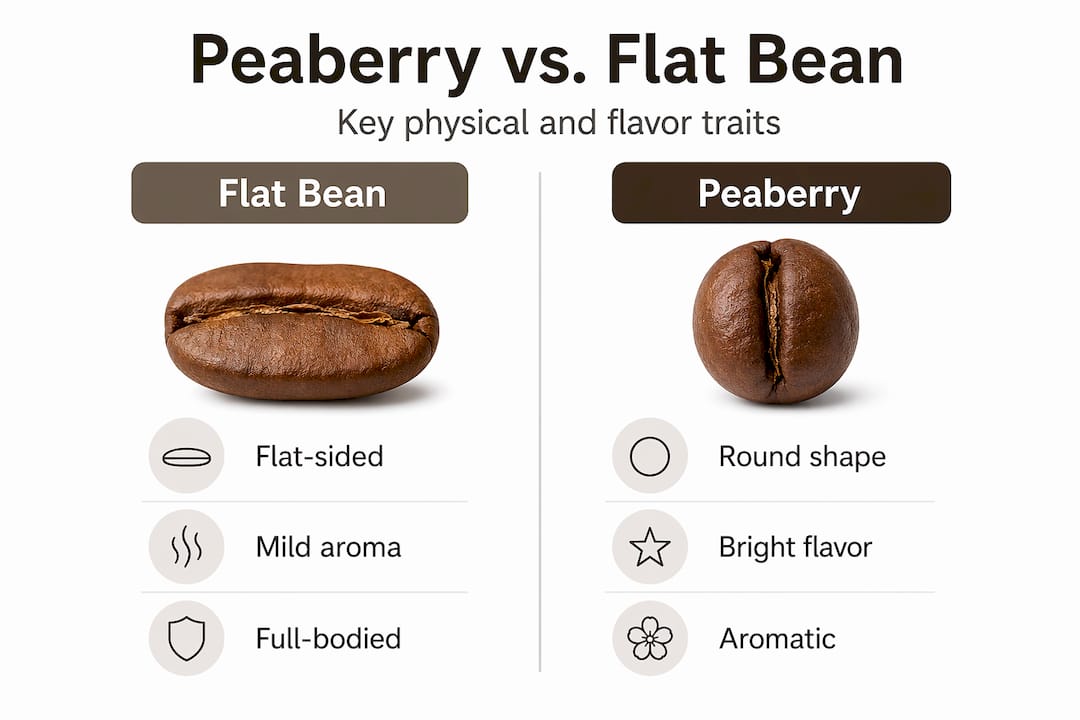
The difference between peaberry and regular coffee beans is not about one being objectively better. A well-roasted, well-sourced flat bean from a top producer will outperform a carelessly roasted peaberry every single time. What peaberry offers is a different expression of the same origin, often with more brightness and aromatic lift. Whether that suits you depends entirely on how you like your coffee.
For drinkers who prefer full-bodied, chocolatey cups, the brightness of peaberry might feel like a trade-off rather than an upgrade. For those who love clarity, floral notes, and a lively finish, it can be a revelation. Understanding where peaberry fits among coffee bean types helps you make a more confident buying decision.
My honest take on peaberry coffee
I’ve tasted a lot of peaberry coffee over the years, and my view on it has shifted. Early on, I bought into the idea that peaberry was automatically special. More expensive meant better, and the round-bean story made it feel exclusive. That framing is mostly marketing doing its job well.
What I’ve actually found is that peaberry is genuinely interesting, but only when the rest of the supply chain is doing its job. A mediocre farm sending peaberry beans to a roaster who treats them the same as flat beans produces a mediocre cup. The shape is not magic. What the shape does is create a slightly different roasting canvas. A talented roaster who pays attention to that canvas can produce something genuinely brighter and more complex than what the flat beans from the same lot deliver.
My honest advice: try peaberry once from a roaster you already trust. Not because it will blow your mind, but because it gives you a real reference point. If you love high-brightness coffees with floral and fruity notes, you will probably keep coming back to it. If you prefer depth and body over brightness, you might find the flat beans from the same origin more satisfying. Neither choice is wrong.
The worst thing you can do is dismiss peaberry as hype without trying it, or overpay repeatedly for it based on the name alone. Treat it like any specialty coffee. Ask about origin, roast date, and how the roaster approached it. The answers will tell you whether a particular bag is worth it long before you open it.
— zachary
Explore peaberry and specialty coffee at Zscoffee
If reading about peaberry has made you want to taste the difference for yourself, Zscoffee is a good place to start. The shop carries carefully sourced specialty coffee options for enthusiasts who care about what is actually in the bag.

Zscoffee’s specialty coffee selection covers a range of origins and roast styles, so you can explore what suits your palate. For something worth trying right now, the cold brew coffee line is a solid starting point if you prefer a smoother, lower-acid experience. Browse the full range at Zscoffee and find the lot that matches how you drink.
FAQ
What is peaberry coffee exactly?
Peaberry coffee is made from beans that form when a coffee cherry develops only one seed instead of the usual two, resulting in a small, round bean. It is not a separate coffee variety but a natural mutation that can occur in any coffee crop worldwide.
Does peaberry coffee taste better than regular coffee?
Not automatically. Peaberry coffee tends to be brighter and more aromatic than flat beans from the same origin, but flavor quality depends far more on origin, processing, and roasting skill than on bean shape alone.
Why is peaberry coffee more expensive?
Peaberry beans make up only about 5% of any given harvest and must be physically sorted from flat beans using screens and hand sorting, which adds significant labor cost and reduces the available volume per lot.
How do I brew peaberry coffee for the best results?
Pour over and drip methods tend to highlight the brightness and aromatic complexity that peaberry coffee is known for. Use the same grind size and water temperature you would for a comparable flat-bean single origin, but taste before adjusting since peaberry lots vary by roaster.
Is peaberry a different coffee species?
No. Peaberry is a natural mutation that occurs randomly across all coffee tree varieties and regions. The beans come from the same Arabica or Robusta plants as regular flat beans, just from cherries where only one seed developed.