TL;DR:
- Direct-to-consumer coffee offers fresher, higher-quality beans by eliminating middlemen and prioritizing transparency. It pays farmers above auction prices, supports better sourcing, and provides customizable subscriptions with verified origin details. The higher cost reflects the value of quality, freshness, and ethical relationships that improve the coffee experience.
Direct-to-consumer coffee is the practice of buying coffee directly from roasters or growers, cutting out the retail middlemen who add cost, time, and distance between the farm and your cup. Why direct-to-consumer coffee matters comes down to three things: freshness, transparency, and value. Kenyan coffee sold through direct channels achieved $406 per 50-kg bag compared to $339 in traditional auctions. That 20% premium flows back to growers and signals a structural shift in how quality coffee gets priced and distributed. Zscoffee operates squarely inside this model, connecting coffee drinkers worldwide to ethically sourced, freshly roasted beans without the grocery store markup.
Why direct-to-consumer coffee outperforms traditional retail
The direct-to-consumer model, often called DTC, removes every layer between the producer and the person drinking the coffee. Traditional retail channels include importers, distributors, regional warehouses, and grocery buyers. Each layer adds weeks to the supply chain and takes a cut of the margin. DTC collapses that chain to a single step.
Freshness is the most immediate benefit. Coffee begins losing its peak flavor within weeks of roasting. Grocery store beans often sit in warehouses and on shelves for months before purchase. A roast-to-order DTC model ships beans within days of roasting, which means the coffee you receive is at its flavor peak.
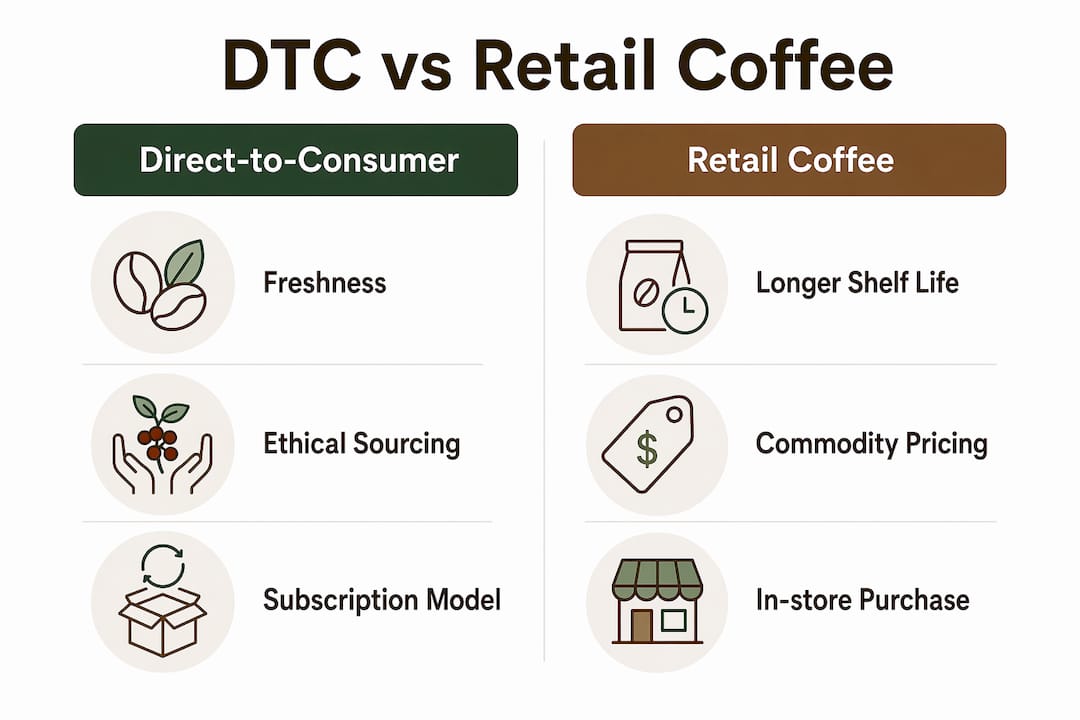
Quality follows directly from sourcing control. DTC roasters build relationships with specific farms and buy micro-lot or single-origin coffees that never appear on grocery shelves. These lots are too small and too specialized for mass retail, but they represent the highest expression of a region’s flavor profile.
The benefits of direct coffee sales extend beyond taste:
- Fresher beans: Roast-to-order fulfillment ships coffee within days, not months.
- Higher quality sourcing: Micro-lot and single-origin coffees are selected for flavor, not shelf stability.
- Full transparency: You know the farm, the region, the harvest date, and often the price paid to the grower.
- Ethical pricing: Direct-trade prices average 20% above traditional auction prices, supporting better farmer income.
- Customization: Grind size, roast level, and delivery frequency are all adjustable.
- Better value per cup: Higher upfront cost reflects real quality, not retail markup.
Pro Tip: When evaluating a DTC coffee brand, look for a roast date on the bag, not just a “best by” date. A roast date tells you exactly how fresh the coffee is.
How do direct coffee subscriptions work, and why are they popular?
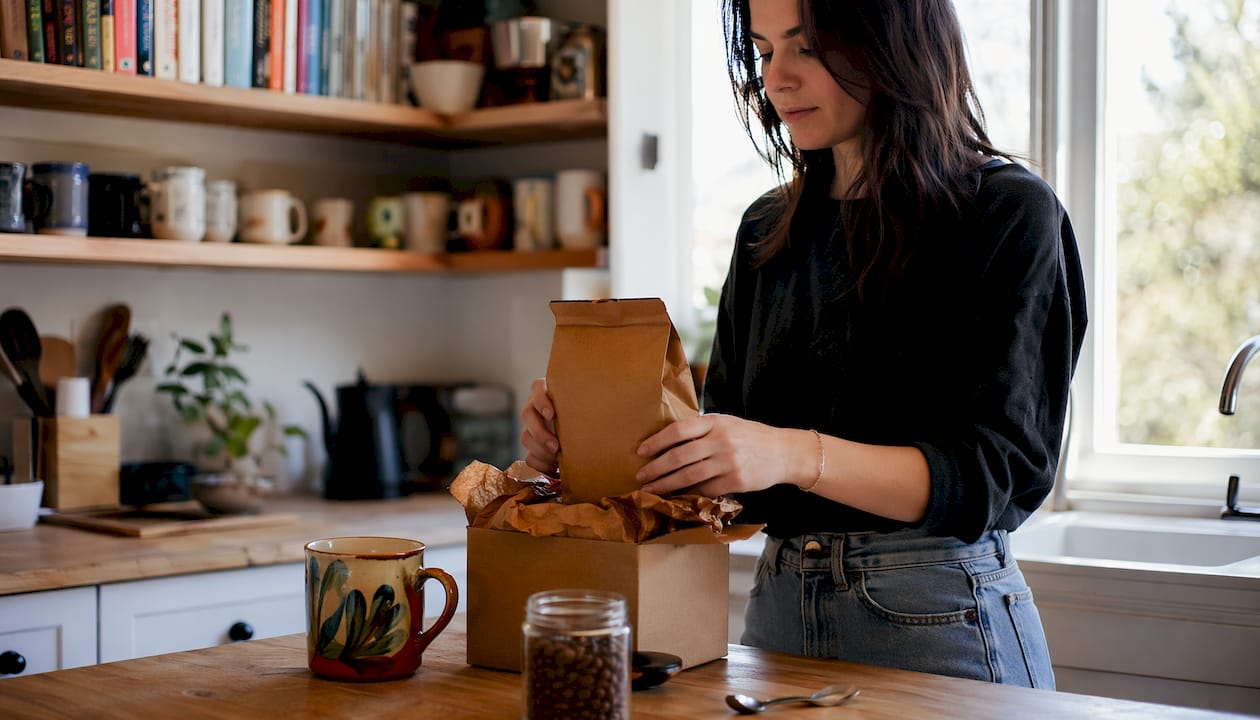
A direct coffee subscription is a recurring delivery arrangement where you choose your coffee preferences once and receive fresh beans on a schedule that matches how fast you drink them. The model is popular because it solves a real problem: running out of good coffee and defaulting to whatever is available at the nearest store.
The subscription process works in four steps:
- Select your preferences. Choose origin, roast level, grind size, and bag weight. Most DTC brands offer single-origin options, blends, and seasonal selections.
- Set your cadence. Weekly, biweekly, or monthly delivery aligns with your consumption rate. You never overbuy or run dry.
- Receive freshly roasted coffee. The roaster fulfills your order after roasting, not from pre-roasted inventory sitting in a warehouse.
- Adjust or pause anytime. Most DTC subscriptions allow changes between deliveries, which removes the commitment anxiety that stops many customers from signing up.
For roasters, the financial logic is compelling. Subscription customers deliver 3–5x the lifetime value of one-time buyers. That predictable demand lets roasters plan roasting schedules, reduce waste, and invest in better sourcing without guessing at volume.
For you as a customer, the advantage is consistency. You get the same quality coffee on a schedule you control, and subscription models transform coffee buying from a transactional purchase into an ongoing discovery experience. Curated selections introduce you to new origins and processing methods you would never find in a grocery aisle.
Pro Tip: Start with a biweekly subscription for a 250g bag. It gives you enough time to evaluate the coffee without committing to a large volume before you know if you love it.
What makes DTC coffee more ethical and transparent?
Direct trade is the sourcing philosophy behind the best DTC coffee brands. It is not a certification. Direct trade involves roasters building direct relationships with producers, visiting farms, negotiating prices above fair trade minimums, and creating quality-based incentives. The result is a supply chain where every participant knows what the coffee costs, where it came from, and why it was priced that way.
Traditional commodity coffee trade works on price floors set by global exchanges. Those floors protect against catastrophic price drops but do nothing to reward quality. A farmer who invests in better processing equipment, shade-grown cultivation, or careful hand-picking gets the same price as one who does not. Direct trade breaks that equation by paying for quality directly.
Transparency has shifted from a luxury to a fundamental trust tool in specialty coffee. Customers now expect to see farm names, harvest seasons, processing methods, and the price paid to growers. Brands that cannot provide this information are increasingly viewed as less credible, regardless of their marketing claims.
The practical benefits of ethical DTC sourcing include:
- Traceability: You can verify the origin of every bag, which matters for both personal values and regulatory compliance in some markets.
- Multi-year commitments: Strong direct trade programs lock in repeat relationships, giving farmers income stability to invest in quality improvements.
- Quality feedback loops: Roasters share cupping scores and flavor notes with farmers, creating a direct incentive to improve processing and cultivation.
- Community impact: Premium pricing funds local infrastructure, education, and equipment at the farm level.
| Feature | Direct trade model | Commodity trade model |
|---|---|---|
| Price basis | Quality and relationship | Global exchange floor |
| Transparency | Farm, harvest, and price visible | Origin often unknown |
| Farmer incentive | Rewarded for quality | Flat price regardless of quality |
| Consumer traceability | Full | Minimal |
| Long-term relationships | Standard practice | Rare |
A well-run direct trade program operates as a system: repeat relationships, shared upside, and quality feedback. It is not a marketing claim. You can verify it by asking a brand for the name of the farm and the price paid per kilogram.
For a deeper look at how transparency shapes consumer trust, the Zscoffee guide to transparent sourcing explains what to look for when evaluating a brand’s sourcing claims.
How does DTC coffee pricing compare to retail, and is it worth it?
DTC coffee costs more than grocery store coffee. That is not a flaw in the model. It is the model working correctly. DTC pricing typically sits 20–40% above the same brand’s grocery shelf price. That gap exists to protect the economics that make quality sourcing possible.
Here is why the gap matters. Grocery distribution involves distributor markups, slotting fees, and promotional allowances. These costs compress per-bag margins by 35–50% for roasters selling through chain grocery. A roaster earning $4 per bag through a grocery channel might earn $12–$16 per bag through a direct subscription. That margin difference funds better green coffee purchases, more careful roasting, and the direct trade relationships that produce better flavor.
DTC coffee brands target fully loaded gross margins of 45–55% to sustain their operations. Fully loaded means the margin calculation includes inbound freight, packaging, pick and pack labor, and duties. Brands that ignore these costs overestimate their margins and eventually cut corners on sourcing to compensate.
For you as a customer, the value calculation is straightforward. A $22 bag of DTC coffee that was roasted four days ago and sourced from a named farm in Ethiopia delivers a fundamentally different experience than a $14 bag from a grocery shelf with no roast date. The cost per cup difference is often less than $0.50. The quality difference is significant.
Subscription pricing adds another layer of value. Many DTC brands offer 10–15% discounts on subscription orders versus one-time purchases. Combined with the freshness advantage, a subscription often delivers better coffee at a lower effective price than buying retail bags inconsistently.
If you want to understand how buying direct from farms affects both quality and pricing in practice, Zscoffee’s 2026 guide covers the full picture.
Key Takeaways
Direct-to-consumer coffee delivers fresher, higher-quality, and more ethically sourced coffee than traditional retail by eliminating intermediaries, paying growers fairly, and giving customers full transparency into what they are buying.
| Point | Details |
|---|---|
| Freshness advantage | Roast-to-order fulfillment ships beans within days, preserving peak flavor. |
| Ethical pricing for growers | Direct channels pay growers an average of 20% more than traditional auction prices. |
| Subscription lifetime value | Subscription customers deliver 3–5x the lifetime value of one-time buyers. |
| Pricing premium is justified | DTC prices run 20–40% above retail to fund quality sourcing and fair trade relationships. |
| Transparency is verifiable | Strong DTC brands name the farm, harvest season, and price paid per kilogram. |
The case for switching that most coffee drinkers overlook
I have been buying coffee through DTC channels long enough to notice something that rarely gets discussed: the freshness gap between DTC and retail is far larger than most people expect. The first time you brew a bag roasted four days ago versus one roasted four months ago, the difference is not subtle. It is the difference between a flat, bitter cup and one with actual sweetness and complexity.
What surprises most newcomers is the transparency. Knowing the farm name, the processing method, and the price paid to the farmer changes how you think about coffee. It stops being a commodity and starts being a product with a story you can verify. That shift in perception is worth more than any single flavor note.
My honest caution: do not expect DTC coffee to be cheap. The pricing premium is real, and brands that price at grocery-store levels are almost certainly cutting corners somewhere in the supply chain. A 45–55% gross margin target is not greed. It is the math that keeps quality sourcing sustainable.
For regular drinkers, a subscription is the practical choice. It removes the friction of reordering, keeps your coffee fresh, and often costs less per bag than buying inconsistently. Start with one origin, drink it carefully, and then use the curated coffee box options to explore what different regions actually taste like. That is how you build a real coffee palate.
— zachary
Premium DTC coffee, ready to order from Zscoffee
Zscoffee brings the direct-to-consumer model to coffee drinkers across the globe, with ethically sourced beans, curated selections, and products built for people who take their coffee seriously.
The cold brew coffee range at Zscoffee is a strong starting point for anyone new to DTC buying. It delivers the freshness and quality that define the DTC model in a format that requires no brewing equipment. For customers who want to explore the full range, the complete coffee and tea collection covers single-origin beans, blends, and brewing accessories. Every product ships directly to you, with no retail markup standing between the roaster and your cup.
FAQ
What is direct-to-consumer coffee?
Direct-to-consumer coffee is coffee sold directly from the roaster or grower to the customer, without passing through distributors or grocery retailers. The model prioritizes freshness, transparency, and direct trade relationships.
Why does DTC coffee cost more than grocery store coffee?
DTC prices typically run 20–40% above retail to protect the margins that fund quality sourcing and fair grower payments. The higher price reflects real cost differences, not markup for its own sake.
How do direct coffee subscriptions work?
You choose your coffee preferences, set a delivery frequency, and receive freshly roasted beans on a recurring schedule. Most subscriptions allow adjustments or pauses between deliveries.
Are direct trade and fair trade the same thing?
No. Fair trade is a certification with a price floor. Direct trade is a sourcing philosophy where roasters build personal relationships with farmers, pay above fair trade minimums, and create quality-based incentives. Direct trade is not certified but is often more transparent.
How fresh is DTC coffee compared to retail?
DTC roasters typically ship within days of roasting. Grocery store coffee often sits in warehouses and on shelves for months. The freshness difference is measurable in flavor and aroma.