TL;DR:
- Curated coffee boxes provide fresher, higher-quality beans by roasting within 24–48 hours before shipping. They introduce drinkers to rare micro-lots, processing methods, and diverse origins, building a tasting palate. These subscriptions are more cost-effective and transparent, making them a valuable complement to daily coffee routines.
Curated coffee boxes are expertly selected collections of specialty coffee beans, chosen for freshness, origin diversity, and flavor complexity, then shipped directly to your door. They represent the fastest-growing segment of the specialty coffee market because they solve a problem every serious coffee lover knows: great beans are hard to find consistently at retail. Subscription coffees are roasted within 24–48 hours of shipping, while retail bags may sit on shelves for weeks before purchase. That gap in freshness alone is why choose curated coffee boxes over standard grocery options is a question with a clear answer. Zscoffee curates selections that prioritize both peak flavor and genuine discovery.
Why choose curated coffee boxes over retail beans?
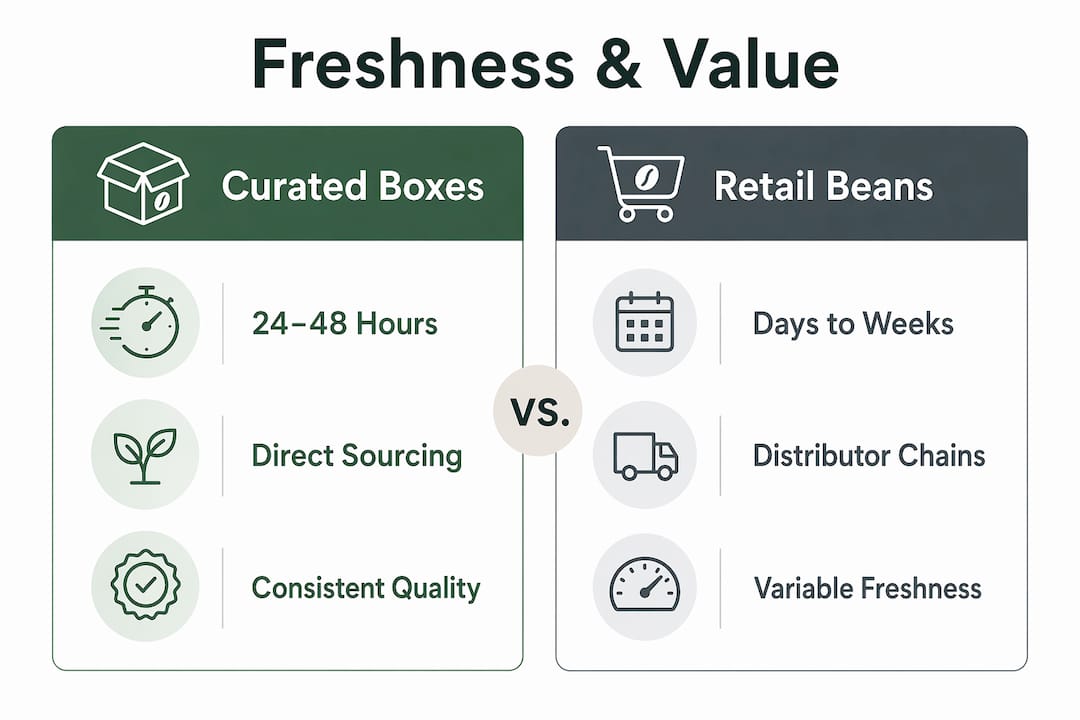
Curated coffee boxes deliver fresher, more flavorful beans than anything you will find on a grocery shelf. The reason is simple: specialty roasters who supply curated boxes operate on tight roast-to-ship windows. Roasting within 24–48 hours before shipping is the standard for quality-focused subscription programs. That timeline matters because coffee flavor degrades rapidly after roasting, with CO2 off-gassing and oxidation beginning almost immediately.
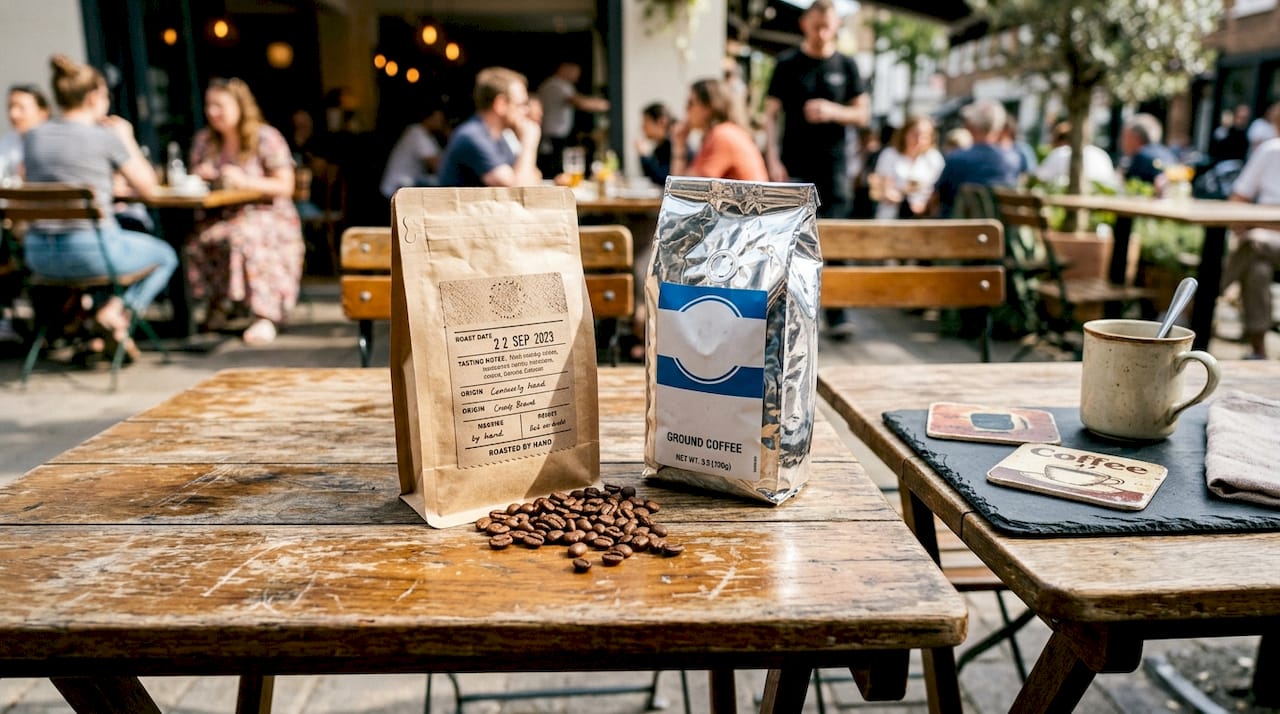
Retail coffee, by contrast, travels through a distribution chain that adds days or weeks between roast and purchase. By the time a bag reaches your kitchen, the volatile aromatic compounds that define a coffee’s character are already diminished. Coffee freshness directly affects flavor in ways that no brewing technique can fully compensate for.
Expert sourcing is the second quality advantage. Curated box providers work directly with farms, cooperatives, and importers to select lots based on cup score, processing method, and harvest timing. That level of sourcing access is not available to most retail buyers. Coffee quality standards used by specialty curators typically require Specialty Coffee Association scores of 80 or above, a threshold that eliminates the majority of commercially traded coffee.
Packaging also plays a direct role in what arrives in your cup. Specialized packaging preserves coffee freshness far better than standard store packaging, using one-way degassing valves and nitrogen flushing to slow oxidation between roast and brew.
Pro Tip: Store your curated beans in an airtight container away from light and heat. Even the best freshly roasted coffee loses flavor fast if left in an open bag on the counter.
- Roast-to-ship window: 24–48 hours for subscription programs vs. weeks for retail
- Sourcing standard: Specialty Coffee Association scores of 80 or above
- Packaging: one-way degassing valves and nitrogen flushing slow oxidation
- Flavor impact: volatile aromatic compounds degrade within days of roasting
How do curated boxes introduce you to unique coffee flavors?
Curated selections are the most reliable way to access micro-lot and limited-edition coffees that never reach mainstream retail. These are small-batch harvests from single farms or specific plots within a farm, processed using methods like natural, honey, or anaerobic fermentation. Each method produces a distinct flavor profile. A naturally processed Ethiopian Yirgacheffe tastes nothing like a washed Guatemalan Huehuetenango, and most coffee drinkers never experience that contrast through retail alone.
Novel processing methods and micro-lots expose drinkers to sensory profiles rarely found in stores. That exposure is the core educational value of a curated box. You are not just drinking coffee. You are building a palate.
The market has matured significantly in this direction. Curated subscriptions increasingly feature limited-edition and experimental lots, including competition-grade coffees and co-fermented lots that push flavor boundaries. These are coffees that win awards at events like the Cup of Excellence, then get allocated to curated programs before they sell out entirely.
“The best curated boxes don’t just send you coffee. They send you context: the farm, the farmer, the processing method, and the reason this particular lot is worth your attention.” — Perfect Daily Grind, 2026
Here is what a well-designed curated box typically covers across a three-month rotation:
- Origin diversity. Boxes rotate between African, Latin American, and Asian-Pacific origins to expose drinkers to the full range of terroir-driven flavor.
- Processing variety. Washed, natural, honey, and anaerobic lots each appear, giving subscribers a direct comparison of how processing shapes taste.
- Roast range. Light, medium, and medium-dark roasts let subscribers identify their preferred roast level through direct experience rather than guesswork.
- Rare and limited lots. Competition-grade and micro-lot coffees appear in rotation, often with tasting notes and brew recommendations included.
Limited-edition coffees serve a purpose beyond novelty. They set a flavor benchmark that recalibrates what you expect from everyday coffee.
What are the cost and convenience benefits of coffee subscriptions?
Curated coffee boxes cost less than buying equivalent specialty beans at retail. Coffee subscriptions typically run $14–$22 per 12 oz bag, which is 10–15% cheaper than purchasing the same quality beans from a specialty retailer or café. For a moderate drinker buying one bag every two weeks, that difference adds up to roughly $52 in annual savings.
The convenience factor is equally significant. Subscriptions automate your supply, so you never run out mid-week or make a last-minute grocery run for inferior beans. Delivery cadence is typically adjustable, matching your actual consumption rate rather than a fixed schedule.
| Feature | Curated coffee box | Standard retail purchase |
|---|---|---|
| Roast-to-delivery window | 24–48 hours | Days to weeks |
| Price per 12 oz bag | $14–$22 | $18–$28+ |
| Access to micro-lots | Regular rotation | Rare or unavailable |
| Sourcing transparency | Included with each box | Rarely provided |
| Packaging for freshness | Degassing valves, nitrogen flush | Standard sealed bag |
Health consistency is another practical argument. Moderate coffee consumption of 3–4 cups per day associates with a 19% reduction in cardiovascular risk. A reliable subscription supply makes that consistency easier to maintain than sporadic retail purchases.
Pro Tip: If you already have a favorite daily roaster, use a curated box as a supplement rather than a replacement. Cover your daily consumption with a trusted single roaster, then use the curated box for weekend brewing and flavor exploration.
A hybrid coffee sourcing approach is now the most popular strategy among serious coffee drinkers. The model works like this: roughly 80% of daily consumption comes from a reliable single roaster, while a curated box handles exploration, gifting, and special occasions. That balance gives you consistency where you need it and discovery where you want it.
What should you look for when choosing a curated coffee box?
Not all curated boxes are equal, and the sourcing complexity behind limited-edition lots creates real variability in what subscribers receive. Sourcing limited-edition coffees carries logistical risks, including supply instability, harvest variability, and allocation limits that can affect what ships in any given month. A curator who cannot explain their sourcing strategy is one worth avoiding.
Transparency is the most reliable quality signal. Before subscribing, look for these specifics:
- Farm or cooperative name. Generic “single origin” labels without a named source are a red flag.
- Processing method. Washed, natural, honey, and anaerobic lots each require different brewing adjustments. A good curator tells you which you are getting.
- Harvest date or crop year. Freshness claims mean nothing without a verifiable roast or harvest date.
- Roast date on the bag. This is non-negotiable. If the bag does not show a roast date, the freshness promise is unverifiable.
- Sourcing strategy. Does the curator work directly with farms, or through importers? Direct trade relationships generally produce more consistent quality.
Market maturity in the curated coffee space means consumers now have higher expectations and more options than ever. That is good news for quality, but it also means more noise to filter through. Matching your subscription to your actual taste preferences, whether you favor bright acidic African coffees or heavy chocolatey Latin American profiles, reduces the chance of receiving boxes that miss the mark.
Commitment level matters too. Many programs offer month-to-month flexibility, while others reward longer commitments with lower per-bag pricing. Start with a shorter commitment to test whether a curator’s selections align with your palate before locking in a longer plan.
Key takeaways
Curated coffee boxes deliver superior freshness, rare flavor access, and meaningful cost savings that standard retail simply cannot match.
| Point | Details |
|---|---|
| Freshness advantage | Subscription beans ship within 24–48 hours of roasting, far fresher than retail stock. |
| Flavor discovery | Micro-lots, competition grades, and experimental processing methods appear regularly in curated rotations. |
| Cost savings | Curated boxes run 10–15% cheaper than retail specialty beans, saving roughly $52 annually for moderate drinkers. |
| Sourcing transparency | Always verify farm name, roast date, and processing method before committing to a subscription. |
| Hybrid strategy | Pair a reliable daily roaster with a curated box for exploration to get the best of both approaches. |
The curated box market has grown up, and so should your expectations
I have been following the specialty coffee subscription market for years, and the shift over the past two years is real. Early curated boxes were mostly a novelty. You got something fresher than the grocery store, maybe a tasting note card, and that was the value proposition. The bar has moved considerably since then.
What I find genuinely interesting now is the push toward competition-grade and co-fermented lots in mainstream curated programs. These are coffees that used to be reserved for café menus at $8 a cup. Getting them shipped to your door at subscription pricing is not a small thing. It represents a real democratization of specialty coffee access.
That said, I think most coffee lovers make one consistent mistake: they treat a curated box as a replacement for a daily roaster rather than a complement to one. The hybrid approach is the right model. Use a curated box for what it does best, which is introducing you to flavors you would never seek out on your own. Use a trusted single roaster for your Monday morning cup when you just need reliable, great coffee without surprises.
The other thing worth saying plainly: transparency separates the serious curators from the marketing-heavy ones. If a box cannot tell you the farm name, the roast date, and the processing method, it is not truly curated. It is just packaged. Demand better, because the programs that meet that standard absolutely exist.
International coffee origins are worth exploring systematically, not randomly. A curated box that rotates through Ethiopia, Colombia, and Indonesia across three months teaches you more about coffee than a year of buying the same bag from the same shelf.
— zachary
Zscoffee curated selections: freshness and flavor in every box
Zscoffee brings together expertly sourced specialty coffees from farms and cooperatives around the world, roasted fresh and shipped with the same 24–48 hour standard that defines quality subscription programs.
Whether you are building a palate through rotating origins or looking for a reliable source of micro-lot and limited-edition coffees, Zscoffee’s curated coffee and tea selections cover the full range. Each product includes sourcing details, roast dates, and tasting notes so you know exactly what you are brewing. Explore the full product range to find the selections that match your taste and brewing style.
FAQ
What is a curated coffee box?
A curated coffee box is a subscription or one-time purchase of specialty coffee beans selected by experts based on origin, quality score, and flavor profile. Beans are typically roasted within 24–48 hours of shipping to ensure peak freshness.
How much do curated coffee subscriptions cost?
Most curated coffee subscriptions run $14–$22 per 12 oz bag, which is 10–15% cheaper than buying equivalent specialty beans at retail. Moderate drinkers save roughly $52 per year compared to retail purchases.
Are curated coffee boxes worth it for everyday drinkers?
Yes, especially when used alongside a reliable daily roaster. The hybrid approach covers daily consumption with a consistent single roaster while using curated boxes for flavor exploration and special occasions.
How do I know if a curated coffee box is high quality?
Look for a named farm or cooperative, a printed roast date on the bag, and a clear description of the processing method. Curators who provide this information consistently are the ones worth trusting.
What types of coffee appear in curated boxes?
Quality curated boxes rotate through micro-lots, competition-grade coffees, and experimental processing methods like anaerobic fermentation and honey processing. These lots rarely appear in standard retail and offer flavor profiles most drinkers have never experienced.