TL;DR:
- Gourmet coffee is defined by high-quality, traceable beans that meet rigorous sustainability and flavor standards. It emphasizes specific origins, careful processing, and freshness, resulting in complex, nuanced flavors. Authentic gourmet coffee involves deliberate choices throughout the supply chain to produce a superior, transparent, and enjoyable cup.
Gourmet coffee isn’t what most people think it is. The word gets slapped on grocery store bags, drive-through specials, and instant packets with equal enthusiasm, which has made it almost meaningless. But real gourmet coffee has nothing to do with a premium price tag or a fancy name. It comes down to where the beans grow, how they’re processed, who handles them along the way, and how carefully they end up in your cup. Understanding those distinctions changes how you shop, how you brew, and how deeply you enjoy every single sip.
Table of Contents
- What defines gourmet coffee?
- How coffee origins and varieties shape gourmet quality
- Taste and aroma: What sets gourmet coffee apart
- Brewing gourmet coffee at home: Essential tips
- Avoiding common pitfalls: Recognizing true gourmet coffee
- Why true gourmet coffee goes beyond the label
- Get started with gourmet coffee at home
- Frequently asked questions
Key Takeaways
| Point | Details |
|---|---|
| Gourmet is about quality | True gourmet coffee uses the best beans, ethical sourcing, and strict standards. |
| Origin impacts flavor | Where and how coffee is grown defines the taste and aroma in every cup. |
| Savor the experience | Noticing subtle flavors and aromas is what makes gourmet coffee memorable. |
| Be label-aware | Don’t trust branding alone—seek transparency and prove quality in your coffee choice. |
What defines gourmet coffee?
At its core, gourmet coffee refers to coffee made from high-grade beans that meet rigorous sourcing and quality standards. The term is closely tied to specialty coffee standards, which requires beans to score 80 points or above on a 100-point scale set by the Specialty Coffee Association. That scoring system evaluates everything from fragrance and acidity to body, balance, and aftertaste. Most grocery store coffee doesn’t come close.
The distinction between gourmet, specialty, and regular coffee can feel blurry, but it doesn’t have to be. Regular commercial coffee is typically mass-produced from lower-grade Robusta or blended Arabica beans, prioritizing consistency and low cost over character. Specialty coffee, by contrast, comes from traceable farms and receives careful processing. Gourmet coffee sits at the same tier as specialty coffee, and in many cases the terms overlap. What separates a true gourmet product is the emphasis on the full chain, from soil to cup.
Here’s a quick comparison to make the differences clear:
| Feature | Regular coffee | Specialty/Gourmet coffee |
|---|---|---|
| Bean grade | Commercial grade | 80+ specialty grade |
| Sourcing | Often anonymous | Single origin or traceable farms |
| Processing | Mass production | Carefully monitored |
| Roast transparency | Minimal | Roast date labeled |
| Flavor complexity | Flat, bitter | Layered, distinct |
Key features that define genuine gourmet coffee:
- Single origin or traceable sourcing from a specific farm, region, or cooperative
- High-altitude growing conditions that slow bean development and concentrate sugars
- Intentional processing methods such as washed, natural, or honey process
- Freshness indicators like a printed roast date within the last 30 days
- Cupping scores of 80 points or above from a certified taster
“Quality in gourmet coffee is never accidental. It’s the result of deliberate choices made at every stage of the supply chain, from how the cherries are picked to how the roast is developed and timed.” This reflects the philosophy driving serious specialty roasters worldwide.
With the basics clarified, let’s examine where gourmet coffee comes from and how origins influence what ends up in your cup.
How coffee origins and varieties shape gourmet quality
One of the most fascinating things about gourmet coffee is that geography does most of the heavy lifting. Just like wine grapes take on characteristics from their soil and climate, coffee regions and flavor are deeply connected. Coffee grown in the volcanic soil of Ethiopia at 2,000 meters above sea level tastes nothing like coffee from a low-altitude farm in Vietnam, even if both plants are technically the same species.
This concept is called terroir, a French term borrowed from the wine world. It refers to the complete natural environment in which a crop is grown: soil composition, altitude, rainfall, shade, and temperature swings between day and night. High-altitude regions with significant temperature variation tend to produce beans with more complex sugars, which translate into nuanced sweetness and bright acidity in the cup.
The specific coffee bean varieties matter just as much. Most gourmet coffee comes from Arabica plants, specifically from distinct sub-varieties such as Heirloom Ethiopian, Gesha (also called Geisha), Bourbon, Typica, and SL-28. These varieties are generally lower-yielding and more delicate than Robusta, but they produce dramatically more complex flavors. A well-grown Gesha from Panama, for instance, can exhibit jasmine florals, bergamot, and stone fruit in a single cup.
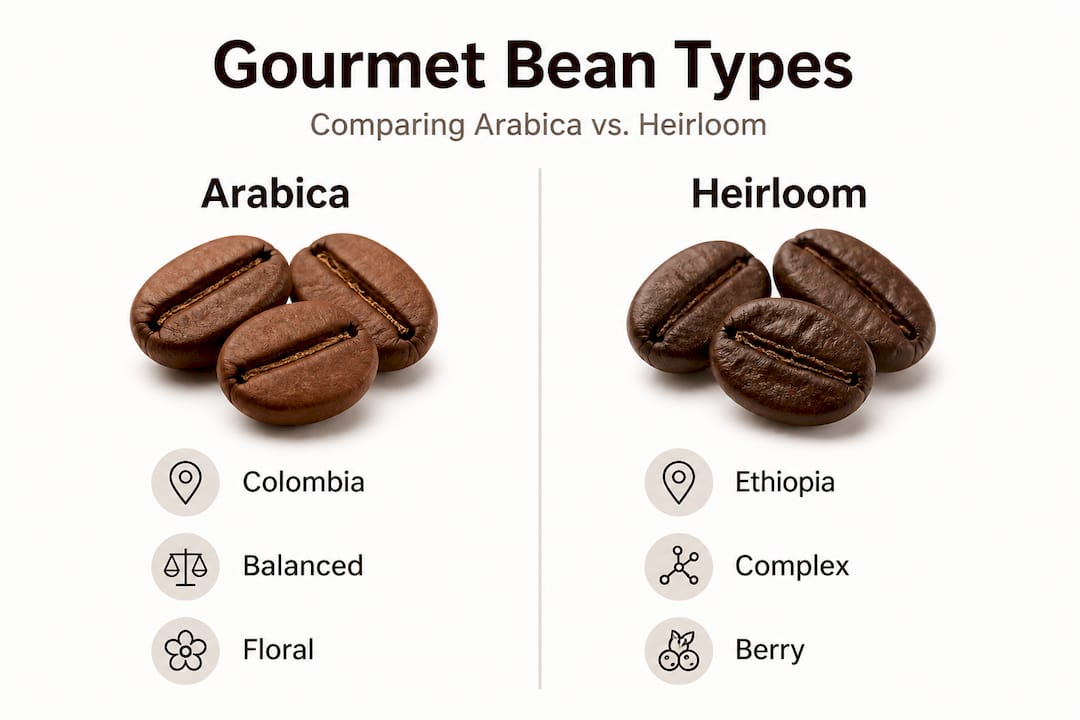
Here’s how some of the world’s most respected gourmet origins compare:
| Region | Altitude | Variety | Flavor notes |
|---|---|---|---|
| Ethiopia (Yirgacheffe) | 1,800–2,200m | Heirloom | Blueberry, jasmine, lemon tea |
| Colombia (Huila) | 1,500–2,000m | Caturra, Castillo | Caramel, apple, milk chocolate |
| Panama (Boquete) | 1,500–1,900m | Gesha | Jasmine, peach, bergamot |
| Kenya (Mount Kenya) | 1,700–2,100m | SL-28, SL-34 | Blackcurrant, citrus, full body |
| Guatemala (Antigua) | 1,500–1,700m | Bourbon, Typica | Chocolate, almond, brown sugar |
The origin and quality connection is real and measurable. Buyers at top roasters specifically seek beans from these regions because the combination of variety, altitude, and processing produces reliable excellence. When you see a bag labeled with a specific farm name, altitude, and processing method, that’s transparency working in your favor.
Traits shared by top gourmet origins:
- Consistent high-altitude growing above 1,400 meters
- Hand-picked cherries at peak ripeness rather than strip-harvested
- Strict post-harvest processing with minimal defects
- Cooperative or direct-trade relationships with farmers
- Seasonal harvests rather than year-round industrial picking
Pro Tip: When exploring gourmet coffee, start with single-origin Ethiopians or Colombians. These regions are beginner-friendly in terms of flavor complexity, and they represent incredible value compared to rarer varieties like Gesha.
After understanding where gourmet coffee comes from, it’s time to explore what it actually tastes like and how aroma and flavor are evaluated.
Taste and aroma: What sets gourmet coffee apart
You’ll know gourmet coffee the moment it hits your nose before you even take a sip. The aroma is the first signal of quality. A coffee’s flavor profiles extend well beyond generic “coffee smell.” In a genuinely high-grade cup, you might detect fresh fruit, warm spice, dark chocolate, tropical flowers, or even honey and brown butter.

Aroma matters enormously because it accounts for up to 80% of what we actually perceive as taste. This is why freshness is non-negotiable. Stale beans lose their volatile aromatic compounds quickly, leaving you with a flat, papery brew regardless of origin or variety.
Common tasting notes found in gourmet coffees:
- Fruity: blueberry, cherry, mango, citrus peel, dried apricot
- Floral: jasmine, rose, lavender, hibiscus
- Chocolatey: dark chocolate, cocoa nib, milk chocolate ganache
- Nutty: almond, hazelnut, walnut, pecan
- Caramel and sweet: brown sugar, maple syrup, toffee, molasses
- Wine-like: grape, berry jam, fermented fruit, blackcurrant
Beyond aroma, gourmet coffee distinguishes itself through three sensory pillars: balance, complexity, and a clean finish. Balance means no single flavor dominates aggressively. Complexity means multiple flavor layers reveal themselves as the cup cools. A clean finish means there’s no lingering bitterness, astringency, or muddy aftertaste. All three together are what make you want another cup immediately.
Research into coffee consumer behavior consistently shows that enhancing coffee flavor starts with bean quality, not with additives or creamers. Studies suggest that over 70% of coffee drinkers who prioritize aroma report higher overall satisfaction with their brew, regardless of origin. That’s a number worth paying attention to.
Gourmet coffee blends can also achieve remarkable complexity by combining origins with complementary flavor profiles. A roaster might blend a bright Ethiopian with a sweeter Colombian to create a cup that has both clarity and depth. When done well, blending is an art form rather than a shortcut.
Pro Tip: Before you add milk or sugar to a new gourmet coffee, try a small sip black first. Let it sit on different parts of your tongue, take a second sip as it cools slightly, and notice how the flavor evolves. You’ll pick up far more nuance this way.
Knowing how gourmet coffee tastes, the next step is unlocking these flavors at home through proper preparation and selection.
Brewing gourmet coffee at home: Essential tips
Buying great beans is only half the equation. Brewing them well is what puts everything together. Poor technique can ruin even the finest specialty-grade coffee, while solid fundamentals can make a $20 bag taste like it cost twice as much.
Follow these steps to select and prepare authentic gourmet coffee at home:
- Check the roast date first. Look for a bag roasted within the last two to four weeks. Avoid anything without a printed date. Best-by dates alone are not enough.
- Read the origin details. A genuine gourmet product will tell you the country, region, farm or cooperative, and often the altitude and processing method.
- Look for third-party certifications. Fair Trade, Rainforest Alliance, and direct-trade labels signal ethical sourcing and traceability.
- Smell the bag when you open it. Freshly roasted gourmet beans should have a strong, complex aroma immediately. Faint or generic smells indicate stale beans.
- Choose the right grind for your method. Coarse for French press, medium for drip, medium-fine for pour-over, fine for espresso. Grinding fresh is non-negotiable.
- Use filtered water at the right temperature. Aim for 195 to 205 degrees Fahrenheit. Water that’s too hot scorches the beans; too cool and you’ll under-extract.
- Keep equipment clean. Coffee oils go rancid and contaminate subsequent brews. Clean your grinder and brewer regularly.
For storage, keep your beans in an airtight, opaque container at room temperature, away from light, heat, and moisture. Don’t refrigerate whole beans because condensation damages cell walls and degrades flavor. Grind only what you need for each session.
Different brewing methods highlight different qualities in the same bean. Pour-over methods like the V60 or Chemex tend to emphasize clarity, brightness, and delicate flavors. French press extracts more body and oils. Espresso concentrates and intensifies everything. Knowing your method helps you match it to the right bean, which is where coffee quality standards knowledge becomes genuinely practical.
Pro Tip: After brewing, try tasting coffee properly by slurping a spoonful across your entire palate. It sounds inelegant, but it spreads the liquid evenly and activates more taste receptors, just like professional cuppers do.
Now that you know how to enjoy gourmet coffee at home, let’s see how to spot so-called “gourmet” imposters and avoid common pitfalls.
Avoiding common pitfalls: Recognizing true gourmet coffee
The gourmet label is legally unregulated in most markets, which means any brand can print it on a bag without meeting any standard at all. This is the uncomfortable reality. Not all coffees labeled gourmet meet authentic standards, and the marketing often targets people who want quality without knowing exactly how to verify it.
Watch for these red flags: vague origin descriptions like “100% Arabica blend” with no country or region specified, no roast date anywhere on the packaging, dramatic words like “ultra-premium” or “world-class” without any supporting information, and extremely low prices that simply can’t support ethical sourcing.
Signs that a coffee is genuinely gourmet:
- Specific origin: Country, region, farm name, or cooperative listed clearly
- Cupping score displayed or third-party certification visible
- Roast date printed on the bag, not just a best-by date
- Processing method noted: washed, natural, honey, anaerobic, etc.
- Altitude listed: above 1,400 meters is a strong quality indicator
- Variety named: Gesha, Heirloom, Bourbon, SL-28, etc.
Transparency in sourcing is a core value of genuine gourmet roasters. When a roaster publishes the farmer’s name, the price paid above commodity rate, and the farm’s altitude and harvest season, that’s a brand operating with integrity. It also makes your coffee more interesting because you know the story behind it.
Using coffee tasting tips alongside these buying criteria closes the loop completely. You’ll be able to evaluate whether the cup lives up to the label in your own kitchen.
Pro Tip: Look for roasters who list quality coffee labels and affiliations with recognized organizations like the Specialty Coffee Association or Cup of Excellence program. These affiliations aren’t guarantees, but they signal that the roaster is operating within a quality-focused community.
With practical buying advice at hand, let’s shift to a perspective on what truly matters if you want to go beyond the basics.
Why true gourmet coffee goes beyond the label
Here’s something the industry doesn’t say loudly enough: the gourmet label, on its own, is nearly worthless. We’ve seen beautiful packaging on coffees that tasted like burnt rubber, and we’ve tasted extraordinary cups from modest-looking bags with no marketing at all. The label is a starting point, not a guarantee.
What actually makes coffee gourmet is a chain of human decisions, not a stamp. A farmer deciding to harvest only ripe cherries instead of strip-picking the whole branch. A mill operator adjusting fermentation times carefully. A roaster choosing to develop a profile that highlights the bean’s natural character rather than masking defects under dark roast. These are intentional, costly choices made at every step.
The brands that lean on exotic-sounding names or high prices without telling you anything about the people who grew your coffee are selling you a feeling, not a product. Real gourmet coffee connects you to exploring coffee’s roots in a specific place and to a specific community. When you drink a naturally processed Ethiopian from a known cooperative and you can taste the blueberry and jasmine in the cup, that flavor is a direct result of decisions made thousands of miles away by people who care deeply about their crop.
Taste with curiosity. Ask questions. A simple artisan-grown cup from a small cooperative farm with honest sourcing will almost always outperform a slick, overpriced “gourmet” brand that can’t tell you anything about where its beans came from. That’s a truth worth holding onto every time you open a new bag.
Get started with gourmet coffee at home
Ready to put this knowledge to work? The best way to understand gourmet coffee is to taste it, compare it, and build your own palate over time.
At Z’s Coffee, we’ve curated a range of options to help you explore genuine quality from your first cup. If you’re just starting out, the Gourmet Donut Shop coffee is an approachable, crowd-pleasing choice that delivers consistent flavor without overwhelming complexity. For adventurous drinkers who want something refreshing and versatile, our cold brew coffee highlights clean, smooth profiles that showcase bean quality beautifully. Browse our full coffee and tea selection to find beans matched to your taste preferences and brewing setup. Every product we carry reflects the standards this article is all about.
Frequently asked questions
What makes a coffee “gourmet” rather than just regular?
Gourmet coffee is made from high-grade beans carefully sourced and processed for superior flavor, often meeting international specialty quality standards. It’s distinguished by traceable origin, fresh roasting, and measurably complex flavor profiles.
Are all specialty coffees considered gourmet?
Not all specialty coffees are marketed as gourmet, but most gourmet coffees meet or exceed specialty quality levels as defined by professional scoring systems. The terms overlap significantly in practice.
How can I identify authentic gourmet coffee in stores?
Look for a printed roast date, specific origin details, processing method, and transparent sourcing from recognized producers or certifications. Any bag lacking these details is likely more marketing than substance.
What are typical flavors found in gourmet coffee?
Gourmet coffees often feature complex tasting notes like dark chocolate, ripe fruit, florals, or wine-like acidity that evolve as the cup cools. These flavors come directly from origin, variety, and careful roasting rather than additives.