TL;DR:
- Planning research with apps, social media, and local guides helps find quality coffee abroad.
- On-site cues like aroma, machine cleanliness, and bean origins indicate café quality.
- Engaging with local baristas and embracing regional coffee rituals enhance travel experiences.
You’ve saved up, flown halfway around the world, and finally settled into a beautiful city, only to be handed a weak, over-roasted cup that tastes like disappointment in a mug. It happens to the best of us. The good news is that finding genuinely great coffee abroad is entirely possible when you know what to look for. Whether you’re chasing global coffee search tips through cobblestone neighborhoods or hunting down a local roaster before your flight home, this guide gives you the research methods, on-site evaluation skills, and cultural awareness to drink well no matter where you land.
Table of Contents
- Do pre-trip research for better coffee finds
- Master on-site coffee shop evaluation
- Engage with baristas and adapt locally
- Must-visit coffee cities and global café trends
- Why chasing local coffee rituals is the ultimate travel hack
- Fuel your next coffee adventure with Z’s Coffee
- Frequently asked questions
Key Takeaways
| Point | Details |
|---|---|
| Plan ahead | Using digital tools and research unlocks specialty café discoveries abroad. |
| Trust your senses | Aroma, equipment, and menu details tell you if a café values coffee quality. |
| Go local | Respecting local customs and barista advice enriches your travel coffee journey. |
| Explore destinations | Some cities are global coffee hotspots—plan to experience their unique scenes. |
Do pre-trip research for better coffee finds
The biggest mistake coffee-loving travelers make is treating café discovery as something to figure out once they arrive. Wandering into a random place and hoping for the best works about as often as hoping a stranger will recommend a symphony. Planning ahead changes everything, and the tools available today make it genuinely easy.
Start with Google Maps. Search “specialty coffee” or “third wave coffee” in your destination city. Third wave is a term for the movement that treats coffee as an artisan product, much like craft beer or fine wine, focusing on bean origin, roasting precision, and brewing technique. You’ll quickly see clusters of highly rated spots that appeal to quality-focused drinkers rather than convenience seekers.
From there, specialized apps take your research further. Pre-trip research using apps like Beanhunter and Roasters reveals local gems that standard travel guides miss entirely. Beanhunter is built specifically for café hunters and lets you filter by brewing method and ratings from other coffee enthusiasts. Roasters focuses on identifying roasteries you can visit in person.
Instagram remains surprisingly powerful for this purpose. Searching hashtags like #specialtycoffee combined with a city name pulls up geotagged photos that show you exactly what’s currently popular. You’re seeing real drinks from real visitors, often posted within days. It’s a living, breathing café review system.
Reddit city-specific threads (think r/Melbourne or r/Barcelona) are your inside track. Locals and transplants argue passionately about which cafés are genuinely great and which ones coast on aesthetics. The signal-to-noise ratio is high once you filter for posts from serious drinkers.
Here’s what to look for when evaluating your research list:
- Keywords in descriptions: “roastery,” “single origin,” “specialty,” or “third wave” indicate quality focus
- Menu transparency: Online menus that list bean origins by farm or region are a strong trust signal
- Review patterns: Look for praise about flavor complexity, not just ambiance or speed
- Frequency of updates: Active social media means they’re engaged with their craft
- Community mentions: Being named in local food blogs or city guides adds credibility
Understanding coffee beans and flavor profiles before you travel also sharpens your ability to read menus intelligently once you’re on the ground.
Pro Tip: Download your shortlisted café locations and hours to Google Maps before you leave home. Roaming charges and spotty connections are real, and offline access means you’re never stuck scrambling for the address outside a train station.
Master on-site coffee shop evaluation
Once you’ve got a shortlist of cafés, here’s how to assess quality the moment you walk in. You don’t need a formal background in coffee to do this well. Your senses do the work.
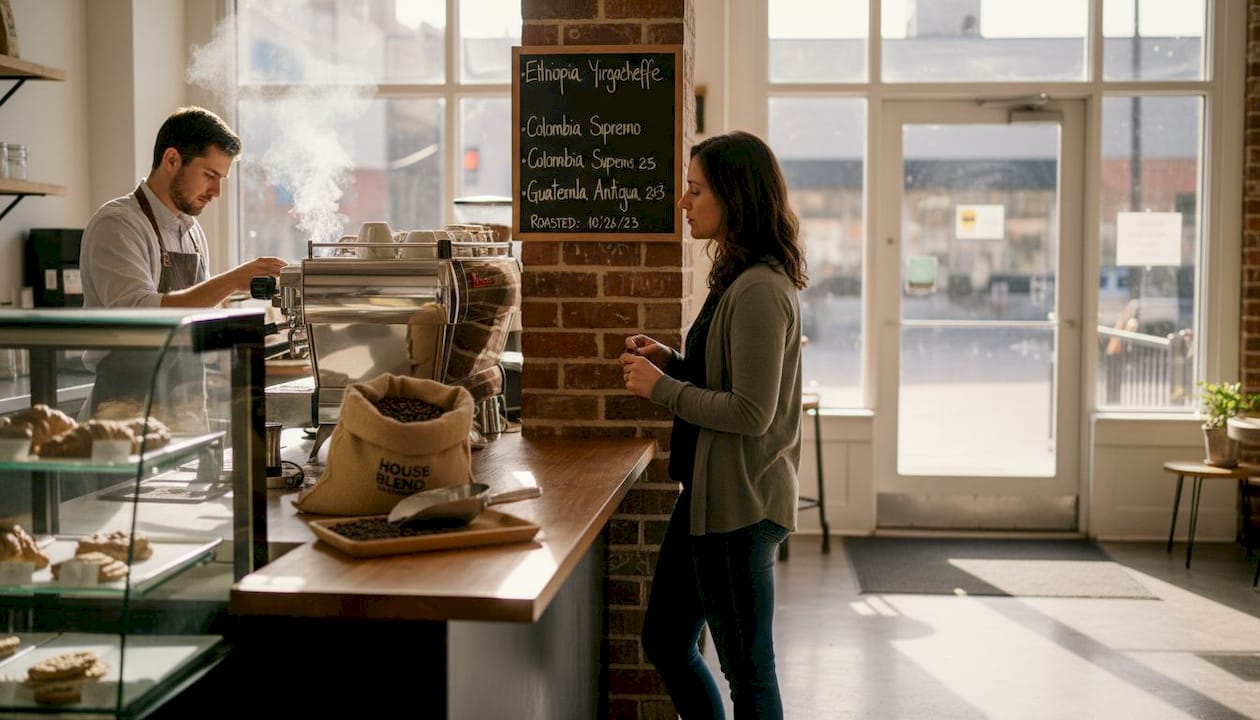
First: the smell. A well-run café has an aroma that makes you lean forward. Notes of chocolate, citrus, or caramelized sugar fill the air. A burnt, acrid smell is a red flag. Over-roasting destroys the nuanced flavors that specialty coffee is built on, and fresh aroma and equipment cleanliness are the two fastest quality checks you can make before you order.
Here’s a numbered walkthrough for your on-site evaluation:
- Smell the room before you reach the counter. Inviting aromas signal fresh beans and proper brewing
- Scan the espresso machine. It should be clean, professionally maintained, and ideally from a recognized brand
- Read the menu closely. Bean origin, farm name, or roast date listed? That’s a roastery that cares about origin and freshness
- Check the roast date. Beans roasted within the past 30 days are ideal. Anything older than 60 days is stale for specialty brewing
- Watch the crowd. Are there locals ordering in the local language? That’s the strongest social proof you’ll find
“Roasters listing bean origin and brew method are typically trustworthy.”
This principle holds up across continents. A café that’s proud of its sourcing will tell you about it. One that hides the details usually has something to hide.
Knowing coffee quality standards before you travel helps you recognize the difference between a café executing at a high level and one that just has nice furniture. The gap is wider than most travelers realize.
Pro Tip: In Spain and some Latin American countries, watch out for torrefacto roasting. This method coats beans in sugar during roasting, creating a dark, bitter flavor that masks quality issues. Specialty cafés explicitly avoid it, and menus will often say so.
Engage with baristas and adapt locally
Now that you know how to spot a quality café, level up your coffee experience by connecting with the people behind the bar. Baristas at specialty shops aren’t just making drinks. They’re often the most knowledgeable people in the room when it comes to local coffee culture.
The best opener is genuinely simple. Asking what’s exciting right now or which local roaster they’re sourcing from immediately signals that you’re a serious drinker, not a tourist who’ll order a caramel macchiato. Most baristas light up when someone shows real curiosity.
Here are conversation starters and habits that unlock better experiences:
- “What are you most excited about pouring right now?” Opens the door to a spontaneous tasting or off-menu recommendation
- “Who roasts your beans?” Leads to roastery visits, which are often among the most memorable coffee experiences of any trip
- “Is there a drink here I won’t find anywhere else?” Invites local pride and often reveals regional specialties
- Observe before ordering. Watch what locals are drinking. In Vienna, that’s melange. In Melbourne, it’s a flat white. In Ethiopia, it might be a traditional coffee ceremony
- Respect local timing. In Italy, ordering a cappuccino after 11 a.m. is a social faux pas. In Sweden, fika culture means a coffee break is a communal ritual, not a solo pit stop
This adaptive mindset also sharpens your taste in ways that benefit your home brewing. Learning from baristas abroad influences expert coffee buying tips and changes how you approach choosing coffee beans back home.
Pro Tip: If a barista recommends a local roastery, write the name down and look for their beans at the airport or specialty grocery before you fly home. It’s the most direct way to bring a destination’s coffee culture back in your suitcase.
Must-visit coffee cities and global café trends
Beyond personal discovery, some cities are destinations themselves for coffee lovers. The global specialty coffee scene has produced a handful of places where coffee culture is woven into daily life so deeply that a trip built around cafés makes complete sense.
A few standouts from the best international coffee destinations:
| City | Coffee identity | Must-try drink |
|---|---|---|
| Vienna | UNESCO-listed café culture | Melange |
| Melbourne | Birthplace of flat white | Filter pour-over |
| Seattle | Pioneer of third wave movement | Single-origin drip |
| Copenhagen | Nordic minimalism meets precision roasting | Natural process espresso |
| Turin | Historical espresso birthplace | Bicerin |
| Barcelona | Fast-growing specialty scene | Single-origin espresso |
Barcelona deserves special attention. The Poblenou neighborhood alone hosts 5 roasters within a 15-minute walk, making it one of the densest specialty coffee corridors in Europe right now. It’s the kind of stat that turns a layover into a deliberate visit.
Beyond destinations, three global trends are shaping what you’ll find in serious cafés:
- Manual brewing focus: Pour-over, Chemex, and AeroPress are now table stakes at specialty shops worldwide. Mastering manual brewing techniques at home helps you appreciate what you’re tasting on the road
- Community-driven spaces: The best cafés function as neighborhood anchors, hosting cuppings (structured coffee tastings) and sourcing from local farms where possible
- Transparency in sourcing: Understanding specialty coffee standards means you’ll recognize when a café is genuinely committed versus just using the language
The convergence of these trends means the gap between a world-class café experience and a mediocre one has never been easier to identify, once you know what signals to read.
Why chasing local coffee rituals is the ultimate travel hack
Here’s the perspective that most coffee travel guides miss entirely: the best cup you’ll drink abroad probably won’t be the one with the highest SCA score. The SCA score, developed by the Specialty Coffee Association, rates beans on a 100-point scale, with 80 or above considered specialty grade. It’s a useful benchmark, but it doesn’t measure the conversation you had while your espresso was pulled, or the ritual of watching a barista prepare a traditional pour in a back-alley roastery.
We’ve seen travelers obsessively chase ratings and miss the entire point. A spontaneous exchange with a barista in Copenhagen who explains why they only roast light can reshape how you think about coffee more than any cupping scorecard. The discomfort of ordering in a foreign language, the surprise of a flavor you’ve never encountered, the shared nod between you and a local over a genuinely good cup: these are the moments that stick.
The role of baristas’ cultural influence in shaping how we understand coffee is deeply underrated. The ritual is the destination. Adapting to it, rather than filtering everything through your home preferences, is what separates a coffee tourist from a coffee traveler.
Fuel your next coffee adventure with Z’s Coffee
Every great coffee trip starts before you leave home. The beans you brew in the morning, the gear you pack, the knowledge you carry with you — all of it shapes how you experience coffee on the road.
At Z’s Coffee, we’ve curated a range of travel-ready coffee essentials built for enthusiasts who take their craft seriously, whether they’re brewing at home or navigating a new city. The travel mug with a handle is the kind of gear that keeps your morning ritual intact across time zones. Browse our selection, stock up before your next trip, and travel with the confidence that great coffee starts with great preparation.
Frequently asked questions
What apps help travelers find great coffee worldwide?
Apps like Beanhunter, Roasters, and Instagram hashtags are top picks for discovering quality cafés wherever you go. Each focuses on different angles, from community ratings to roastery mapping.
How can I tell if a café serves specialty-grade coffee?
Look for fresh aroma, clean espresso machines, and bean origins on display along with roast dates within 30 days. These signals together paint a reliable picture of quality.
What is an SCA score and why does it matter?
The SCA score rates coffee quality on a 100-point scale, with 80 or above considered specialty grade, which typically means better flavor complexity and sourcing standards.
Should I try local coffee drinks or stick to what I know?
Adapting to local customs, whether it’s cappuccino rules in Italy or fika in Sweden, consistently leads to more memorable and authentic experiences than defaulting to familiar orders.
Recommended
- How to enhance coffee flavor: brew, beans & tips – Z’s Coffee
- Creative coffee flavor pairing ideas for richer brews – Z’s Coffee
- Instant Coffee – Z’s Coffee
- How packaging preserves coffee freshness for flavor – Z’s Coffee
- Packing Tips for Wrinkle-Resistant Clothing | Laundry Tips