TL;DR:
- Hosting a coffee tasting at home involves selecting contrasting coffees and maintaining consistent brewing parameters. It is a social, educational event guided by a structured tasting sequence that encourages curiosity without requiring professional skills. Simple equipment and thoughtful food pairings enhance the experience, and asking open questions helps guests develop their sensory skills over time.
A coffee tasting at home, known professionally as a cupping session, is a structured sensory experience where guests sample and compare multiple coffees side by side. Knowing how to host coffee tasting at home means selecting distinct beans, preparing consistent brews, and guiding guests through smell, taste, and flavor identification without requiring any professional training. The result is a social gathering that feels both relaxed and genuinely educational. You do not need a café setup or a barista certification to pull it off well.
What do you need to prepare before hosting a coffee tasting?
The foundation of a great home tasting is choosing coffees that contrast clearly with each other. Aim for three to five different origins or roast levels so guests can actually notice differences. A light Ethiopian Yirgacheffe, a medium Colombian, and a dark Sumatran give you a full spectrum of acidity, body, and sweetness. Buying freshly roasted beans, ideally within two weeks of the roast date, makes those differences sharper and more enjoyable to discuss.
Essential gear for your tasting kit
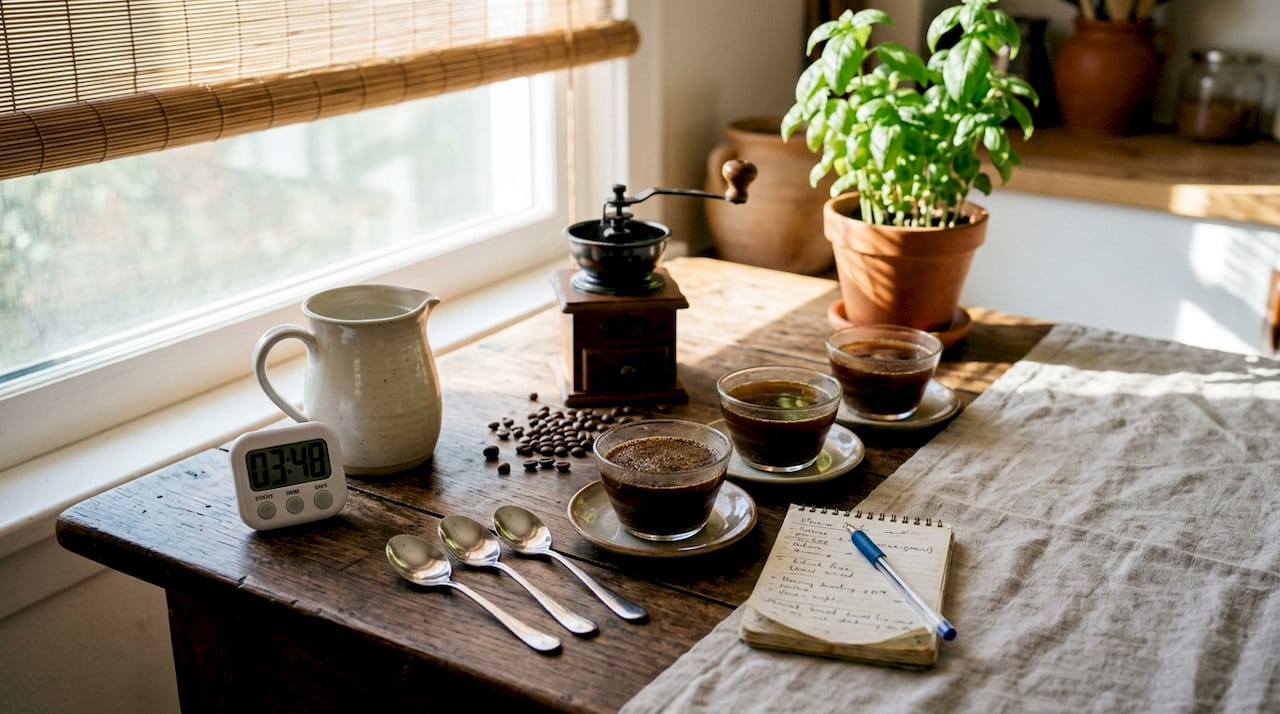
Building a coffee tasting kit does not require specialty equipment. The table below covers what you need and what you can substitute when you do not have the ideal tool.
| Item | Purpose | Acceptable substitute |
|---|---|---|
| Burr grinder | Consistent grind size | Pre-ground beans (same day) |
| Kitchen scale | Accurate coffee-to-water ratio | Measuring tablespoons |
| Cupping bowls or mugs | Individual brew vessels | Heatproof glass jars |
| Kettle with thermometer | Precise water temperature | Electric kettle with temperature setting |
| Tasting spoons | Slurping samples | Regular soup spoons |
| Palate cleansers | Reset between coffees | Plain water, neutral crackers |
| Tasting scorecards | Recording flavor notes | Blank index cards |
Pro Tip: Label each vessel with a number rather than the coffee name. Blind tasting removes bias and makes guests focus purely on what they taste rather than what they expect.
Keeping brewing parameters consistent across every sample, including the same water temperature, grind size, and brew time, is the single most important technical step. Consistency lets guests compare the coffees themselves, not the preparation. Set up your tasting table with enough space between stations so guests can move freely without bumping into each other.
How do you organize and guide the coffee tasting process?
The standard cupping method used by professional tasters involves brewing 12 g of coffee in 200 ml of water directly in the tasting cup, then waiting four minutes before tasting. This method removes brewing device variables and showcases the pure flavor of each coffee. It is the most reliable approach for a home tasting because every guest’s cup is prepared the same way.
Step-by-step tasting order
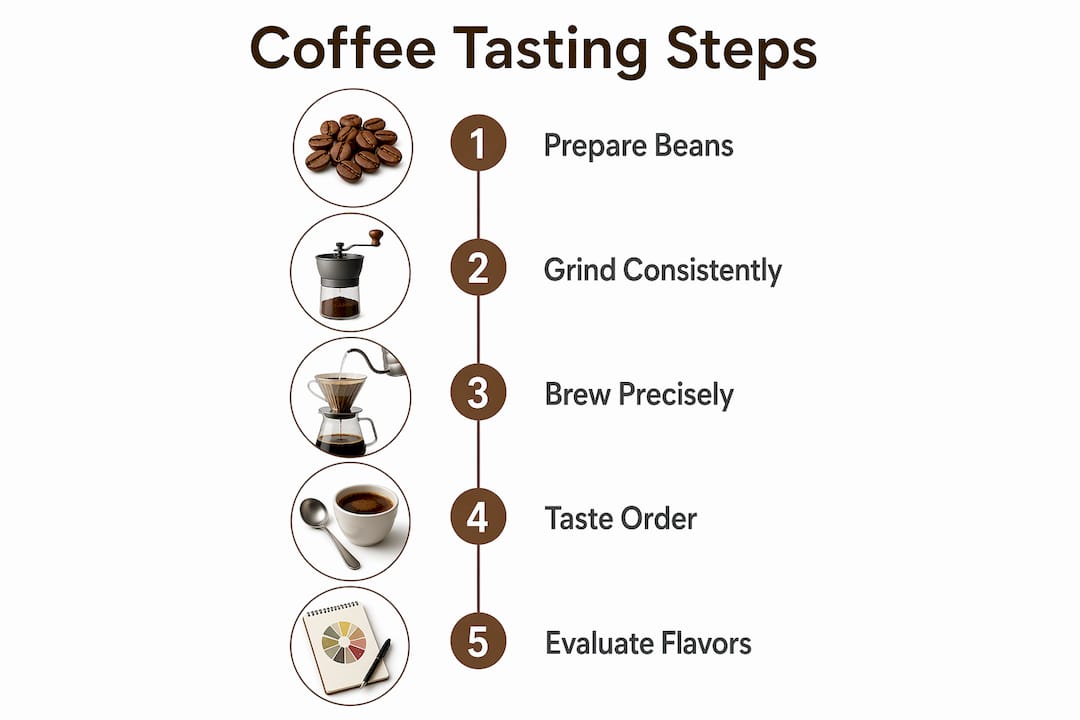
Follow this sequence to get the most out of each sample:
- Smell the dry grounds. Before adding water, pass each labeled vessel around and ask guests to note what they smell. Dry aromas often reveal fruit, floral, or earthy notes that disappear after brewing.
- Add hot water and wait. Pour water at roughly 200°F (just off the boil) over the grounds and set a four-minute timer. A crust of grounds will form on the surface.
- Break the crust. Use a spoon to gently push through the crust on each cup. Lean in and inhale as you do. The wet aroma is often the most intense moment of the entire tasting.
- Skim and cool. Remove floating grounds with two spoons. Let the coffee cool for three to four minutes. Flavor complexity increases as temperature drops.
- Slurp and taste. Use a spoon to take a small amount and slurp it loudly across your tongue. Slurping aerates the coffee and spreads it across all taste receptors. Encourage guests to do the same without embarrassment.
- Record notes. Give guests 60 seconds to write down what they taste before discussing. Individual impressions are more honest before group discussion shapes them.
- Cleanse and repeat. Plain water or neutral crackers reset the palate between samples and prevent flavor fatigue.
Pro Tip: Taste coffees from lightest to darkest roast. Heavier roasts can overwhelm the palate and make lighter coffees taste flat if you go in the wrong order.
Managing group flow matters as much as the brewing itself. Keep each tasting round to about 10 minutes so guests stay engaged. If you have more than six guests, split into two tables and rotate. The host’s role is to guide sensory exploration at a relaxed pace, not to lecture. Ask open questions like “What does this remind you of?” rather than announcing the correct answer.
How do coffee pairings and ambiance improve the experience?
Food pairings sharpen the tasting experience by giving guests contrast and context. Coffee pairing follows three core principles: match intensity, complement flavors, or contrast flavors. A bright, citrusy Ethiopian coffee pairs naturally with a lemon tart because both share acidity. A sharp, acidic coffee placed next to a creamy cheesecake creates contrast that makes both the coffee and the food taste more interesting.
Pairing ideas by roast level
- Light roasts: lemon shortbread, fresh berries, mild goat cheese
- Medium roasts: dark chocolate squares, almond biscotti, banana bread
- Dark roasts: aged cheddar, salted caramel, pecan brownies
Keep portions small. The goal is to enhance the coffee, not replace it as the main event. Lay out pairings in small dishes next to each numbered tasting station so guests can experiment freely. For a full coffee and food pairing reference, a structured guide helps you match flavors with confidence.
Ambiance shapes how comfortable guests feel exploring unfamiliar flavors. Warm but bright lighting, ample seating, and coffee-themed decorations increase engagement and make the space feel intentional without being formal. Print simple flavor wheel cards for each guest so they have vocabulary to describe what they taste. At the end of the event, sending guests home with coffee-themed favors, such as leftover beans, a small candle, or a personalized note card, makes the gathering memorable long after the last cup.
Troubleshooting common challenges and expert tips
Even well-prepared tastings run into problems. Here is how to handle the most common ones.
- Muted or flat flavors: The most likely cause is stale beans. Always use beans roasted within the past two weeks. If flavors still seem dull, increase your coffee-to-water ratio slightly.
- Inconsistent brews: Weigh every dose on a scale rather than estimating by volume. A one-gram difference per cup can noticeably change the taste.
- Guests feel lost: Provide a simple scorecard with five categories: aroma, acidity, body, flavor, and finish. Giving people a framework removes the pressure of having to invent descriptions from scratch.
- Palate fatigue: Limit each session to five coffees maximum. Beyond that, taste sensitivity drops and guests stop noticing differences.
- Rushed pacing: Build in silence. After each cup, give guests 60 seconds to write before opening discussion. Silence feels awkward at first but produces more honest and detailed observations.
Short, regular practice sessions build sensory skills faster than occasional long ones. Practicing aroma identification for 10–15 minutes, two to three times weekly, using household items like dark chocolate, citrus peels, dried fruits, and spices builds a personal aroma library that makes tasting far more rewarding over time.
“The best coffee tasting hosts are not the ones who know the most. They are the ones who ask the best questions and make every guest feel like their palate is worth trusting.”
For a deeper look at tasting coffee properly, including how to read flavor notes and develop your vocabulary, a structured guide gives you a clear path forward.
Key Takeaways
Hosting a successful coffee tasting at home requires consistent brewing, a clear tasting sequence, and a relaxed facilitation style that keeps guests curious rather than self-conscious.
| Point | Details |
|---|---|
| Choose contrasting coffees | Select three to five origins or roast levels to make flavor differences obvious and discussable. |
| Brew consistently | Use the same ratio, water temperature, and brew time for every cup so guests compare coffees, not preparation. |
| Follow the tasting sequence | Smell dry grounds, break the crust, cool, slurp, record notes, then cleanse before the next sample. |
| Pair food thoughtfully | Match, complement, or contrast food intensity with the coffee to sharpen flavor perception. |
| Facilitate, do not lecture | Ask open questions and give guests time to write before discussing, so every palate gets equal weight. |
What I have learned from hosting coffee tastings at home
The first time I hosted a coffee tasting, I over-prepared the information and under-prepared the experience. I had printed tasting notes, origin maps, and processing method explanations. Guests spent more time reading than tasting. The event felt like a class, not a gathering.
The shift that changed everything was deciding to facilitate rather than teach. I stopped explaining what guests should taste and started asking what they actually noticed. That single change made the room louder, more curious, and more fun. People who claimed they “couldn’t taste anything” started identifying chocolate, stone fruit, and smoke on their own.
The other lesson I keep relearning is that the coffee matters less than the structure. I have hosted tastings with grocery store beans that generated better conversation than sessions with expensive single-origins, simply because the format gave people a clear way to engage. A numbered blind tasting with a simple scorecard beats an informal “try these and tell me what you think” every time.
My honest advice: keep your first tasting small, three coffees and four to six guests. Get the format right before you scale up. Once guests experience the structure, they will ask you to do it again, and that is when you can start experimenting with more complex selections and pairings.
— zachary
Stock your tasting with Zscoffee
A well-run tasting starts with quality beans and the right accessories. Zscoffee carries a curated range of coffees and brewing accessories suited for home tastings, from single-origin selections that contrast beautifully in a flight to brewing tools that keep your preparation consistent. Whether you are setting up your first tasting or refining a format that already works, browsing the full Zscoffee catalog gives you practical options at every price point. Good coffee makes the conversation easier. Zscoffee makes finding it straightforward.
FAQ
What is coffee cupping and how does it differ from regular brewing?
Coffee cupping is a standardized tasting method where grounds steep directly in hot water for four minutes before tasting with a spoon. Unlike regular brewing, it removes device variables so tasters can compare pure coffee flavors.
How many coffees should I serve at a home tasting?
Three to five coffees is the right range for most home tastings. More than five samples causes palate fatigue and reduces guests’ ability to distinguish differences.
Do I need expensive equipment to host a coffee tasting?
A kitchen scale, a grinder, heatproof vessels, and a kettle cover the basics. Professional cupping bowls improve the experience but are not required for a successful home event.
How do I help guests who struggle to describe what they taste?
Provide a simple scorecard with five categories: aroma, acidity, body, flavor, and finish. A flavor wheel with common descriptors like “citrus,” “chocolate,” and “earthy” gives guests vocabulary without requiring prior experience.
Can I host a virtual coffee tasting with remote guests?
Yes. Ship pre-measured coffee samples to each guest in advance, then run the tasting over a video call using the same numbered sequence and shared timer. The format works well because the structure keeps everyone synchronized regardless of location.