TL;DR:
- Brewing coffee for guests is an art that involves selecting the right method, ratios, and presentation to create memorable cups.
- Proper setup and equipment, such as a burr grinder and temperature-controlled kettle, ensure consistent, high-quality coffee.
Brewing coffee for guests is the art of combining the right method, precise ratios, and thoughtful presentation to deliver a cup people actually remember. The best hosts treat coffee as part of the experience, not an afterthought. Equipment like a French Press, AeroPress, drip brewer, or cold brew pitcher each serves a different crowd size and preference. Pair any of those with fresh whole beans, a burr grinder, and an electric kettle, and you have everything needed to serve specialty coffee that rivals a café.
How to brew coffee for guests: choosing the right method
The method you choose determines flavor, volume, and how much attention you need to give during the gathering. Each brewing style has a distinct personality, and matching it to your event makes the difference between a forgettable cup and one guests ask about.
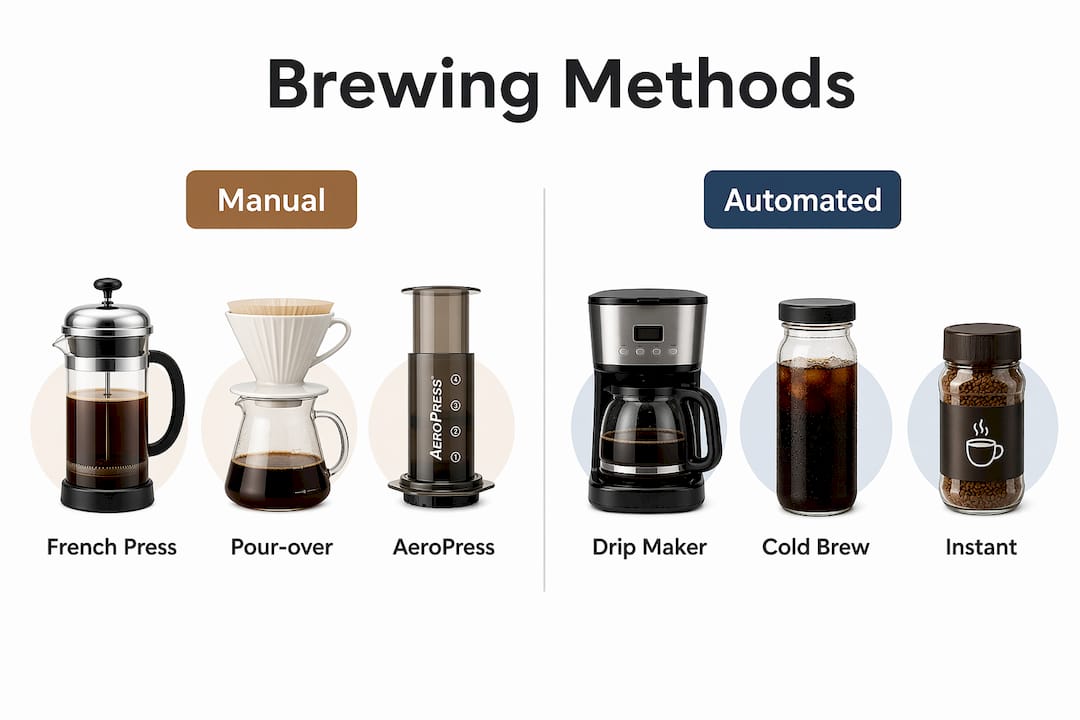
French Press produces a full-bodied, rich brew and handles large volumes well. An 8-cup French Press holds enough for four to six guests per batch. It requires no filters, and the process is forgiving for beginners.
Drip coffee makers are the most practical option for groups. A standard 12-cup drip machine brews up to 12 cups at a time with minimal effort. You load the grounds, add water, press start, and serve from the carafe while you focus on your guests.
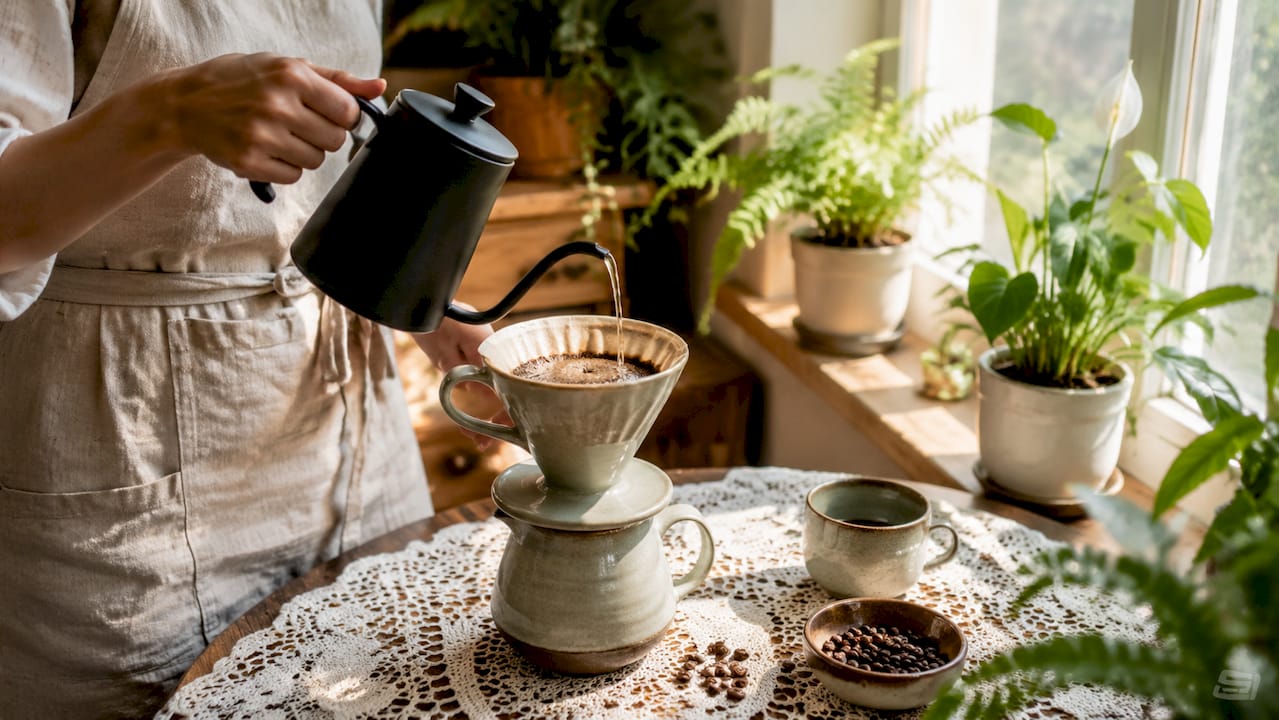
Pour-over stations (using a Hario V60 or Chemex) deliver clarity and brightness in the cup. Pour-over brew time runs 3–4 minutes with careful, controlled pouring. The process is slower and better suited for smaller groups or a dedicated coffee moment.
AeroPress brews one to two cups at a time but produces an intensely concentrated, espresso-style result. Manual methods like AeroPress create an entertainment experience that invites guests to watch, ask questions, and engage. That social dimension is something a drip machine simply cannot replicate.
Cold brew pitchers require zero active brewing time during the event. You steep grounds 12–24 hours in advance, and the result is a smooth, low-acid concentrate that serves beautifully over ice or diluted with water or milk.
| Method | Capacity | Hands-On Time | Best For |
|---|---|---|---|
| French Press | 4–8 cups | Medium | Small to mid-size groups |
| Drip Machine | Up to 12 cups | Low | Large gatherings, convenience |
| Pour-Over (V60/Chemex) | 1–4 cups | High | Intimate settings, flavor focus |
| AeroPress | 1–2 cups | Medium | Interactive guest experience |
| Cold Brew Pitcher | 8–12 servings | Very Low (prep ahead) | Warm weather, effortless serving |
Pro Tip: If you want to impress without stress, combine two methods. Set a drip machine for volume and brew one AeroPress cup as a “show” for curious guests. It creates conversation without slowing down service.
What equipment do you need before brewing?
The right tools produce consistent results. Improvising with a blade grinder and a stovetop pot will not get you there.
- Burr grinder (Baratza Encore or similar): produces uniform particle size, which is the single biggest factor in extraction quality
- Electric kettle with temperature control (Fellow Stagg EKG or Bonavita): lets you hit the ideal brewing temperature of 195–205°F without guessing
- French Press or drip machine: your primary brewing vessel for groups
- Paper or metal filters: matched to your method (Chemex uses bonded paper; AeroPress uses micro-filters)
- Digital kitchen scale: eliminates ratio guesswork entirely
- Mugs and cups: pre-warmed mugs keep coffee hotter longer
Water quality matters as much as the beans. Use filtered water whenever possible. Tap water with heavy chlorine or mineral content changes the flavor of even excellent coffee. Bring water to a full boil, then let it rest 30–45 seconds to drop into the ideal extraction window.
For beans, buy whole bean and grind fresh. Pre-ground coffee loses most of its volatile aromatics within 30 minutes of grinding. A medium roast from a single origin like Ethiopia Yirgacheffe or Colombia Huila gives guests a clear, interesting flavor profile without being polarizing. Learn more about grind size matching your brewing method to get the most out of every batch.
Pro Tip: Grind your beans no more than 10 minutes before brewing. Set up your station the night before so morning service is fast and calm.
Step-by-step brewing instructions for each method
Clear ratios and timing are what separate a good cup from a great one. Follow these steps exactly the first time, then adjust to taste.
French press for a group
- Heat filtered water to 200°F (let boiling water rest 45 seconds).
- Use a coarse grind: 55–60 grams of coffee to 850–900 grams of water for an 8-cup press.
- Add grounds to the press, pour water evenly over them, and stir once.
- Place the lid on (plunger up) and steep for exactly 4 minutes.
- Press the plunger down slowly and steadily over 20–30 seconds.
- Pour immediately into a carafe or cups. Do not leave coffee sitting in the press.
Drip coffee maker for a crowd
- Use 2 tablespoons of medium-grind coffee per 6 ounces of water.
- Fill the reservoir, insert a fresh filter, and add grounds to the basket.
- Press start and serve directly from the carafe within 20 minutes of brewing.
Cold brew pitcher (prep the night before)
- Combine coarsely ground coffee with cold filtered water at a 1:4 ratio (1 cup grounds to 4 cups water).
- Stir, cover, and refrigerate for 12–24 hours.
- Strain through a fine mesh strainer or cheesecloth into a clean pitcher.
- Serve over ice, diluted 1:1 with water or milk, or straight as a concentrate.
Cold brew is the smartest move for warm-weather gatherings. You do zero work during the event, and guests can serve themselves. For a deeper look at the process, the Zscoffee guide on cold brew at home covers every variable.
Pro Tip: Brew a cold brew pitcher the night before any gathering. It removes all morning pressure and gives guests a premium option that feels special without extra effort.
Avoid common brewing mistakes like using water that is too hot, skipping the bloom step on pour-overs, or letting French Press coffee sit and over-extract.
How do you set up a coffee station for guests?
A well-organized coffee station does more work than the brewer itself. Proper coffee station flow arranges everything in the order of use: cups first, then the brewer, then add-ins. That sequence prevents guests from doubling back and creates a natural, comfortable flow.
Set up your station in this order:
- Cups and mugs at the start of the line, pre-warmed if possible
- Brewer or carafe next, with a drip tray underneath
- Sweeteners: white sugar, raw sugar, and a sugar-free option like stevia
- Creamers: whole milk, oat milk, and one non-dairy alternative (almond or coconut)
- Stirrers, napkins, and small spoons at the end
Decorative touches matter more than most hosts expect. Handwritten labels on creamers and sweeteners signal care and attention. Small sample bags of the beans you used give guests something to take home. Branded mugs from Zscoffee add a visual anchor to the station.
Accommodate every preference without making it complicated. Keep a decaf option clearly labeled. Oat milk has become the default non-dairy choice for most guests, so stock it first. If you are hosting a coffee party, consider offering a brief “flight” of two or three brewing styles in small cups so guests can compare flavors directly.
Pro Tip: Place a small card next to the brewer that names the coffee you used, its origin, and its tasting notes. Guests read it, ask questions, and suddenly coffee becomes the conversation.
How much coffee should you provide for guests?
Quantity planning prevents the one situation no host wants: running out mid-gathering. The standard guideline is 1–2 cups per guest per day for short stays or single-day events. For visits longer than five days, stock a 5–7 day supply or schedule a restock.
| Guest Count | Single Event | 2-Day Stay | 5+ Day Stay |
|---|---|---|---|
| 2–4 guests | 250g beans | 500g beans | 1kg+ beans |
| 5–8 guests | 500g beans | 1kg beans | 2kg+ beans |
| 9–12 guests | 750g beans | 1.5kg beans | 3kg+ beans |
Always err toward more. A half-used bag of quality beans is a far better outcome than an empty one at 8 a.m. Stock decaf as a separate option. Roughly one in four guests prefers decaf in the evening, and having it available signals that you thought about everyone.
For longer stays, keep a secondary bag in reserve. Specialty beans from a single origin stay fresh for two to three weeks after roasting when stored in an airtight container away from light and heat.
Key takeaways
Brewing great coffee for guests comes down to three things: the right method for your group size, precise ratios, and a station setup that makes self-service feel effortless.
| Point | Details |
|---|---|
| Match method to group size | Use drip machines for 8+ guests and French Press or AeroPress for smaller, intimate groups. |
| Use precise ratios | French Press needs 55–60g coffee to 850–900g water; drip uses 2 tablespoons per 6 ounces. |
| Prep cold brew in advance | Steep 12–24 hours ahead to serve a smooth, low-acid option with zero event-day effort. |
| Set up the station in order | Arrange cups, brewer, then add-ins to create a natural flow that guests navigate without confusion. |
| Stock more than you think you need | Plan 1–2 cups per guest per day and keep a backup bag of beans for longer stays. |
What i’ve learned from hosting with coffee
I used to obsess over equipment. I bought a Baratza Encore grinder, a Fellow Stagg kettle, and a Chemex before I realized none of it mattered if the station was a mess and the timing was off. Guests do not evaluate your grinder. They notice whether the coffee was hot, whether there was oat milk, and whether the whole thing felt easy to use.
The single biggest upgrade I made was switching to a logical station layout. Cups at the front, brewer in the middle, add-ins at the end. That one change stopped the awkward traffic jams and made guests feel comfortable helping themselves. It sounds obvious, but most hosts set up stations the way they unpack groceries, not the way people actually move through a space.
My other hard-won lesson: cold brew is underrated for hosting. Most people associate it with summer, but a cold brew pitcher in the fridge works year-round. It is ready when you are, it serves itself, and guests who have never had quality cold brew are always surprised by how smooth it tastes. Start there if you are new to brewing specialty coffee for a group.
Start simple. One method, one origin, one solid ratio. Add complexity once you have the basics locked in.
— zachary
Stock your coffee station with Zscoffee
Hosting great coffee starts with great ingredients. Zscoffee carries everything you need to build a guest-ready coffee station, from specialty beans to brewing accessories.
The cold brew coffee from Zscoffee is the easiest win for any host. It is ready to serve, requires no brewing equipment during the event, and consistently impresses guests who are used to drip coffee. For hosts who want to offer variety, the coffee and tea collection includes blends and single origins suited for every brewing method covered in this guide. Browse the full catalog at Zscoffee and find the right products for your next gathering.
FAQ
What is the best brewing method for a large group?
A 12-cup drip coffee maker is the most practical option for large groups. It brews up to 12 cups at once with minimal effort and keeps coffee warm in the carafe.
What coffee-to-water ratio works for french press?
Use 55–60 grams of coffee to 850–900 grams of water for an 8-cup French Press. Steep for exactly 4 minutes before pressing.
How far in advance can i make cold brew for guests?
Cold brew can be made 12–24 hours in advance and keeps in the refrigerator for up to two weeks. It is the best prep-ahead option for any gathering.
How much coffee should i buy for a dinner party?
Plan for 1–2 cups per guest. For 8 guests, 500 grams of whole bean coffee covers the event with a small reserve remaining.
Do i need a burr grinder to brew good coffee for guests?
A burr grinder produces uniform grounds that extract evenly, which directly improves flavor. A blade grinder creates uneven particles that lead to bitter or weak coffee. For guest-quality results, a burr grinder is the right tool.