TL;DR:
- Choosing coffee based on mood involves selecting roast levels, flavors, and brewing methods that support your emotional state. Light roasts energize and uplift, while dark roasts promote relaxation and grounding, with caffeine levels playing a role in your alertness. Proper timing, freshness, and consistent testing help optimize mood benefits from coffee consumption.
Mood-based coffee selection is the practice of matching a coffee’s flavor profile, roast level, and caffeine content to your current emotional state or desired mental outcome. Your cup choice directly shapes how alert, calm, creative, or focused you feel within the hour. Science backs this up: coffee polyphenols influence the gut-brain axis independent of caffeine, meaning even decaf drinkers get real mood benefits. Knowing how to select coffee for different moods turns a daily habit into a deliberate tool for emotional well-being.
How do coffee flavor profiles and roast levels affect your mood?
Roast level is the fastest shortcut to mood-aligned coffee selection. Light roasts preserve the bean’s original character, producing bright, fruity, and floral notes. Medium roasts balance sweetness and body. Dark roasts lean into chocolatey, smoky, and earthy flavors that feel grounding and warm.
Flavor and mood connect more directly than most drinkers realize. Light to medium roasts from Ethiopian washed-process beans deliver jasmine and citrus notes that feel lively and uplifting. That brightness is well suited to creative work or an adventurous morning. Brazilian natural-process medium-dark roasts, by contrast, produce mellow, low-acid cups with chocolate and nut tones that signal comfort and relaxation.
Roasting also changes caffeine content in a counterintuitive way. Light roasts carry more caffeine by weight than dark roasts because the roasting process burns off caffeine over time. A darker roast tastes bolder but delivers less caffeine per gram. That distinction matters when you are choosing coffee for an energy boost versus a calm evening cup.
Here is a quick reference for roast-to-mood mapping:
- Light roast: Fruity, floral, bright. Best for creative moods, morning energy, and adventurous flavor exploration.
- Medium roast: Balanced sweetness and body. Versatile for focus, social settings, and everyday alertness.
- Medium-dark roast: Chocolatey, nutty, smooth. Ideal for comfort, relaxation, and stress relief.
- Dark roast: Bold, smoky, earthy. Suits grounding rituals and low-stimulation evenings when paired with decaf.
Pro Tip: If you want to explore coffee bean types by flavor before committing to a bag, start by ordering small samples across roast levels and tasting them side by side on the same morning.
What role does caffeine content play in selecting coffee for specific moods?
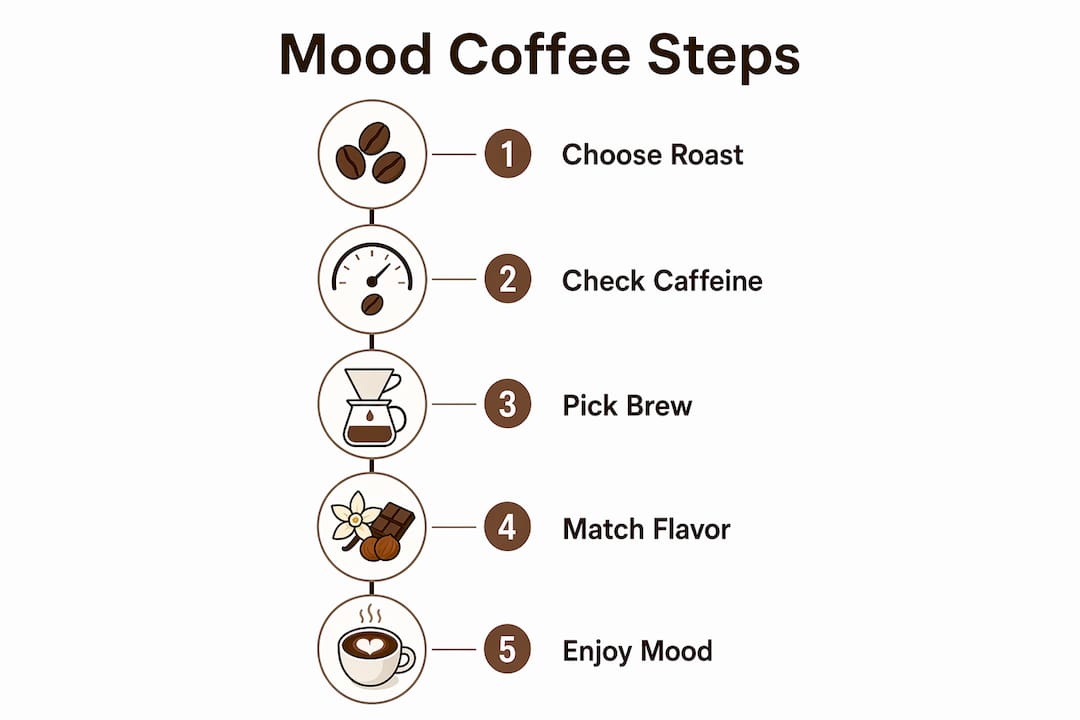
Caffeine is the most studied psychoactive compound in coffee, but its mood effect is more nuanced than most people expect. Caffeine’s alertness benefit is largely a return to baseline for tired or sleep-deprived individuals, not a pharmacological boost above normal alertness. That means caffeine works best when you are running low, not when you are already sharp.
The FDA sets the maximum safe daily caffeine intake at 400 mg. A standard 12 oz drip coffee delivers roughly 144 mg of caffeine. That context matters for mood-based selection: one cup supports focus without anxiety risk, while three or four cups in quick succession can trigger jitteriness and elevated cortisol.
Decaffeinated coffee offers a separate set of mood benefits. A 21-day study found that both caffeinated and decaffeinated coffee increased beneficial gut bacteria and improved mood and cognitive function through polyphenol activity. Caffeinated coffee lowered anxiety and improved attention. Decaf improved memory and sleep quality. That finding reframes decaf as a legitimate mood tool, not just a caffeine-free substitute.
Here is how to match caffeine level to mood goal:
- High alertness or focus: Choose a light or medium roast drip brew. Caffeine content is highest, and the bright flavor profile reinforces mental clarity.
- Moderate energy with calm: Choose a medium roast espresso or pour-over. Lower volume means controlled caffeine intake with a clean flavor experience.
- Relaxation without sedation: Choose a medium-dark decaf. You still get polyphenol mood benefits and the sensory comfort of a warm cup.
- Evening wind-down: Choose a dark roast decaf French press. The heavy body and chocolate notes satisfy the ritual without disrupting sleep.
- Stress or anxiety relief: Reduce caffeine and increase polyphenol intake by choosing a decaf with high polyphenol content from a quality roaster.
Daily coffee consumption is linked to a 30% lower risk of depressive symptoms compared to drinking less than one cup per day. That figure reflects the combined effect of caffeine and polyphenols working through multiple biological pathways.
Which brewing methods best complement mood-focused coffee choices?
Brewing method shapes flavor extraction as much as the bean itself. The same medium roast Colombian coffee tastes completely different from a pour-over versus a French press. Matching your brew method to your mood goal is the final step in a complete mood-based selection.
| Brew method | Flavor character | Caffeine level | Best mood use |
|---|---|---|---|
| Pour-over | Bright, floral, clean | Moderate | Focus, creativity, morning clarity |
| Espresso | Concentrated, bold, complex | High per oz | Energy boost, pre-workout, social energy |
| French press | Heavy body, rich, full | Moderate | Comfort, relaxation, slow mornings |
| Cold brew | Smooth, low-acid, mellow | High total | Sustained energy, hot-weather calm |
Pour-over brewing highlights floral and bright notes best, making it the top choice for light and medium roasts when you want a lively, uplifting cup. French press delivers heavier body and suits medium-dark roasts for a grounding, comforting experience. Cold brew is smooth and less acidic, which makes it easier on the stomach and well suited to relaxed, sustained energy without the spike-and-crash pattern of espresso.
Grind size and freshness are not optional details. Grinding whole beans immediately before brewing preserves aroma and reduces oxidation, which directly improves both flavor and the stimulating sensory experience of the cup.
Pro Tip: For the clearest read on how a coffee affects your mood, brew it the same way for three consecutive mornings before switching variables. Changing bean, roast, and brew method at once makes it impossible to know what caused the mood shift.
How to select coffee for relaxation, energy, creativity, and stress relief
Practical mood-based coffee selection comes down to four common emotional states. Each one has a clear best-fit combination of roast, flavor, caffeine level, and brew method.

For relaxation: Choose a medium-dark or dark roast decaf with chocolatey or nutty flavor notes. Brew it as a French press for maximum body and warmth. The sensory ritual of a slow, heavy cup signals the nervous system to slow down. Polyphenols still deliver gut-brain benefits without caffeine disrupting rest.
For an energy boost: Espresso from a light or medium roast delivers the highest caffeine concentration per ounce. Pair it with a bean that has fruity or bright flavor notes to reinforce mental sharpness. A well-chosen espresso from a fresh-roasted light roast gives you both the caffeine effect and the sensory stimulation of a lively flavor profile.
For creativity: Ethiopian washed-process light roasts brewed as pour-over are the best match. The jasmine and citrus notes feel open and exploratory. Lower caffeine anxiety at moderate doses keeps the mind loose rather than locked into task-focused tension. Creativity benefits from alertness without rigidity.
For stress relief: Reduce caffeine and lean on polyphenol-rich decaf. A medium roast Colombian decaf brewed as a pour-over gives you the full sensory experience of a quality cup without the cortisol spike that excess caffeine triggers. Healthy coffee habits built around timing and dose matter as much as bean selection when stress is the target.
Here is a summary reference:
- Relaxation: Medium-dark decaf, French press, chocolate or nut notes
- Energy boost: Light or medium roast espresso, fruity or bright notes
- Creativity: Ethiopian light roast, pour-over, floral or citrus notes
- Stress relief: Medium roast decaf, pour-over, balanced and smooth
What are the best beginner tips for mood-aligned coffee selection?
Starting with a medium roast Colombian coffee is the right move for anyone new to mood-based selection. Colombian medium roast offers balanced sweetness, body, and acidity. It works across drip, espresso, and French press without demanding a precise technique. That versatility lets you isolate the mood variable without fighting the brew method.
Freshness is the factor most beginners overlook. Coffee tastes and performs best 7–21 days after roasting. Buying from roasters who print the roast date on the bag is not a premium preference. It is the baseline for getting consistent mood and flavor results. Stale coffee delivers flat flavor and a weaker sensory experience, which undermines the whole mood-enhancement goal.
Journaling your mood response to different coffees accelerates the learning curve significantly. After each cup, note the bean origin, roast level, brew method, time of day, and how you felt 30 and 60 minutes later. Patterns emerge within two weeks. You will quickly identify which combinations produce focus, which produce calm, and which produce anxiety.
- Start with Colombian medium roast for a neutral, versatile baseline.
- Check the roast date before buying. Avoid anything older than 21 days post-roast.
- Change one variable at a time. Swap bean origin before changing brew method.
- Log your mood response after each cup for at least two weeks.
- Learn to taste coffee properly to identify flavor notes that resonate with your mood goals.
Pro Tip: Buy three small bags at once: one light roast Ethiopian, one medium roast Colombian, and one medium-dark roast Brazilian. Brew each as a pour-over on three consecutive mornings and note the mood difference. That single experiment teaches more than months of reading.
Key Takeaways
Mood-based coffee selection works best when you align roast level, caffeine dose, flavor profile, and brew method to your specific emotional goal rather than choosing by habit or convenience.
| Point | Details |
|---|---|
| Roast level signals mood | Light roasts energize and uplift; dark roasts comfort and ground. |
| Caffeine restores, not elevates | Caffeine returns alertness to baseline in tired individuals, not above it. |
| Decaf still boosts mood | Polyphenols in decaf improve memory and sleep quality through gut-brain effects. |
| Brew method changes everything | Pour-over brightens flavor; French press adds body; cold brew smooths acidity. |
| Freshness is non-negotiable | Use coffee 7–21 days post-roast for the best flavor and mood response. |
What I’ve learned from years of mood-driven coffee choices
The biggest mistake I see is treating coffee as a single variable. People swap beans but keep the same stale bag, the same brew method, and the same time of day, then wonder why nothing changes. Mood-based selection only works when you treat the cup as a system: bean, roast, freshness, brew method, and timing all interact.
The science on polyphenols changed how I think about decaf. For years I dismissed it as a compromise. Knowing that decaffeinated coffee improves memory and sleep quality through gut microbiome activity made me add a decaf French press to my evening routine. The ritual itself carries mood weight. A warm, chocolatey cup at 8:00 PM signals wind-down as effectively as any supplement.
The other thing I would tell anyone starting out: your mood preference shifts. On high-stress days I reach for a medium roast pour-over, not an espresso. The controlled caffeine and the slower ritual calm me down more than a fast, concentrated shot. On low-energy creative mornings, an Ethiopian light roast pour-over feels like opening a window. Paying attention to what you actually want, not what you think you should want, is the whole practice.
Experimentation without judgment is the method. There is no wrong answer in mood-based selection. There is only the cup that works for you today.
— zachary
Zscoffee has the beans to match every mood
Zscoffee carries a curated range of single-origin beans, blends, and roast levels designed to give you real options for mood-focused brewing. Whether you want a bright Ethiopian light roast for creative mornings, a smooth Colombian medium for everyday focus, or a low-acid Brazilian medium-dark for evening calm, the selection covers every point on the roast spectrum. All products ship with roast dates clearly listed, so freshness is never a guess. Browse the full coffee and tea collection to find the roast and origin that fits your mood goals, or check the complete product catalog for brewing accessories that complete the experience.
FAQ
What coffee is best for an energy boost?
A light or medium roast espresso delivers the highest caffeine concentration and the brightest flavor profile for mental sharpness. Light roasts contain more caffeine by weight than dark roasts.
Does decaf coffee actually improve mood?
Yes. A 21-day study found decaffeinated coffee improves memory and sleep quality through polyphenol activity on the gut microbiome, independent of any caffeine effect.
Which roast is best for relaxation?
A medium-dark or dark roast decaf brewed as a French press is the best choice. The chocolatey, low-acid flavor and heavy body support a calming sensory experience without caffeine disrupting rest.
How does brewing method affect mood outcomes?
Pour-over highlights bright, floral notes suited to focus and creativity. French press delivers heavy body for comfort. Cold brew is smooth and low-acid, supporting sustained, calm energy.
How fresh does coffee need to be for the best mood effect?
Coffee performs best 7–21 days after the roast date. Stale coffee delivers flat flavor and a weaker sensory experience, which reduces both the enjoyment and the mood-enhancing effect of the cup.