TL;DR:
- Nitro coffee is cold brew infused with nitrogen, producing a smooth, creamy texture and cascading foam. It is lower in acidity, naturally sweet, and requires double the coffee grounds, making it more concentrated and rich. Made at home with a nitrogen cartridge and cold brew concentrate, it offers a unique and enjoyable coffee experience.
Nitro coffee sounds like something from a science lab, but it’s actually one of the most satisfying cups you’ll ever drink. So what is nitro coffee, exactly? It’s cold brew coffee infused with nitrogen gas and served under pressure, producing a thick, cascading foam head that looks and pours like a draft stout. It’s not simply iced coffee with bubbles. The texture, taste, and entire drinking experience are genuinely different. This guide breaks down how it’s made, what it tastes like, how it compares to regular coffee, and how you can make it yourself.
Table of Contents
- Key takeaways
- What is nitro coffee, really?
- How to make nitro coffee
- Nitro coffee vs regular coffee: what actually differs
- Benefits of nitro cold brew worth knowing
- How to enjoy nitro coffee and creative ways to use it
- My honest take on nitro coffee
- Brew better with Zscoffee
- FAQ
Key takeaways
| Point | Details |
|---|---|
| Nitrogen drives everything | Tiny nitrogen bubbles create the creamy foam and smooth texture that define nitro coffee. |
| Cold brew is the base | The process starts with 12 to 24 hours of cold steeping before any nitrogen is added. |
| Lower acidity, no sugar needed | Nitrogen infusion reduces bitterness and creates natural perceived sweetness without additives. |
| You can make it at home | A whipped cream dispenser with nitrogen cartridges is enough to get started at home. |
| Caffeine runs strong | Nitro cold brew uses nearly double the coffee grounds of regular cold brew, so expect a concentrated cup. |
What is nitro coffee, really?
Most people assume nitro coffee is just cold brew with carbonation. That’s not quite right. Nitrogen infuses cold brew coffee under pressure from a keg or pressurized dispenser, producing a creamy foam head that sits on top of a dark, smooth liquid. The result looks closer to a glass of Guinness than a typical cup of coffee.
The science behind the texture is straightforward. Nitrogen creates tiny bubbles that are far more stable than carbon dioxide bubbles, because nitrogen has very low solubility in liquid. Those stable micro-bubbles produce a thick, velvety mouthfeel without any dairy. The foam isn’t decorative. It’s part of why nitro coffee tastes smoother and richer than regular cold brew.
Nitro cold brew is typically served from a tap, without ice. That’s intentional. Adding ice would dilute the concentrate and break down the foam. The serving style is part of the experience, right down to watching the liquid cascade and settle in the glass.
Here’s what sets it apart from other coffee styles at a glance:
- Nitro cold brew: Nitrogen-infused, no ice, poured from a tap, thick foam head
- Regular cold brew: Room-temperature or chilled concentrate diluted with water or milk, served over ice
- Iced coffee: Hot-brewed coffee poured over ice, more acidic, thinner in texture
- Cold brew concentrate: The base before dilution or nitrogen infusion
The nitrogen infusion reduces acidity and bitter notes significantly, which is one reason nitro coffee has attracted so many people who normally find black coffee too harsh.
How to make nitro coffee
Making nitro coffee starts well before the nitrogen gets involved. The base is a strong cold brew concentrate, and that takes patience.

Step 1: brew a cold brew concentrate
Cold brew steeps coffee grounds in cold water for 12 to 24 hours. Use extra coarse grounds and a ratio of about 1 cup of coffee to 4 cups of water for a concentrate strong enough to handle nitrogen infusion. Coarser grounds minimize over-extraction and keep bitterness low.
Step 2: strain and chill
Once steeping is complete, strain through a fine mesh filter or cheesecloth. Then refrigerate the concentrate for at least 2 hours before adding nitrogen. Temperature management matters here more than most people realize. Cold coffee binds nitrogen better, which leads to more stable foam and richer mouthfeel. Don’t skip the chill step.
Step 3: infuse with nitrogen
Commercially, coffee shops push the cold brew through a keg system connected to a nitrogen tank. At home, the most practical method is a whipped cream dispenser loaded with nitrogen cartridges (not CO2). Pour your chilled concentrate into the dispenser, seal it, charge it with the nitrogen cartridge, then shake for 25 to 30 seconds to distribute the gas evenly.
Step 4: pour and serve
Tilt your glass and release the dispenser slowly. Watch the liquid cascade. The foam head forms on top within seconds. Serve immediately without ice.
Pro Tip: Always use nitrogen (N2) cartridges, not CO2 cartridges. CO2 creates carbonation, which gives you a fizzy coffee instead of the smooth, creamy texture nitro coffee is known for.
If you want to go deeper on cold brew preparation before you try nitrogen infusion, the cold brew process guide at Zscoffee walks through grind size, ratios, and steeping times in detail.
Nitro coffee vs regular coffee: what actually differs
Knowing how nitro cold brew compares to your regular morning cup helps you decide whether it’s worth seeking out or making at home.
| Feature | Nitro cold brew | Regular cold brew | Iced coffee |
|---|---|---|---|
| Texture | Creamy, thick, foam head | Smooth but thin | Watery as ice melts |
| Acidity | Low | Low to moderate | Higher |
| Bitterness | Minimal | Mild | Moderate |
| Caffeine level | High (concentrated) | Moderate to high | Moderate |
| Served with ice | No | Yes | Yes |
| Added sweetener needed | Rarely | Sometimes | Often |
| Visual presentation | Cascading, draft-style | Standard | Standard |
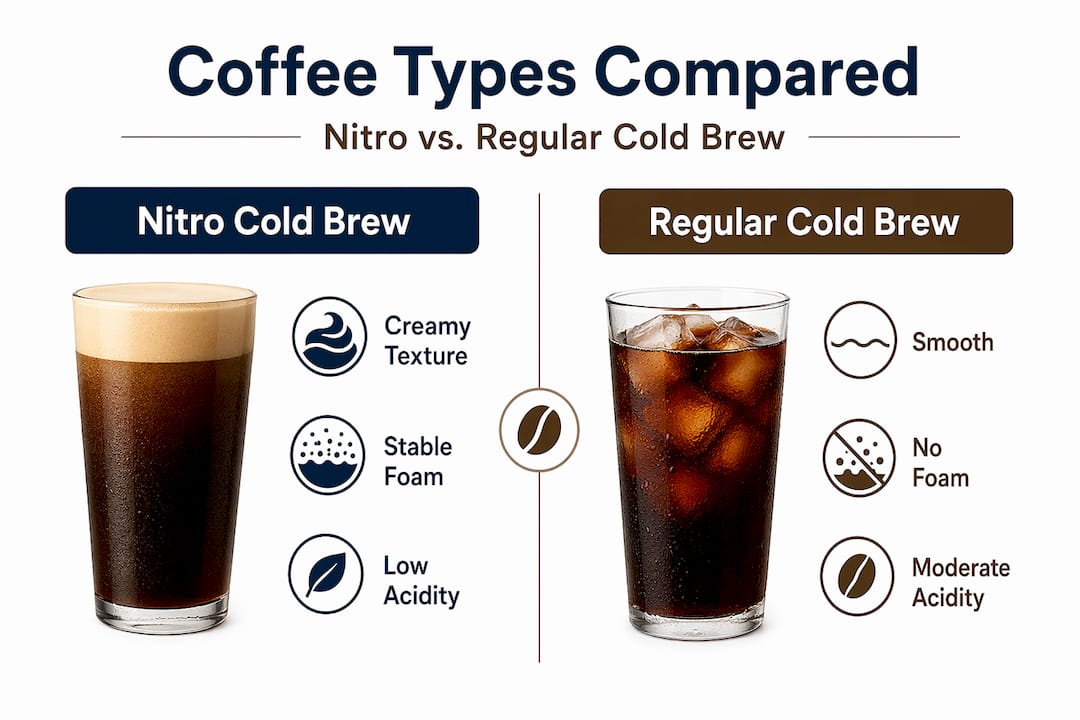
The caffeine picture is worth understanding clearly. Nitro and regular cold brew have similar caffeine levels on the surface, but nitro cold brew uses almost double the coffee grounds during brewing. That makes the concentrate significantly stronger before dilution. Since nitro is served straight without diluting water, the caffeine per serving trends higher than a standard cold brew.
On flavor, nitro cold brew consistently lands smoother and less acidic than both iced coffee and regular cold brew. People who find cold brew slightly tart often describe nitro as silkier and more approachable, even at the same roast level. That’s the nitrogen doing its work, not a different bean or roast profile.
Benefits of nitro cold brew worth knowing
Nitro coffee isn’t just a novelty drink. There are real reasons people reach for it over other options, especially those who are health-conscious or sensitive to acidity.
Easier on your stomach. The lower acidity makes nitro cold brew gentler on sensitive digestive systems than hot coffee or iced coffee. Nitrogen infusion improves mouthfeel and taste without additives, supporting health-conscious consumption. If your stomach tends to react badly to black coffee, nitro is worth trying before you give up on it entirely.
Natural sweetness without sugar. One of the stranger and more pleasant surprises with nitro cold brew is that it tastes slightly sweet even with zero added sugar. The tiny nitrogen bubbles interact with your taste receptors in a way that mimics sweetness. You’re not imagining it. This makes nitro cold brew a genuinely low-calorie option for people cutting back on sugar in their coffee routine.
Antioxidants and cognitive support. Like all coffee, nitro cold brew offers antioxidants and caffeine-related cognitive benefits such as improved focus and alertness. The preparation method doesn’t strip these out.
“Nitro cold brew delivers the same core benefits as regular cold brew coffee including antioxidants and caffeine but with lower acidity and no need for added sugar, making it a smarter daily option for many coffee drinkers.” — nitrobrew.com
One caution: because nitro cold brew is concentrated, it’s easy to underestimate how much caffeine you’re consuming. A 12-ounce serving can carry significantly more caffeine than a standard drip coffee. If you’re sensitive to caffeine or limit your intake, treat it accordingly.
How to enjoy nitro coffee and creative ways to use it
Finding nitro cold brew has gotten considerably easier. Many specialty coffee shops now serve it on tap, and canned versions are available at most grocery stores. When you’re ordering at a cafe, understanding how a coffee bar works can help you ask the right questions about freshness and nitrogen pressure.
At home, here are ways to get the most out of your nitro setup:
- Drink it straight first. Before adding anything, try it plain. The foam, texture, and natural sweetness deserve appreciation on their own terms.
- Add a splash of oat milk. Oat milk complements the creamy texture without overpowering the coffee flavor. Avoid shaking or stirring vigorously after adding milk. It breaks the foam.
- Use it as a float base. Pour nitro cold brew over a small scoop of vanilla ice cream for an affogato-style treat that genuinely works.
- Make nitro coffee cocktails. Nitro cold brew pairs well with Irish whiskey or vanilla vodka for cold coffee cocktails that have texture and depth.
Pro Tip: Store your cold brew concentrate sealed in the refrigerator and only infuse nitrogen right before serving. Pre-infused nitro coffee loses its foam and cascading effect quickly once the pressure is released.
If you want to sharpen your cold brew base before experimenting with nitrogen, these cold brew flavor tips from Zscoffee cover beans, grind, and steeping strategies worth reading.
My honest take on nitro coffee
I’ll be direct: I was skeptical the first time I tried nitro cold brew. It seemed like a gimmick, coffee theater designed to justify a higher price tag at specialty shops. I was wrong.
What surprised me wasn’t the foam or the cascade pour. It was the texture. I’ve never had a black coffee that felt that smooth going down. There’s no coating of dairy, no sweetener masking acidity. The coffee just drinks differently. Lighter and richer at the same time, which sounds contradictory until you experience it.
The thing most people miss is that the quality of your cold brew base determines everything. If you rush the steep or use mediocre beans, nitrogen infusion won’t save the cup. It amplifies what’s already there. A great cold brew gets better. A mediocre one stays mediocre with foam on top.
My actual advice: don’t start with canned nitro. The canned versions are convenient, but the foam and cascading effect are almost nonexistent once the can is opened. Go to a good coffee shop and order it on tap first. That’s the experience worth understanding. Once you’ve had it properly, the DIY version at home becomes a lot more rewarding because you know what you’re aiming for.
— zachary
Brew better with Zscoffee

If nitro cold brew has caught your attention, the place to start is a quality cold brew concentrate worth infusing. Zscoffee offers cold brew coffee selected for the smooth, low-acidity profile that nitrogen infusion rewards most. A weak or overly bitter base won’t benefit from nitrogen. A well-sourced cold brew will. Zscoffee also carries a broader coffee and tea range if you want to experiment with different origins and roast levels for your nitro base. Better beans, better brew, better pour.
FAQ
What does nitro coffee taste like?
Nitro coffee tastes smooth, creamy, and slightly sweet without any added sugar. The nitrogen infusion reduces bitterness and acidity significantly, giving it a richer mouthfeel than regular cold brew or iced coffee.
Is nitro coffee stronger than regular coffee?
Nitro cold brew is typically more concentrated because it uses nearly double the coffee grounds of regular cold brew. Caffeine content per serving runs higher than a standard drip coffee, so approach it accordingly if you’re sensitive to caffeine.
Can you make nitro coffee at home?
Yes. You need a cold brew concentrate and a whipped cream dispenser charged with nitrogen cartridges. Shake the dispenser for 25 to 30 seconds after charging and pour immediately for the best foam and texture.
Why is there no ice in nitro coffee?
Nitro cold brew is served without ice because ice dilutes the concentrate and destroys the foam head. The coffee is chilled during the cold brew steeping process and infused cold, so it’s already at the right temperature when served.
Is nitro coffee good for you?
Nitro cold brew offers the same antioxidants and caffeine benefits as regular coffee but with lower acidity and no added sugar, making it a reasonable choice for health-conscious drinkers. The main consideration is caffeine concentration, which runs higher than most standard coffee servings.