TL;DR:
- Honey process coffee involves drying beans with sticky mucilage, not added honey or flavors.
- Different honey styles (white, yellow, red, black) vary in mucilage amount, affecting flavor and risk.
- Properly processed honey coffee offers layered sweetness, fruit notes, and richness, best brewed via pour over, AeroPress, or espresso.
Most coffee drinkers pick up a bag labeled “honey process” and assume something sweet was added. Maybe actual honey was drizzled over the beans. Maybe a syrup was involved somewhere. The truth is far more interesting and, once you understand it, changes how you taste every sip. Honey process refers to a specific post-harvest method where the coffee bean dries with its sticky fruit mucilage still attached, giving it a texture that resembles raw honey. No sweetener. No additive. Just skilled, intentional processing that shapes flavor from the inside out.
Table of Contents
- What is honey process coffee?
- How the honey process works step by step
- Types of honey process: White, yellow, red, and black
- Flavor attributes and brewing tips for honey process coffee
- Why most coffee lovers misunderstand the honey process — and what you’re missing
- Discover exceptional coffees and tools for your next brew
- Frequently asked questions
Key Takeaways
| Point | Details |
|---|---|
| No honey added | Honey process coffee uses the sticky mucilage, not actual honey, for its unique name and character. |
| Flavorful spectrum | Expect flavors from mild and clean to intensely sweet, depending on the honey process type. |
| Processing impacts risk | Longer drying and more mucilage boost both sweetness and the chance for defects in coffee. |
| Brewing matters | How you grind and brew honey process beans hugely impacts the taste in your cup. |
What is honey process coffee?
Honey process coffee is a post-harvest method, not a flavor ingredient. After coffee cherries are picked, producers remove the outer skin but deliberately leave some or all of the sticky mucilage layer, the fruit pulp coating that surrounds the seed, intact during drying. This mucilage is naturally honey-like in both texture and appearance, which is exactly how the method got its name.
Here is what honey process coffee is, at its core:
- A controlled drying method, not a flavoring technique
- A way to manipulate sweetness, acidity, and body through how much mucilage remains on the bean
- Common across Central America, especially in Costa Rica and El Salvador
- A middle point between the fully washed process and the natural process
“The mucilage resembles honey in texture and appearance, hence the name; no actual honey is added.” — Craft Coffee Guru
Understanding this distinction matters because it shifts your focus to what the farmer and processor actually control. They are managing fermentation, airflow, drying time, and mucilage thickness, all of which directly translate into what ends up in your cup. This is craft work. It requires skill, patience, and a sharp eye for consistency.
How the honey process works step by step
Now that you know what honey process coffee actually is, it is worth walking through exactly how skilled producers execute it. Each stage builds on the one before it, and small decisions at any point can dramatically alter the final flavor.
- Harvesting ripe cherries. Only fully ripe, red coffee cherries are selected. Using unripe cherries would introduce unwanted astringency that no processing method can fix.
- Pulping the cherry. A depulping machine removes the outer skin of the cherry. This is where the honey process begins to diverge. Unlike the washed coffee process, there is no washing station to remove mucilage. Unlike natural process coffee, the full fruit layer is not kept intact.
- Controlling mucilage levels. The producer decides how much mucilage to leave on the bean. This single decision determines the honey “color” style, from white honey with barely any mucilage to black honey with nearly all of it.
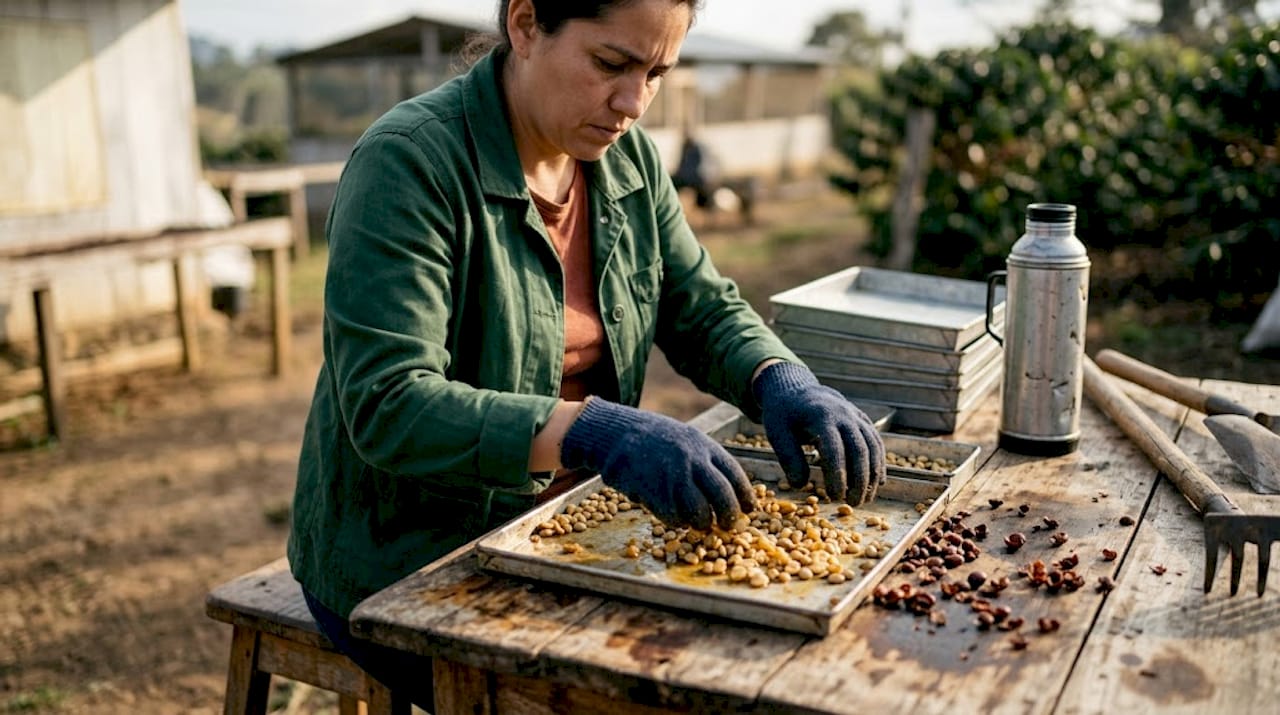
- Drying on raised beds or patios. Beans with the sticky mucilage attached are spread out to dry slowly. This is where fermentation occurs. As sugars in the mucilage break down, they penetrate the seed and create complex flavor compounds.
- Turning and monitoring. Workers turn the beans regularly to prevent mold and ensure even drying. Drying can take anywhere from one to four weeks depending on the honey style.
- Milling. Once the beans reach the right moisture level, typically around 11 to 12 percent, the dried mucilage is removed through milling and the beans are sorted and graded.
Understanding the coffee processing methods used in each region helps you predict what a bag might taste like before you even open it.
Comparison of the three main processing methods:
| Feature | Washed | Honey | Natural |
|---|---|---|---|
| Mucilage removed? | Yes, fully | Partially | No |
| Drying duration | Shorter | Moderate to long | Longest |
| Sweetness level | Lower | Medium to high | Highest |
| Acidity | Bright, clean | Balanced | Muted, fruity |
| Fermentation risk | Low | Medium | High |
| Flavor complexity | Terroir-forward | Layered | Bold, heavy |
Pro Tip: If you are new to honey process coffees, start with a yellow honey. It offers a noticeable sweetness boost over washed coffees without the intensity and risk that comes with black honey. It is a great bridge bean.
Types of honey process: White, yellow, red, and black
The honey process is not a single method. It is a spectrum, and understanding where on that spectrum a particular coffee falls tells you a lot about what to expect in the cup.
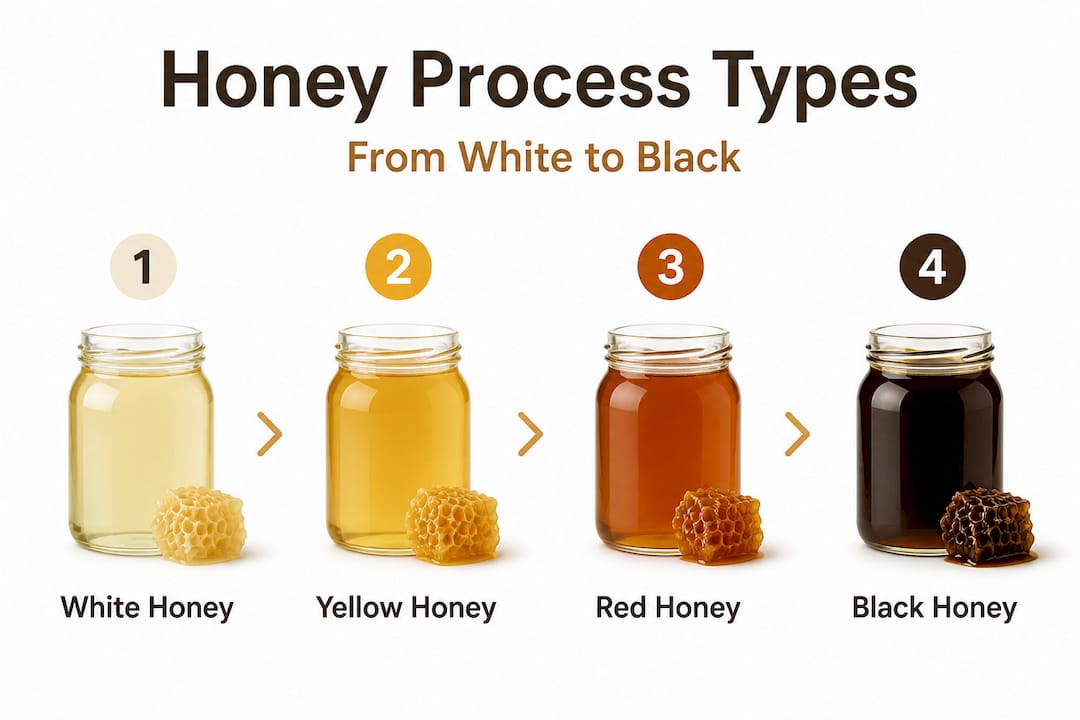
White honey sits closest to the washed process. Almost all of the mucilage is removed before drying. Drying times are short, fermentation is minimal, and the risk of defects is low. You get a cleaner, brighter cup with just a subtle sweetness. If you prefer washed coffees but want to ease into honey processing, white honey is your entry point.
Yellow honey leaves a small to moderate amount of mucilage on the bean. Drying takes around one to two weeks. The cup tends to show light fruit notes, a touch more body than washed, and a gentle sweetness that rounds out any sharp acidity.
Red honey is where things get noticeably more complex. More mucilage remains, drying is slower and often done in partial shade, and the extended fermentation period builds richer fruit character. Expect stone fruit, caramel, and a syrupy mouthfeel. This is where most specialty coffee enthusiasts start to really pay attention.
Black honey is the boldest and riskiest style. Almost all mucilage stays on the bean. Drying takes up to four weeks in the shade, requiring constant attention. Black honey is prone to defects due to the long drying time and maximum mucilage exposure, but when executed well, it yields an intensely sweet, fruit-forward cup that is unlike anything in the washed category.
Here is a quick summary of what distinguishes each style:
- White honey: least mucilage, shortest drying, cleanest, lowest risk
- Yellow honey: light mucilage, moderate sweetness, bright and accessible
- Red honey: significant mucilage, longer drying, rich and layered
- Black honey: maximum mucilage, longest drying, richest sweetness, highest defect risk
Pro Tip: When shopping for black honey coffees, prioritize bags from producers with transparent processing notes and solid traceability. The difference between a well-executed black honey and a poorly dried one is dramatic, and labeling alone will not tell you everything.
Flavor attributes and brewing tips for honey process coffee
After all the technical groundwork, here is the part that matters most at 6 a.m. with a mug in your hand: what does honey process coffee actually taste like, and how do you brew it to bring out its best qualities?
Honey processed coffees are known for their layered sweetness, syrupy body, and complex fruit and floral notes. You are not going to find the sharp, transparent brightness of a high-quality washed Ethiopian. And you will not get the heavy, almost wine-like richness of a natural-processed Yirgacheffe. Honey process lives in its own space, with qualities like:
- Ripe stone fruit, especially peach, apricot, and nectarine
- Dried berries and tropical notes in red and black varieties
- Floral undertones, particularly in lighter roasts
- A rounded, gentle acidity that does not dominate
- A body that feels thicker and more coating than washed coffees
- A sweetness that lingers without turning cloying
Understanding coffee flavor profiles across processing methods gives you a much sharper palate for identifying what you are tasting and why it is happening. And if you enjoy pairing your brew with food, flavor pairing ideas can help you build really memorable combinations around a honey processed coffee’s natural sweetness.
Best brewing methods for honey process coffee:
Pour over is an excellent choice. Methods like the V60 or Chemex preserve clarity while letting the fruit and floral notes come forward. Use a slightly coarser grind than you would for a washed coffee and keep water temperature around 195 to 200 degrees Fahrenheit.
AeroPress works particularly well with red and black honey coffees. The pressure and shorter brew time concentrate the sweetness and body beautifully. Experiment with inverted technique and a two to three minute steep.
Espresso is where honey process coffees really shine. The concentrated extraction amplifies all that layered sweetness and syrupy body. A well-pulled shot of a black honey coffee can almost resemble a dessert espresso without any added sugar.
For detailed brewing tips tailored to different bean types and processing methods, it helps to understand how variables like grind size, temperature, and extraction time interact. You can also dig deeper into coffee extraction tips to dial in your technique for maximum flavor clarity.
Why most coffee lovers misunderstand the honey process — and what you’re missing
Here is an opinion worth sitting with: the honey process label has become a victim of its own marketability. Coffee brands slap “black honey” or “red honey” on bags because it sounds exotic, evocative, and different. And consumers, reasonably enough, assume the color label guarantees a specific flavor experience. It does not.
The color categories, white through black, describe how much mucilage was left on the bean and approximately how long it dried. They do not guarantee a consistent outcome. A poorly executed black honey from a careless producer can taste flat, fermented in an unpleasant way, or just plain muddy. Meanwhile, a beautifully managed yellow honey from a skilled Costa Rican farm can produce a cup so sweet and clean that it stops experienced drinkers mid-sip.
The real takeaway is this: honey process coffee is not about added sweetness. It is about skilled risk management at the farm level. The longer that mucilage stays on the bean, the more things can go wrong. Mold. Uneven fermentation. Off-flavors. Producers who master black honey processing are doing something genuinely difficult. They are making hundreds of judgment calls across weeks of drying, often without the safety net of a washing station to correct mistakes.
Most coffee enthusiasts also underestimate how much their brew method shapes the final result. A mediocre grinder or stale beans will flatten even the most carefully processed honey coffee. Freshness is not negotiable here. Understanding coffee origins and processing at the regional level also helps, because a honey processed coffee from El Salvador will taste noticeably different from one grown in Ecuador, even if both use identical mucilage percentages.
The most powerful thing you can do as a coffee enthusiast is run a side-by-side tasting. Brew the same white honey and black honey from the same farm on the same day, using the same method and grinder. The contrast is eye-opening. You will immediately understand what the processing choice is doing and why producers bother with the extra complexity and risk. Black honey remains most risky in terms of defect potential, but in the hands of the right producer, the reward is a cup with a depth of sweetness that washed coffees simply cannot replicate.
Seek out roasters who list the honey type, the farm, the drying duration, and ideally the altitude. Transparency is a sign the roaster knows what they bought and why it is special.
Discover exceptional coffees and tools for your next brew
If reading about honey process coffee has made you want to taste the real thing, you are in the right place.

At Z’s Coffee, we curate specialty coffees and brewing tools for enthusiasts who want more than just a morning routine. Whether you are exploring cold brew coffee made with a sweet, fruity honey processed bean, or building out a brewing setup with quality gear, our coffee and tea collection has exactly what you need to take your next cup further. Every product we carry is chosen with the serious coffee drinker in mind, someone who notices the difference between a well-processed bean and a mediocre one and wants that difference in every brew.
Frequently asked questions
Does honey process coffee actually contain honey?
No, “honey process” refers to the sticky mucilage left on the coffee bean during drying, not to any added honey or sweetener. The name comes from the texture and color of that mucilage layer.
How does the honey process affect coffee flavor?
Honey processing typically creates a sweeter, more complex cup with fruit and floral notes, sitting between the clean brightness of washed coffees and the bold fruitiness of natural process coffees. The sweetness and complexity both increase as more mucilage is left on the bean.
What are the main risks with black honey process coffee?
Black honey processing requires the longest drying time with maximum mucilage intact, which makes it highly susceptible to mold, uneven fermentation, and off-flavors. When it goes wrong, the cup is noticeably prone to defects, but when it goes right, the sweetness is extraordinary.
Can I use honey process coffee for espresso?
Absolutely. Honey processed coffees, especially red and black honey varieties, pull beautifully as espresso shots, producing a naturally sweet, syrupy result that needs little or no sugar to feel satisfying.