TL;DR:
- Slow dried coffee involves dehydrating whole cherries over 15 to more than 40 days, enhancing flavor complexity. The process promotes sugar and acid migration into the bean, resulting in sweeter, fruit-forward cups with fuller body and nuanced aromas. It demands precise technique and careful management to minimize risks like mold and uneven drying, making it a premium but rewarding method.
Slow dried coffee is defined as an extended post-harvest dehydration process where whole coffee cherries are dried over 15 to more than 40 days, compared to the standard 3–5 days used in conventional processing. The industry term for this approach is “slow natural processing,” and it sits at the heart of specialty coffee’s most complex flavor profiles. The goal is controlled moisture reduction to a final 10–12% moisture content, which preserves flavor compounds and ensures safe storage. Sugars and organic acids from the fruit pulp migrate into the bean during this extended window, producing a cup with more sweetness, fuller body, and distinctive fruit-forward notes. If you have ever tasted a coffee with wild blueberry or ripe strawberry flavors and wondered how that happened, slow drying is almost always the answer.
What is slow dried coffee and how does the process work?
Slow drying is an intentional extended dehydration of whole coffee cherries, lasting 15 to over 40 days, targeting a final moisture content of 10–12%. That extended timeline is not accidental. It gives the fruit’s sugars and acids time to penetrate the bean’s cell walls, building flavor complexity that faster methods simply cannot replicate.
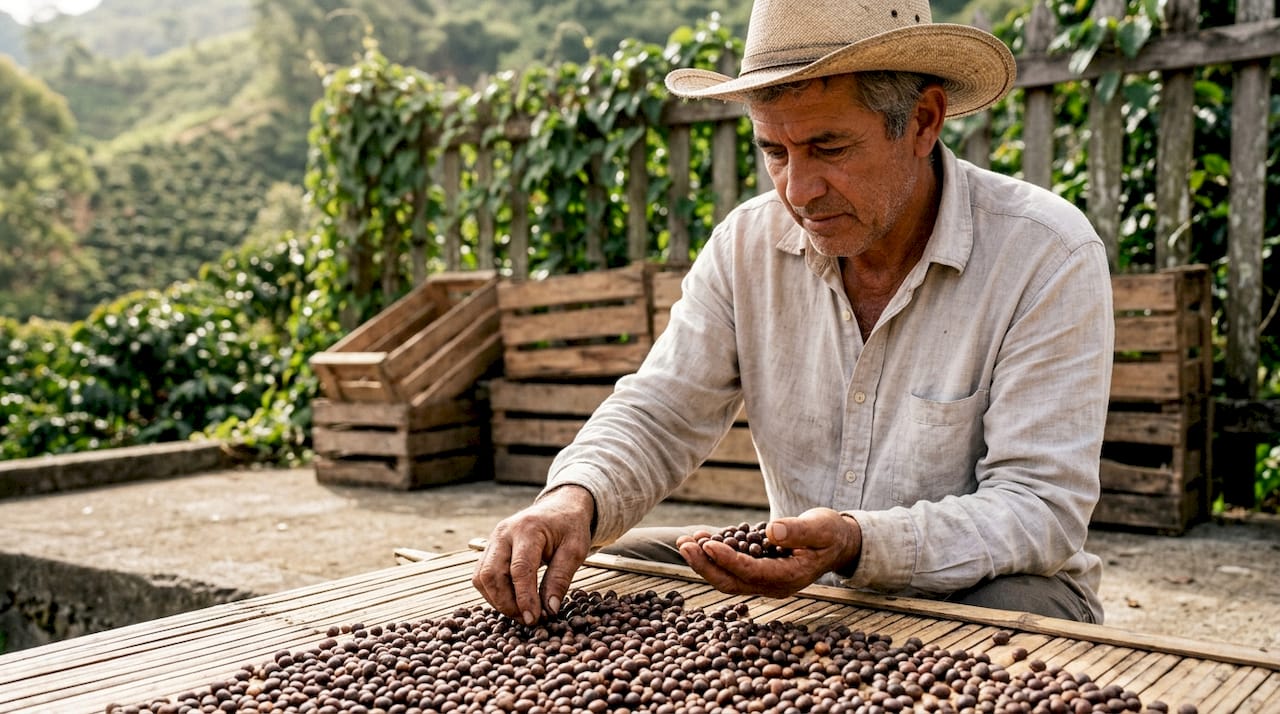
The process starts at the farm immediately after harvest. Producers spread freshly picked whole cherries across raised drying beds, typically elevated 50–100 cm off the ground. That height is not arbitrary. Raised drying beds improve airflow underneath the cherries, reducing the risk of mold and uneven moisture pockets that form when cherries sit flat on concrete patios.
From that point, the slow drying coffee process follows a structured sequence:
- Initial spread and sorting. Cherries are sorted by ripeness before drying begins. Unripe or overripe cherries dry unevenly and introduce off-flavors into the batch.
- Shade net placement. Many producers cover beds with shade netting during the hottest hours of the day. Direct sun at peak heat can crack the cherry skin and accelerate surface drying while the interior stays wet.
- Manual turning. Workers turn cherries by hand multiple times per day, especially in the first week. Consistent turning prevents the bottom layer from fermenting faster than the top.
- Moisture monitoring. Producers use moisture meters to track water activity inside the cherry. Temperature guns measure surface heat to catch overheating before it damages the bean.
- Final reduction. Once moisture drops to 15–18%, some producers transfer cherries to mechanical dryers for the final reduction to 10–12%. This hybrid drying approach captures slow drying’s flavor benefits while reducing mold risk in the critical final stage.
Pro Tip: If you are evaluating a slow dried coffee at origin or from a producer’s notes, ask for the total drying duration and the final moisture reading. A 25-day drying time with a 10.5% final moisture is a reliable signal of careful production.
What are the flavor benefits of slow dried coffee?
Slow drying creates a biochemical environment that no other processing method fully replicates. As the cherry dehydrates over weeks, sugars and organic acids migrate from the fruit pulp directly into the green bean. The result is a cup that tastes noticeably sweeter and fuller than washed or quickly dried naturals.
The flavor notes most associated with slow dried coffee include:
- Strawberry and blueberry. These are the signature markers of well-executed slow naturals, driven by ester compounds that develop during extended fermentation under the cherry skin.
- Tropical fruits. Mango, passion fruit, and guava notes appear in slow dried coffees from humid, high-altitude origins where fermentation runs slightly warmer.
- Syrupy body. The mouthfeel is thicker and more coating than a washed coffee. Specialty buyers describe it as “wine-like” or “jam-like.”
- Reduced harsh acidity. The extended drying mellows sharp malic and citric acids, producing a smoother, less aggressive cup.
- Chocolate and caramel undertones. These develop in the later drying stages as sugars concentrate and begin mild caramelization on the bean’s surface.
The fermentation happening under the cherry skin is not a defect. It is the mechanism. Modern slow natural producers treat fermentation as a creative tool, managing oxygen exposure and temperature to steer the cup profile toward specific flavor outcomes rather than simply avoiding spoilage.
“Controlled fermentation during slow drying can yield cup score increases of up to 10 points on the 100-point scale, transforming a standard natural coffee into a specialty-tier lot with distinct aroma, acidity, and flavor complexity.”
That kind of score jump explains why slow dried lots command premium prices at auction and why roasters seek them out for single-origin offerings. For coffee enthusiasts, understanding how fermentation shapes flavor is the key to appreciating what makes these cups so different.
What challenges and risks does slow dried coffee present?
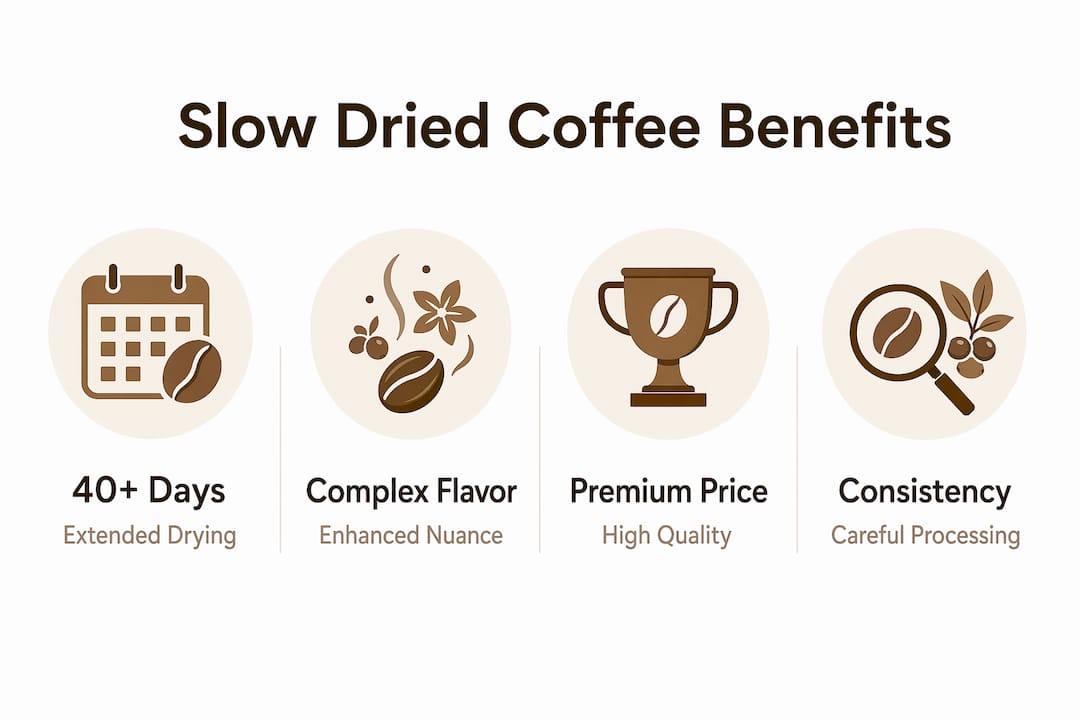
Slow drying is unforgiving. The same extended timeline that builds flavor complexity also creates a long window for things to go wrong. Prolonged drying keeps the cherry intact for weeks, making the entire batch sensitive to humidity swings, temperature spikes, and inconsistent airflow.
The main risks producers manage include:
- Mold growth. High ambient humidity combined with slow moisture loss creates ideal conditions for fungal contamination, particularly in the first 10 days.
- Over-fermentation. If turning frequency drops or temperatures spike, fermentation accelerates beyond the intended profile, producing vinegar, alcohol, or barnyard off-notes.
- Uneven moisture distribution. Cherries in the center of a bed dry slower than those on the edges. Without consistent turning, the batch develops moisture pockets that cause inconsistent roasting behavior.
- Batch inconsistency from unripe cherries. A single unripe cherry mixed into a slow drying batch can introduce harsh, grassy flavors that affect the entire lot.
- Infrastructure demands. Slow drying requires dedicated raised bed space, shade netting, and skilled labor for daily monitoring. Producers need temperature guns and moisture meters for precise control throughout the full drying period.
Pro Tip: The most reliable quality signal in a slow dried coffee is consistency across the bag. Brew two cups from beans drawn at different points in the bag. If the flavor profile holds steady, the producer managed moisture and turning well throughout the drying period.
Climate is the variable producers cannot fully control. A rainy week during the final drying stage can push moisture back up and restart fermentation in ways that damage the batch. Producers in high-humidity regions often schedule slow drying during dry-season windows specifically to reduce this risk.
How do regional producers approach slow drying differently?
Slow drying is not a single fixed method. Producers across different origins adapt the technique to their climate, infrastructure, and flavor goals. The result is a range of slow dried profiles that reflect both geography and intentional craft.
Brazil pioneered what the specialty industry now calls the “slow natural” method. Brazilian producers actively manage fermentation during drying by controlling oxygen exposure, sometimes sealing cherries in tanks for part of the process before moving them to raised beds. Controlled fermentation with restricted oxygen enhances complex aroma and acidity beyond what traditional open-air naturals produce. The Brazilian approach treats slow drying as a flavor engineering process, not just a drying method.
Papua New Guinea offers a contrasting example. Producers there have experimented with full shade drying, keeping cherries out of direct sunlight for the entire drying period. The shade environment slows moisture loss even further and produces a cleaner, more nuanced cup than sun-dried naturals from the same region.
The table below shows how key variables differ across slow drying approaches:
| Variable | Traditional natural | Slow natural (shade) | Hybrid slow drying |
|---|---|---|---|
| Drying duration | 3–5 days | 20–40+ days | 15–25 days |
| Sun exposure | Full sun | Shade net or full shade | Shade then mechanical |
| Fermentation control | Minimal | Active management | Partial control |
| Flavor complexity | Moderate | High | High with consistency |
| Spoilage risk | Low | High | Moderate |
Shade drying prioritizes flavor nuance over speed, while mechanical drying offers consistency but less complexity. The hybrid approach is gaining traction among specialty producers who want both. Beans are transferred to mechanical dryers when moisture reaches 15–18%, locking in the flavor development from the slow phase while reducing the risk of mold in the final stage.
Slow drying also supports premium pricing. Lots that take 30+ days to dry and require daily skilled labor cost more to produce. That cost is reflected in the retail price, and specialty buyers pay it because the cup quality justifies it. For coffee enthusiasts who want to understand coffee origins and processing, regional slow drying practices are one of the clearest examples of how geography and craft combine to shape what ends up in your cup.
Key Takeaways
Slow dried coffee delivers its distinctive flavor because extended dehydration over 15 to 40+ days allows sugars and acids from the fruit pulp to migrate into the bean, creating sweetness, body, and fruit complexity that faster drying methods cannot produce.
| Point | Details |
|---|---|
| Extended drying timeline | Slow drying lasts 15–40+ days, targeting 10–12% final moisture for flavor and storage stability. |
| Sugar and acid migration | Fruit sugars and organic acids move into the bean during drying, building sweetness and body. |
| Fermentation as a tool | Controlled fermentation under the cherry skin drives fruit-forward flavors like strawberry and blueberry. |
| High infrastructure demands | Raised beds, shade nets, moisture meters, and daily turning are all required to avoid defects. |
| Hybrid methods reduce risk | Transferring cherries to mechanical dryers at 15–18% moisture captures flavor while cutting mold risk. |
Why slow dried coffee is worth the extra cost
I have tasted a lot of coffee over the years, and slow dried naturals are the ones that stop me mid-sip. There is a specific moment when a well-executed slow natural hits the palate and delivers something that tastes less like coffee and more like biting into a ripe piece of fruit. That experience does not happen by accident.
What strikes me most about slow drying is how much it demands from the producer. You are asking a farmer to spend 30 or 40 days managing a single batch, turning cherries by hand, watching moisture readings, and hoping the weather cooperates. That is a significant commitment of labor and infrastructure for a product that could be ruined by one rainy week. The fact that producers do it anyway tells you something about the flavor payoff.
The trend I find most exciting right now is the move toward intentional fermentation management within slow drying. Producers in Brazil and Ethiopia are treating the fermentation window not as a risk to minimize but as a variable to control. Restricting oxygen, managing temperature, and timing the transition to mechanical drying are all ways of steering the cup profile toward a specific outcome. That is closer to winemaking than traditional coffee farming, and the results are showing up in auction scores and specialty roaster catalogs.
My honest advice to any coffee enthusiast: buy a slow dried natural from a producer who lists the drying duration and final moisture on the bag. Brew it as a pour-over or in a French press where the body and sweetness can fully express themselves. Then compare it to a washed coffee from the same origin. The difference will tell you more about coffee processing methods than any article can.
— zachary
Slow dried coffee at Zscoffee
Slow dried naturals are among the most distinctive coffees you can brew at home, and finding a well-sourced one makes all the difference.

Zscoffee carries a selection of specialty coffees chosen for their processing quality and flavor depth. If you want to experience the syrupy body and fruit-forward notes that slow drying produces, the cold brew coffee options at Zscoffee are a strong starting point. Cold brew amplifies the sweetness and body that slow dried beans develop, making it one of the best formats for tasting what the process actually does. You can also browse the full coffee and tea collection to find single-origin lots and specialty selections worth exploring.
FAQ
What is slow dried coffee in simple terms?
Slow dried coffee is whole coffee cherries dehydrated over 15 to 40+ days instead of the standard 3–5 days. The extended timeline allows fruit sugars and acids to migrate into the bean, producing sweeter, fuller-bodied cups with complex fruit flavors.
How is slow dried coffee different from regular natural process coffee?
Regular natural process coffee dries quickly, often in direct sun over 3–5 days. Slow drying extends that timeline significantly, often under shade nets, with active fermentation management that produces more intense and complex flavor development.
Does slow dried coffee have more caffeine?
The drying method does not meaningfully change caffeine content. Caffeine levels are determined primarily by the coffee variety and origin, not by how long the cherry takes to dry.
Why does slow dried coffee taste fruity?
The fruit flavors come from ester compounds that develop during fermentation under the cherry skin. Extended fermentation during slow drying produces higher concentrations of these compounds, which translate directly into strawberry, blueberry, and tropical fruit notes in the cup.
Is slow dried coffee harder to roast?
Slow dried naturals require careful roasting because their higher residual sugar content means they can tip into over-roasted territory faster than washed coffees. Roasters typically use lower charge temperatures and extended development times to preserve the fruit-forward character without burning off the sweetness.