TL;DR:
- Coffee freshness involves multiple factors like roast date, packaging, and storage conditions.
- Fresh coffee typically offers brighter flavors, but some aged coffees can be preferred depending on taste.
- Proper storage, buying fresh, and timing grinding can significantly enhance coffee quality at home.
Most coffee lovers operate on a simple rule: the fresher the beans, the better the cup. It sounds logical. But this assumption leaves out a lot of nuance that even dedicated enthusiasts often miss. The relationship between coffee freshness and flavor is layered, shaped by roast date, packaging, grind timing, oxygen exposure, and even personal taste. Recent research is starting to challenge what we thought we knew, and the results are genuinely surprising. This guide breaks down what freshness really means, how it affects your brew, and how to make smarter choices for your specific palate.
Table of Contents
- What does coffee freshness mean?
- How freshness affects coffee flavor and quality
- The freshness debate: Does ‘freshest’ always mean best?
- Practical ways to maximize coffee freshness at home
- Why freshness is personal: What most guides overlook
- Explore fresher brews with Z’s Coffee
- Frequently asked questions
Key Takeaways
| Point | Details |
|---|---|
| Freshness impacts flavor | Coffee freshness directly influences taste and aroma, especially in the first weeks after roasting. |
| Shelf life varies | Whole beans last longer than ground coffee, and the right storage extends freshness even further. |
| Not always fresher is better | Some matured coffees can match or exceed fresh beans in flavor, depending on individual taste. |
| Optimize freshness at home | Simple storage tricks and buying habits help you enjoy better brews every day. |
| Experiment for your best cup | Try different freshness levels and brewing methods to discover what you enjoy most. |
What does coffee freshness mean?
Freshness in coffee is not a single thing. It refers to a combination of factors that together determine how much of the bean’s original character survives through to your cup. At its core, freshness is about time since roasting, but that’s only the beginning.
When coffee is roasted, hundreds of chemical reactions occur inside the bean. Volatile aromatic compounds form, carbon dioxide gas builds up, and oils migrate toward the surface. The moment the roast ends, a slow process of degradation begins. Oxygen, moisture, light, and heat all accelerate this process, stripping away complexity and flattening the flavors that make a great coffee memorable.
Here’s what freshness actually covers:
- Time since roasting: Beans start losing their brightest aromatics within days of leaving the roaster.
- Time since grinding: Ground coffee has enormously more surface area exposed to air, speeding up staling dramatically.
- Packaging integrity: A sealed, nitrogen-flushed bag extends shelf life far beyond an open container or paper bag.
- Storage conditions: Temperature, humidity, and light exposure all affect how fast quality declines.
“Freshness is not just about when the beans were roasted. It is about how well they were protected from the moment they left the roaster to the moment they hit your grinder.”
The science here is important. Shelf life research shows that roasted whole beans maintain quality for up to 32 days in optimal packaging, while ground coffee stays fresh for roughly 12 days under similar conditions. In low-oxygen environments, those numbers extend dramatically, sometimes up to 250 days at 20 degrees Celsius for whole beans.
There is also a major misconception worth addressing. Many people assume the “best by” date on a bag of coffee tells you everything you need to know. It does not. That date reflects the manufacturer’s estimate for minimum acceptable quality, not peak flavor. For specialty coffee, peak flavor often falls within a much tighter window than the label suggests.
Understanding packaging and coffee freshness is genuinely one of the most underrated skills for any coffee lover. Valve-sealed bags, for example, let carbon dioxide escape without letting oxygen in, protecting the bean in that critical post-roast window. Without that one-way valve, you’d need to leave bags open briefly to release gas, which exposes the beans to more oxygen and speeds up staling. These details matter a lot more than most people realize.
Ground coffee is the most vulnerable of all. The surface area increase from whole bean to fine grind is dramatic, and most of the aromatic oils exposed to air will oxidize within minutes. This is why brewing with beans ground fresh produces such noticeably different results compared to pre-ground coffee, even from the same batch.
How freshness affects coffee flavor and quality
Fresh coffee tastes different from stale coffee in ways you can actually identify and describe, not just a vague sense that something is “off.”
Coffee’s flavor comes from a complex mix of volatile aromatic compounds, organic acids, and carbon dioxide that interact during brewing. When beans are fresh, these compounds are present in abundance. As beans age, volatile aromatics escape or break down, acids degrade, and the carbon dioxide that helps push flavors into your cup slowly dissipates. The result is a flat, hollow, or cardboard-like flavor that even a skilled barista cannot rescue with technique alone.
Here is a simple way to visualize how freshness tracks with flavor over time:
| Days since roast | Whole bean quality | Ground coffee quality |
|---|---|---|
| 1 to 7 days | Peak (may need degassing) | Excellent if ground fresh |
| 7 to 14 days | Excellent to very good | Good to acceptable |
| 14 to 32 days | Good in optimal packaging | Poor to stale |
| 32 to 60 days | Declining, noticeable drop | Very stale |
| 60+ days | Stale, flat profile | Avoid |
The shelf life window for quality is genuinely tighter than most supermarket coffee labels suggest, which is one reason specialty roasters print roast dates rather than just best-by dates.
One thing coffee enthusiasts often overlook is how freshness affects brewing itself, not just flavor in isolation. When you brew very fresh beans, they release a burst of carbon dioxide gas that creates the characteristic bloom you see when hot water hits your grounds. This bloom matters because carbon dioxide can interfere with water’s ability to extract flavor compounds evenly. Allowing it to escape improves extraction. You can read more about coffee bloom and freshness to understand exactly how this plays out in different brew methods.
To assess freshness effects at home, follow these steps:
- Check the roast date, not the best-by date. Aim to brew beans within two to four weeks of roasting for most single-origin coffees.
- Observe the bloom. When you pour hot water over fresh grounds, look for a strong, active bubble reaction. Weak or absent blooming is a sign of stale beans.
- Smell before brewing. Fresh coffee has a sharp, complex aroma even before it touches water. Stale coffee smells flat, musty, or faintly of paper.
- Taste the difference. Brew two cups back to back, one from fresh beans and one from a bag that’s been open for three weeks, and notice the contrast in brightness and body.
The influence of freshness on flavor also intersects with how coffee was processed before roasting. Washed, natural, and honey-processed coffees each carry different volatile compound profiles, and processing methods and flavor clarity help explain why some coffees hold their character longer than others. Natural-processed beans, for example, often have denser fruit-forward flavors that can soften in interesting ways as they age, while washed coffees tend to lose their brightness more quickly. Meeting coffee quality standards means understanding that freshness is part of the full quality picture, not the only measure.
The freshness debate: Does ‘freshest’ always mean best?
Here is where the conventional wisdom starts to crack. The idea that peak freshness always equals the best cup makes intuitive sense, but the science doesn’t fully back it up.
A landmark finding challenges the “fresher is always better” rule head-on. Research shows no preference disadvantage for 145-day matured coffee compared to 1-day fresh coffee in blind taste tests. Participants did not consistently rate fresh coffee as superior. Some even preferred the more rounded, settled flavors of the aged batch. This result is striking because it runs directly against what most roasters and specialty shops tell you.
Here’s a quick comparison to illustrate how flavor characteristics shift with age:
| Days since roast | Flavor notes | Body | Acidity | Overall character |
|---|---|---|---|---|
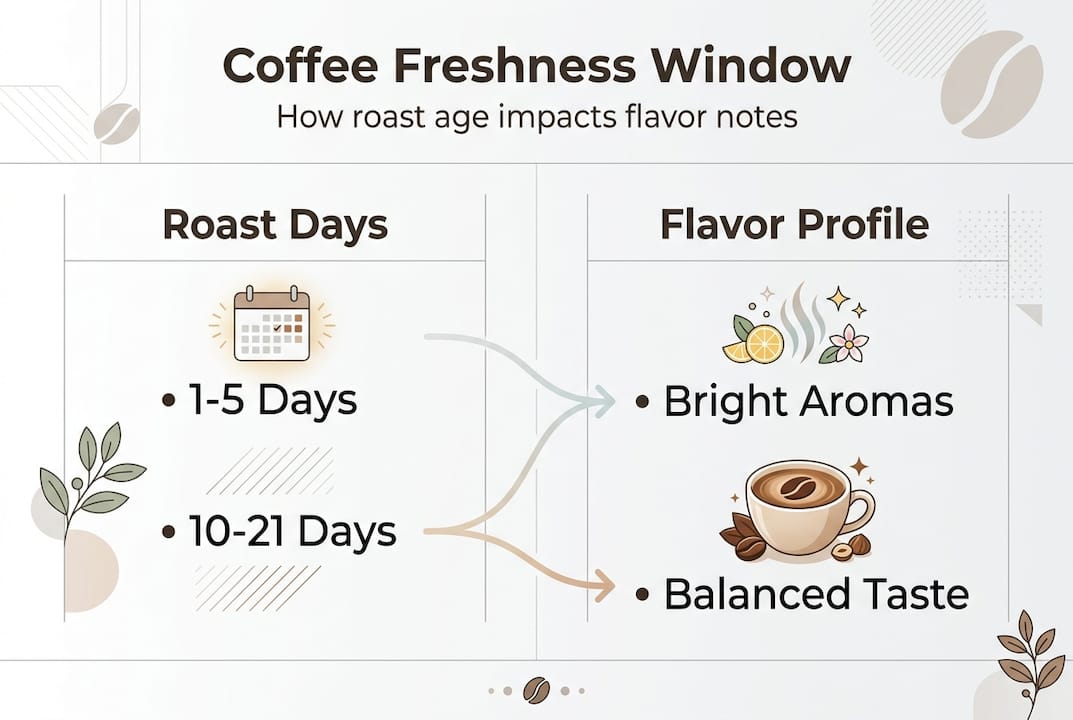
| 1 to 5 days | Sharp, bright, gassy | Light | High | Vibrant, may feel raw |
| 7 to 21 days | Balanced, complex | Medium | Medium | Peak rounded flavor |
| 30 to 60 days | Softer, mellower | Full | Lower | Smooth, less distinct |
| 90 to 145 days | Flat or muted | Heavy | Low | Depends heavily on storage |
What this tells us is that “optimal” freshness is actually a window, not a single point. Very fresh coffee, especially within the first few days of roasting, can taste harsh or gassy. Many roasters specifically recommend waiting at least five to seven days after the roast date before brewing. Beans that have “rested” in this way often taste noticeably more balanced.
Different coffee flavor profiles also respond differently to aging. A high-altitude Ethiopian coffee packed with floral and citrus notes will fade faster than a low-acidity Sumatran with earthy, syrupy qualities. Understanding this means you can make more intentional choices about when to open a specific bag.
Pro Tip: If you’re brewing espresso, slightly rested beans in the 10 to 21-day post-roast window often perform better than very fresh beans because the reduced gas allows for more even extraction under pressure. For pour-over, fresher is generally preferable, but still wait at least five to seven days.
There’s also a real argument that coffee origin and quality plays a stronger role in the final cup than freshness alone. A mediocre bean at peak freshness will still taste mediocre. A well-sourced, expertly roasted coffee will hold on to its character much longer.
What most enthusiasts miss is that the pursuit of absolute freshness can sometimes become an obsession that distracts from exploring what they actually like. Some people genuinely prefer a softer, mellower cup. If that’s you, chasing a three-day-old bag of light roast might actually deliver a cup that feels too sharp or sour for your taste.
Practical ways to maximize coffee freshness at home
Understanding both sides of the freshness debate, here’s how you can take action for better results at home. The good news is that most of what you can do is simple, inexpensive, and immediately effective.
Buying for freshness:
- Look for a roast date, not a best-by date. Any specialty roaster worth buying from prints the roast date on the bag. Skip bags without one.
- Buy in smaller quantities. A 250g bag you’ll finish in two weeks beats a 1kg bag you’ll slowly work through over two months.
- Buy whole beans. Every time you read that roasted whole beans maintain quality for up to 32 days versus 12 days for ground, it should reinforce the habit of buying whole and grinding fresh.
- Check the seal. Bags with one-way degassing valves are a sign of quality packaging. If the bag has no valve and no seal, move on.
Storage best practices:
- Store beans in an airtight container, not the bag they came in unless that bag reseals properly.
- Keep beans at room temperature, away from heat sources like ovens or sunny windowsills.
- Avoid the refrigerator. The moisture and odors from other food items will damage your beans faster than open-air storage.
- Never store beans in direct light. A dark pantry or cupboard is ideal.
Grinding and brewing:
- Grind only what you need, right before brewing. This single habit makes a bigger difference than nearly any other change you can make.
- Use a burr grinder instead of a blade grinder. Burr grinders produce a more consistent grind that extracts flavor more evenly, and they heat the grounds less during grinding.
Pro Tip: If you buy a larger bag and know you won’t finish it quickly, consider dividing it into weekly portions and storing the unused portions in a sealed, airtight jar. This limits the number of times you open and expose the full supply to air.
Before you brew, do a quick freshness check: smell the grounds right after grinding. Fresh grounds should hit you with a vivid, sharp, layered aroma. If it’s muted or dusty, your beans are past their best window regardless of the roast date. Use those older beans for cold brew, where longer contact time and cold water extraction can still pull good flavor even from slightly staled beans.
The expert tips for buying quality beans that apply to sourcing apply equally to how you manage beans once they’re home. And when you’re thinking through which beans to try next, choosing coffee beans for home brew covers the selection side in depth. Knowing what specialty coffee quality standards look like helps you recognize genuinely fresh, high-grade beans when you see them.
Why freshness is personal: What most guides overlook
After years of thinking about coffee, here’s the honest take we don’t see enough in standard freshness guides: freshness is not a fixed target. It’s a personal one.
Most articles tell you to drink your beans within two weeks of roasting, as if every coffee drinker has the same taste preferences, brews the same method, and starts from the same bean. That’s not real life. The truth is, freshness is only one dimension of a much richer equation that includes origin, roast level, processing method, grind size, water temperature, and what you personally find delicious.
We’ve seen customers who prefer a cup brewed from beans that are a full month past roast because they love the soft, approachable body it produces. That’s not wrong. That’s their palate speaking honestly. Chasing someone else’s definition of peak freshness can actually prevent you from discovering what your best cup looks like.
The most rewarding approach is to experiment deliberately. Try the same beans at different points in the post-roast window. Take notes. Notice what you like. Pair that with curiosity about exploring coffee flavor profiles from different origins and roast levels, and you’ll develop a sense of freshness that is calibrated to your actual preferences, not a generic rule.
Freshness absolutely matters. But your taste buds are the final authority.
Explore fresher brews with Z’s Coffee
If this article has sparked a desire to upgrade your coffee experience, we’ve made it easy to explore at Z’s Coffee.
Browse our curated selection of coffee and tea products sourced with quality and freshness in mind, from whole bean single-origins to expertly blended options. For those who love coffee on the go, our travel mug with handle keeps your brew at the ideal temperature while you’re out. Whether you’re just starting to pay attention to roast dates or you’re a seasoned enthusiast dialing in your storage setup, Z’s Coffee has the products and resources to help you brew better, one cup at a time.
Frequently asked questions
How long does roasted coffee stay fresh?
Whole roasted beans maintain quality for 32 days in optimal packaging, while ground coffee stays fresh for roughly 12 days under the same conditions.
Does older coffee taste bad?
Older coffee loses aromatic compounds and can taste flat, but some studies show that 145-day matured coffee performed equally well compared to 1-day fresh coffee in blind preference tests.
What’s the best way to store coffee for freshness?
Store your beans in an airtight container away from light, heat, and moisture, since low-oxygen environments can extend shelf life significantly beyond standard open-air storage.
Is freshly ground coffee always better?
Freshly ground coffee typically delivers more aroma and brightness, but the best result depends on the bean variety, roast level, and your preferred brewing style rather than grind timing alone.