TL;DR:
- Fermentation transforms coffee cherry mucilage into flavor precursors that influence aroma, acidity, and taste.
- Microbial communities of yeasts and lactic acid bacteria work together to produce complex, consistent coffee flavors.
Fermentation is defined as the microbial transformation of coffee cherry mucilage into flavor precursors that directly determine the aroma, acidity, and taste of your cup. The role of fermentation in coffee flavor is not incidental. It is the central post-harvest stage where the chemical identity of a coffee is built. Recent research confirms that microbial activity during fermentation produces free amino acids, organic acids, and volatile esters that survive drying and roasting to define what you ultimately taste. Understanding this process separates casual coffee drinkers from true connoisseurs.
How do microbial communities drive coffee fermentation and flavor?
Fermentation is not a single chemical reaction. It is a coordinated performance by a community of microorganisms, primarily yeasts and lactic acid bacteria (LAB), each playing a distinct role in flavor development.
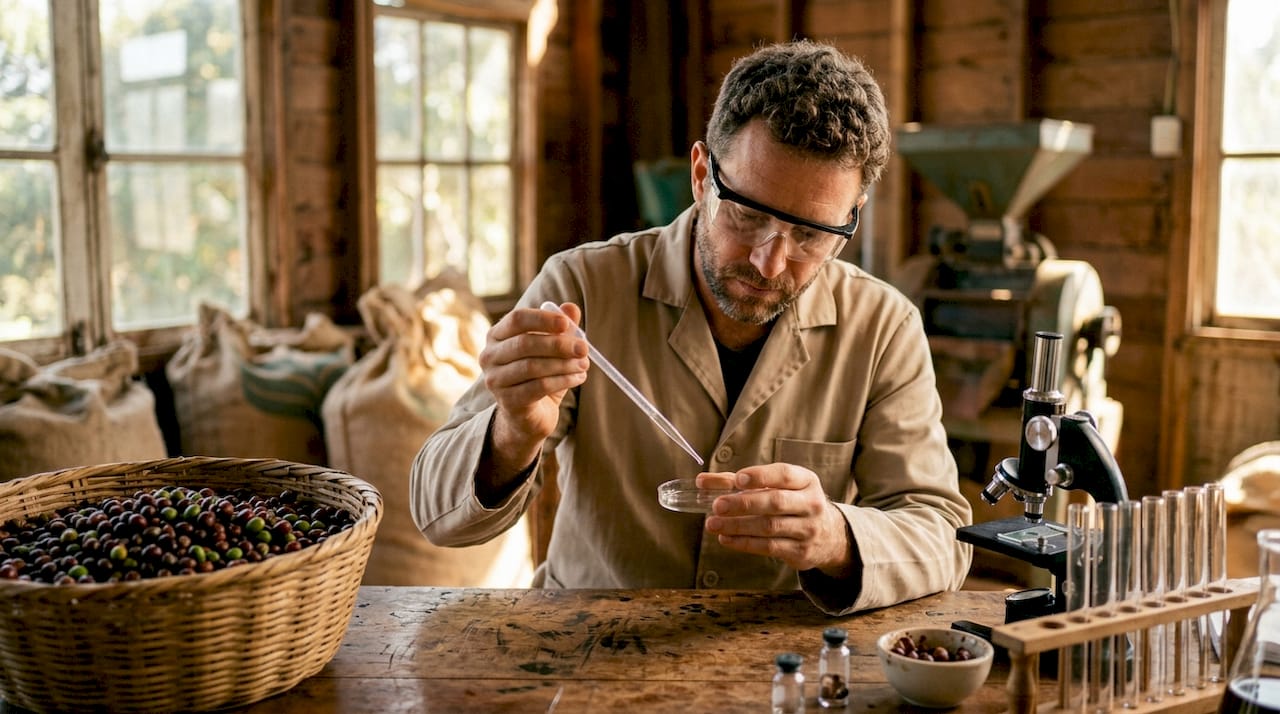
Yeasts and LAB operate with a clear division of labor. LAB acidify the environment and generate starter flavor precursors, while yeasts create fruity, wine-like aromas through ester and alcohol production. This division means neither group alone produces the full aromatic complexity found in well-fermented specialty coffee. The interaction between the two is what creates depth.
The symbiotic relationship between yeasts and LAB goes further. LAB inhibit spoilage organisms and yeasts supply nutrients that improve aroma precursor formation. This mutual support system stabilizes the fermentation environment and protects flavor quality. When this balance breaks down, off-flavors like vinegar, barnyard, or rot appear in the cup.
Yeast produces fruity and floral esters while LAB generate organic acids, and together they enhance coffee aroma complexity in ways neither achieves independently. The specific volatile compounds produced by each microbial group serve as chemical fingerprints. Researchers now track these volatile biomarkers through postharvest stages to predict aromatic potential before roasting even begins.
Key microbial contributions to coffee flavor include:
- Yeasts: Produce ethanol, isoamyl acetate, and ethyl esters that translate into tropical fruit and floral notes
- Lactic acid bacteria: Generate lactic and acetic acids that build brightness and structure in the cup
- Microbial symbiosis: Suppresses spoilage organisms while amplifying aroma precursor formation
- Volatile biomarkers: Signal the aromatic potential of beans at each fermentation stage, not just the final flavor
Pro Tip: When evaluating a specialty coffee’s tasting notes, look for producer transparency about microbial inoculation. A coffee fermented with controlled yeast and LAB starters will show more consistent and intentional flavor than one relying solely on wild fermentation.
What fermentation methods are used and how do they affect coffee flavor?
The method a producer chooses for fermentation directly controls which microbes dominate, how long they work, and what flavor compounds they generate. The four main approaches each produce a distinct sensory outcome.
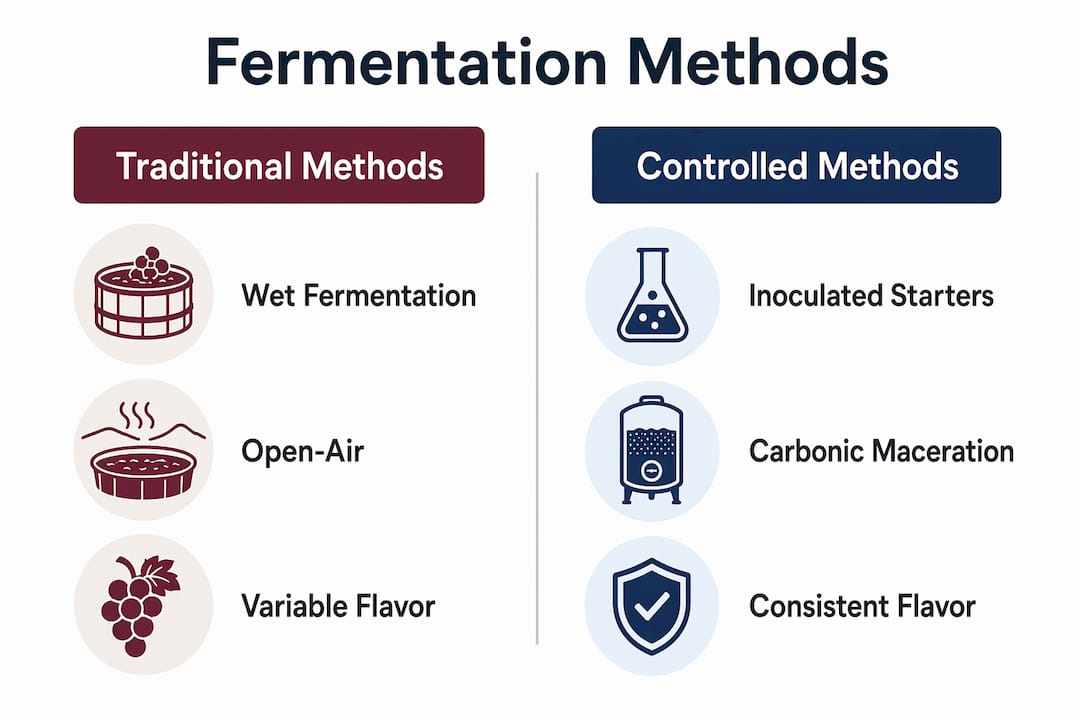
Traditional wet fermentation soaks depulped beans in water tanks, relying on ambient microbes. Results vary by region, season, and even tank material. Self-Induced Anaerobic Fermentation (SIAF) seals beans in their own CO2, creating an oxygen-free environment that favors specific metabolic pathways. SIAF produces unique metabolites that improve sensory qualities, and when combined with geothermal drying, it increases chlorogenic acid and amino acid concentrations by 7–10 fold compared to conventional methods. That is a dramatic shift in flavor potential.
Carbonic maceration, borrowed from wine production, seals whole coffee cherries in CO2-saturated tanks. Carbonic maceration at 30°C for over 120 hours enhances favorable acids, esters, and alcohols in Arabica coffee, producing measurably different volatile compositions compared to shorter or cooler fermentations. The result is a coffee with pronounced fruit acidity and a wine-like body.
Controlled inoculation with commercial yeast and LAB starters is the most consistent approach. Co-inoculating coffee with yeast and LAB boosts flavor consistency and sensory scores by ensuring specific microbial populations dominate from the start. This method is particularly valuable for producers who need repeatable results across harvests.
| Method | Oxygen environment | Flavor profile | Consistency |
|---|---|---|---|
| Traditional wet fermentation | Open air | Clean, mild acidity | Variable |
| SIAF | Anaerobic (self-induced) | Complex, fruity, high amino acids | Moderate |
| Carbonic maceration | CO2 sealed | Wine-like, high esters and acids | High with control |
| Controlled inoculation | Variable | Intentional, producer-defined | Very high |
Fermentation under modified atmospheres inhibits sucrose consumption and improves sensory scores compared to open-air fermentation. This matters because sucrose preservation during fermentation means more substrate available for Maillard reactions during roasting, which directly builds flavor complexity in the cup.
Pro Tip: When shopping for specialty coffee, look for processing labels like “anaerobic natural,” “carbonic maceration,” or “inoculated fermentation.” These terms signal that the producer made deliberate choices about fermentation method, which usually means more intentional and traceable flavor.
How do fermentation variables like temperature and time influence coffee flavor?
Temperature and duration are the two most powerful levers a producer controls during fermentation. Small changes in either variable shift the entire microbial and chemical outcome.
Carbonic maceration research confirms that the optimal temperature near 30°C produces the best sensory profile for Arabica coffee. At lower temperatures, microbial metabolism slows and fewer volatile compounds form. At higher temperatures, spoilage organisms gain an advantage and off-flavors develop. The 30°C target is not arbitrary. It reflects the metabolic sweet spot for the yeast and LAB strains most beneficial to coffee flavor.
Duration matters just as much. Prolonged fermentation beyond 120 hours enhances volatile compound concentrations, producing more complex aromatic profiles. However, this only holds when temperature and microbial populations are properly managed. Uncontrolled extended fermentation produces over-fermented defects, which cup evaluators describe as sour, alcoholic, or putrid.
| Variable | Optimal range | Effect on flavor |
|---|---|---|
| Temperature | Near 30°C | Maximizes ester and acid production |
| Duration | Over 120 hours (controlled) | Increases volatile complexity |
| pH | Monitored continuously | Signals fermentation progress and acid balance |
| Brix | Monitored continuously | Tracks sugar consumption by microbes |
Monitoring pH and Brix levels is a more reliable fermentation control method than fixed time windows. Environmental factors like altitude, ambient temperature, and seasonal microbial populations cause fermentation to progress at different rates. A producer who stops fermentation at 48 hours regardless of conditions will get inconsistent results. One who stops at a target pH and Brix reading will get consistent flavor across batches.
Elevated elaidic acid levels correlate with lower sensory ratings, while higher linoleate concentrations correspond to better flavor scores. This fatty acid profile shift is a direct chemical marker of fermentation quality. It gives producers and researchers a measurable way to assess whether fermentation conditions produced a favorable or unfavorable outcome before the coffee even reaches a roaster.
How do fermentation metabolites translate into roasted coffee flavors?
Fermentation does not deliver flavor directly. It builds the chemical potential that roasting then converts into the aromas and tastes you experience in the cup. This distinction is critical for understanding why fermentation decisions made weeks before roasting still define what ends up in your mug.
Fermentation metabolites like free amino acids and reducing sugars contribute to Maillard and Strecker reactions during roasting. The Maillard reaction between amino acids and sugars creates hundreds of aromatic compounds, including pyrazines, furans, and aldehydes that define roasted coffee’s characteristic depth. Strecker degradation produces additional aldehydes that contribute to caramel, nutty, and chocolatey notes. Fermentation sets the concentration of these reactants. Roasting fires the reaction.
The metabolites formed during fermentation remain largely dormant in the green bean. They do not produce aroma at room temperature. Roasting heat activates them, which is why fermentation is a precursor-building phase rather than a flavor-delivery phase. A coffee with rich fermentation metabolites will respond to roasting with greater complexity. A coffee with depleted precursors will taste flat regardless of roasting skill.
Key metabolites and their flavor contributions include:
- Free amino acids: React with sugars during roasting to form caramel, chocolate, and nutty compounds via Maillard reactions
- Reducing sugars: Provide the substrate for browning reactions that build body and sweetness
- Chlorogenic acids: Modulate acidity and bitterness in the cup; SIAF fermentation increases these significantly
- Organic acids (lactic, acetic): Survive into the final cup as brightness and tartness, shaped by LAB activity during fermentation
- Volatile esters: Carry floral and fruit aromas that persist through light to medium roasting
Understanding this chemistry helps you taste coffee more perceptively. When you detect jasmine in an Ethiopian natural or a wine-like tartness in a Colombian anaerobic, you are tasting the direct output of fermentation decisions made at origin. The roaster revealed those flavors. The fermentation created them.
Key Takeaways
Fermentation is the single most influential post-harvest stage in coffee production, converting mucilage into flavor precursors that roasting then transforms into the aromas and tastes in your cup.
| Point | Details |
|---|---|
| Microbial division of labor | Yeasts create fruity esters; LAB generate acids. Both are needed for full flavor complexity. |
| Method determines flavor profile | Carbonic maceration and SIAF produce more complex, intentional flavors than open-air fermentation. |
| Temperature and time are critical | Near 30°C and over 120 hours (with monitoring) produces the best volatile compound profiles. |
| pH and Brix beat fixed timers | Tracking these metrics gives producers consistent results across variable environmental conditions. |
| Fermentation builds, roasting reveals | Metabolites formed during fermentation remain dormant until roasting activates them through Maillard reactions. |
What I’ve learned from watching fermentation get ignored at origin
Most coffee marketing focuses on roast profiles and brewing ratios. Fermentation gets a footnote, if it gets mentioned at all. That frustrates me, because fermentation is where the real work happens.
I’ve tasted side-by-side comparisons of the same Arabica variety processed with open-air fermentation versus controlled inoculation. The difference is not subtle. The inoculated lot tastes intentional. The wild-fermented lot tastes like a gamble that sometimes pays off. For connoisseurs who spend serious money on specialty coffee, that variability is a problem worth understanding.
The most underappreciated insight from recent research is that commercial fermentation starters can be propagated cheaply using coffee by-products, making controlled fermentation accessible to smallholder farmers. This is not a technique reserved for large, well-funded estates. A small producer in Colombia or Ethiopia can achieve the same microbial consistency as an industrial facility with the right knowledge and a modest investment. The barrier is information, not cost.
What I look for when selecting fermented coffees is producer transparency. A label that says “anaerobic” tells me something. A label that specifies inoculation strain, fermentation temperature, and duration tells me the producer understands their process. That level of detail predicts cup quality more reliably than any tasting note written by a marketer. The experimental processing techniques emerging in 2026 are pushing this transparency further, and that is good for everyone who drinks coffee seriously.
— zachary
Fermented coffees worth tasting at Zscoffee
Knowing the science of fermentation is one thing. Tasting it is another.

Zscoffee carries cold brew and specialty coffees selected to showcase what controlled fermentation actually produces in the cup. The cold brew collection features coffees where extended fermentation and careful processing create the fruit-forward, low-bitterness profiles that cold brewing amplifies. If you want to taste the direct impact of fermentation on flavor, cold brew is one of the clearest expressions of it. Zscoffee also offers a full range of specialty coffees sourced from producers who document their fermentation methods, giving you the traceability that serious coffee appreciation demands.
FAQ
What is the role of fermentation in coffee flavor?
Fermentation converts the mucilage surrounding coffee beans into flavor precursors, including free amino acids, organic acids, and volatile esters. These compounds survive into the green bean and react during roasting to produce the aromas and tastes in the final cup.
How does yeast affect coffee fermentation?
Yeast produces fruity and floral esters and alcohols during fermentation, contributing tropical fruit, wine-like, and floral notes to the coffee’s aroma profile. Yeast works alongside lactic acid bacteria to build full aromatic complexity.
What fermentation method produces the most complex coffee flavor?
Carbonic maceration and Self-Induced Anaerobic Fermentation (SIAF) consistently produce the most complex flavor profiles. SIAF increases chlorogenic acids and amino acids by 7–10 fold, while carbonic maceration at 30°C for over 120 hours maximizes ester and acid development.
How do temperature and time affect coffee fermentation?
Temperature near 30°C maximizes beneficial microbial activity and volatile compound production. Fermentation beyond 120 hours under controlled conditions increases aromatic complexity, but uncontrolled extended fermentation produces off-flavors.
Why does fermentation matter if roasting creates the final flavor?
Fermentation builds the chemical precursors that roasting converts into flavor. Without sufficient free amino acids and reducing sugars from fermentation, Maillard and Strecker reactions during roasting produce a flat, underdeveloped cup regardless of roasting skill.