TL;DR:
- Ethiopia and Yemen are the two roots of coffee, with Ethiopia offering vast genetic diversity and Yemen pioneering cultivation and trade. These origins produce distinct flavor profiles: Ethiopian coffees are floral and complex, while Yemeni varieties are wild, spiced, and ancient. Regional variables like altitude, processing, and roast date significantly influence the cup’s character and quality.
Ethiopia gave the world Arabica. Yemen taught the world to roast it. And from those two starting points, a dozen countries now produce coffees so distinct from each other that drinking them back-to-back feels like flipping between different beverages entirely. If you want to explore coffee origin country highlights, start here:
- Ethiopia — floral, tea-like, and wildly complex from heirloom varieties
- Kenya — bright, wine-like acidity with blackcurrant and tomato notes
- Colombia — balanced, medium-bodied, caramel and red fruit
- Guatemala — chocolate and brown sugar with a clean finish
- Costa Rica — honey-sweet with stone fruit, especially from honey-processed lots
- Brazil — low acid, nutty, chocolate, the classic espresso base
- Indonesia/Sumatra — earthy, full-bodied, dark chocolate and cedar
- Yemen — wild and funky, dried fruit and spice from ancient dry-process traditions
- Honduras — underrated citrus brightness and stone fruit at high altitude
- Peru — mild, sweet, and clean; great for pour-over exploration
- Mexico — light, nutty, and approachable; often organic
- Vietnam — bold, bitter, and earthy; primarily Robusta
One practical buying cue before anything else: check the roast date and the region on the bag. A bag that lists only “Ethiopia” with no roast date tells you almost nothing useful. A bag that reads “Ethiopia, Yirgacheffe, washed, roasted March 12, 2026” tells you what to expect in the cup.
Table of Contents
- Where did coffee actually come from?
- What is the Coffee Belt and how does it predict flavor?
- Country-by-country highlights: what each origin actually tastes like
- How altitude, variety, soil, and processing change what you taste
- How to taste single-origin coffee and buy it with confidence
- How to use sourcing transparency as a quality signal
- Key Takeaways
- Why origin is the most underrated variable in your cup
- Explore single-origin coffees from Zscoffee
- Useful sources and further reading
Where did coffee actually come from?
The story splits cleanly into two chapters: botany and culture. Genomic research published in 2024 traced Coffea arabica to a natural hybridization event in the forests of Ethiopia, estimating the species originated between 610,000 and 1,000,000 years ago. That is not a cultural claim; it is a genetic one. Ethiopia’s forests hold the widest natural diversity of Arabica on the planet, which is why Ethiopian coffees taste so different from each other depending on the region.
Yemen’s role is equally real but entirely different. According to World Coffee Research, historians believe coffee seeds were first carried from Ethiopia’s forests to Yemen, where farmers cultivated the plant as a crop. Sufi Muslims in the 15th century used brewed coffee to sustain concentration during night prayers, and from Yemen’s port of al-Makha (the origin of the word “mocha”), the trade spread to Mecca, Cairo, Damascus, and Istanbul.
“Wild coffee plants originated in Ethiopia, while the beverage itself has its roots in Yemen, where it was harvested, roasted and brewed; Sufi Muslims in the 15th century used it to aid concentration during night prayers.” — Wikipedia, History of Coffee
Why does this distinction matter for a modern buyer? Because Ethiopian coffees carry extraordinary genetic complexity that no other origin can replicate — thousands of heirloom varieties that produce flavors ranging from jasmine to blueberry to black tea. Yemeni coffees, by contrast, reflect centuries of dry-process tradition and isolated cultivation, producing cups that taste ancient and funky in the best possible way. Same species, completely different story.
What is the Coffee Belt and how does it predict flavor?
Every coffee-producing country sits within a band roughly 25 degrees north and south of the equator, commonly called the Coffee Belt. Within that band, three variables do most of the flavor work: altitude, rainfall patterns, and whether the country sits in Latin America, East Africa, or Southeast Asia. Those regional groupings are reliable enough that specialty roasters use them as shorthand for setting tasting expectations.
The three regional archetypes break down like this:
- Latin America (Brazil, Colombia, Guatemala, Costa Rica, Honduras, Peru, Mexico): Balanced, medium-bodied, with notes of chocolate, caramel, nuts, and mild fruit. Clean and approachable. The default choice for espresso blends and everyday drinkers.
- East Africa (Ethiopia, Kenya): Bright, high-acidity, floral, and fruit-forward. Expect citrus, berries, stone fruit, and sometimes wine-like complexity. Best appreciated through pour-over or filter methods that let acidity shine.
- Southeast Asia and Indonesia (Indonesia/Sumatra, Vietnam): Full-bodied, low-acidity, earthy, and often herbal or woody. Vietnam leans heavily Robusta; Sumatra produces some of the most distinctive wet-hulled Arabica on earth.
Geography is a reliable high-level predictor of flavor: Latin America tends to be balanced and chocolatey; East Africa bright and citrus- and flower-forward; Indonesia and parts of Southeast Asia often deliver earthy, full-bodied cups. — Home Espresso Lab
Yemen sits outside these three archetypes. Geographically it belongs to the Arabian Peninsula, and its coffees taste like it: ancient dry-process, heirloom varieties, and a flavor profile that reads more like a spiced dried-fruit compote than anything from Latin America or Africa.
Use these archetypes as a starting filter. If you love bright, acidic cups, start in East Africa. If you want something easy and chocolatey for espresso, Latin America is your region. If you want something unusual and earthy, go Southeast Asia or Yemen.
Country-by-country highlights: what each origin actually tastes like
The table below gives you a quick reference. Detailed notes follow for each country.
| Country | Typical Flavor | Common Process | Suggested Brew |
|---|---|---|---|
| Brazil | Chocolate, nuts, low acid | Natural, pulped natural | Espresso, French press |
| Colombia | Caramel, red fruit, balanced | Washed | Pour-over, drip |
| Ethiopia | Floral, berry, tea-like | Washed or natural | Pour-over, Chemex |
| Kenya | Blackcurrant, tomato, wine | Washed (double) | Pour-over, Aeropress |
| Guatemala | Dark chocolate, brown sugar | Washed | Drip, espresso |
| Costa Rica | Stone fruit, honey, sweet | Honey, washed | Pour-over, drip |
| Indonesia/Sumatra | Earthy, cedar, dark chocolate | Wet-hulled | French press, espresso |
| Vietnam | Bold, bitter, earthy | Wet, dry | Cold brew, espresso |
| Honduras | Citrus, stone fruit, bright | Washed | Pour-over, drip |
| Peru | Mild, sweet, clean | Washed | Pour-over, drip |
| Mexico | Nutty, light, approachable | Washed | Drip, pour-over |
| Yemen | Dried fruit, spice, wild | Natural (dry) | Pour-over, French press |
Brazil
Brazil is the world’s largest coffee producer by volume, and its coffees reflect that scale: consistent, low-acid, and built for blending. Natural and pulped-natural processing dominate, which gives Brazilian beans their characteristic chocolate and nut profile with a smooth, round body. Bourbon and Mundo Novo are the most common varietals. Harvest runs May through September. Look for bags listing the Cerrado Mineiro or Sul de Minas regions for the most traceable lots.
Colombia
Colombia produces almost exclusively washed Arabica, which keeps the cup clean and the acidity bright but approachable. Cauca, Nariño, and Huila are the regions worth seeking out; high-altitude lots from Nariño regularly hit the cupping table with red apple and caramel notes. Caturra and Castillo are the dominant varietals. Colombia harvests twice a year (main crop October through February, mitaca April through June), so fresh-roasted Colombian is available year-round. A Colombian Supremo medium roast is a solid entry point for anyone new to Latin American single-origins.
Ethiopia
Ethiopian coffees are the most genetically diverse on the planet, and that diversity shows up in the cup. Yirgacheffe produces the most floral, jasmine-forward washed coffees you will find anywhere. Sidamo and Guji deliver ripe berry and stone fruit. Natural-processed Ethiopian coffees push even further into blueberry and wine territory. Heirloom varieties are the norm rather than the exception, which means no two Ethiopian lots taste quite alike. Harvest runs October through January. Always check whether the bag specifies washed or natural; the difference in the cup is dramatic.
Kenya
Kenya’s double-washed process, combined with SL28 and SL34 varietals, produces some of the most distinctive cups in specialty coffee: bright, almost savory acidity with blackcurrant, tomato, and grapefruit. The AA grading refers to bean size, not quality, though larger beans from high-altitude farms in Nyeri and Kirinyaga tend to be exceptional. Harvest is October through December. Kenyan coffee is not subtle; if you want a coffee that challenges your expectations of what the drink can taste like, this is the one to try.
Guatemala
Guatemala’s Antigua and Huehuetenango regions produce washed Arabica with a reliable dark-chocolate and brown-sugar profile, often with a hint of dried fruit in the finish. Bourbon and Caturra dominate. Altitude ranges from 1,300 to 2,000 meters, and the higher lots from Huehuetenango tend to show more complexity. Harvest runs November through April. Guatemala is an excellent choice for espresso drinkers who want single-origin character without the brightness of East African coffees.
Costa Rica
Costa Rica is where the honey process became an art form. Honey-processed Costa Rican coffees from the Tarrazú and West Valley regions deliver stone fruit sweetness with a syrupy body that washed coffees from the same farms simply cannot match. Catuai is the most common varietal. Harvest runs November through March. If you have never tried a honey-processed coffee, Costa Rica is the best place to start.
Indonesia/Sumatra
Sumatra’s wet-hulled process (called giling basah locally) is unlike anything else in coffee production. Beans are hulled while still high in moisture, which creates the characteristic earthy, cedar, and dark-chocolate profile that Sumatra is known for. Mandheling and Lintong are the most recognized growing regions. Typica is the primary varietal. Harvest runs September through December. Sumatra works exceptionally well in a French press or as an espresso base for drinkers who want body over brightness.
Vietnam
Vietnam is the world’s second-largest coffee producer and grows primarily Robusta, which means bold, bitter, and earthy cups with about twice the caffeine of Arabica. Traditional Vietnamese iced coffee (cà phê sữa đá) is the cultural expression of this profile, and it works. For specialty buyers, a small Arabica production exists in Da Lat, but Vietnam’s real contribution to global coffee is volume and intensity.
Honduras
Honduras is one of specialty coffee’s most underrated origins. High-altitude farms in Copán, Marcala, and Santa Bárbara produce washed Arabica with genuine citrus brightness and stone fruit character that rivals Guatemala and Colombia at a lower price point. Catuai and Lempira are common varietals. Harvest runs December through April. If you want to explore Latin American origins beyond the obvious choices, Honduras is worth your attention.
Peru
Peruvian coffees are mild, sweet, and clean, which makes them excellent for pour-over exploration when you want to taste subtle floral and fruit notes without aggressive acidity. Most production is washed, and the Cajamarca and Amazonas regions produce the most traceable specialty lots. Harvest runs April through September. Peru also has a strong organic certification presence, so it is a good option for buyers who prioritize that.
Mexico
Mexican coffees from Chiapas and Oaxaca are light, nutty, and approachable, with a mild sweetness that makes them easy to enjoy across a range of brew methods. Bourbon and Typica are common. Harvest runs November through March. Mexico has a long tradition of organic farming, and certified organic lots are widely available. Not the most complex cup on this list, but reliable and often excellent value.
Yemen
Yemeni coffee is in a category of its own. Ancient heirloom varieties, traditional dry-process methods, and terraced mountain farms at high altitude produce cups with dried fig, tamarind, cardamom, and dark chocolate. The port of al-Makha gave the world the word “mocha,” and the flavor profile still earns that name. Availability is limited and prices are high, but a quality Yemeni lot is unlike anything else in single-origin coffee. Harvest runs October through January.
How altitude, variety, soil, and processing change what you taste
Altitude is the single most reliable predictor of cup quality in Arabica. At higher elevations (generally above 1,500 meters), cooler temperatures slow bean development, which allows sugars to concentrate and acids to develop more complexity. The result is denser beans with brighter acidity and more nuanced sweetness. Lower-altitude coffees tend toward softer, milder profiles. This is why Kenyan and Ethiopian highland lots taste so different from Brazilian lowland naturals, even when both are technically Arabica.
Variety matters almost as much. Bourbon produces a sweet, rounded cup. Typica is clean and delicate. SL28 and SL34 (Kenya’s signature varietals) deliver that distinctive blackcurrant acidity. Geisha, originally from Ethiopia and now grown in Panama and Colombia, produces an almost tea-like floral cup that commands premium prices. Ethiopian heirloom varieties are the wild card: because they have never been formally catalogued, each lot is a genetic surprise. You can read more about how coffee varietals shape flavor across different brewing methods.
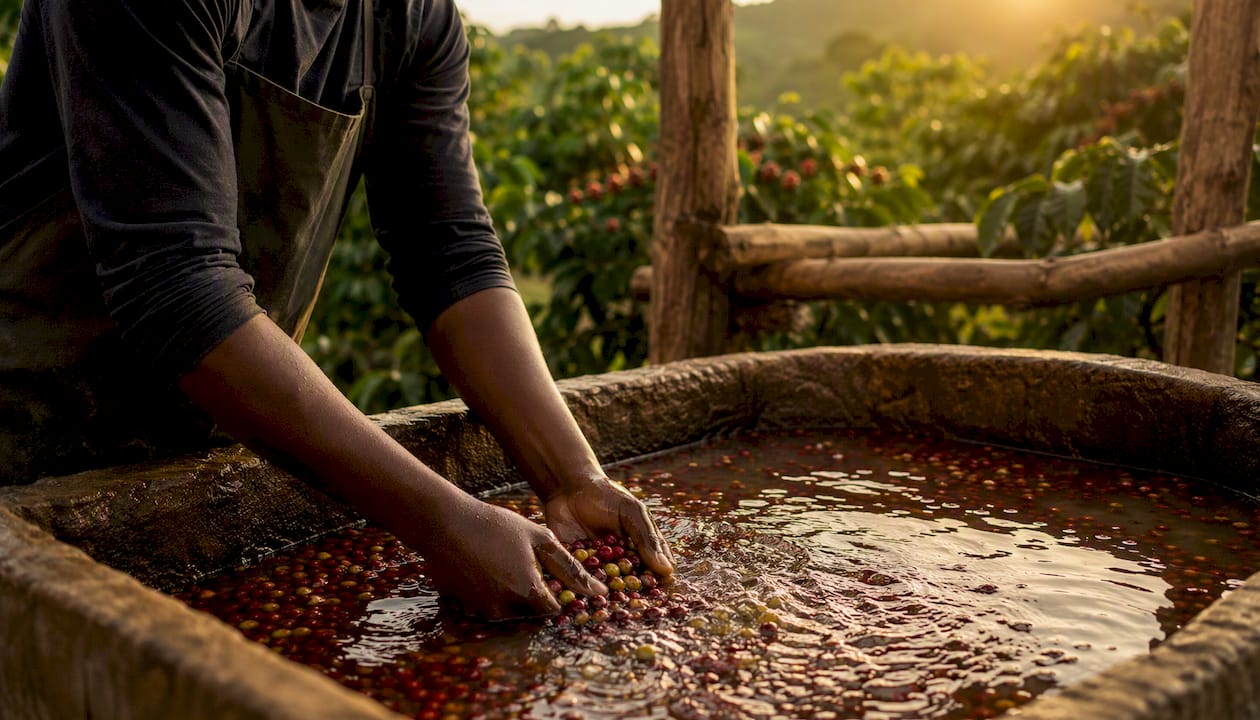
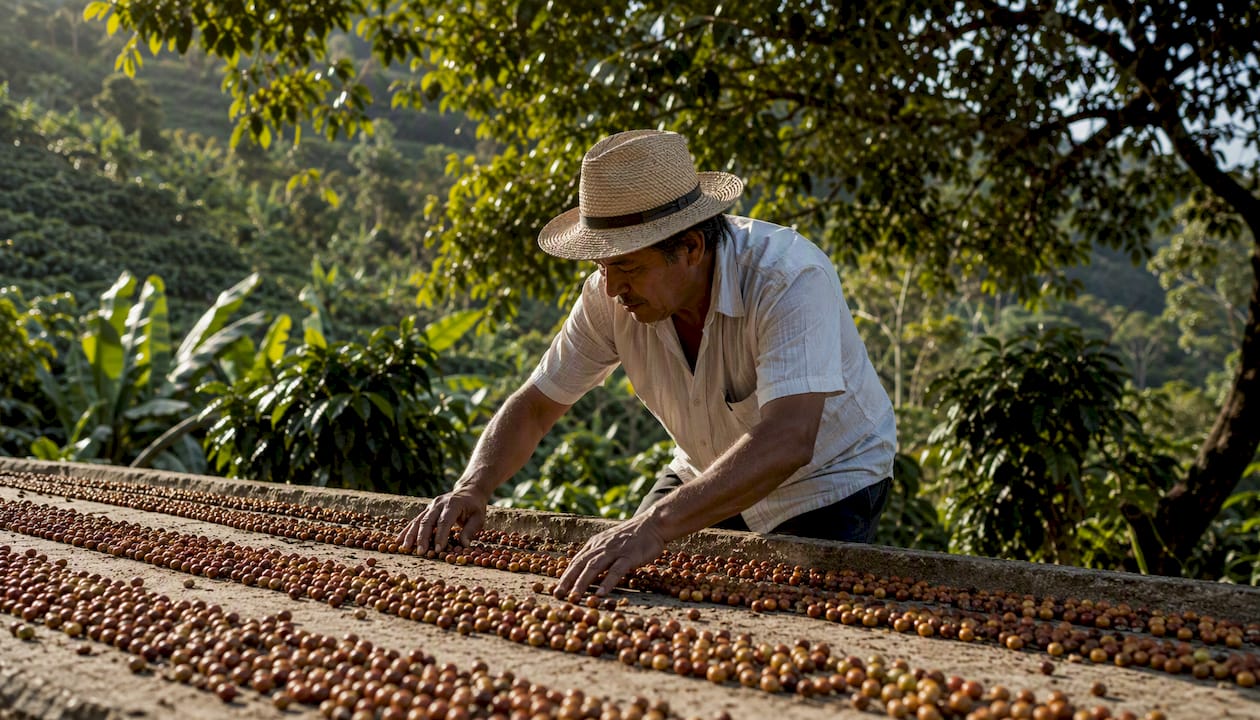
Processing is where the roaster and producer have the most direct control over flavor. Here is what each method typically delivers:
- Washed (wet): Fruit removed before drying. Clean, bright, terroir-forward. The bean’s inherent character comes through clearly.
- Natural (dry): Whole cherry dried with fruit intact. Fruity, wine-like, sometimes funky. Adds sweetness and body.
- Honey: Partial fruit left on during drying. Sits between washed and natural; stone fruit sweetness with cleaner finish than full natural.
- Anaerobic: Fermented in sealed tanks before drying. Intense, often tropical fruit or wine-like, polarizing but distinctive.
Pro Tip: A dark roast on a natural-processed Ethiopian coffee will mask most of the fruit notes that make it worth buying. If you want the blueberry and jasmine, go medium or light roast. Save dark roasts for low-acid naturals like Brazil, where the roast adds chocolate depth without destroying complexity.
For a deeper look at how each method affects the cup, the coffee processing methods guide at Zscoffee covers the technical details clearly.
How to taste single-origin coffee and buy it with confidence
The tasting checklist
- Grind fresh. Use a burr grinder and grind immediately before brewing. Pre-ground coffee loses volatile aromatics within minutes.
- Brew for the origin. Washed East African coffees shine in a Chemex or V60. Full-bodied Sumatrans work better in a French press. Use an 8-cup drip brewer for side-by-side origin comparisons at home.
- Smell before you sip. Aroma carries most of the flavor information. Note whether you get fruit, flowers, chocolate, or earth before the cup touches your lips.
- Sip without additives first. Milk and sugar mask origin character. Try it black for at least the first few sips.
- Note acidity, body, and finish. Acidity is the brightness or tartness. Body is the weight on your palate. Finish is what lingers. Compare these to the regional archetype you expect.
- Compare to the bag’s tasting notes. If the roaster says “blackcurrant and grapefruit” and you taste it, the sourcing is probably solid. If you taste nothing like the notes, the coffee may be stale or the notes may be aspirational.
What the bag label actually tells you
- Country: Regional archetype predictor. East Africa = bright; Latin America = balanced; SE Asia = earthy.
- Region/farm: Traceability signal. The more specific, the better.
- Process: Flavor modifier. Washed = clean; natural = fruity; honey = sweet.
- Varietal: Flavor modifier. Geisha, SL28, and heirloom Ethiopian are worth noting.
- Altitude: Quality indicator. Higher generally means more complexity in Arabica.
- Roast date: Freshness indicator. Buy within 2–6 weeks of roast for peak flavor. Origin and roast date together are the two most important label items for specialty buyers.
For sampler buying, small-batch or multi-origin sets let you taste regional differences side by side without committing to a full bag of each. That is the fastest way to learn what you actually prefer.
How to use sourcing transparency as a quality signal
The most informative coffee bags tell you who grew the coffee, not just where. A label that reads “Ethiopia, Yirgacheffe, Kochere Cooperative, washed, 1,900m, roasted February 2026” gives you everything you need to evaluate the coffee before you open the bag. A label that reads “Premium Ethiopian Blend” gives you almost nothing.
Roaster transparency correlates with better traceability and often with stronger price signals for producers in specialty markets. When a roaster publishes the producer’s name, the lot number, and the processing method, it signals a direct or near-direct trade relationship. That relationship typically means the farmer received a better price than commodity market rates, which in turn funds the farm investment that produces better coffee.
“Single-origin storytelling (producer, region, process) is an effective way for roasters to communicate flavor and ethical sourcing to specialty buyers.” — Zscoffee, Single Origin Coffee Guide
Green flags on a roaster page or bag label: Producer or cooperative name listed; lot or harvest year specified; processing method named; altitude stated; roast date printed (not “best by”).
Red flags: No roast date; country listed without region; “blend” with no component origins; vague certifications with no third-party verification; tasting notes that read like marketing copy with no specifics.
Climate change adds another layer to this. Genomic research from the University at Buffalo highlights that Arabica’s narrow genetic base makes it vulnerable to rising temperatures and shifting rainfall patterns. Roasters who invest in varietal diversity and producer relationships are better positioned to maintain supply quality as growing conditions shift. Buying from transparent roasters is, in a small way, a vote for that kind of resilience.
Key Takeaways
Ethiopia is Arabica’s botanical birthplace and produces the most genetically diverse, flavor-complex coffees on earth, making it the single best starting point for any serious single-origin exploration.
| Point | Details |
|---|---|
| Start with Ethiopia or Kenya | These two origins offer the most distinct flavor complexity and the clearest contrast to everyday blends. |
| Match region to flavor preference | East Africa for bright and floral; Latin America for balanced and chocolatey; Southeast Asia for earthy and full-bodied. |
| Roast date and region are non-negotiable | Buy within 2–6 weeks of roast; always prefer bags that name the growing region, not just the country. |
| Processing method changes everything | Washed = clean and bright; natural = fruity and full; honey = sweet and smooth. Check the bag before you buy. |
| Zscoffee for curated single-origin selection | Zscoffee offers single-origin coffees with origin, process, and roast-date transparency so you can apply these buying cues directly. |
Why origin is the most underrated variable in your cup
The conventional wisdom in specialty coffee circles is that roast level is the biggest variable in what ends up in your cup. That is wrong, and the country-by-country evidence in this guide makes the case clearly. A light-roasted Brazilian natural and a light-roasted Ethiopian washed coffee are so different that most drinkers would not identify them as the same species without prompting. Roast level is a modifier; origin is the foundation.
What most buyers underestimate is how much the processing method amplifies or suppresses origin character. A washed Yirgacheffe and a natural Yirgacheffe from the same farm can taste like two completely different coffees. The washed version gives you jasmine and lemon verbena. The natural gives you blueberry jam and red wine. Neither is better; they are just different expressions of the same place. Understanding that distinction is what separates a coffee enthusiast from someone who just drinks coffee.
The other thing worth saying plainly: transparency on the bag is not a marketing gimmick. When a roaster lists the producer’s name and the lot number, it usually means they paid more for that coffee and have a relationship with the farm. That relationship is what makes the tasting notes on the bag accurate rather than aspirational. Buy from roasters who show their work.
Explore single-origin coffees from Zscoffee
The fastest way to put this guide to practical use is to taste two or three origins side by side. Zscoffee’s single-origin selection gives you exactly that: coffees sourced with region, process, and roast-date transparency so the label information you just learned to read actually means something. No mystery blends, no vague origin claims.
If you want to start with something approachable and ready to drink, Zscoffee’s cold brew coffee is a low-commitment entry point that lets you taste origin character without any brewing equipment. Cold brew highlights body and sweetness, which makes it a particularly good format for exploring Latin American and Indonesian origins. Browse the full selection at Zscoffee and filter by region to find the origin that matches the flavor profile you are chasing.
Useful sources and further reading
- Genome study reveals prehistoric Ethiopian origins of coffee, Reuters — The 2024 Nature Genetics study tracing Coffea arabica to Ethiopian forests, estimating the species’ origin at 610,000–1,000,000 years ago.
- Newly sequenced genome reveals coffee’s prehistoric origin story, University at Buffalo — University summary of the genome research, including implications for climate resilience and varietal conservation.
- History of Arabica, World Coffee Research — Authoritative botanical history of Arabica’s Ethiopian origin and Yemen’s role in early cultivation and varietal development.
- History of coffee, Wikipedia — Broad historical overview covering Ethiopia, Yemen, and the spread of coffee culture across the Arabian Peninsula and into Europe.
- Coffee Origin: Ethiopia or Yemen?, The Foods That Shaped Us — Clear explanation of the botanical vs. cultural origin distinction and Yemen’s al-Makha trade history.
- USDA Foreign Agricultural Service, Coffee Production Data — Primary source for country-level production volumes and area data.
- Why coffee origin matters for flavor and quality, Zscoffee — Zscoffee’s guide to how geography, processing, and roast date interact to shape cup flavor.
- Single origin coffee: taste, quality, and story, Zscoffee — Zscoffee’s resource on single-origin sourcing, label transparency, and what to look for when buying.
- Coffee flavor profiles list, Zscoffee — Comprehensive flavor mapping resource for readers who want to go deeper on tasting descriptors by origin.