You order two cups of coffee from the same cafe, brewed identically, yet one tastes like jasmine and tropical fruit while the other delivers rich caramel and chocolate. The difference? Coffee varietals, the genetic subtypes that fundamentally shape flavor, acidity, and body long before water touches the grounds. While most coffee drinkers focus solely on brewing technique, the varietal itself determines much of what ends up in your cup. This guide reveals how understanding varietals transforms your ability to select beans and match them to brewing methods that unlock their full potential.
Table of Contents
- Key takeaways
- Understanding coffee varietals: genetics and flavor
- How coffee varietals influence brewing methods and extraction
- Flavor complexity and quality: genetics versus terroir and processing
- Selecting and brewing coffee varietals for your perfect cup
- Discover premium coffee varietals at Z’s Coffee
- FAQ
Key Takeaways
| Point | Details |
|---|---|
| Varietal genetics matter | Varietals determine flavor, acidity, and body before roasting, shaping what you taste in the cup. |
| Bean density matters | High altitude dense varietals require finer grinds, hotter water, and adjusted contact time to balance extraction. |
| Brewing aligned to varietal | Matching your brew method to a varietal profile unlocks its full flavor potential. |
| Geisha and SL28 guidance | Geisha and SL28 beans benefit from pour over with fine to medium fine grinds and water between 200 and 205 F to extract delicate floral notes. |
| Request cupping notes | When exploring beans, ask for cupping notes that specify varietal along with origin and processing for the most complete flavor prediction. |
Understanding coffee varietals: genetics and flavor
Coffee varietals represent genetic subtypes within the two main species: Arabica and Robusta. These genetic variations create measurable differences in bean density, sugar development, acidity profiles, body weight, and aromatic compound production. When you understand these genetic blueprints, you gain predictive power over flavor outcomes before grinding a single bean.
Coffee varietals influence flavor, acidity, body, and aroma through differences in bean density and chemical precursors like chlorogenic acids and caffeine. Geisha varietals, originating from Ethiopia but famously cultivated in Panama, produce jasmine, bergamot, and tropical fruit notes due to specific terpene and ester concentrations. Bourbon varietals deliver caramel, chocolate, and nutty flavors from higher sucrose content and Maillard reaction precursors. SL28, developed in Kenya, creates distinctive blackcurrant and bright citrus characteristics through elevated malic and citric acid levels.
Bean density matters enormously. High-altitude varietals like Geisha grow slowly in cooler temperatures, developing denser cellular structures packed with flavor precursors. These dense beans require different grinding and extraction approaches compared to lower-elevation varietals. The cellular density affects how water penetrates during brewing, influencing extraction rates and final flavor concentration.
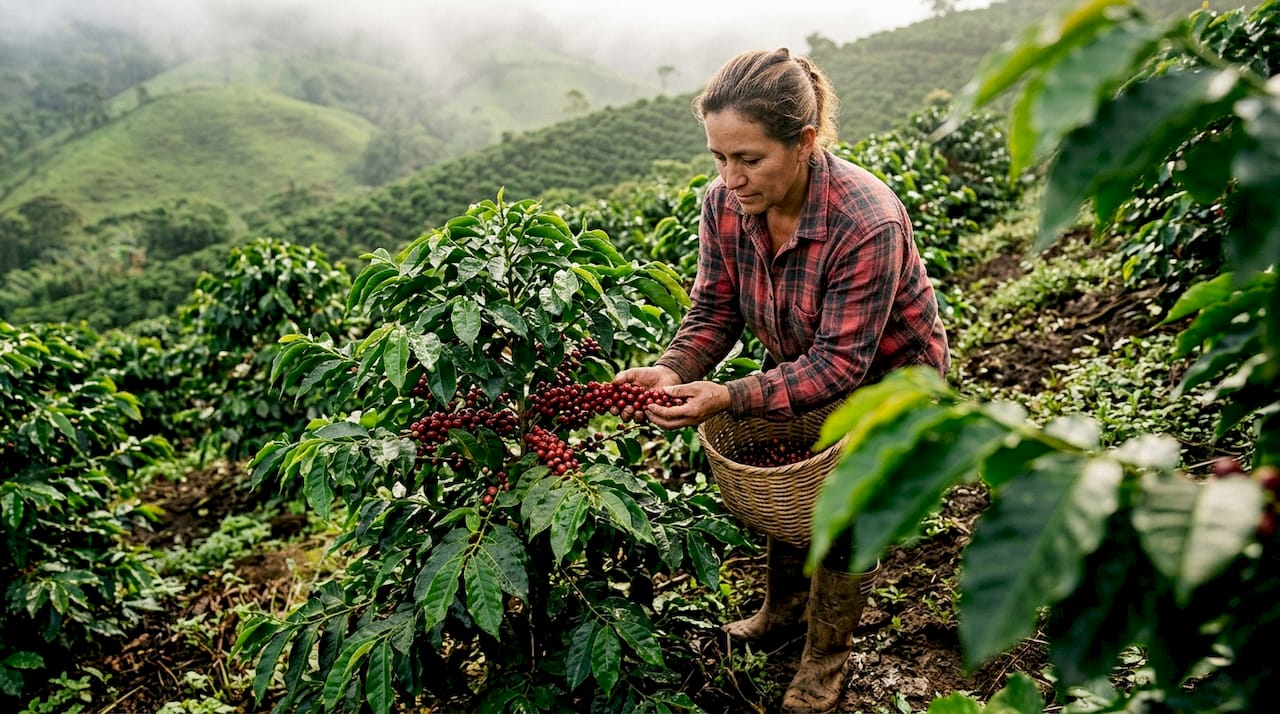
Chemical precursors determine flavor potential before roasting or brewing begins. Chlorogenic acids break down during roasting into quinic and caffeic acids, contributing to perceived acidity and brightness. Caffeine levels vary by varietal, with Robusta containing roughly double the caffeine of most Arabica subtypes. This caffeine difference affects bitterness perception and body weight in the final cup.
Here are key flavor distinctions among popular varietals:
- Geisha: floral jasmine, bergamot, tropical fruit, tea-like body, bright acidity
- Bourbon: caramel, chocolate, stone fruit, medium to full body, balanced acidity
- SL28: blackcurrant, citrus, wine-like complexity, medium body, high acidity
- Caturra: nutty, cocoa, mild fruit, light to medium body, moderate acidity
- Typica: clean, sweet, subtle fruit, light body, mild acidity
| Varietal | Primary Flavor Notes | Acidity Level | Body Weight | Optimal Roast |
|---|---|---|---|---|
| Geisha | Jasmine, tropical fruit, bergamot | High | Light to medium | Light to medium |
| Bourbon | Caramel, chocolate, stone fruit | Medium | Medium to full | Medium to dark |
| SL28 | Blackcurrant, citrus, wine notes | High | Medium | Light to medium |
| Caturra | Nutty, cocoa, mild fruit | Medium | Light to medium | Medium |
| Typica | Clean, sweet, subtle fruit | Low to medium | Light | Light to medium |
Pro Tip: When exploring types of coffee beans, request cupping notes that specify varietal alongside origin and processing, as this trio provides the most complete flavor prediction.
How coffee varietals influence brewing methods and extraction
Bean density creates the foundation for brewing decisions. High-altitude varietals grown above 1,400 meters develop cellular structures so dense that water struggles to penetrate during extraction. This physical reality demands specific adjustments in grind size, water temperature, and contact time to achieve balanced extraction without under-developing flavor compounds or over-extracting bitter elements.
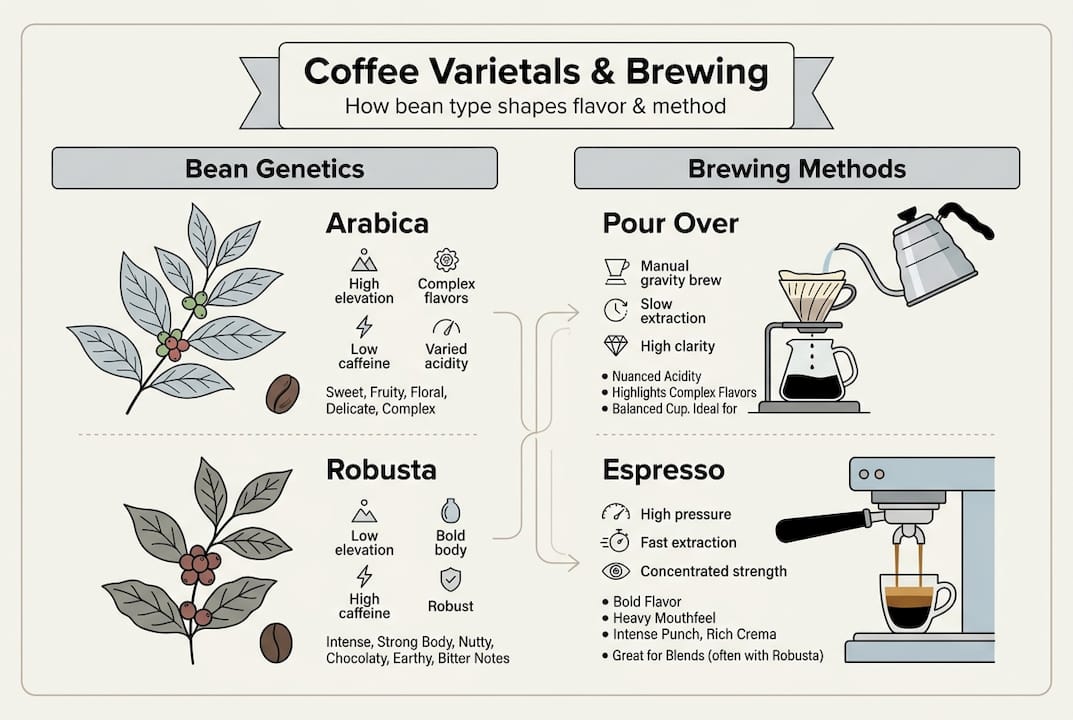
Varietals affect brewing via bean density and extraction behavior; high-altitude dense varietals require finer grinds and higher temperatures while natural-processed varietals suit immersion methods. Geisha and SL28 beans benefit from pour-over methods using fine to medium-fine grinds and water temperatures between 200-205°F. The controlled pour rate allows gradual saturation of dense cellular structures, extracting delicate floral and fruit notes without harsh bitterness.
Processing methods interact powerfully with varietal genetics to determine ideal brewing approaches. Washed processing removes fruit mucilage before drying, creating cleaner flavor profiles that showcase varietal characteristics directly. Natural processing leaves fruit intact during drying, allowing fermentation to add berry, wine, and funky notes that layer over genetic traits. These processing differences change how water interacts with the bean during brewing.
Brazilian varietals like Catuai and Mundo Novo, often natural processed and grown at moderate elevations, extract beautifully in immersion methods. French press brewing with coarse grinds and four-minute steep times highlights their chocolate, nut, and low-acid profiles. The extended contact time compensates for lower bean density while the metal filter preserves oils that contribute to fuller body.
Here are brewing recommendations matched to varietal characteristics:
- High-altitude heirlooms (Geisha, SL28): pour-over with fine grind, 200-205°F water, 2.5-3.5 minute total time
- Medium-altitude varietals (Bourbon, Caturra): versatile across methods, medium grind, 195-200°F water
- Natural processed beans: French press or Chemex, coarse to medium grind, 195-200°F water, longer steep times
- Washed processed beans: V60 or Kalita Wave, fine to medium grind, 200-205°F water, faster flow rates
- Robusta blends: espresso or Moka pot, fine grind, 200-203°F water, shorter extraction times
Grind size adjustments compensate for density variations. A Geisha bean might require a setting two notches finer than a Catuai bean to achieve similar extraction rates. Water temperature similarly shifts based on density: denser beans tolerate and benefit from hotter water that increases solubility of flavor compounds locked in tight cellular structures.
Pro Tip: When learning to choose coffee beans, start with washed processed, medium-altitude varietals like Bourbon or Caturra, as they forgive brewing errors and perform well across multiple methods while you develop technique. Then explore our coffee brewing guide to refine your approach.
Flavor complexity and quality: genetics versus terroir and processing
The genetics versus environment debate reveals surprising truths about what actually determines cup quality. While varietal genetics establish flavor potential, empirical cupping data shows that terroir and processing frequently equal or exceed genetic influence on final taste. Many high-altitude heirloom varietals achieve SCA scores above 85, but identical genetics produce dramatically different cups when grown in varied conditions.
Genetics set flavor potential but terroir and processing often dominate final expression; not all rare varietals are superior. A Geisha grown in Panama at 1,600 meters with meticulous processing commands premium prices and delivers exceptional complexity. The same Geisha genetic material grown at 900 meters with standard processing produces a pleasant but unremarkable cup. Altitude affects bean density, which concentrates flavor precursors. Soil composition provides minerals that influence acidity profiles. Climate patterns determine sugar development during cherry maturation.
Processing methods create flavor divergence even within single varietal harvests. Washed Bourbon presents clean caramel and chocolate notes with balanced acidity. Natural processed Bourbon from the same farm adds fermented berry, wine, and sometimes funky characteristics that overlay the genetic baseline. The fermentation occurring during natural processing introduces entirely new flavor compounds not encoded in varietal genetics.
| Processing Method | Flavor Impact on Bourbon Varietal | Acidity | Body | Cup Score Range |
|---|---|---|---|---|
| Washed | Clean caramel, chocolate, stone fruit | Bright, clean | Medium | 82-86 |
| Natural | Berry, wine, fermented fruit, chocolate | Muted, complex | Full | 83-88 |
| Honey | Balanced fruit, caramel, syrupy | Moderate | Medium-full | 83-87 |
Caffeine content varies with altitude and stress conditions, influencing perceived bitterness and body. Arabica beans grown above 1,400 meters typically contain 1.2-1.5% caffeine by weight, while the same varietals at 800 meters may reach 1.6-1.8%. This seemingly small difference noticeably affects taste, as caffeine contributes bitter compounds that can mask delicate flavor notes.
“Varietal genetics provide the canvas, but terroir paints the picture. I’ve cupped Geisha coffees scoring 92 and others at 84, all genetically identical. The difference came down to altitude, soil mineral content, processing precision, and harvest timing. Chasing rare varietals without understanding growing conditions often disappoints.” — Maria Santos, Q Grader and Coffee Quality Consultant
The interaction between genetics and environment creates complexity that defies simple rules. Some Robusta selections, traditionally dismissed for inferior flavor, achieve impressive quality when grown at high elevations with careful processing. Meanwhile, prestigious Arabica varietals produce mediocre cups when cultivation shortcuts compromise bean development. Understanding why coffee origin matters helps you evaluate these complex interactions when selecting beans.
Selecting and brewing coffee varietals for your perfect cup
Transforming varietal knowledge into better daily coffee requires systematic selection and brewing adjustments. Start by identifying your flavor preferences, then match them to varietals with corresponding genetic profiles, and finally optimize brewing parameters to extract those characteristics fully.
Follow this selection process:
- Define your desired flavor profile: bright and floral, balanced and sweet, or bold and chocolatey
- Identify varietals matching that profile: floral seekers choose Geisha or Ethiopian heirlooms, chocolate lovers select Bourbon or Catuai
- Check origin and altitude: higher elevations (above 1,400m) intensify varietal characteristics
- Verify processing method: washed emphasizes genetic traits, natural adds fermentation complexity
- Confirm roast level: light roasts preserve varietal nuances, dark roasts emphasize roast character over genetics
- Purchase whole beans and grind immediately before brewing to preserve volatile aromatic compounds
Match Geisha and SL28 to pour-over for clarity in floral notes and acidity; pair Bourbon and Catuai with espresso or French press to highlight body and sweetness. These pairings work because brewing method mechanics align with varietal physical properties and flavor goals.
Recommended brewing methods by varietal group:
- Floral, high-acidity varietals (Geisha, SL28, Ethiopian heirlooms): V60, Kalita Wave, or Chemex with paper filters
- Balanced, sweet varietals (Bourbon, Typica, Caturra): versatile across pour-over, French press, or drip machines
- Full-bodied, chocolate-forward varietals (Catuai, Mundo Novo): French press, espresso, or Moka pot
- Natural processed varietals (any genetics): Chemex or French press to preserve fruit complexity and body
- Robusta or blends: espresso machines or Moka pot where pressure extracts oils and creates crema
Adjust brewing parameters based on varietal density and processing. Dense, high-altitude beans need finer grinds to increase surface area for extraction. Water temperature should reach 200-205°F for these beans, as the heat energy helps break down complex cellular structures. Brewing time extends slightly to allow thorough extraction without rushing the process.
Lower-density beans from moderate elevations require coarser grinds to prevent over-extraction. Water temperature can drop to 195-200°F, as excessive heat pulls harsh flavors from less dense cellular structures. Brewing time shortens to avoid extracting bitter compounds that develop with prolonged contact.
Pro Tip: Invest in quality coffee accessories like a burr grinder with precise adjustment settings and a temperature-controlled kettle, as these tools provide the control needed to optimize extraction for different varietals. When ready to brew perfect espresso, varietal selection becomes even more critical.
Freshness matters enormously regardless of varietal. Coffee peaks 7-21 days post-roast, with volatile aromatic compounds degrading rapidly afterward. Purchase quantities you’ll consume within three weeks, store beans in airtight containers away from light and heat, and grind only immediately before brewing. Even exceptional varietals taste flat when stale.
Discover premium coffee varietals at Z’s Coffee
Now that you understand how varietals shape flavor and guide brewing choices, you can explore coffees that embody these principles. Z’s Coffee curates exceptional specialty coffee varietals from renowned growing regions, offering whole beans that showcase distinct genetic profiles alongside detailed tasting notes and brewing recommendations.

Whether you prefer the convenience of our Mexico coffee pods featuring balanced Bourbon and Typica genetics or want to experiment with whole bean varietals using pour-over methods, our collection supports your coffee journey. Complete your setup with practical accessories like our travel mugs with handle to enjoy varietal-specific brews wherever your day takes you. Every product comes selected to help you experience the remarkable diversity that coffee genetics and careful cultivation create.
FAQ
What is the role of coffee varietals in flavor development?
Varietals provide the genetic blueprint that influences acidity levels, aromatic compound production, and body characteristics, establishing the flavor potential before any processing or brewing occurs. Specific genes control sugar development, chlorogenic acid concentrations, and cellular density, which directly translate into taste experiences like bright citrus notes in SL28 or chocolate richness in Bourbon. However, this genetic potential only manifests fully when combined with appropriate growing conditions and processing methods.
How do I choose the best brewing method for different coffee varietals?
Match brewing method to bean density and processing type for optimal extraction. Select finer grinds and higher temperatures (200-205°F) for dense, high-altitude varietals like Geisha using pour-over methods that allow controlled saturation. Use coarser grinds and immersion methods like French press for lower-density, natural processed varietals, as the extended contact time and metal filter preserve body and fruit complexity. Adjust water temperature, grind size, and brew time based on how quickly your specific beans extract flavor compounds.
Can processing methods override varietal flavor characteristics?
Yes, processing techniques and terroir frequently equal or exceed genetic influence on final cup profile. The same Bourbon varietal tastes dramatically different when natural processed versus washed, with natural processing adding fermented berry and wine notes that can dominate the genetic baseline of caramel and chocolate. Altitude, soil composition, and climate also powerfully shape flavor expression, sometimes making origin and processing more important than varietal genetics alone.
Are all rare coffee varietals superior in quality?
Not all rare varietals deliver superior quality, as cup excellence depends heavily on cultivation conditions, processing precision, and post-harvest handling rather than genetics alone. Some Robusta selections achieve impressive quality when grown at high elevations with meticulous processing, while prestigious Arabica varietals produce mediocre cups when shortcuts compromise bean development. Evaluate coffees based on cupping scores, origin details, and processing methods rather than varietal rarity alone.