Most people assume coffee is just coffee. You pick a bag, brew it, and drink it. But that thinking misses something remarkable. Single origin coffee tells a story that blends simply cannot. Every cup carries the fingerprint of a specific place, a specific harvest, and the hands that processed it. Once you start paying attention to where your coffee comes from, you realize the flavor differences are not subtle. They are dramatic, surprising, and genuinely exciting. This guide walks you through what single origin coffee really means, how it differs from blends, and how to get the most out of every cup.
Table of Contents
- What does single origin coffee mean?
- Levels of single origin specificity
- How processing methods shape flavor
- Single origin coffee vs blends: Key differences
- Quality and grading: Are all single origin coffees special?
- How to choose, brew, and taste single origin coffee
- Discover unique single origin and specialty coffees
- Frequently asked questions
Key Takeaways
| Point | Details |
|---|---|
| Defined by origin | Single origin coffee is traceable to a specific country, region, or farm. |
| Flavor shaped by process | Washing, natural, honey, or anaerobic processing dramatically affects the cup’s taste and aroma. |
| Not always superior | Single origin does not always mean higher quality; specialty grading is key. |
| Exploration encouraged | Trying different origins and preparation methods expands your appreciation of coffee’s flavor diversity. |
What does single origin coffee mean?
The term gets used a lot, but it is worth pinning down precisely. Single origin coffee is sourced from a single identifiable geographic location, whether that is a country, region, farm, estate, cooperative, or even a specific micro-lot or harvest batch. That traceability is the whole point. You are not drinking a mystery blend assembled from dozens of anonymous sources. You are drinking something with a verifiable origin story.
This matters because geography shapes flavor in ways that are hard to overstate. Soil composition, altitude, rainfall patterns, and local microclimates all leave their mark on the bean. Understanding Arabica coffee origins gives you a solid foundation for appreciating why a coffee from Ethiopia tastes nothing like one from Guatemala, even if both are high-quality Arabica.
Here is what traceability can look like in practice:
- Country level: The broadest category. Example: Colombia.
- Regional level: Narrows it down. Example: Huila or Nariño.
- Farm or estate level: A specific producer. Example: Finca La Soledad.
- Micro-lot level: A specific plot, picking date, or processing batch.
- Harvest batch: Tied to a single season or even a single day’s picking.
Pro Tip: When you buy single origin, look for the most specific origin information available. The more detail on the bag, the more the roaster values transparency and traceability.
Levels of single origin specificity
Single origin is not a single thing. It exists on a spectrum. Levels of specificity include country-wide, regional, farm or estate, and micro-lot, and each tier tells a different kind of story.
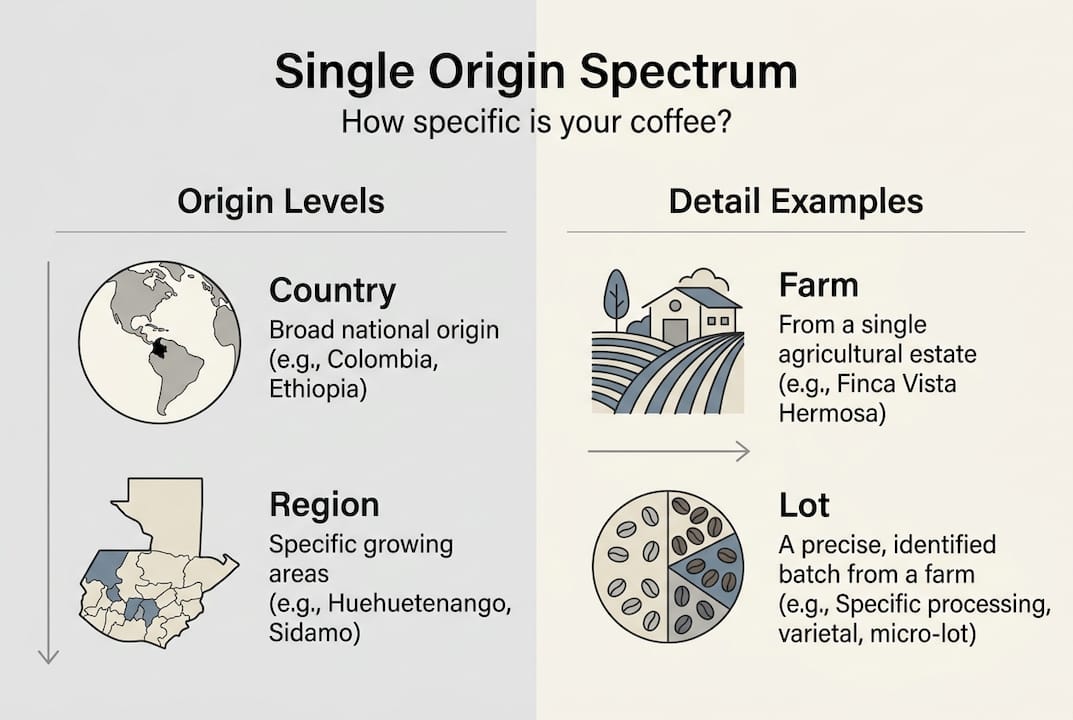
| Specificity level | Example | What it tells you |
|---|---|---|
| Country | Colombia | Broad flavor profile of a nation |
| Region | Huila, Colombia | Altitude, microclimate, local varietals |
| Farm or estate | Finca La Soledad | Producer practices, specific varietals |
| Micro-lot | Lot #12, Finca La Soledad | Exact plot, picking date, processing batch |
As you move down the table, the story gets richer and the coffee gets rarer. Micro-lots are often produced in tiny quantities, sometimes just a few hundred kilograms per year. That exclusivity drives both price and excitement among specialty buyers.
Traceability also matters for quality assurance. When a roaster can point to a specific farm and lot, they can verify how the coffee was grown, picked, and processed. That accountability pushes producers to maintain higher standards. Understanding why origin matters for flavor helps you read coffee labels with a much sharper eye.
- Country-level single origins are great entry points for exploring a new region.
- Farm-level coffees reward drinkers who want to build a relationship with a specific producer.
- Micro-lots are ideal for serious tasters who want to compare harvests year over year.
How processing methods shape flavor
Where a coffee grows is only half the story. What happens after the cherry is picked determines a huge portion of the final flavor in your cup. Processing methods shape flavor expression in distinct and predictable ways, and knowing the difference changes how you taste.
| Processing method | Flavor profile | Body | Common regions |
|---|---|---|---|
| Washed | Clean, bright, high acidity | Light to medium | Ethiopia, Kenya, Colombia |
| Natural (dry) | Fruity, jammy, wine-like | Heavy | Ethiopia, Brazil |
| Honey | Sweet, balanced, mild acidity | Medium | Costa Rica, El Salvador |
| Anaerobic | Tropical, winey, experimental | Variable | Worldwide, specialty farms |
Washed coffees are stripped of the fruit before drying, which produces a cleaner cup where the bean’s intrinsic character shines. Natural coffees dry with the fruit intact, which ferments and infuses the bean with intense sweetness and body. Honey processing sits in between, leaving some fruit mucilage on the bean during drying.
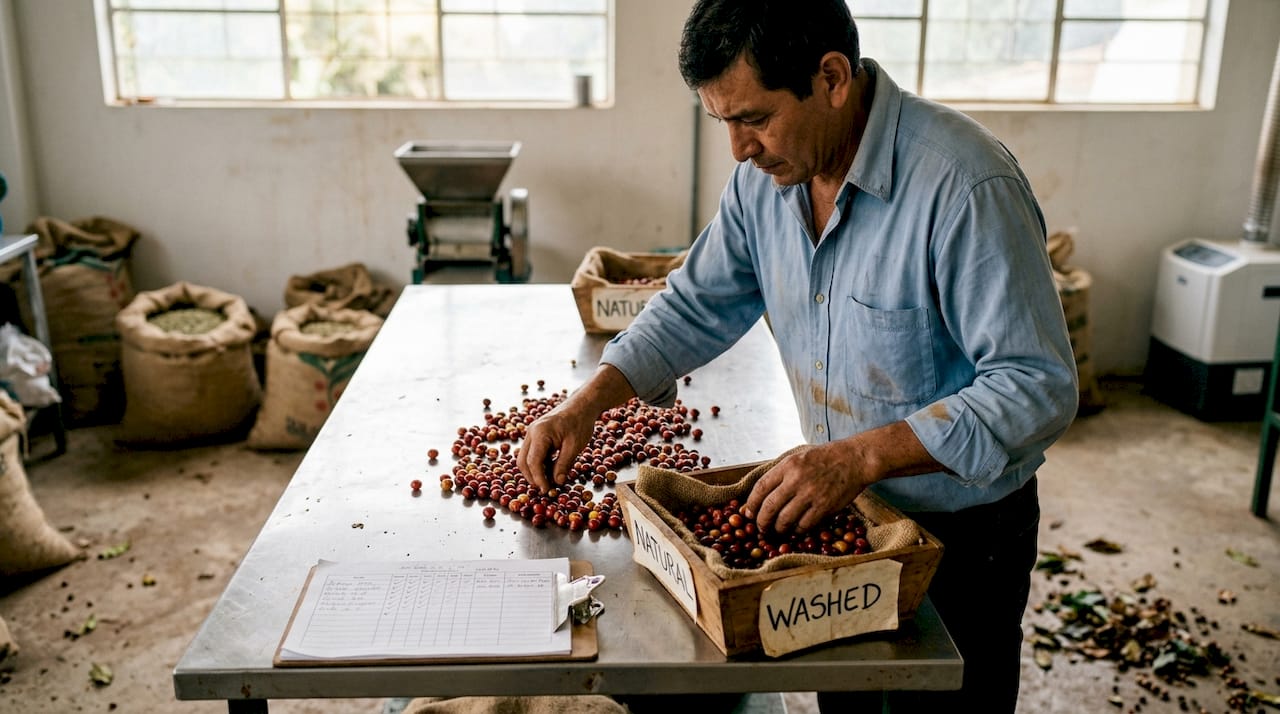
Anaerobic fermentation is the newest frontier. Producers seal the coffee cherries in oxygen-free tanks, creating unusual fermentation conditions that produce wild, complex flavors. These coffees are polarizing but fascinating. Exploring processing and brewing methods together gives you a complete picture of how flavor is built from the ground up.
Pro Tip: If you are new to single origin, start with a washed Ethiopian or Colombian. The clean, bright profile makes it easy to identify specific tasting notes. Then try a natural processed coffee from the same country to see how dramatically processing changes the cup.
When you understand processing, you can predict what you will taste before you even open the bag. Pairing that knowledge with coffee flavor profiles makes tasting sessions genuinely educational. You can also use that knowledge to explore coffee pairing ideas that complement specific processing styles.
Single origin coffee vs blends: Key differences
Blends are not inferior. They serve a different purpose. Once you understand how flavors are shaped, comparing single origin with blends clarifies when each one makes sense for your cup.
| Attribute | Single origin | Blend |
|---|---|---|
| Flavor | Unique, origin-specific | Consistent, balanced |
| Variability | Seasonal, changes yearly | Stable year-round |
| Traceability | High | Low to moderate |
| Best brew method | Pour-over, Aeropress | Espresso, milk drinks |
| Price | Often higher | Usually lower |
Single origin coffees are unique, variable, seasonal, and traceable, making pour-over the preferred method to highlight their characteristics. Blends, by contrast, are built for consistency and work beautifully in espresso machines where milk and pressure can mask subtle nuances.
Single origin is for exploration. Blends are for reliability. Neither is wrong. The best coffee drinkers keep both in their pantry.
Here is a quick breakdown of who benefits most from each:
- Single origin suits you if: You enjoy tasting and comparing, you want to learn about coffee geography, or you prefer lighter roasts with distinct character.
- Blends suit you if: You want the same great cup every morning, you drink espresso or lattes, or you prefer a rounder, less acidic flavor.
Exploring types of coffee beans alongside this comparison helps you understand why certain beans are chosen for blends versus single origin offerings.
Quality and grading: Are all single origin coffees special?
Here is a common misconception worth addressing directly. Single origin does not automatically mean better. Quality is measured via SCA cupping, where coffees scoring 80 or above on a 100-point scale earn the designation of specialty grade. Top lots from exceptional farms can reach scores of 94 to 97.
The SCA (Specialty Coffee Association) evaluates coffee on six key criteria:
- Aroma: Fragrance of the dry grounds and wet coffee.
- Flavor: The overall taste impression.
- Acidity: Brightness and liveliness in the cup.
- Body: The weight and texture on the palate.
- Balance: How well all attributes work together.
- Aftertaste: The finish after swallowing.
A single origin coffee from a poorly managed farm, harvested at the wrong time, or processed carelessly can score well below 80. Meanwhile, a thoughtfully crafted blend can score in the specialty range. Origin is a starting point, not a guarantee. Understanding specialty coffee standards and coffee quality standards gives you the tools to evaluate any coffee objectively.
If you want to develop your palate and learn to score coffee yourself, a coffee cupping guide walks you through the professional tasting process step by step.
How to choose, brew, and taste single origin coffee
Knowing the theory is one thing. Putting it into practice at home is where the real learning happens. Single origin coffees are ideal for exploration, and pour-over is the preferred method to highlight their characteristics because it gives you full control over extraction.
Here is a simple process to get started:
- Read the bag carefully. Look for country, region, farm name, processing method, and tasting notes. The more detail, the better.
- Choose your brew method. Pour-over (V60 or Chemex) or Aeropress are ideal for single origin. They preserve clarity and let origin flavors come through.
- Use fresh, filtered water. Water quality affects flavor more than most people realize. Aim for water around 200°F (93°C).
- Grind fresh. Grind just before brewing. A medium-fine grind works well for most pour-over methods.
- Taste intentionally. Let the coffee cool slightly. Notice the aroma first, then the flavor, then the finish. Does it match the tasting notes on the bag?
- Keep a coffee journal. Write down the origin, process, brew method, and your impressions. Over time, you will start to recognize patterns and develop real preferences.
Pro Tip: Brew the same single origin coffee two days in a row using different methods, such as pour-over one day and Aeropress the next. The contrast reveals how much brew method influences what you taste, independent of the origin itself.
A solid home brewing guide can help you dial in your technique so the coffee you buy actually tastes the way it was intended.
Discover unique single origin and specialty coffees
You now have the knowledge to shop, brew, and taste single origin coffee with real confidence. The next step is finding coffees worth exploring. At Z’s Coffee, we curate a range of single origin and specialty coffees sourced from farms and regions that prioritize quality and traceability.
Whether you are looking for a bright washed Ethiopian, a rich natural Brazilian, or something experimental from an anaerobic lot, the selection covers the full spectrum of what single origin has to offer. If you prefer convenience without sacrificing origin integrity, our instant single origin options bring traceable, specialty-grade coffee into your daily routine without any brewing equipment required. Explore the collection and let the origins speak for themselves.
Frequently asked questions
Is single origin coffee always better than blends?
Single origin is not inherently better than blends. Blends offer consistency and balance, while single origins highlight unique, place-specific flavors. Both can achieve specialty grade quality.
What are the most common processing methods for single origin coffee?
The four most common methods are washed, natural, honey, and anaerobic. Each one shapes flavor expression differently, from clean and bright to fruity and wine-like.
How can I tell if a coffee is truly single origin?
Check the bag for specific origin details. A single identifiable location such as a named farm, region, or lot number confirms it is not a blend.
What brewing methods bring out the best in single origin coffee?
Pour-over methods like Chemex and V60 are preferred because they offer clarity and precision. Pour-over highlights flavor specificity better than espresso or immersion methods for most single origin coffees.