TL;DR:
- Freshly roasted coffee needs a degassing period for optimal flavor extraction.
- Proper degassing enhances aroma, balance, and clarity in brewed coffee.
- Rest times vary by roast level and method, typically ranging from 2 to 14 days.
Cracking open a bag of coffee the day it was roasted feels exciting, but brewing it immediately is one of the most common mistakes specialty coffee lovers make. Freshly roasted beans are actively releasing carbon dioxide and other gases, and that gas gets in the way of a clean, flavorful extraction. The roasting method impacts when coffee is ready to brew, which is why two bags roasted on the same day might have completely different ideal brew windows. Degassing is the overlooked step between roast and cup, and understanding it changes everything about how you approach freshness.
Table of Contents
- The science behind coffee degassing
- Why degassing matters for coffee quality and flavor
- How long should you degas coffee? Timing, methods, and variables
- Practical tips: Storing, testing, and brewing degassed coffee
- Why degassing is the coffee game-changer everyone overlooks
- Level up your coffee with Z’s Coffee
- Frequently asked questions
Key Takeaways
| Point | Details |
|---|---|
| Degassing explained | Degassing is the natural release of gases from roasted coffee that heavily influences brewing quality. |
| Timing matters | The ideal wait for brewing depends on roast style, but most beans shine after 2-7 days of degassing. |
| Better flavor results | Allowing proper degassing boosts aroma, sweetness, and sensory clarity in every cup. |
| Practical testing | You can test for readiness through bloom observation, taste, and packaging feel. |
The science behind coffee degassing
Degassing sounds like a technical term, but the concept is straightforward. When coffee beans are roasted, the intense heat triggers a series of chemical reactions inside each bean. Sugars caramelize, moisture evaporates, and organic compounds break down and recombine. One major byproduct of this process is carbon dioxide, or CO2, which gets trapped inside the bean’s cellular structure. After roasting ends, those beans start releasing that stored gas slowly and steadily. This release is degassing.
The release of carbon dioxide happens at different speeds depending on several factors. Roast level plays a major role. Darker roasts release gas faster because the bean’s structure becomes more porous and fragile during prolonged heat exposure. Lighter roasts hold onto gas longer because the denser bean matrix traps it more effectively.
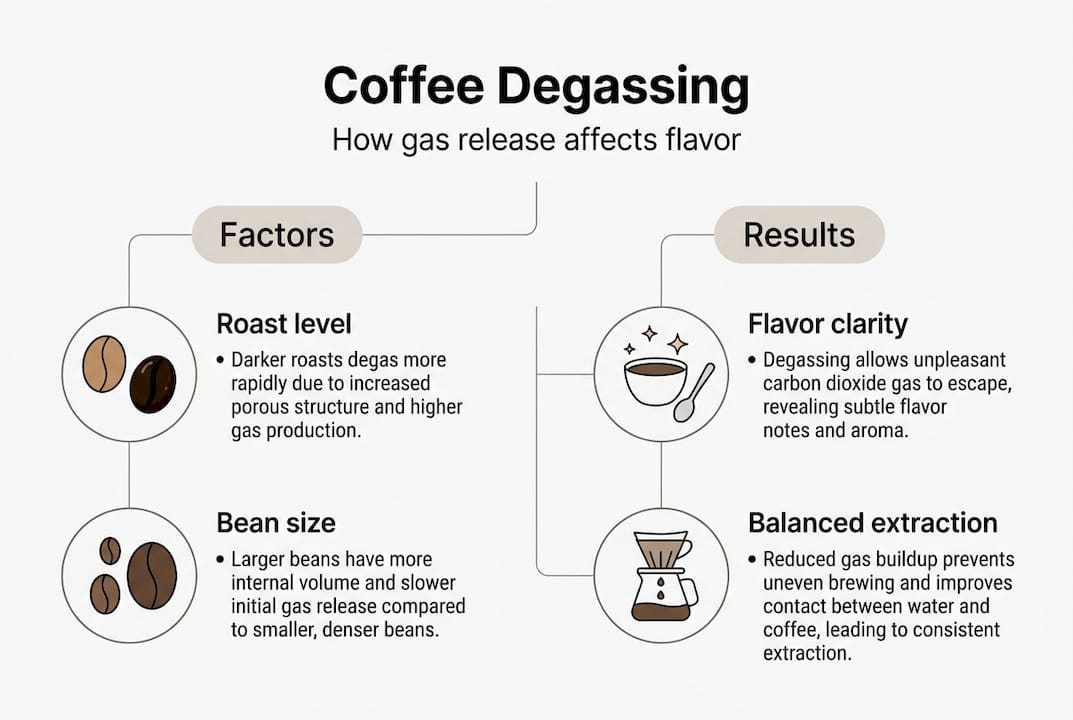
The roasting method also shapes the degassing curve. Drum roasters expose beans to heat for longer periods, which means more gas accumulates and the post-roast release is slower and more sustained. Fluid bed roasters use hot air to roast beans quickly and evenly, which often means the gas exits faster after roasting, sometimes allowing for earlier brewing.
You can actually observe fresh degassing happening. Press a sealed bag of newly roasted beans and you’ll feel it push back from the gas venting through the one-way valve. Crack the bag open and you’ll catch a burst of intense, raw roast aroma. That aromatic burst is a mix of CO2 and volatile organic compounds escaping together. Understanding coffee aroma explained at a molecular level reveals why that initial blast doesn’t always predict what the brewed cup will taste like.
“The gases released from freshly roasted coffee are not just CO2. They carry aromatic compounds that influence both scent and flavor in the final brew.”
Here’s a quick breakdown of the key degassing factors:
- Roast level: Darker roasts degas faster, lighter roasts degas slower
- Roasting method: Drum roasts degas gradually, fluid bed roasts degas more rapidly
- Bean density: Denser single-origin beans from high altitudes hold gas longer
- Temperature: Warmer storage speeds up degassing, cooler storage slows it
- Grind size: Ground coffee releases gas much faster than whole beans
| Factor | Speeds up degassing | Slows down degassing |
|---|---|---|
| Roast level | Dark roast | Light roast |
| Roasting method | Fluid bed | Drum roast |
| Storage temp | Room temperature | Cool/cold storage |
| Bean form | Ground | Whole bean |
| Bean density | Low-altitude beans | High-altitude beans |
Why degassing matters for coffee quality and flavor
Skipping the degassing window doesn’t just leave some gas in your coffee. It actively disrupts the chemistry of brewing in ways you can taste immediately.
When CO2 is still escaping from the grounds during extraction, it creates a physical barrier between the water and the soluble flavor compounds inside the bean. Water struggles to saturate the grounds evenly. Some areas over-extract while others under-extract, and the result is a cup that tastes sour, thin, or oddly muted. The degassing period affects flavor and aroma released during brewing in ways that no grind adjustment or water temperature change can fully compensate for.
Here’s how degassing shows up differently across brew methods:
- Espresso: Excess CO2 can cause the shot to gush rather than pull smoothly. You’ll see aggressive channeling and a hollow, acidic aftertaste. After proper degassing, espresso shots pull with better crema texture and more balanced sweetness.
- Pour over: Insufficient degassing makes the bloom phase unpredictable. The grounds bubble wildly, the water drains unevenly, and the resulting cup lacks clarity.
- French press and cold brew: These methods are more forgiving, but still benefit from a rested bean for fuller body and deeper flavor.
Proper degassing creates the conditions for even extraction across all brew methods. Sweetness becomes more prominent, bitterness integrates rather than spikes, and aroma lifts cleanly in the cup. You can enhance coffee flavor tips through technique, but without proper degassing, those techniques are working against a moving target.
One of the clearest indicators of a well-degassed coffee is the bloom. When you pour hot water over your grounds for the first 30 to 45 seconds, fresh coffee blooms by releasing residual CO2 in a controlled, even dome. The role of bloom in brewing is to exhaust that remaining gas before full extraction begins, which is why a proper bloom requires a coffee that’s had time to rest but still has some gas left.
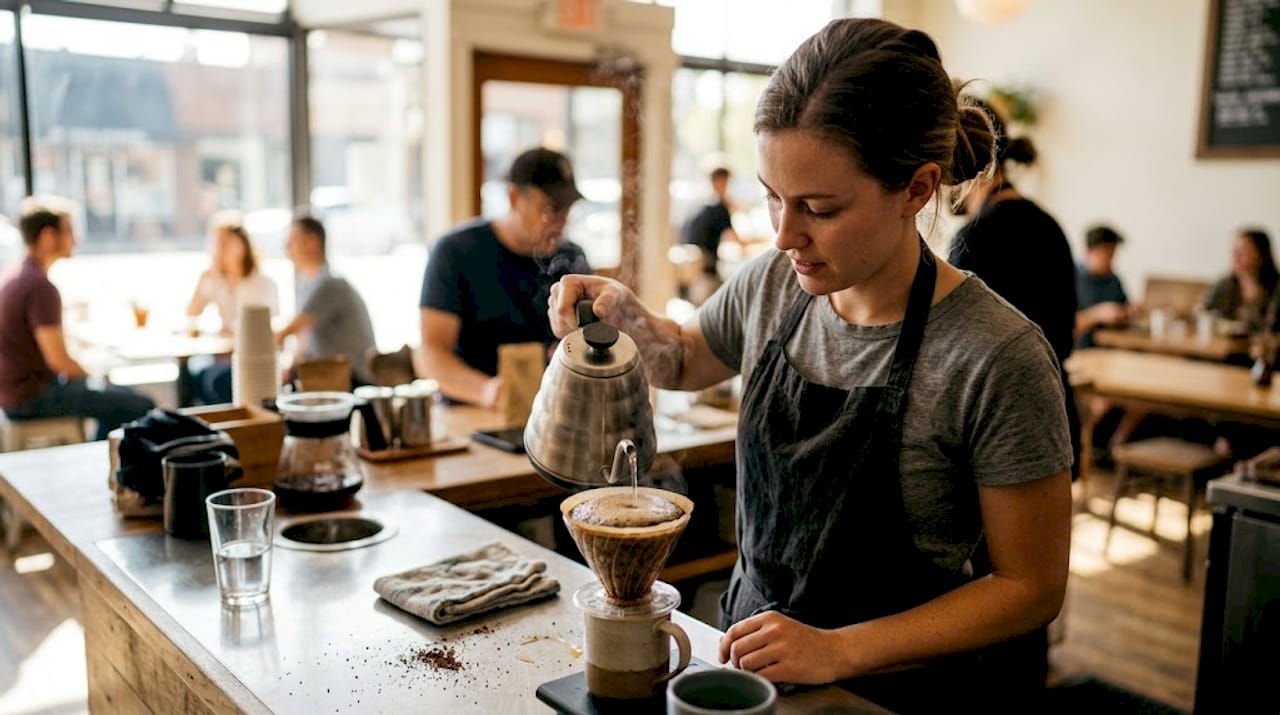
Pro Tip: If your coffee blooms excessively with no control, it’s too fresh. If it barely blooms at all, it may be over-rested or stale. A moderate, steady bloom is the sweet spot.
A coffee that’s properly degassed will extract predictably, taste balanced, and smell richer from the very first pour.
How long should you degas coffee? Timing, methods, and variables
The exact wait time for degassing isn’t one-size-fits-all, but there are solid benchmarks you can use as a starting point. Fluid bed roasting allows brewing sooner, while most coffees benefit from 2 to 7 days of degassing before the brew window truly opens.
Here’s a practical reference by roast style:
| Roast style | Minimum rest | Optimal range | Maximum before staling |
|---|---|---|---|
| Light roast | 5 days | 7 to 14 days | 4 to 6 weeks |
| Medium roast | 3 to 4 days | 5 to 10 days | 3 to 4 weeks |
| Dark roast | 1 to 2 days | 3 to 7 days | 2 to 3 weeks |
Different coffee processing methods also influence degassing timelines. Natural-processed coffees tend to have more fermentation-derived compounds that extend the rest window. Washed coffees can be a bit more predictable. Honey-processed coffees fall somewhere in between.
Step-by-step guidance for home enthusiasts:
- Check the roast date on your bag. If there’s no roast date, ask your roaster or switch to a supplier who provides one.
- Match the rest time to your roast style using the table above.
- Store whole beans in the original valve bag or an airtight container at room temperature, away from light and heat.
- Test readiness by gently squeezing the sealed bag. Reduced pressure indicates slower gas release, a sign the coffee is approaching its window.
- Observe the bloom when you start brewing. An even, controlled rise means you’re in the right zone.
- Taste and adjust. If flavors seem sharp or thin, give it one more day. If it tastes flat or cardboard-like, brew faster next time.
Pro Tip: Different coffee varietals and brewing methods interact with degassing differently. A delicate Ethiopian Yirgacheffe may need a longer rest than a bold Brazilian natural to let its floral notes settle into balance.
Practical tips: Storing, testing, and brewing degassed coffee
Knowing the timelines is useful, but how you store coffee during the degassing window shapes the final result just as much. Proper storage during degassing preserves flavor and prevents staling, especially in the critical first week after roasting.
Best storage practices:
- Keep beans in their original one-way valve bag if it seals well. The valve lets CO2 escape without letting oxygen in.
- If you transfer to a container, use an airtight vessel with a CO2-release valve. Mason jars work but aren’t ideal because they trap oxygen once sealed.
- Avoid the freezer during the degassing window. Freezing slows degassing almost entirely and introduces moisture when you thaw, both of which hurt flavor development.
- Store at room temperature, away from direct sunlight, heat sources, and strong odors.
DIY readiness tests:
- The squeeze test: Gently press the sealed bag. Heavy resistance and puffing mean active degassing is still happening. Less resistance signals the coffee is settling into its brew window.
- The bloom test: Pour your first small dose of hot water over grounds and watch for 30 seconds. Controlled, even bubbling is good. Explosive foam means too fresh; no movement at all means over-rested.
- The taste test: Brew a small cup and evaluate sweetness, clarity, and aftertaste. Sour notes suggest under-rested. Flat or papery flavors suggest it’s past peak.
Common mistakes to avoid:
- Brewing the day it arrives because “fresh is best”
- Storing in the fridge, which absorbs odors and creates condensation
- Waiting too long and letting beans go stale thinking “more rest is better”
- Grinding all beans in advance, which collapses the degassing timeline to hours instead of days
Pro Tip: Explore coffee extraction techniques alongside your degassing experiments. Adjusting grind size and water temperature once your coffee is properly rested reveals flavor layers that were impossible to access before.
Why degassing is the coffee game-changer everyone overlooks
Most coffee discussions obsess over origin, processing, grind precision, and brewing gear. These matter, no question. But we’ve seen home enthusiasts invest hundreds of dollars in a new grinder and still wonder why their cup tastes inconsistent. The answer, almost every time, is timing.
Competition baristas treat degassing like a variable as critical as extraction yield. They track roast dates, note rest windows by bean and method, and adjust their brew schedule accordingly. Meanwhile, most home guides skip this step entirely or bury it in a footnote.
The uncomfortable truth is that a small timing error, brewing two days too early, can have more impact on flavor than choosing between a $150 and a $300 grinder. Understanding coffee flavor profiles becomes far more actionable once you’ve controlled for degassing, because you’re finally tasting what the bean actually offers rather than what gas interference allows.
Treat degassing with the same curiosity you bring to origin or grind. It costs nothing. It just takes patience.
Level up your coffee with Z’s Coffee
Now that you understand how degassing shapes every cup, it’s time to start with beans worth waiting for. At Z’s Coffee, we curate specialty coffee that gives you the full degassing advantage right out of the bag.

Explore smooth, ready-to-rest options like our cold brew coffee for a slow-extraction experience or the bold, complex mushroom coffee dark roast that opens up beautifully after a proper rest period. Ready to find your next favorite? Browse our full selection at Z’s Coffee and bring your new degassing knowledge to every single brew.
Frequently asked questions
Is degassing necessary for all types of coffee?
Yes, all roasted coffee benefits from degassing, though most coffees need a rest period for their best flavor to emerge. The ideal resting time varies by roast level and brewing method.
How do I know when my coffee is degassed enough?
Look for reduced puffing in sealed packaging, a balanced and controlled bloom during brewing, and improved taste clarity. Bloom and taste testing are the most practical readiness indicators you can use at home.
Can I degas ground coffee or only whole beans?
Whole beans degas most evenly and predictably. Grinding increases gas release rates dramatically, which also accelerates staling, so grinding right before brewing is always the better practice.
What happens if I brew coffee before degassing is complete?
Brewing too soon after roasting disrupts flavor and texture, resulting in uneven extraction, excessive bubbling, and muted or sour flavors that no technique fix can fully correct.
Does packaging affect the degassing process?
Absolutely. Valve bags aid degassing by allowing CO2 to vent while keeping oxygen out, which preserves freshness without trapping gas that could accelerate staling inside the bag.