TL;DR:
- Small brewing errors like grind size, water temperature, and equipment cleanliness greatly affect coffee flavor.
- Proper water quality, freshness, and serving techniques are crucial for maintaining optimal taste.
- Regularly tasting, measuring, and cleaning build consistency and improve overall coffee quality at home.
You buy quality beans, you follow the steps, and still your morning cup falls flat. Frustrating, right? The truth is, even small brewing errors can completely wreck the flavor of an otherwise excellent coffee. Grind size, water temperature, bean freshness, and equipment cleanliness all play a role. Miss one, and the whole cup suffers. This guide walks you through the most common brewing mistakes coffee enthusiasts make at home, why they happen, and exactly how to fix them so every cup tastes the way it should.
Table of Contents
- Grind size mistakes: Getting the basics right
- Water quality and temperature: The hidden flavor factors
- Coffee freshness and storage: Preserving flavor from bean to cup
- Ratios, timing, and equipment: Fine-tuning your brew
- Serving mistakes: How to keep a perfect cup fresh
- Our take: Why most brewing advice misses what really matters
- Upgrade your brew with quality beans and gear
- Frequently asked questions
Key Takeaways
| Point | Details |
|---|---|
| Grind size matters | Use a burr grinder and match your grind to the brewing method for balanced extraction. |
| Water quality is crucial | Brew with filtered water at the right temperature to avoid off-flavors and uneven extraction. |
| Fresh beans taste best | Buy freshly roasted whole beans and grind them just before brewing for the best aroma and flavor. |
| Precision improves results | Weigh your coffee and water for repeatable, high-quality cups every time. |
| Clean gear, great taste | Regular cleaning and proper serving keep each cup tasting fresh and delicious. |
Grind size mistakes: Getting the basics right
The size of your coffee grounds controls how water flows through them and how much flavor gets pulled out. This process is called extraction. Get it wrong, and no amount of fancy equipment will save your cup.
The first problem most people run into is using a blade grinder. Blade grinders chop beans unevenly, leaving you with a mix of powder and chunks in the same batch. That inconsistency means some grounds over-extract while others under-extract, all in the same brew. A burr grinder, which crushes beans between two abrasive surfaces, produces uniform particle size every time. That consistency is what makes a repeatable, great cup possible.
The second issue is using the wrong grind size for your brewing method. Each method needs a specific grind:
- Espresso: Fine grind, similar to table salt
- Drip coffee maker: Medium grind, like coarse sand
- Pour over: Medium to medium-fine
- French press: Coarse grind, like rough breadcrumbs
- Cold brew: Extra coarse
When you grind too coarse, water passes through too quickly and you get sour, weak coffee. Grind too fine, and water struggles to pass through, pulling out bitter, harsh compounds. Your taste buds are actually the best diagnostic tool you have. Sour means go finer. Bitter means go coarser.
If you want to learn how to nail the perfect grind for home brewing, start with the grind before you touch anything else. It has the single biggest impact on flavor of any variable in your brew.
Pro Tip: When you switch brewing methods, always adjust your grind first. Changing water temperature or ratio without fixing the grind will not solve a flavor problem caused by incorrect particle size.
Water quality and temperature: The hidden flavor factors
Once your grind is dialed in, it’s time to think about what you’re brewing with. Water is not just a neutral carrier. It is an active ingredient.
Coffee is 98% water, which means the quality of your water directly shapes what ends up in your cup. Tap water loaded with chlorine or minerals adds off-flavors that no amount of good technique can mask. Filtered water removes those unwanted elements and lets the actual coffee flavors come through clean and clear. Distilled water, on the other hand, strips out minerals entirely, which actually flattens flavor. You want filtered, not stripped.
Temperature is equally critical. The optimal brewing range is 195 to 205°F. Below 195°F, the water cannot dissolve the flavor compounds efficiently, leaving you with a weak, sour brew. Above 205°F, it scorches the grounds and pulls out bitter, astringent notes.
Here is how common water mistakes affect your cup:
| Water mistake | What happens to flavor |
|---|---|
| Tap water with chlorine | Adds chemical, flat taste |
| Distilled water | Dull, lifeless cup |
| Water below 195°F | Sour, under-extracted |
| Water above 205°F | Bitter, harsh, over-extracted |
| Hard water (high minerals) | Chalky, muted flavors |
For roast type, lighter roasts benefit from water closer to 205°F to fully extract their complex flavors. Dark roasts do better at the lower end of the range, around 195 to 200°F, to avoid amplifying bitterness.
Understanding coffee water standards can genuinely transform your results without changing a single bean. And if you are curious how flavor and water origin interact at a deeper level, it is worth exploring.
Pro Tip: A simple kitchen thermometer costs under $10 and takes the guesswork out of water temperature entirely. Let boiling water sit for 30 seconds before pouring and you will land right in the ideal range.
Coffee freshness and storage: Preserving flavor from bean to cup
With your water quality confirmed, make sure your beans are doing their part. Freshness is one of the most overlooked variables in home brewing, and it has an enormous impact on taste.
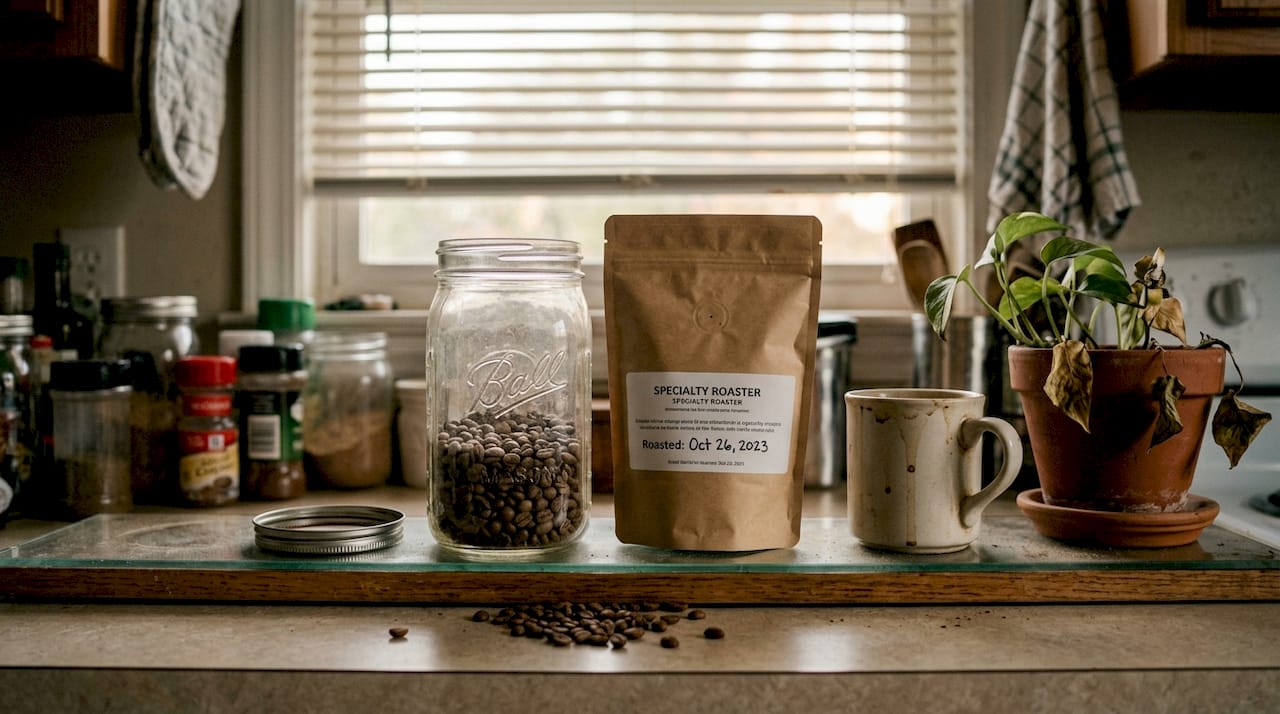
Beans peak at 2 to 4 weeks after their roast date. After that, oxidation and off-gassing cause the flavors to fade and go stale. Pre-ground coffee loses its freshness even faster, often within 15 to 30 minutes of grinding. Buying pre-ground might seem convenient, but you are trading away most of the flavor before you even start brewing.
Here is how freshness drops over time after roasting:
| Time after roast | Flavor quality |
|---|---|
| 0 to 7 days | Degassing, slightly intense |
| 1 to 4 weeks | Peak flavor and aroma |
| 4 to 8 weeks | Noticeable decline |
| 8+ weeks | Flat, stale, dull |
To protect your beans, follow these storage rules:
- Store in an airtight container, not the original bag after opening
- Keep beans in a cool, dark location away from heat and sunlight
- Never store beans in the refrigerator or freezer unless buying in bulk
- Grind only what you need right before brewing
- Always check the roast date, not the expiration date, when buying
When choosing fresh coffee beans, look for a roast date printed on the bag. If there is no roast date, that is already a red flag. Some specialty roasters, like those offering organic whole coffee beans, print roast dates clearly so you know exactly what you are getting.
Pro Tip: Buy smaller quantities more frequently rather than one large bag that sits for months. Fresh beans make a bigger difference than almost any brewing upgrade you can make.
Ratios, timing, and equipment: Fine-tuning your brew
After freshness, the next piece of the puzzle is how you brew and care for your equipment. Even with perfect beans and water, sloppy ratios and dirty gear will drag your cup down.
Most people eyeball their coffee, scooping by feel instead of measuring. That inconsistency means your brew changes every single day. The Specialty Coffee Association recommends a 1:15 to 1:17 ratio of coffee to water by weight. A kitchen scale removes the guesswork entirely and makes your results repeatable.
“Weigh everything for best results. Consistency is the foundation of a great cup.”
Blooming is another step many people skip. When you pour a small amount of hot water over fresh grounds and wait 30 seconds before continuing, you allow CO2 to escape. That gas, if trapped, creates uneven extraction. Blooming takes 30 seconds and meaningfully improves flavor clarity.
Here are the top five overlooked details in brewing:
- Not using a scale to measure coffee and water
- Skipping the bloom step with fresh beans
- Pouring water unevenly over grounds
- Using the wrong grind for the method
- Neglecting equipment cleaning
Dirty equipment is a silent flavor killer. Rancid oils and residue from old brews coat your machine, grinder, and carafe and add stale, off flavors to every new cup. Rinse equipment daily and do a deeper clean weekly. For a full breakdown of step-by-step coffee ratios, it is worth bookmarking as a reference.
Pro Tip: Run a cycle of equal parts water and white vinegar through your drip machine once a month to dissolve mineral buildup and keep extraction consistent.
Serving mistakes: How to keep a perfect cup fresh
A flawless brew still needs proper handling. Don’t undo your work at the finish line. What happens after brewing matters more than most people realize.
The single biggest serving mistake is leaving coffee on a warming plate. That low, constant heat oxidizes the coffee and turns it bitter within 20 to 30 minutes. What started as a balanced, flavorful cup becomes harsh and unpleasant. The fix is simple: pour brewed coffee directly into a thermal carafe.
“A thermal carafe keeps coffee at the right temperature without cooking it further. It is the easiest upgrade most home brewers never make.”
Here are the best practices for serving and storing brewed coffee:
- Pour immediately into a preheated thermal carafe after brewing
- Drink within 30 to 45 minutes for best flavor
- Never reheat coffee in a microwave, it changes the chemical structure and amplifies bitterness
- Avoid glass carafes on warming plates entirely
- Brew smaller batches more frequently rather than keeping a large pot warm
For home brewers who want to go further, enhancing brew flavor after the brew is complete is a real option. Small additions like a pinch of salt or a cinnamon stick in the grounds can round out bitterness without changing your method.
The goal is simple: brew well, serve fast, and protect what you worked to create.
Our take: Why most brewing advice misses what really matters
Most brewing guides send you straight to gear. Get a better grinder. Buy a gooseneck kettle. Invest in a scale. And yes, those things help. But chasing equipment upgrades while ignoring your own tasting ability is like buying a better camera without learning to see light.
The real breakthrough in home brewing comes from tasting your mistakes deliberately. When a cup is sour, do not just dump it. Pause and ask why. When it is bitter, trace it back. That diagnostic habit, built over weeks, teaches you more than any gadget ever will.
Consistency also beats perfection every time. A repeatable process that produces a good cup daily is worth far more than a flawless cup you cannot recreate. Build the habit first. Refine the gear second.
If you want to go deeper on technique, the espresso expert guide is a strong next step for anyone ready to push their skills further. But start with tasting. Everything else follows from there.
Upgrade your brew with quality beans and gear
Putting these fixes into practice is easier when you have the right tools and beans to work with. At Z’s Coffee, we have put together a range of premium beans and brewers chosen to support better brewing at every level, whether you are dialing in your first pour over or upgrading your home espresso setup.
The right equipment prevents the mistakes covered in this guide before they happen. And if you want to protect a great cup on the go, our insulated travel mugs keep your coffee at the right temperature without the warming plate problem. Browse the full collection and find what fits your setup.
Frequently asked questions
What is the best coffee grind size for drip brewing?
Medium grind works best for most drip coffee makers. Using a grind that is too fine or coarse will produce bitter or sour results respectively.
Why does my coffee taste bitter or sour?
Bitterness usually points to over-extraction or a grind that is too fine, while sourness signals under-extraction. Extraction problems like these are almost always solved by adjusting grind size first.
How can I keep my coffee hot without ruining the flavor?
Pour brewed coffee into a thermal carafe right away instead of leaving it on a warming plate. Thermal carafes preserve flavor far better than any heated surface.
Does filtered water really make a difference in coffee flavor?
Absolutely. Since coffee is 98% water, filtered water removes the off-flavors that tap water introduces and delivers a noticeably cleaner, brighter cup.
Recommended
- Master perfect coffee at home: brewing guide for 2026 – Z’s Coffee
- Step by step coffee making: master home brewing – Z’s Coffee
- Brew Espresso Like a Pro: Essential Steps and Expert Tips – Z’s Coffee
- Master cold brew at home for rich, smooth coffee – Z’s Coffee
- Coffee Making – Autoryzowany dystrybutor i serwis Jura Wrocław