The coffee industry is experiencing its most significant quality standards evolution in decades. As 2026 unfolds, new evaluation frameworks are reshaping how professionals assess, source, and brew exceptional coffee. These changes extend far beyond traditional grading systems, introducing comprehensive criteria that integrate sustainability, origin transparency, and freshness preservation. Understanding these updated benchmarks isn’t just about compliance, it’s about delivering consistently superior experiences to discerning consumers who expect excellence in every cup. Whether you’re a specialty roaster, cafe owner, or passionate home brewer, mastering these standards positions you at the forefront of coffee quality.
Table of Contents
- Key takeaways
- Understanding updates to coffee quality standards in 2026
- Comparing traditional vs. 2026 coffee quality evaluation methods
- Practical guidelines to meet coffee quality standards throughout the supply chain
- Sustainability and freshness: new pillars in coffee quality for 2026
- Discover premium coffee products aligned with 2026 quality standards
- FAQ
Key Takeaways
| Point | Details |
|---|---|
| Holistic evaluation framework | The 2026 shift moves from defect only grading to a holistic framework that weighs origin, processing, freshness, and sustainability alongside traditional quality markers. |
| Origin traceability required | Beans require verifiable origin documentation including the farm, cooperative, altitude, and climate data to support flavor mapping and quality interpretation. |
| Freshness timing matters | Freshness windows between roasting and consumption are now critical across tiers to preserve aroma and overall cup quality. |
| Sustainability drives quality | Sustainable farming and ethical sourcing are integrated into quality assessment by evaluating soil health, water use, shade growing, and labor practices. |
Understanding updates to coffee quality standards in 2026
The 2026 quality framework represents a fundamental rethinking of what defines exceptional coffee. Unlike previous systems that primarily counted physical defects and assigned numerical grades, coffee quality standards are incorporating more holistic criteria including origin and processing methods. This comprehensive approach acknowledges that superior coffee results from multiple interconnected factors, not just the absence of flaws.
Bean origin traceability has become a cornerstone of quality assessment. You now need verifiable documentation showing exactly where beans were grown, which farm or cooperative produced them, and the specific elevation and microclimate conditions. This transparency allows quality evaluators to correlate flavor profiles with terroir characteristics, creating more accurate and meaningful quality scores. Processing consistency matters equally, with detailed records of fermentation times, drying methods, and moisture content required for premium grades.
Freshness timelines now carry significant weight in quality determinations. Beans lose volatile aromatic compounds rapidly after roasting, so standards specify maximum time windows between roasting and consumption for different quality tiers. Specialty grade coffee must reach consumers within specific freshness parameters, pushing the entire supply chain toward faster, more efficient distribution models.
Sustainable farming practices and ethical sourcing have transitioned from optional certifications to integrated quality factors. Evaluators assess soil health, water conservation methods, shade growing practices, and fair labor conditions alongside traditional sensory attributes. This shift reflects growing recognition that environmental stewardship and social responsibility directly impact long-term coffee quality and availability.
Pro Tip: Many professionals mistakenly believe 2026 standards completely replaced traditional grading systems. Actually, defect counting and physical bean assessment remain important, they’re now supplemented by additional criteria rather than eliminated. Understanding both traditional and new evaluation methods gives you comprehensive quality insight.
Common misconceptions persist about what actually changed. The fundamental cupping protocols and sensory evaluation techniques remain largely intact. What expanded is the contextual information required to interpret those sensory scores meaningfully. A coffee scoring 85 points now carries additional data about its environmental footprint, supply chain transparency, and freshness status, providing a complete quality picture.
These changes affect every supply chain participant differently. Buyers need enhanced due diligence capabilities to verify origin claims and sustainability practices. Roasters must implement tighter inventory management to maintain freshness standards. Baristas require deeper knowledge about bean backgrounds to communicate quality attributes effectively to customers. The entire industry ecosystem is adapting to more sophisticated, information-rich quality frameworks.
Comparing traditional vs. 2026 coffee quality evaluation methods
Recognizing the practical differences between historical and current evaluation approaches helps you navigate quality assessments effectively. Traditional standards served the industry well for decades, focusing primarily on physical bean characteristics and defect identification. Trained graders examined green coffee samples, counting specific defects like black beans, insect damage, or broken fragments. These defect counts determined quality grades, with specialty coffee requiring minimal imperfections.
The 2026 standards expand evaluation criteria from simple defects to including flavor profiles, freshness, and environmental factors. This expansion creates a multidimensional quality framework where excellence requires meeting standards across multiple categories simultaneously. A coffee might have zero physical defects but still receive a lower overall quality rating if its supply chain lacks transparency or its freshness falls outside optimal parameters.
| Evaluation Aspect | Traditional Standards | 2026 Standards |
|---|---|---|
| Primary Focus | Physical defects, bean size uniformity | Holistic quality including sensory, origin, sustainability |
| Grading Basis | Defect count per sample weight | Integrated scoring across multiple quality dimensions |
| Flavor Assessment | Cupping scores, subjective tasting notes | Standardized sensory protocols plus chemical analysis |
| Origin Documentation | Country or region sufficient | Farm-level traceability with terroir details required |
| Freshness Consideration | Not systematically evaluated | Mandatory freshness windows for quality tiers |
| Environmental Impact | Optional certifications | Integrated sustainability scoring |
| Processing Information | Basic method noted | Detailed processing parameters documented |
Sensory evaluation techniques have become more standardized and reproducible. While expert cuppers still assess aroma, flavor, acidity, body, and aftertaste, they now use calibrated reference standards and validated descriptive frameworks. This reduces subjectivity and ensures consistent scoring across different evaluators and geographic locations. Chemical analysis supplements sensory assessment, measuring compounds that indicate freshness, processing quality, and potential flavor development.
Origin information requirements have intensified dramatically. Simply stating “Colombian coffee” no longer suffices for specialty grades. You need specific farm names, GPS coordinates, elevation data, varietal information, and harvest dates. This granular detail enables quality professionals to understand why coffee origin matters for quality and predict flavor characteristics based on terroir patterns.
Pro Tip: Don’t abandon traditional quality knowledge when adopting new standards. The most effective quality professionals combine deep understanding of classic defect identification with proficiency in modern sustainability assessment and supply chain verification. This hybrid expertise makes you invaluable in today’s quality landscape.
Environmental and social factors now influence quality ratings in measurable ways. Coffees from farms demonstrating soil conservation, biodiversity preservation, and fair labor practices receive quality premiums. This creates market incentives for sustainable production methods, aligning quality standards with broader industry goals around environmental stewardship and social responsibility.
The practical implication is that achieving top quality grades requires excellence across more dimensions than ever before. You can’t rely solely on careful harvesting and processing anymore. Supply chain documentation, freshness management, and sustainability practices all contribute to your final quality assessment. This comprehensive approach benefits consumers by ensuring that high-quality ratings reflect genuinely superior coffee across all meaningful dimensions.
Practical guidelines to meet coffee quality standards throughout the supply chain
Successfully adhering to 2026 standards requires systematic attention at every supply chain stage. Proper sourcing and processing techniques are essential to meeting updated quality standards, starting with rigorous verification of bean origins and quality certifications. Establish direct relationships with farms or cooperatives whenever possible, creating transparency and accountability that documentation alone cannot provide.
Verifying quality certifications demands careful attention to detail. Request complete traceability documentation including farm certifications, processing records, and export paperwork. Cross-reference lot numbers across all documents to ensure consistency. Conduct periodic third-party audits of your supply chain to validate claims about sustainability practices and quality protocols. This due diligence protects your reputation and ensures compliance with quality standards.
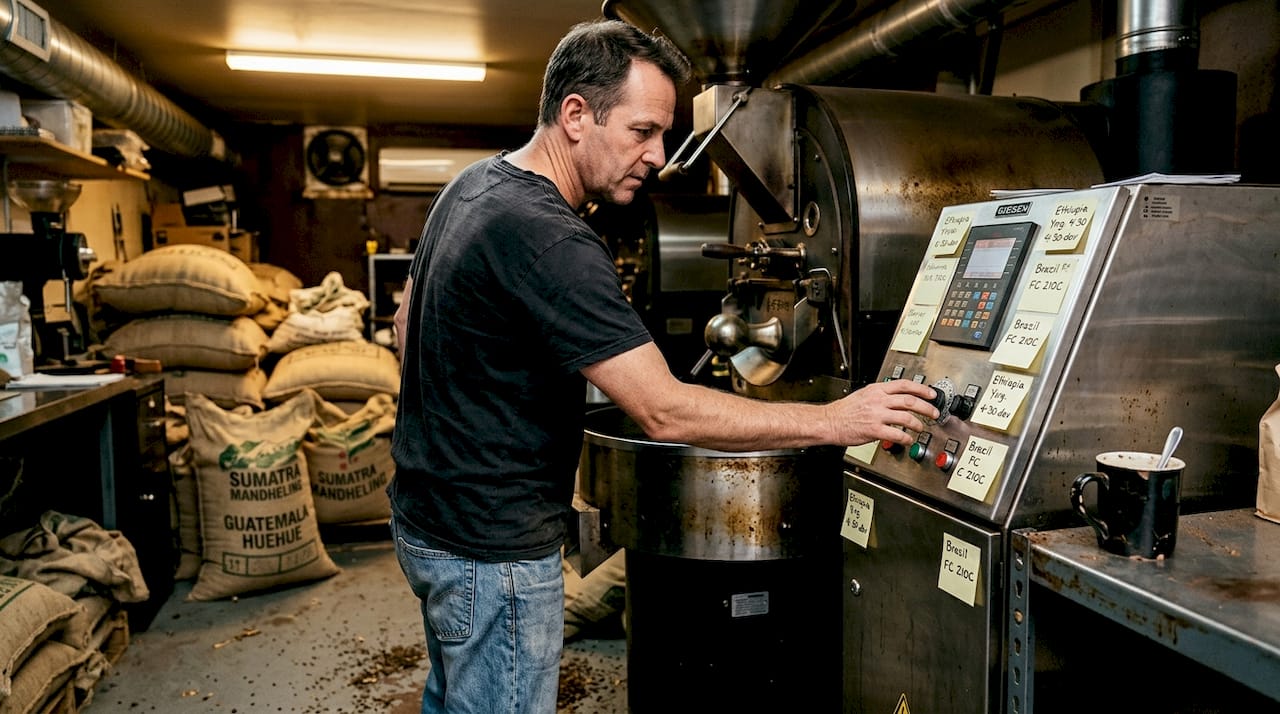
Roasting profiles must align with both bean characteristics and quality preservation goals. Different origins and processing methods require tailored roast development to highlight their unique qualities while meeting freshness standards. Document your roasting parameters meticulously, including charge temperature, development time ratio, and end temperature. This documentation enables consistency and provides quality assurance records.
Brewers need appropriate coffee accessories for perfect brewing that preserve the quality achieved through careful sourcing and roasting. Water quality, grind consistency, and extraction parameters all impact whether the coffee’s inherent quality reaches the cup. Invest in calibrated equipment and train staff on standardized brewing protocols that showcase coffee at its best.
Daily quality control checks for cafes and roasters:
- Verify green coffee storage conditions maintain stable temperature and humidity below 60%
- Check roasted coffee packaging integrity and confirm proper degassing valve function
- Calibrate grinders to ensure particle size distribution meets specifications for brewing method
- Test water quality parameters including mineral content and pH levels
- Conduct sensory evaluation of at least one coffee daily using standardized cupping protocols
- Review inventory rotation to ensure oldest stock gets used first within freshness windows
- Document any quality deviations and implement corrective actions immediately
Storage and packaging practices directly impact your ability to meet freshness standards. Use packaging with one-way degassing valves that allow carbon dioxide escape while preventing oxygen ingress. Store roasted coffee in cool, dark environments away from moisture and strong odors. Implement strict first-in-first-out inventory management to prevent any coffee from exceeding optimal freshness timelines.
Staff training represents a critical but often overlooked quality factor. Everyone handling coffee throughout your operation needs understanding of quality standards and their role in maintaining them. Master perfect coffee preparation by investing in comprehensive training programs that cover sensory evaluation basics, proper handling techniques, and quality documentation requirements.
Create quality feedback loops that connect customer experiences back to sourcing and processing decisions. Track which coffees receive the most positive responses and analyze what quality attributes drive that preference. Use this information to refine your sourcing criteria and processing specifications, continuously improving your quality outcomes.
Maintaining detailed records throughout the supply chain enables traceability and quality verification. Document everything from green coffee arrival inspections through final customer service. These records prove compliance with quality standards and provide valuable data for identifying improvement opportunities. Digital systems streamline record keeping while making information readily accessible for audits or quality investigations.
Sustainability and freshness: new pillars in coffee quality for 2026
Environmental responsibility and flavor preservation have emerged as defining characteristics of quality coffee in the modern marketplace. Sustainability criteria integrated into quality assessments evaluate farming practices across multiple dimensions including soil health management, water conservation efficiency, biodiversity preservation, and carbon footprint reduction. Farms demonstrating measurable environmental stewardship through practices like composting, shade growing, and integrated pest management receive quality recognition for these efforts.
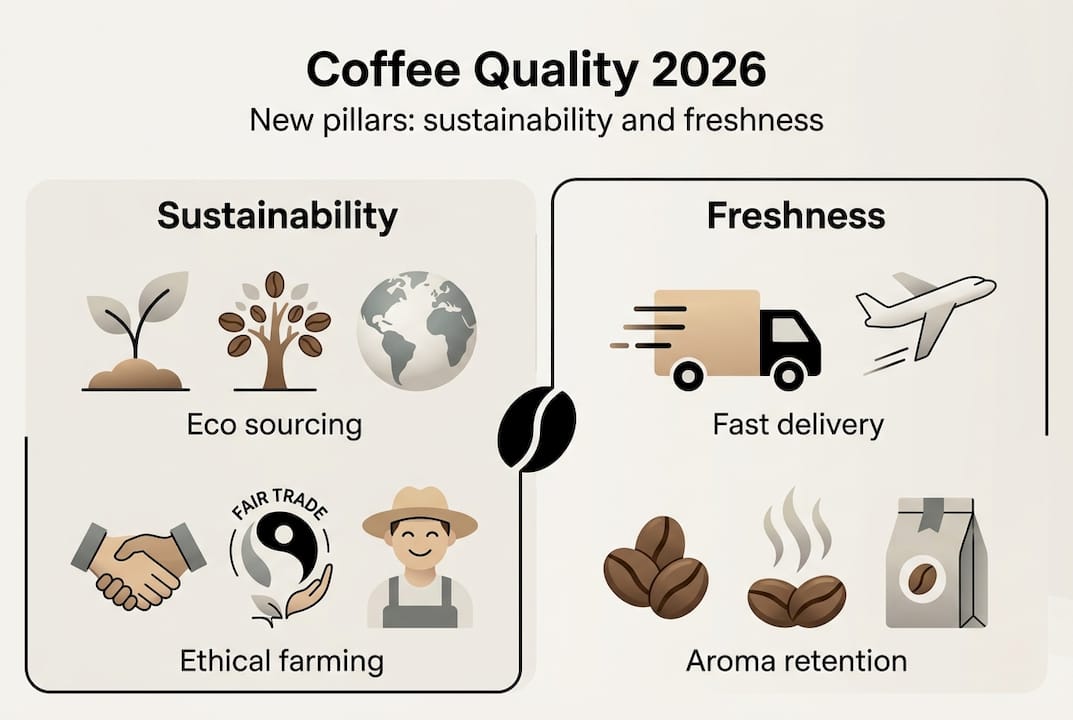
Packaging innovations play a crucial role in extending freshness and meeting quality standards. Sustainability and freshness are increasingly critical to coffee quality standards, with new materials and designs that balance environmental impact against preservation effectiveness. Compostable packaging made from plant-based materials offers environmental benefits but requires careful evaluation of barrier properties to ensure adequate freshness protection.
| Packaging Type | Freshness Retention (Days) | Environmental Impact | Cost Factor |
|---|---|---|---|
| Standard foil laminate | 180-270 | High (non-recyclable) | Baseline |
| Recyclable multilayer | 150-210 | Medium (requires separation) | 1.3x |
| Compostable bio-based | 90-150 | Low (fully biodegradable) | 1.8x |
| Reusable container systems | 60-90 per fill | Very Low (long-term use) | 2.5x initial |
Freshness preservation requires understanding the chemical changes occurring after roasting. Carbon dioxide release continues for days post-roast, necessitating degassing before sealing or using specialized valves. Oxygen exposure triggers oxidation reactions that degrade aromatic compounds and develop stale flavors. Moisture absorption compromises texture and accelerates quality deterioration. Effective packaging addresses all these factors simultaneously.
Best practices for sustainable sourcing extend beyond environmental considerations to encompass social and economic sustainability. Fair pricing that enables farmers to invest in quality improvements and environmental stewardship creates long-term supply chain stability. Supporting farmer education programs and providing access to processing equipment upgrades builds capacity for sustained quality production. These investments in supply chain partners generate quality returns through improved coffee and reliable sourcing relationships.
Pro Tip: Freshness dramatically impacts flavor perception and quality scoring. Coffee evaluated within two weeks of roasting typically scores 2 to 4 points higher on the specialty coffee scale compared to identical coffee assessed at 8 weeks post-roast. This quality degradation emphasizes why freshness windows are now integral to quality standards rather than optional considerations.
Environmental impact reduction strategies benefit from systematic measurement and continuous improvement approaches. Calculate your carbon footprint across the supply chain from farm to customer. Identify the largest impact sources and prioritize reduction efforts accordingly. Transportation often represents significant emissions, making local sourcing or optimized logistics valuable quality improvements under 2026 standards.
Transparency about sustainability practices builds consumer trust and differentiates quality offerings. Communicate your environmental commitments clearly, backing claims with verifiable data and third-party certifications where applicable. Consumers increasingly recognize that quality coffee requires healthy ecosystems and fair treatment of everyone in the supply chain. Meeting their expectations for both sensory excellence and ethical production defines quality leadership.
Freshness monitoring systems help maintain quality throughout distribution. Time-temperature indicators, oxygen sensors, and digital tracking provide real-time quality status information. These technologies enable proactive quality management, identifying potential issues before they impact customer experiences. Investing in monitoring capabilities demonstrates commitment to delivering consistently superior quality.
Discover premium coffee products aligned with 2026 quality standards
Experiencing quality coffee that meets rigorous modern standards helps you understand what excellence tastes like and why these standards matter. Z’s Coffee offers carefully selected products that exemplify the comprehensive quality approach defining 2026 benchmarks. Each offering reflects attention to origin, processing, freshness, and sustainability that quality-conscious professionals demand.

Explore specialty options like coffee with mushrooms medium roast that combines quality coffee with functional benefits, or discover regional character through Mexico coffee pods showcasing distinctive terroir. The complete coffee and tea collection demonstrates how diverse quality expressions can be when sourcing and processing align with comprehensive standards. Tasting these carefully curated coffees provides practical reference points for evaluating quality in your own sourcing and brewing decisions.
FAQ
How do 2026 quality standards affect small versus large coffee producers?
Small producers often excel at origin traceability and sustainable practices due to direct farm relationships, giving them advantages in new quality criteria. However, documentation requirements and certification costs can burden smaller operations more heavily. Large producers benefit from economies of scale in quality systems but may struggle with farm-level traceability across extensive supply networks. Both can achieve top quality ratings by focusing on their respective strengths.
How do freshness deadlines impact daily brewing and serving operations?
Freshness windows require tighter inventory management and faster product turnover than traditional approaches. Cafes must order smaller quantities more frequently, adjusting purchasing patterns to match consumption rates. This creates operational challenges but delivers noticeably superior flavor that customers appreciate and recognize. Implementing robust inventory tracking systems and building relationships with responsive suppliers makes freshness management practical.
What certification types are most relevant for coffee quality in 2026?
Organic, Fair Trade, and Rainforest Alliance certifications remain valuable for demonstrating sustainability and ethical sourcing. Newer certifications focusing on carbon neutrality, regenerative agriculture, and supply chain transparency are gaining prominence in quality assessments. However, certifications supplement rather than replace fundamental quality attributes like sensory excellence and proper processing. The most effective approach combines relevant certifications with comprehensive quality management.
What advice helps existing coffee businesses transition to new evaluation standards?
Start by auditing current practices against 2026 criteria to identify gaps requiring attention. Prioritize improvements with the greatest quality impact, typically supply chain documentation and freshness management. Invest in staff training so everyone understands new standards and their role in meeting them. Build stronger supplier relationships that enable the transparency and collaboration modern quality requires. Implement changes systematically rather than attempting everything simultaneously.
What emerging trends in coffee quality will shape standards beyond 2026?
Climate adaptation strategies are becoming quality factors as changing conditions affect traditional growing regions. Traceability technology using blockchain and IoT sensors will enable unprecedented supply chain transparency. Consumer interest in coffee varietals and processing experiments is driving quality appreciation for diversity and innovation. Regenerative agriculture practices that actively improve soil health and sequester carbon represent the next evolution in sustainability-focused quality standards.