Coffee aromas fall into nine broad families: fruity, floral, nutty/cocoa, roasted/brown, sweet, spices, green/vegetative, sour/fermented, and other/defect. A washed Ethiopian Yirgacheffe might hit you with jasmine and bergamot before you even pour; a dark-roasted Sumatra lands closer to cedar and tobacco. Knowing which family you’re smelling is the first step toward describing what’s actually in your cup.
That classification comes from the Coffee Taster’s Flavor Wheel, developed by the Specialty Coffee Association (SCA) in collaboration with World Coffee Research. Coffee contains a vast number of volatile compounds, and the wheel condenses that complexity into a working taxonomy that tasters worldwide use the same way. Without a shared vocabulary, one person’s “earthy” is another person’s “defect.”
- Fruity: blueberry, citrus, stone fruit
- Floral: jasmine, rose, elderflower
- Nutty/Cocoa: hazelnut, almond, dark chocolate
- Roasted/Brown: smoky, cedar, tobacco
- Sweet: caramel, brown sugar, vanilla
- Spices: cinnamon, clove, black pepper
- Green/Vegetative: grassy, herbal, green pepper
- Sour/Fermented: winey, vinegar, fermented fruit
- Other/Defect: papery, musty, chemical, rubber
Key Takeaways
Coffee aromas fall into nine families defined by the SCA/WCR taxonomy, and recognizing them requires matching a physical sensory impression to a named category before reaching for a specific descriptor.
| Point | Details |
|---|---|
| Nine aroma families | Fruity, floral, nutty/cocoa, roasted/brown, sweet, spices, green/vegetative, sour/fermented, and other/defect cover the full range. |
| Use the flavor wheel outward | Start at the center (broad family), move to subcategory, then reach the specific note — never guess the specific note first. |
| Roast drives roasted notes | Pyrazines, furans, and dry distillation compounds form during roasting and produce smoky, cedar, and tobacco character. |
| Processing drives fruity notes | Natural and anaerobic processing amplifies berry and fermented notes; washed processing preserves clean enzymatic aromas. |
| Defects are distinct | Papery, musty, and chemical notes are never positive; learn to flag them immediately rather than describe them as complex. |
Table of Contents
- Quick reference: the nine aroma categories at a glance
- Expanded coffee aroma types list: category-by-category sensory cues
- How coffee aromas are created
- How to use the Coffee Taster’s Flavor Wheel
- Practical tips for identifying and describing aromas reliably
- 1. Blueberry
- 2. Jasmine
- 3. Dark Chocolate
- 4. Caramel
- 5. Citrus
- 6. Hazelnut
- 7. Cinnamon
- 8. Tobacco/Pipe
- 9. Molasses
- 10. Green Grass
- 11. Winey/Fermented
- 12. Papery/Cardboard ⚠
- What the flavor wheel gets right that most tasters miss
- Sources
Quick reference: the nine aroma categories at a glance
The table below gives you a field guide you can scan mid-tasting. Rows marked with ⚠ include notes that signal defects when they dominate, so you know to flag them rather than celebrate them.
| Category | Example Descriptors |
|---|---|
| Fruity | Blueberry, citrus, mango, dried cherry |
| Floral | Jasmine, rose, chamomile, elderflower |
| Nutty/Cocoa | Hazelnut, almond, dark chocolate, cocoa powder |
| Roasted/Brown | Smoky, cedar, tobacco, pipe |
| Sweet | Caramel, brown sugar, vanilla, molasses |
| Spices | Cinnamon, clove, black pepper, cardamom |
| Green/Vegetative | Grassy, herbal, green pepper, raw grain |
| Sour/Fermented | Winey, vinegar, fermented fruit, sour berry |
| Other/Defect ⚠ | Papery, musty, chemical, rubber, earthy (negative) |
Aromas shift across three tasting stages: the fragrance (dry grounds), the wet aroma (just after hot water hits), and retronasal perception (while you sip). Floral and fruity notes tend to appear early in the fragrance; roasted and spice notes intensify in the wet aroma; sweetness and body reveal themselves on the palate. The World Coffee Research Sensory Lexicon is the authoritative source for these descriptors and their reference standards.
Expanded coffee aroma types list: category-by-category sensory cues
Each category below includes common sub-descriptors and a short sensory cue so you know where and how each note typically shows up. Origin and processing signals are noted where they matter most.
Fruity
Sub-descriptors: blueberry, raspberry, strawberry, citrus, lemon, orange, grapefruit, mango, dried cherry, apricot, tamarind
Sensory cue: Fruity notes are bright and high-pitched. They usually appear in the dry fragrance and bloom, and they linger as a clean finish. Natural-processed and anaerobic coffees push these notes hard; washed coffees from high-altitude origins like Ethiopia or Kenya can show citrus and berry without the fermented edge. Positive fruity is clean and distinct. When it tips into overripe or boozy, that’s a processing defect. Coffee processing methods directly shape how fruity a coffee reads.
Floral
Sub-descriptors: jasmine, rose, orange blossom, elderflower, chamomile, lavender, bergamot, violet
Sensory cue: Floral notes are delicate and evaporate fast. Smell dry grounds immediately after grinding. Light-roasted, high-altitude washed Arabica from Ethiopia or Colombia is the most reliable source. If you’re getting floral notes in a dark roast, you’re likely picking up something else.
Nutty/Cocoa
Sub-descriptors: hazelnut, almond, walnut, peanut, cocoa powder, dark chocolate, milk chocolate, malt
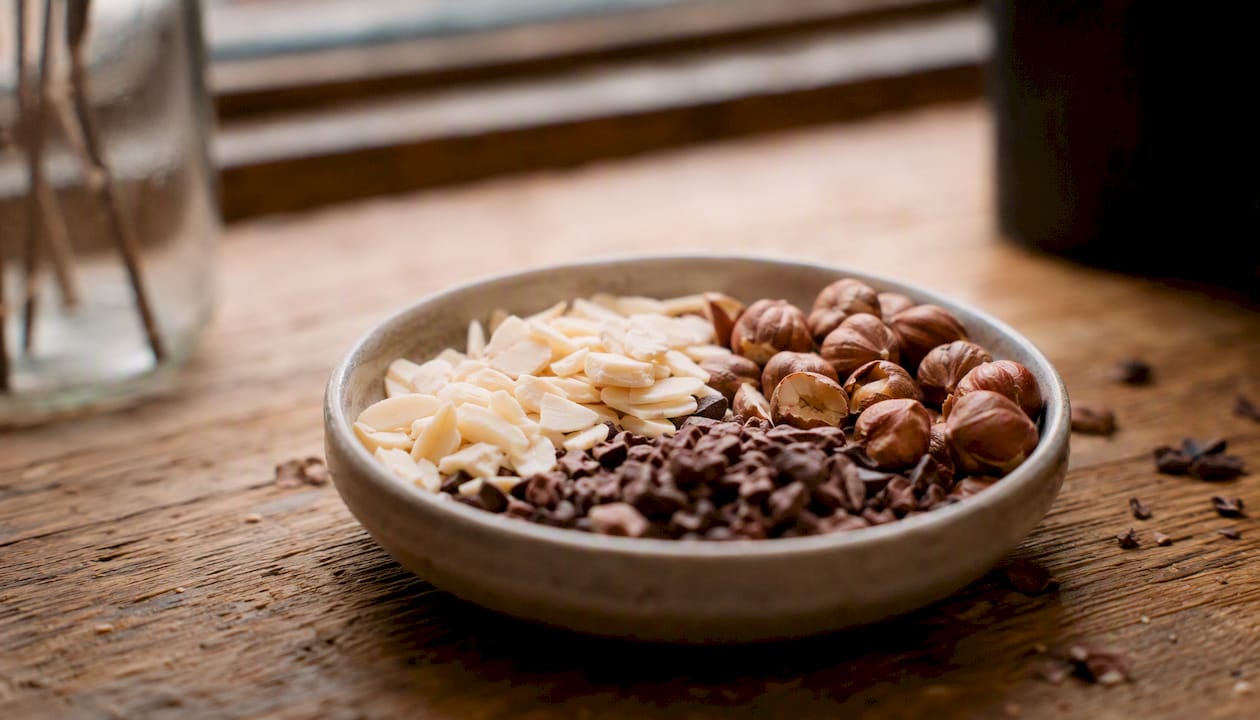
Sensory cue: These notes are warm and round, appearing most clearly in the wet aroma and mid-palate. Medium-roasted Central American coffees (Guatemala, Honduras) are classic sources. Cocoa and chocolate notes come from Maillard browning during roasting, not from added flavoring.
Roasted/Brown
Sub-descriptors: smoky, cedar, tobacco, pipe, leather, clove-like char, dark caramel, burnt sugar
Sensory cue: Roasted notes dominate the wet aroma and linger through the finish. They’re driven by pyrazines and furans formed during high-heat roasting. A little smoke is pleasant; when it overwhelms everything else, the roast has gone too far. The MDPI research on coffee aroma complexity confirms that professionals use fine-grained descriptors precisely to separate pleasant roasted character from acrid defects.
Sweet
Sub-descriptors: caramel, brown sugar, honey, vanilla, molasses, maple, toffee, butterscotch
Sensory cue: Sweetness in aroma is perceived before you taste anything. It shows up in the steam rising off a fresh pour. Well-developed medium roasts from Brazil or Colombia are reliable for caramel and brown sugar. Vanilla and honey tend to appear in lighter roasts with good cherry ripeness.
Spices
Sub-descriptors: cinnamon, clove, black pepper, cardamom, nutmeg, anise, allspice
Sensory cue: Spice notes sit in the mid-range of the aroma profile. They’re common in natural-processed Yemeni or Ethiopian coffees and in some Indonesian origins. Cinnamon is the most frequently identified; clove and pepper appear more in darker roasts. Spice notes can be enzymatic (origin-driven) or formed during roasting.
Green/Vegetative
Sub-descriptors: grassy, herbal, green pepper, raw grain, hay, straw, leguminous, fresh-cut wood
Sensory cue: Green notes signal under-development. A little herbal quality can be pleasant in a very light roast; grassy or raw-grain notes usually mean the roast didn’t develop fully or the beans were stored poorly. Flag these as a quality concern unless the coffee is intentionally roasted very light.
Pro Tip: To sharpen your ability to distinguish green/vegetative from floral, smell freshly cut grass or a green bell pepper before your next cupping session. Your brain will lock in the reference point and you’ll catch it immediately in the cup.
Sour/Fermented
Sub-descriptors: winey, vinegar, fermented fruit, sour berry, kombucha-like, lactic, acetic
Sensory cue: A controlled winey or lactic note can be a positive quality signal in natural-processed coffees. Vinegar or sharp acetic notes are defects from over-fermentation during processing. The line between “complex fermented” and “defect” is thin. If the sourness is clean and fruit-forward, it’s likely intentional. If it’s sharp, pungent, or reminds you of nail polish remover, it’s a problem.
Other/Defect ⚠
Sub-descriptors: papery, cardboard, musty, mold, rubber, chemical, phenolic, earthy (negative), stale
Sensory cue: These notes are never positive. Papery and cardboard usually come from old or improperly stored beans. Musty or moldy notes signal moisture damage. Chemical or phenolic notes point to contamination or improper processing. The Roastopedia flavor reference catalogs roughly 93 primary descriptors, and defect notes occupy their own distinct category for exactly this reason: you need to recognize them to reject them.
The World Coffee Research Sensory Lexicon provides reference standards for each descriptor, including defects, so tasters can calibrate against a physical benchmark rather than relying on memory alone.
How coffee aromas are created
Three chemical pathways account for most of what you smell. Understanding them helps you predict what a coffee will smell like before you even open the bag.
-
Enzymatic reactions happen in the coffee cherry before and during processing. These produce floral and fruity notes: jasmine, berry, citrus. They’re origin-driven and variety-driven. High-altitude Arabica from Ethiopia or Colombia carries more enzymatic complexity than lower-grown Robusta. Bean variety and origin set the ceiling for what enzymatic aromas are possible.
-
Sugar browning and Maillard reactions occur during roasting. Caramel, chocolate, hazelnut, and brown sugar notes all come from here. The Maillard reaction between amino acids and reducing sugars generates hundreds of new compounds, including the pyrazines and furans that drive nutty and roasted character. Sulfur-containing compounds, even at tiny concentrations, shape the roasted impression significantly, according to research on key coffee volatile compounds.
-
Dry distillation happens at high roast temperatures when cellulose and lignin in the bean break down. This produces smoky, cedar, tobacco, and leather notes. The darker the roast, the more these notes dominate.
Processing adds another layer. Washed coffees strip the cherry away quickly, preserving clean enzymatic notes. Natural-processed coffees dry with the fruit intact, amplifying fruity and fermented character. Anaerobic fermentation pushes those notes further still, sometimes into tropical fruit or winey territory. Poor fermentation control or bad storage introduces defects: papery, musty, chemical. The difference between a positive fermented note and a defect is usually consistency and intensity. A defect overwhelms; a positive note integrates.
For a deeper look at how processing choices shape what ends up in your cup, the SCA/WCR Sensory Lexicon and the Serious Eats cupping guide both explain the formation pathways in practical terms.
How to use the Coffee Taster’s Flavor Wheel
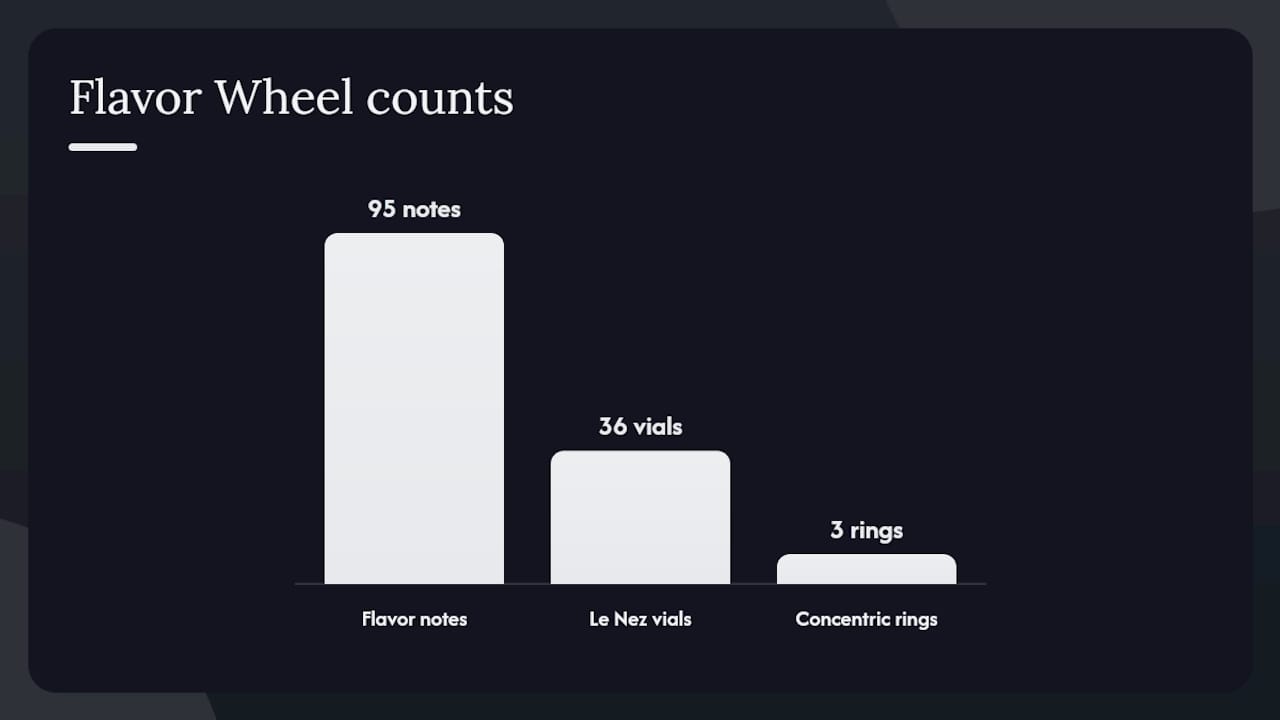
The SCA Coffee Taster’s Flavor Wheel organizes 95 flavor notes across three concentric rings: broad category (inner), subcategory (middle), and specific note (outer). The SCA and World Coffee Research built it from large sensory panels, making it the most widely used taxonomy in the specialty coffee industry.
Using it well means working outward, not inward:
- Start at the center with the broadest impression (“this smells fruity”).
- Move to the middle ring to narrow it (“citrus or berry?”).
- Reach the outer ring for the specific note (“lemon? grapefruit? dried cherry?”).
Working inward from a specific guess tends to anchor you too early. If you decide “blueberry” before you’ve checked the middle ring, you’ll miss the dried cherry sitting right next to it.
Pro Tip: During a cupping, keep the flavor wheel face-down until after your first smell. Write down your raw impression in plain language, then flip the wheel and find where your words land. This trains genuine recognition rather than label-matching.
The World Coffee Research Sensory Lexicon pairs with the wheel by providing physical reference standards for each descriptor. You can read “jasmine” on the wheel all day, but smelling an actual jasmine reference vial is what locks the memory in place.
That’s exactly what Le Nez du Café is built for. The kit contains 36 sniffable vials covering the most common coffee aromas, from berry and citrus to tobacco and rubber. Coffee Review’s analysis of aroma training makes the case clearly: natural language lacks consistent words for smells, and calibration tools like Le Nez du Café reduce the ambiguity that makes tasting notes unreliable across tasters. Routine practice with the vials builds the kind of scent memory that makes the flavor wheel usable in real time.
For a practical walkthrough of flavor mapping in action, the Zscoffee flavor mapping guide covers the process step by step.
Practical tips for identifying and describing aromas reliably
Three stages, three different things to smell:
- Fragrance (dry grounds): Grind fresh and smell immediately. Floral and fruity notes are most volatile and disappear fast. This is your best window for enzymatic aromas.
- Wet aroma (bloom): Pour hot water and smell within the first 30 seconds. Roasted, spice, and caramel notes intensify here. The Maillard compounds bloom with heat.
- Retronasal (in-cup): Sip and exhale through your nose. Sweetness, body, and lingering finish reveal themselves here. This is where chocolate and vanilla tend to register most clearly.
Setup matters more than most people realize. Use freshly roasted beans (ideally within two to four weeks of roast date), grind right before smelling, and use water at around 200°F. Stale beans lose volatile compounds fast, and you’ll be smelling the ghost of an aroma rather than the thing itself.
Reduce bias with a simple sniff sequence: smell neutral air (your inner wrist or a blank piece of paper) between samples to reset your olfactory baseline. Avoid strong perfumes, scented soaps, or eating spicy food before a cupping session. Your nose fatigues quickly on the same compound, so rotate between samples rather than smelling the same cup repeatedly.
Pro Tip: Pick one target note per session — say, “caramel” — and spend 30–60 seconds smelling a reference (actual caramel, brown sugar, or a Le Nez du Café vial) before you cup. Then look for it actively. This focused micro-practice builds recognition faster than general cupping alone.
For a full step-by-step tasting method, the Zscoffee guide to tasting coffee properly covers setup, technique, and common mistakes in detail. The Coffee & Health aroma and flavor reference also provides a clean breakdown of how aroma descriptors differ from taste descriptors, which is useful when you’re learning to separate what your nose detects from what your tongue does.
1. Blueberry
Fresh or jammy, appearing in the dry fragrance. Most common in natural-processed Ethiopian coffees; a hallmark of the Yirgacheffe and Sidama regions.
2. Jasmine
Delicate, high-floral, and fleeting. Smell dry grounds immediately after grinding. Washed light-roast Arabica from Ethiopia or Colombia is the most reliable source.
3. Dark Chocolate
Rich, slightly bitter, and warm. Strongest in the wet aroma and mid-palate. Driven by Maillard browning; medium-roasted Brazilian and Guatemalan coffees are classic examples.
4. Caramel
Sweet, buttery, and round. Appears in the steam and bloom. A sign of good roast development; common in medium-roasted Latin American coffees.
5. Citrus
Bright and sharp, ranging from lemon to grapefruit to orange zest. Appears in fragrance and finish. Washed Kenyan and Colombian coffees are the go-to references.
6. Hazelnut
Warm, toasty, and slightly sweet. Sits in the mid-range of the wet aroma. Common in medium-roasted Central American and Brazilian coffees.
7. Cinnamon
Spicy-sweet and dry. Appears in the wet aroma and sometimes the finish. More common in lighter roasts; can be enzymatic (origin) or formed during roasting.
8. Tobacco/Pipe
Dry, woody, and slightly sweet. A roasted/brown note that appears in darker roasts and some Indonesian origins (Sumatra, Sulawesi). Pleasant in small amounts; dominant when the roast is very dark.
9. Molasses
Deep, dark-sweet, and slightly smoky. A sign of very developed roasting. Common in dark-roasted coffees and some natural-processed Yemeni or Ethiopian beans.
10. Green Grass
Fresh-cut and raw. Usually signals under-development in the roast. A small herbal quality can be pleasant in very light roasts; strong grassy notes are a quality flag.
11. Winey/Fermented
Complex, fruit-forward, and slightly sharp. A positive note in well-controlled natural-processed coffees. When it tips into vinegar or nail polish, it’s a defect from over-fermentation.
12. Papery/Cardboard ⚠
Flat, dry, and stale. Always a defect. Caused by old beans or improper storage. If you smell this, the coffee has lost its volatile compounds and won’t taste good. The United Baristas Coffee Aroma Map groups defect notes separately from positive aromas for exactly this reason.
What the flavor wheel gets right that most tasters miss
The SCA flavor wheel is not a checklist. Most people use it wrong by scanning for a note that “fits” rather than building from a genuine sensory impression. That approach produces tasting notes that sound authoritative but describe nothing real.
The more honest approach is uncomfortable: sit with the impression before you name it. The wheel works because it forces you to commit to a family before a specific note. That constraint is the whole point. When you skip straight to “blueberry,” you’ve bypassed the reasoning that makes the descriptor meaningful.
There’s also a tendency to treat positive and defect notes as two separate conversations. They’re not. Earthy can be a pleasant, terroir-driven quality in a Sumatran wet-hulled coffee, or it can be a sign of mold damage. Winey can be a complex, intentional fermentation note, or it can be over-fermentation that should have been caught at the mill. The MDPI research on aroma complexity makes clear that distinguishing quality from defect is the core skill in professional evaluation, not just naming pleasant notes.
Le Nez du Café and the WCR Sensory Lexicon exist because the vocabulary problem is real. Without a physical reference, “floral” means something different to every taster. With a jasmine vial in hand, it means one thing. That’s the entire argument for training tools, and it’s a strong one.
Sources
These are the primary references used throughout this article. Each one is worth bookmarking if you want to go deeper.
- Coffee Flavor Wheel - Interactive SCA Tasting Guide | CoffeeTrove
- Sensory Lexicon — World Coffee Research (Sweet Maria library copy)
- Food article on coffee aroma complexity (MDPI)
- Coffee Flavors - Roastopedia
- Aroma, flavour, and the senses — Coffee & Health