TL;DR:
- Coffee education resources vary in accuracy, depth, relevance, and sensory focus; choose based on learning style.
- Brew guides should be stepwise, flexible, troubleshooting-oriented, and regularly updated for best results.
- Mastery involves experimentation, understanding science, and trusting palate, not just following instructions.
The world of coffee knowledge is vast, scattered, and sometimes contradictory. You might spend an hour reading about extraction ratios on one site, then find completely different advice somewhere else. Between YouTube channels, specialty roaster blogs, academic research, and barista forums, knowing where to actually start, and what to trust, is genuinely hard. This guide cuts through that noise by mapping out the best coffee education resources available today, organized by what you want to learn and how deep you want to go.
Table of Contents
- How to choose the best coffee education resources
- Brew guides and recipes: Where to start your coffee journey
- Advanced knowledge: Coffee science, standards, and sensory skills
- Comprehensive academies and deep-dive courses
- Comparison of featured coffee education resources
- What most guides miss about mastering coffee
- Upgrade your coffee journey with Z’s Coffee
- Frequently asked questions
Key Takeaways
| Point | Details |
|---|---|
| Match resource to goals | Choose educational tools based on whether you’re seeking brewing mastery, sensory science, or global context. |
| Leverage multiple sources | Combine hands-on guides, science-based materials, and structured courses for well-rounded knowledge. |
| Understand coffee scientifically | Advanced resources reveal how variables like extraction and sensory analysis elevate your experience. |
| Full-spectrum learning | Academies and structured programs cover everything from origin to cup, catering to deep hobbyists and pros. |
| Try, taste, repeat | Experimenting with what you learn is the key to true coffee expertise and enjoyment. |
How to choose the best coffee education resources
Not all coffee education is created equal. Some resources are written by enthusiasts with good intentions but shaky science. Others are technically dense but skip the practical skills that matter most at your brew station. Before you invest time in any platform, it helps to know what separates a genuinely useful resource from one that just sounds authoritative.
Here are the core criteria worth evaluating:
- Accuracy: Does the content cite research, sensory data, or established industry standards? Or does it rely on anecdote?
- Depth: Does the resource go beyond “use filtered water and a scale,” or does it explain why those variables matter at a molecular and sensory level?
- Relevance: Is the content updated regularly to reflect current techniques, equipment, and growing regions?
- Balance of science and tradition: The best resources acknowledge that specialty coffee standards are both rooted in cultural craft and increasingly guided by measurable science.
- Sensory focus: Can the resource teach you to evaluate what you taste, not just follow a recipe?
Your learning style matters just as much as content quality. If you absorb information best through video and visual demonstrations, a text-heavy academic paper will frustrate you. If you prefer systematic, stepwise instruction, look for resources built around structured modules rather than scattered blog posts. The step-by-step coffee making approach works especially well for tactile learners who want to replicate each variable before moving on.
The Specialty Coffee Association (SCA) is one benchmark worth noting. The SCA publishes standards showing how coffee education can be tied to sensory science rather than tradition alone, which signals a shift toward more objective, verifiable coffee knowledge.
Pro Tip: When you find a new resource, test it with something you already know well. If its explanation of, say, bloom time during a pour-over matches your real-world experience, it’s likely trustworthy for topics you haven’t explored yet.
Brew guides and recipes: Where to start your coffee journey
Once you have a framework for evaluating resources, the natural starting point for most learners is the brew guide. A good brew guide doesn’t just list steps. It tells you what each step accomplishes and what to adjust when things go wrong. That diagnostic layer is what separates a guide you’ll use once from one you’ll return to every week.
The most actionable brew education typically shares a few traits:
- Stepwise clarity: Each action is isolated and explained, so you’re not guessing why you’re doing something
- Equipment flexibility: Good guides address variables across different brewers, from AeroPress to V60 to drip machines
- Troubleshooting built in: The best resources tell you what a sour shot means versus a bitter one, and how to fix it
- Ongoing updates: Brewing science evolves quickly, so look for platforms that refresh their content regularly
“The difference between a good cup and a great cup is often one small, deliberate variable. Start with one guide and master its method before adding complexity.”
Perfect Daily Grind’s Brew Guides & Recipes section is an example of an ongoing educational hub offering brew-method guides with genuine technical depth, covering everything from grind size relationships to the impact of water temperature on extraction yield.
For your own practice, a resource like step-by-step brewing is a solid foundation before exploring niche techniques. Once you’re comfortable with hot brew methods, expanding into coffee processing methods helps you understand how origin and processing affect what you’re actually tasting. And if you want to branch into cool-weather brews, guides on making cold brew at home offer a different, slower extraction model that reveals a lot about how time compensates for temperature.
Pro Tip: When trying a new brew guide, brew the same coffee three times using the guide’s instructions exactly before making any personal adjustments. This gives you a reliable baseline and teaches you what the method’s “default” tastes like.
Advanced knowledge: Coffee science, standards, and sensory skills
Recipe guides teach you what to do. Science explains why it works. And once you understand the “why,” your troubleshooting becomes much faster and more intuitive.
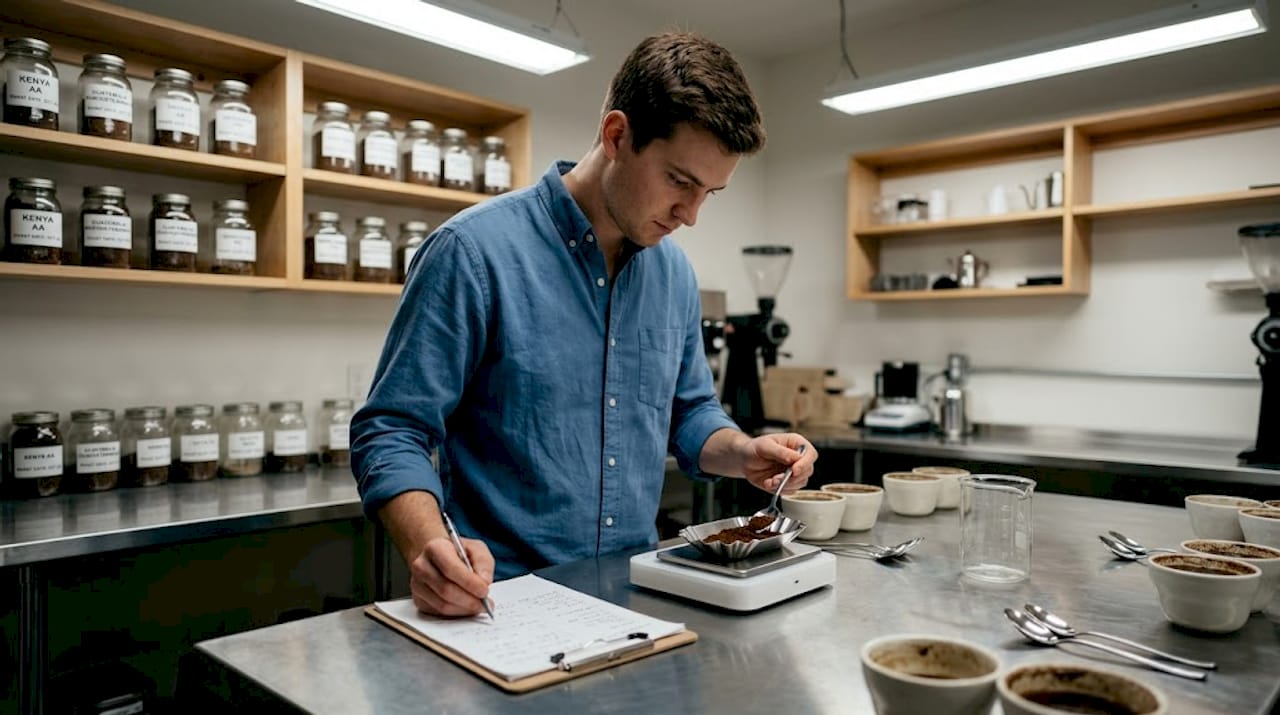
The SCA’s Coffee Science Foundation has been doing important work here. Their current green grading research project aims to quantify defects through sensory thresholds, noting that existing grading guidelines have traditionally been based on visual inspection rather than actual sensory science. This matters because two coffees that look similar under current grading systems can taste dramatically different. Moving toward sensory-based standards means more consistent, honest quality assessments.
From a physics and chemistry standpoint, coffee brewing is a surprisingly complex process involving fluid dynamics, particle size distribution, heat transfer, and solubility chemistry. Understanding even the basics of these interactions helps you make smarter decisions about grind size, water temperature, and agitation.
Here’s what advanced science-focused coffee education typically covers:
- Extraction chemistry: How water dissolves soluble compounds from coffee grounds in a specific order, with acids extracting first and bitters later
- Particle size and surface area: Why a finer grind extracts faster and what that means for different brew methods
- Water chemistry: How mineral content affects which flavor compounds are extracted and how strongly they’re perceived
- Sensory evaluation: Training your palate to identify specific defect notes, regional flavor markers, and roast characteristics
| Topic | Beginner focus | Advanced focus |
|---|---|---|
| Extraction | Ratio and time | Solubility curves, TDS measurement |
| Grind | Coarse vs. fine | Particle distribution and bimodal grinding |
| Water | Filtered vs. tap | Mineral content and buffering capacity |
| Tasting | Sweet, bitter, sour | SCAA flavor wheel, sensory thresholds |
Connecting science to practice, resources on coffee extraction and flavor are particularly useful because they translate chemistry into actionable brew decisions. Similarly, learning about water quality and flavor is one of the fastest ways to improve your cup without changing anything about your beans or equipment.
Comprehensive academies and deep-dive courses
Individual guides and science articles are powerful, but sometimes you want a structured curriculum that builds your knowledge in sequence rather than jumping between topics. Coffee academies fill this gap, especially for people moving from enthusiast to semi-professional or professional practice.
What separates a strong academy from a loose collection of videos?
- Curated sequences: Content is organized so that foundational knowledge comes before advanced topics, preventing confusion
- Multiple tracks: Strong programs cover origins, roasting, brewing, and sensory evaluation, sometimes as separate learning paths
- Industry access: The best academies feature input from green buyers, roasters, and Q Graders with real-world experience
- Self-paced flexibility: Good programs work around your schedule rather than forcing you into live sessions
- Free or accessible pricing: Price should not be the reason someone can’t access quality coffee education
ED+U by Cafe Imports is a standout here. It’s an open-access coffee academy built around multiple courses spanning supply chain topics alongside the science and art of coffee, including roasting and brewing. Crucially, it’s free, which removes one of the biggest barriers to quality education.
| Academy/Resource | Cost | Depth | Best for |
|---|---|---|---|
| ED+U by Cafe Imports | Free | High, multitrack | Serious enthusiasts and professionals |
| SCA online courses | Paid | Very high, certification-level | Career baristas and roasters |
| Perfect Daily Grind | Free | Medium to high | Curious home brewers and students |
| Physics World articles | Free | High, science-focused | Analytically minded coffee drinkers |
Pro Tip: When using an academy, resist the urge to skip ahead to brewing content if you haven’t completed the origins and processing modules. Understanding where coffee comes from and how it’s handled pre-roast fundamentally changes how you interpret flavor.
For those interested in the professional side of coffee, exploring the role of baristas in specialty coffee reveals how much craft and knowledge goes into a single cup. Pairing academy work with hands-on practice, like refining your approach using espresso tips from experienced sources, helps bridge theory and real-world execution.
Comparison of featured coffee education resources
With so many strong options available, the real question is which resource fits your current goals. Use this as your quick-reference guide.
| Resource | Approach | Depth | Cost | Ideal user |
|---|---|---|---|---|
| SCA research materials | Science and standards | Expert | Free to paid | Professionals, serious students |
| Perfect Daily Grind | Editorial and practical | Medium to high | Free | Home brewers, curious enthusiasts |
| ED+U by Cafe Imports | Structured curriculum | High | Free | Beginners to advanced learners |
| Physics World coffee articles | Physics and chemistry | High | Free | Analytically minded enthusiasts |
| Z’s Coffee blog | Practical how-to | Beginner to intermediate | Free | Home brewers and coffee shoppers |
Situational picks based on your goal:
- You want to improve quickly at home: Start with structured brew guides and the brewing guide for 2026, then layer in water and extraction science
- You want to understand flavor deeply: Combine SCA sensory research with Perfect Daily Grind’s technique-focused articles
- You want professional-level knowledge without a formal program: ED+U by Cafe Imports is your best no-cost starting point
- You want to nerd out on physics: Physics World’s coffee content explains that over two billion cups are brewed worldwide daily, with 155 people involved from farm to barista, putting your single cup in a remarkable global context
The honest answer is that no single resource handles every angle. The best learners treat coffee education as a mosaic: brew guides for practice, science articles for understanding, academies for structure, and sensory training for refinement.
What most guides miss about mastering coffee
Here’s something most educational content won’t tell you: following instructions perfectly is not the same as developing mastery. Mastery comes from knowing when and why to break from the instructions.
Almost every coffee guide is written to produce a consistent, generally well-liked cup. That’s useful, especially when you’re starting out. But the moment you stop questioning the defaults, your learning slows dramatically. The real jump happens when you start running intentional experiments: brewing slightly under-extracted to taste what’s missing, adjusting grind in small increments to hear how flavor shifts, using the same beans across three different methods to understand how technique changes the character of the same coffee.
Science-backed resources explain the “why,” but they can sometimes create a false sense of precision. Coffee is agricultural. Two bags of the same single-origin coffee from the same farm can taste different depending on harvest timing, storage, and roast date. Mastering coffee quality standards is partly about understanding these variables and partly about accepting that perfection is a moving target.
The most useful thing any guide can do is make you a more confident experimenter, not a more obedient follower. Tasting broadly, including coffees that don’t suit your preference, matters as much as reading any certification material. Failures teach you what matters. A sour batch teaches you more about extraction than ten articles about extraction theory. Use the guides. Learn the science. Then trust your palate enough to push past them.
Upgrade your coffee journey with Z’s Coffee
You’ve done the intellectual work. Now it’s time to put it to use with the right tools and beans.
At Z’s Coffee, we stock products designed to help you apply everything you’ve been learning. Whether you’re experimenting with your first manual brew method or refining a precise espresso routine, having quality ingredients and gear makes every experiment more meaningful. Try our instant coffee for quick side-by-side flavor comparisons without equipment variables, or keep your best brews fresh on the go with our travel mug with a handle. Browse our full selection and find everything you need to make your new knowledge count.
Frequently asked questions
What is the best resource for learning to brew coffee at home?
Step-by-step guides and updated recipe hubs are the most actionable starting point. Perfect Daily Grind’s brew guides offer technical depth alongside practical method walkthroughs that home brewers can follow immediately.
Are there free advanced courses on coffee origins and roasting?
Yes. ED+U by Cafe Imports is a fully open-access academy with structured courses covering supply chain, roasting, brewing, and coffee science at no cost.
How is sensory science changing how coffee is graded?
The SCA is actively working to make grading more objective by establishing sensory-based thresholds for defects, moving beyond visual inspection that can miss real differences in cup quality.
What makes science-focused coffee resources unique?
They explain how physics and chemistry drive brewing outcomes, giving you a diagnostic framework for understanding off-flavors and inconsistencies rather than just following recipes by rote.
Can you learn professional coffee skills outside formal barista training?
Absolutely. Online academies and standards bodies like the SCA offer self-paced, structured course material that covers professional topics from green grading to sensory evaluation without requiring enrollment in a formal program.