TL;DR:
- Coffee workshops cover brewing, roasting, sensory skills, latte art, and barista fundamentals, each focusing on different skills. Starting with the Introduction to Coffee module from the SCA is recommended for beginners, providing a foundational understanding of coffee from origin to cup. Certification from the SCA signals professional readiness, and online formats complement practical, hands-on learning.
Coffee workshops fall into five main categories: brewing, roasting, sensory skills, latte art, and barista fundamentals. Each targets a different slice of coffee knowledge, and the right starting point depends entirely on what you want to get out of your cup.
Here is a quick map of the landscape:
- Brewing workshops cover pour-over, French press, AeroPress, and espresso extraction
- Roasting workshops dig into green bean selection, roast profiles, and how heat transforms flavor
- Sensory skills workshops teach cupping, flavor wheel navigation, and aroma identification
- Latte art workshops focus on milk steaming and free-pour techniques
- Barista fundamentals blend espresso theory, workflow, and customer-facing skills
Formats range from a two-hour Saturday morning session to multi-day intensives. The Specialty Coffee Association (SCA) sets the most widely recognized education standard in the industry, and its modular Coffee Skills Program shapes how most serious workshops are structured.
Table of Contents
- 1. What are the main types of coffee workshops?
- What you actually gain from attending coffee workshops
- How to choose the right coffee workshop for your goals
- The Specialty Coffee Association’s role in coffee education
- Key Takeaways
1. What are the main types of coffee workshops?
Brewing workshops
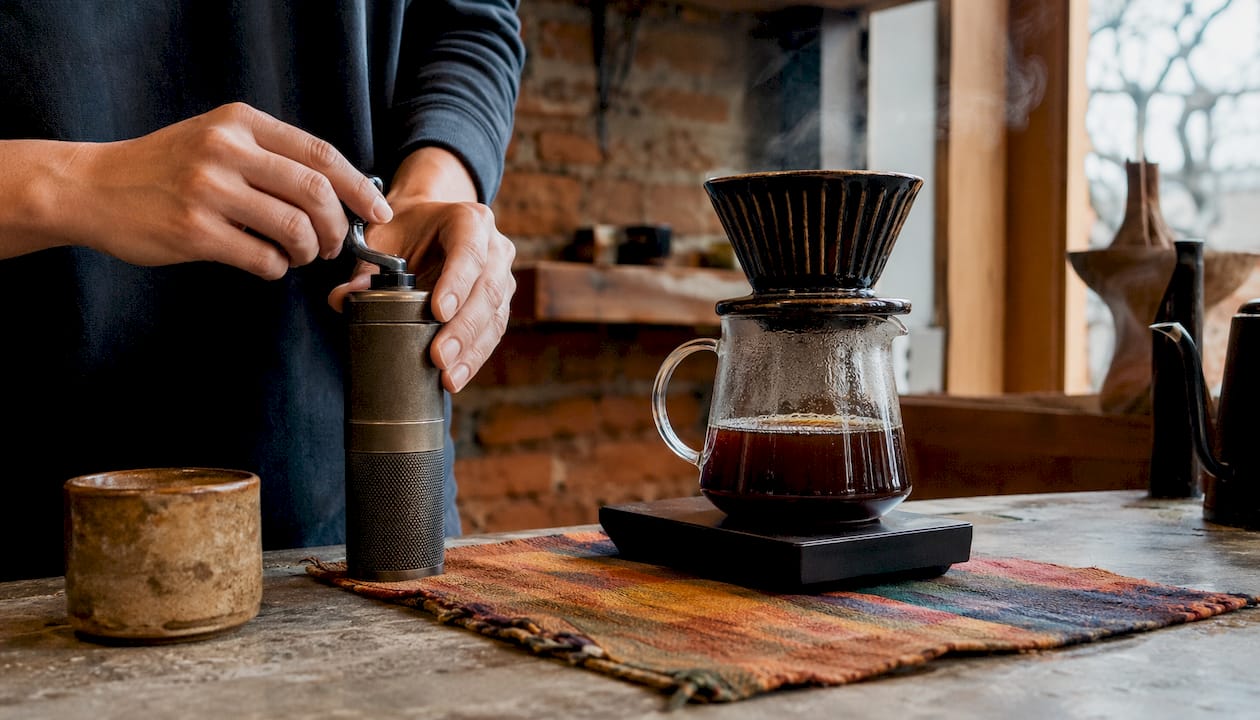
Brewing workshops are the most accessible entry point. You learn how variables like grind size, water temperature, and brew ratio affect what ends up in the cup. Most sessions cover at least two or three methods, whether that is a V60, a Chemex, or a moka pot. Manual brewing techniques get particular attention because they make extraction variables visible in a way an automatic machine hides.
Skill level required: none. Duration: beginner sessions usually last a few hours (often 2–3), while advanced workshops may take a full day or longer.
Barista skills workshops
These go deeper into espresso. You learn to operate a commercial machine, dial in a shot, steam milk to the right texture, and troubleshoot a sour or bitter extraction. The concept of “dialing in” is central here: rather than following a fixed recipe, you adjust dose, yield, and grind time to match a specific bean and roast level. That skill takes practice, and a good barista workshop gives you the framework to keep improving after you leave.
Most courses target beginners, but advanced options exist for people already working behind a bar.
Pro Tip: Before booking a barista workshop, ask whether the session uses a commercial espresso machine or a prosumer home unit. The muscle memory you build differs significantly between the two.
Roasting workshops
Roasting workshops sit at the more advanced end of the spectrum. You study green coffee bean characteristics, how moisture content and density affect roast behavior, and how to read a roast curve. The SCA’s Coffee Skills Program includes a dedicated Roasting module that runs across three levels: Foundation, Intermediate, and Professional.
Hands-on roasting sessions often run a full day or across multiple days. Some providers offer virtual formats where you follow along with sample beans shipped to your door, though the tactile feedback of a live roaster is hard to replicate on screen.
Sensory skills and cupping workshops
Sensory workshops train your palate systematically. You work through the SCA flavor wheel, practice identifying acidity, body, sweetness, and finish, and learn the standardized cupping protocol used by professional buyers worldwide. Many of these sessions lead directly to certification: the SCA Sensory Skills Foundation certificate is a common outcome, and the Q Grader credential sits at the top of that ladder for professionals.
Online versions work surprisingly well here. Providers ship tasting kits with pre-roasted samples, and you follow along with video instruction and printed tasting sheets. The flexibility suits working professionals who cannot block out a full weekend.
Latte art workshops
Latte art is its own discipline. You spend most of the session on milk: understanding fat content, steaming to the right temperature and texture, and then practicing the wrist movement that creates a rosette or tulip. Progress is visible immediately, which makes these sessions satisfying even for complete beginners. Duration is typically a few hours, and no prior coffee knowledge is required.
Coffee tasting sessions
Shorter and more social than a full sensory workshop, coffee tasting sessions introduce participants to origin differences, processing methods, and roast levels through guided comparison. Think of it as a wine tasting format applied to coffee. These sessions work well as group events and are often the first coffee education experience people have. They pair naturally with reading about coffee processing methods before you attend.
Introduction to coffee courses
The SCA recommends starting here before moving into any specialist module. An Introduction to Coffee course covers the full value chain: origin, processing, roasting, brewing, and tasting. It gives you the vocabulary and context that makes every subsequent workshop more productive. Duration ranges from a half day to a full day.
Coffee sustainability workshops
A newer addition to structured coffee education, sustainability workshops address climate impact on growing regions, supply chain transparency, and ethical sourcing. The SCA’s Coffee Sustainability Program includes a foundation course plus three specialized tracks. These sessions appeal to buyers, café owners, and anyone who wants to understand what sits behind the price of a bag of specialty beans.
Private and corporate workshops
Private sessions give you one-on-one time with a trainer, which accelerates skill development considerably. Corporate workshops adapt the same content for team-building formats, often combining a tasting session with a short brewing demonstration. Pricing for private sessions runs higher than group rates, but the focused attention is worth it if you have a specific skill gap to close.
Online coffee education programs
Online formats have expanded significantly. On-demand video, downloadable manuals, and remote certification exams now cover most of what used to require in-person attendance. The main limitation is anything hands-on: you cannot get feedback on your milk texture or your pour technique through a screen. A hybrid approach works best for most learners: complete theory modules online, then attend one in-person practical session.
What you actually gain from attending coffee workshops
The most immediate benefit is skill transfer. You leave a brewing workshop able to brew better coffee at home the same day, not after weeks of trial and error. That gap between reading about extraction and actually experiencing it is where workshops earn their price.
Sensory training compounds over time. Once you can identify the difference between citric and malic acidity in a cup, you start tasting it in every coffee you drink. That awareness changes how you shop for beans and how you dial in your brewer.
Certification opens professional doors. An SCA certificate on a resume signals to a café owner or roastery that you understand the fundamentals at a recognized standard. The SCA Skills Diplomas go further, combining multiple certificates into credentials tied to specific roles: Café Diploma for baristas and managers, Roastery Diploma for production roles, Trade Diploma for buyers and importers.
Networking is underrated. A group cupping session puts you in the same room as roasters, importers, and café owners. Those conversations often lead to sourcing recommendations, job leads, or just a better understanding of where your coffee comes from. For home barista skills and professional development alike, the community access alone justifies the cost of many workshops.
How to choose the right coffee workshop for your goals
Start with an honest assessment of where you are. If you cannot consistently brew a balanced cup at home, a roasting workshop will not give you much to work with yet. The SCA’s structured education pathway points beginners toward Introduction to Coffee first, then a specialist module.
A few questions worth asking before you book:
- What is your primary goal? Better home brewing, a career in coffee, or just curiosity each point to different workshop types.
- What format fits your schedule? A 2–3 hour weekend session versus a multi-day intensive are very different commitments.
- Is certification important to you? If yes, confirm the workshop leads to a recognized credential, ideally SCA-aligned.
- What is the group size? Smaller groups mean more hands-on time with the trainer.
- What does it cost? Introductory sessions typically run $50–$150. Full-day workshops with certification exams can reach $300–$500 or more.
Budget matters, but the cheapest option often skips the hands-on component that makes a workshop worth attending. Check whether equipment and materials are included, and whether the trainer has verifiable credentials.
The Specialty Coffee Association’s role in coffee education
The SCA structures its education to mirror coffee’s full value chain, from farm to cup. Its Coffee Skills Program covers five specialist areas: Barista Skills, Brewing, Green Coffee, Roasting, and Sensory Skills. Each runs across Foundation, Intermediate, and Professional levels, so you can enter at the right point and progress at your own pace.
The Introduction to Coffee module is the recommended starting point for anyone new to structured coffee education. It teaches coffee fundamentals from origin to cup and provides the conceptual foundation that makes specialist modules click faster.
At the top of the SCA credential ladder sits the Q Grader program: a six-day intensive with nine exams that qualifies professionals to evaluate coffee against the SCA Coffee Value Assessment. It is not a beginner course, but knowing it exists helps you understand where the pathway leads.
For anyone serious about coffee, whether as a career or a deep hobby, SCA-aligned workshops offer a clear, credible progression. The modular structure means you are never locked into a fixed sequence. You can start with a sensory session, take a break, then pick up a brewing module six months later, and every certificate you earn counts toward a Skills Diploma.
Key Takeaways
Coffee workshops span five core types, and the SCA’s modular Coffee Skills Program gives every learner a clear, credible path from beginner to professional.
| Point | Details |
|---|---|
| Five core workshop types | Brewing, roasting, sensory skills, latte art, and barista fundamentals each target a distinct skill set. |
| Start with Introduction to Coffee | The SCA recommends this foundational module before advancing to any specialist workshop. |
| Duration varies by level | Beginner sessions typically last a few hours (often 2–3), while advanced roasting or sensory courses can span a full day or several days. |
| Certification matters | SCA certificates and Skills Diplomas (Café, Roastery, Trade) signal job-readiness to employers. |
| Online formats work for theory | Hybrid learning — online theory plus one in-person practical — suits most schedules and skill goals. |
Ready to put workshop skills to work? Zscoffee carries the beans and brewing gear you need to practice what you learn. Browse the full coffee and tea collection and find the right equipment for your next session.