TL;DR:
- Brewing coffee for large groups requires controlling variables like ratio, grind freshness, water quality, and temperature more than equipment.
- Using proper equipment, accurate weight measurements, and staggered batch timing ensures consistent, flavorful coffee for events over 40 guests.
Brewing coffee for large groups is defined as preparing consistent, high-quality coffee at volumes of 40 or more cups per service window, using scaled ratios, appropriate equipment, and planned logistics. The key variables are the coffee-to-water ratio, grind freshness, water quality, and brewing temperature. Get those right, and the machine you use matters far less than you think. This guide covers everything you need to know: equipment selection, batch calculations, step-by-step brewing methods, and service logistics that keep your guests happy from the first cup to the last.
What equipment is essential for brewing coffee for large groups?
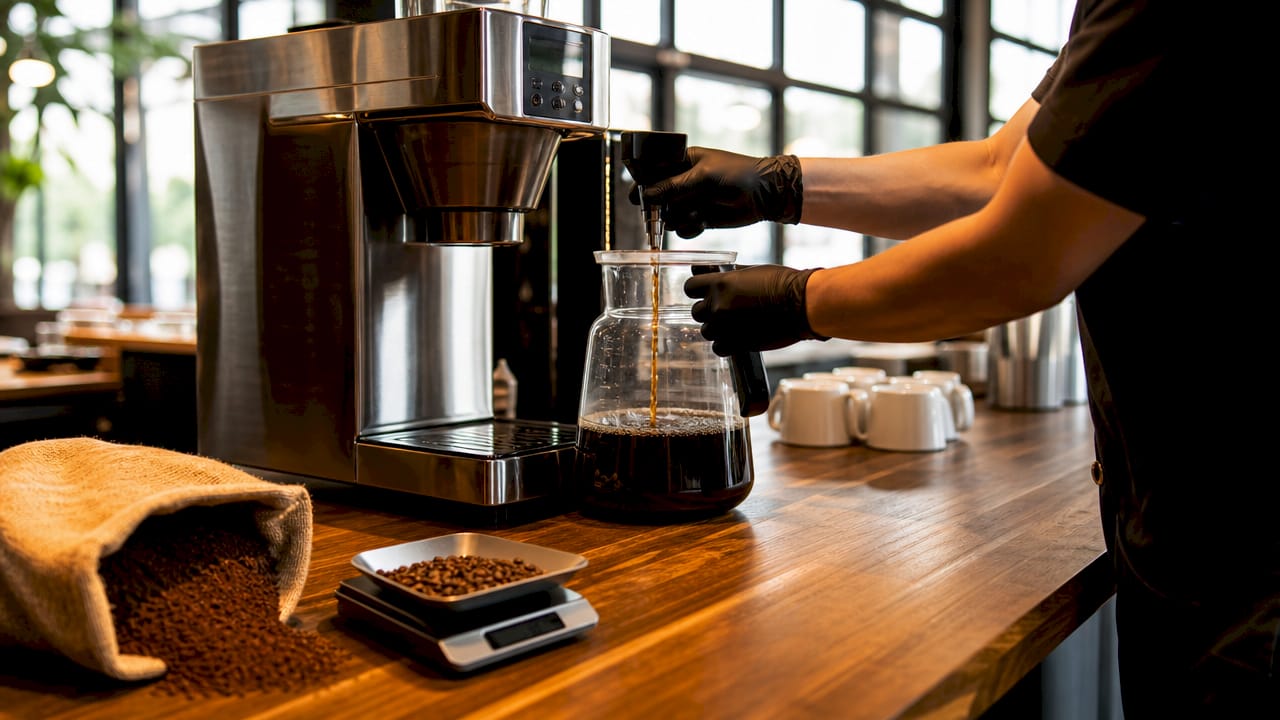
The right equipment determines whether your event coffee service runs smoothly or falls apart at the seams. Commercial batch brewers, large-capacity drip machines, and insulated airpots are the core tools for any gathering above 40 guests. You also need a reliable scale, a burr grinder capable of handling volume, quality filters, and a water source you trust.
| Equipment | Capacity | Best for | Key consideration |
|---|---|---|---|
| Commercial batch brewer | 60–100+ cups/hour | Conferences, weddings | Requires 20-amp circuit |
| Large-capacity drip machine | 30–60 cups/cycle | Office events, brunches | Slower cycle time |
| Percolator (large) | 30–100 cups | Outdoor events | Harder to control temperature |
| Cold brew setup | 50–200 servings | Summer events, festivals | Requires 12–24 hours prep |
| Insulated airpots/servers | 1.5–5 liters each | All event types | Maintains heat without scorching |
Power is a real constraint most planners overlook. A full espresso bar setup typically needs an 8 ft x 10 ft footprint or more, while a coffee cart setup requires at least 6 ft x 6 ft of clear space. Confirm outlet availability and amperage before you commit to any equipment layout.
Freshly ground beans and filtered water are not optional upgrades. They are the two variables that most directly affect flavor in large batch brewing. Grinding in batches is recommended when you are working with more than 5 pounds of coffee at once, since grinder heat buildup can affect consistency.
Pro Tip: Preheat your insulated servers and airpots with hot water before filling them. Preheating servers keeps coffee at 80–85°C longer and prevents the first pour from cooling the vessel.
How do you calculate coffee and water quantities for large batches?
The standard coffee-to-water ratio for large batch brewing sits between 1:15 and 1:17, meaning 1 gram of coffee for every 15–17 grams of water. A 1:16 ratio is the most practical starting point for events, since it produces a balanced cup that suits most guests without skewing too strong or too weak.
Here is how to scale that for common event sizes:
- 40 cups (200 oz / 5,900 ml of water): Use approximately 370 grams (about 13 oz) of ground coffee.
- 60 cups (300 oz / 8,850 ml of water): Use approximately 550 grams (about 19.5 oz) of ground coffee.
- 100 cups (500 oz / 14,750 ml of water): Use approximately 920 grams (about 32.5 oz) of ground coffee.
| Batch size | Water volume | Coffee needed (1:16 ratio) |
|---|---|---|
| 40 cups | 5,900 ml | 370 g |
| 60 cups | 8,850 ml | 550 g |
| 100 cups | 14,750 ml | 920 g |
| 150 cups | 22,125 ml | 1,383 g |
The most common pitfall in bulk coffee preparation is measuring by volume instead of weight. A cup of ground coffee can vary by 20% or more in weight depending on grind size and roast level. A digital scale eliminates that variable entirely and pays for itself at the first event. You can find a detailed guide to scales that explains exactly why weight beats volume every time.
Grind size also shifts when you scale up. Larger coffee beds create more flow resistance, so a slightly coarser grind than you would use for a single batch prevents over-extraction and bitterness in large batches.
Step-by-step brewing methods for serving coffee to large groups
Batch brewing with a commercial or large-capacity drip brewer
This is the most reliable method for most events. Commercial batch brewers maintain consistent water temperature and flow rate, which removes the two biggest variables in large batch brewing.
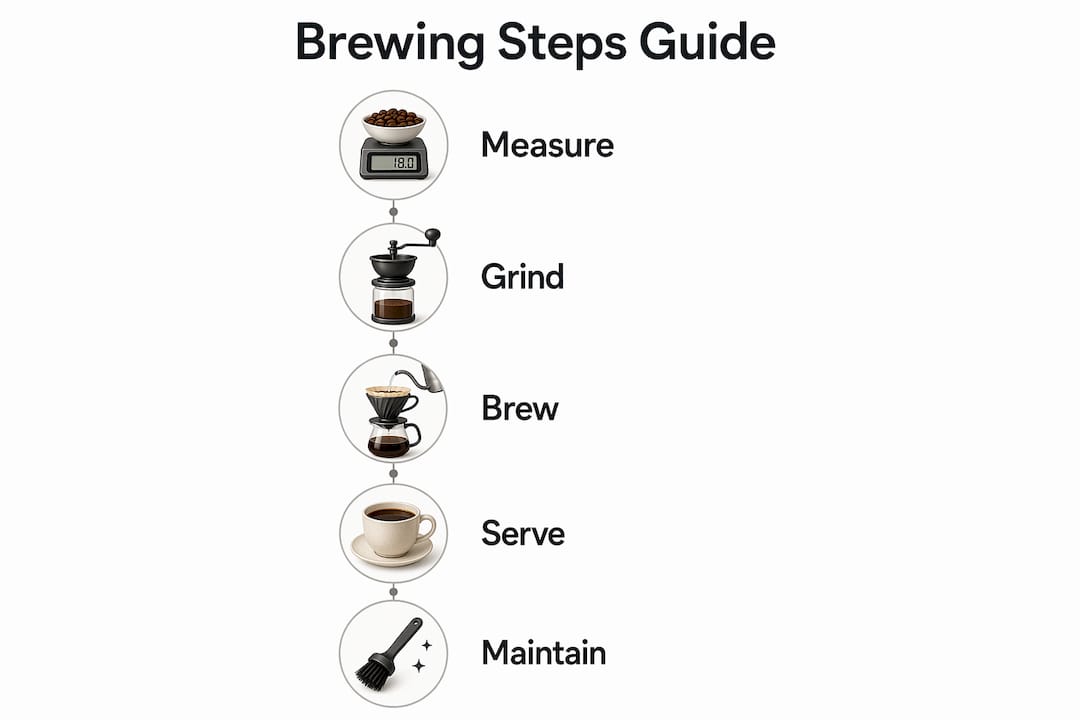
- Measure your coffee by weight using a digital scale.
- Use filtered water and set the brewer to 198–205°F if temperature is adjustable.
- Place a fresh filter and add your ground coffee. Use a slightly coarser grind than you would for a home brewer.
- Start the brew cycle and transfer immediately to a preheated insulated airpot. Never leave coffee on a hot plate.
- Label each airpot with the brew time so you can track freshness.
- Stagger your batches every 20–30 minutes to keep coffee fresh throughout the event.
Troubleshooting: If the coffee tastes bitter, coarsen the grind or reduce brew time. If it tastes weak, tighten the grind or increase your coffee dose slightly.
French press adaptation for groups
A large French press (8-cup or 12-cup) works well for smaller gatherings of 10–20 people and produces a richer, fuller body than drip brewing.
- Heat water to 200°F (just off the boil).
- Add coarsely ground coffee at a 1:15 ratio.
- Stir gently, place the lid on without pressing, and steep for 4 minutes.
- Press slowly and pour immediately into a preheated server. Do not leave coffee in the press after plunging.
- Repeat in staggered cycles to maintain freshness.
Make-ahead cold brew concentrate for large events
Cold brew is the single best option for summer events and outdoor gatherings. You can prepare it 24 hours in advance, which removes all time pressure on the day of the event. Cold brew preparation at scale uses a 1:4 to 1:5 ratio of coffee to cold water for concentrate, which guests dilute with water or milk at a 1:1 ratio.
- Combine coarsely ground coffee and cold filtered water in a large container.
- Stir to saturate all grounds, cover, and refrigerate for 12–24 hours.
- Strain through a fine mesh filter or cheesecloth into a clean container.
- Store concentrate refrigerated and serve over ice with water or milk alternatives on the side.
Pro Tip: Staggering your batches rather than brewing one massive pot prevents the bitter off-notes that develop when coffee sits on heat for more than 30–60 minutes. Plan one fresh batch every 30 minutes for events over 2 hours.
How do you manage coffee service logistics during events?
Logistics separate a good coffee experience from a frustrating one. Arrive 60–120 minutes before service begins to set up and test all equipment. Setup and breakdown typically require 45–90 minutes for setup and another 30–60 minutes for cleanup, so build that into your event timeline.
Guest preferences vary more than most planners expect. Iced coffee accounts for roughly one-third of specialty coffee orders at events, and about 17% of guests request dairy-free milk alternatives, with oat milk leading that group. Plan your supplies accordingly and label all options clearly.
Your logistics checklist for serving coffee to large groups:
- Set up a dual service line for events over 75 guests. Dual service lines cut wait times significantly during peak periods.
- Position condiments (sugar, milk, alternatives) at the end of the service line, not the beginning, to prevent bottlenecks.
- Keep at least one backup airpot of hot coffee ready before the first runs out.
- Offer both hot and iced coffee options. Guests who want iced coffee will not wait in a hot coffee line.
- Stock oat milk, almond milk, or another dairy-free option. Guests with dietary needs notice when you do not. Pairing coffee with dairy-free snack options creates a more inclusive experience for all attendees.
- Assign at least one person to monitor coffee levels and replenish supplies throughout the event.
- Discard any coffee that has been sitting for more than 60 minutes. Stale coffee damages your reputation more than running out briefly.
Key Takeaways
Brewing great coffee for large groups depends on controlling four variables: ratio, grind freshness, water quality, and temperature, not on owning the most expensive machine.
| Point | Details |
|---|---|
| Use weight, not volume | A digital scale at a 1:16 ratio removes the biggest source of inconsistency in large batches. |
| Stagger your batches | Brew every 20–30 minutes to keep coffee fresh and avoid bitter off-notes from extended heat exposure. |
| Plan for guest preferences | Expect one-third of guests to want iced coffee and roughly 17% to request dairy-free milk. |
| Arrive early | Allow 60–120 minutes for setup and testing before the first guest arrives. |
| Preheat your servers | Insulated airpots keep coffee at 80–85°C longer when preheated with hot water before filling. |
What I have learned from brewing coffee at events
The most common mistake event planners make is treating coffee as an afterthought. They spend weeks on food, décor, and music, then assign coffee to whoever shows up first with a machine. That approach produces mediocre coffee every time, and guests notice.
The machine matters far less than the preparation. I have seen a well-calibrated large-capacity drip brewer outperform expensive commercial espresso setups because the person running the drip brewer understood ratios and freshness. Mastering coffee-to-water ratios and brewing precision yields consistently good coffee at scale, regardless of equipment budget.
Fresh grinding is the single highest-impact upgrade you can make. Pre-ground coffee loses most of its aromatic compounds within 30 minutes of grinding. For a 100-person event, grinding in batches immediately before each brew cycle makes a noticeable difference in the cup.
Invest in quality insulated servers before anything else. A good airpot holds temperature for 4–6 hours without scorching the coffee. That one piece of equipment solves the freshness problem for most events without requiring staggered brewing at all. If you are working with a tight budget, check out café-quality brewing under $100 for practical gear recommendations that do not sacrifice quality.
Plan your guest flow before you plan your menu. A single service line at a 100-person event creates a bottleneck that frustrates guests and makes your coffee service feel chaotic. Two lines, clearly labeled, with condiments at the end, solve 80% of service problems before they start.
— zachary
Zscoffee has what you need for your next event
Planning coffee for a crowd starts with having the right products on hand. Zscoffee carries a curated selection of coffee and tea products suited for large batch brewing, from whole bean coffees that hold up well in high-volume drip setups to accessories that make service smoother.
For guests who want to take their coffee on the go, Zscoffee’s insulated travel mugs keep drinks hot through long events without the need for constant refills. Whether you are hosting a wedding, a corporate breakfast, or a weekend brunch for 50, Zscoffee’s online store gives you a practical starting point for building your event coffee setup.
FAQ
How much coffee do I need for 100 guests?
At a 1:16 coffee-to-water ratio, 100 cups requires approximately 920 grams (about 32.5 oz) of ground coffee. Plan for 1–1.5 cups per guest as a baseline, then add 15–20% for heavy coffee drinkers.
What is the best brewing method for a large event?
A commercial batch brewer is the most reliable method for events over 40 guests. It maintains consistent temperature and flow rate, produces large volumes quickly, and pairs well with insulated airpots for extended service.
How long does brewed coffee stay fresh?
Coffee left on a heat plate develops off-flavors within 30–60 minutes. Transferred to a preheated insulated airpot, brewed coffee stays fresh and flavorful for up to 2 hours.
Should I hire a professional coffee caterer or brew it myself?
Professional coffee catering costs between $9 and $15 per guest, which adds up to roughly $900 for 100 guests. A DIY drip setup for the same crowd costs around $167. The right choice depends on your budget, the formality of the event, and how much time you can dedicate to setup and service.
What milk alternatives should I offer at a coffee event?
Oat milk is the most requested dairy-free option at events, with about 17% of guests asking for a non-dairy alternative. Stock oat milk as your primary option and consider almond milk as a secondary choice to cover most dietary needs.