TL;DR:
- The premium coffee experience combines traceability, expert brewing, and sensory engagement into a meaningful ritual. It emphasizes origin, freshness, and preparation quality over price or marketing claims.
The premium coffee experience is defined as a curated combination of exceptional bean quality, expert brewing technique, and deliberate sensory engagement that transforms coffee from a daily habit into a meaningful ritual. Unlike commodity coffee, the premium version demands attention at every stage: origin, processing, preparation, and tasting. Specialty coffee grading systems, such as the Specialty Coffee Association’s 100-point scale, provide one benchmark for quality, but the full experience goes further. It includes the story behind the bean, the skill of the person brewing it, and the knowledge you bring to the cup. Zscoffee exists to help coffee lovers access that full experience, from sourcing to the final sip.
What is the premium coffee experience, and how is it defined?
The premium coffee experience is best understood as a holistic sensory and educational experience, not solely about bean rarity or price. That distinction matters because the word “premium” carries no formal certification the way “specialty coffee” does. Specialty coffee, as defined by the Specialty Coffee Association, requires a cupped score of 80 or above on a 100-point scale. Premium coffee sits in a broader, less regulated category that signals better raw beans and more careful roasting, but it is not a formal quality guarantee like specialty coffee.
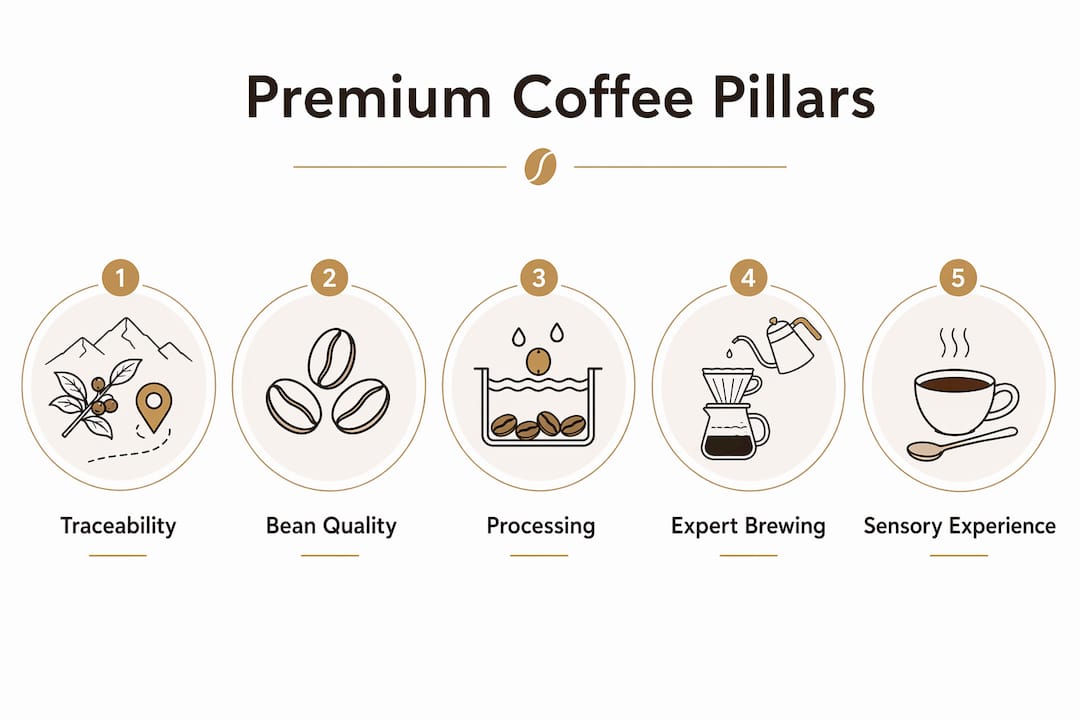
What separates a genuinely premium cup from a well-marketed one comes down to three pillars: traceability, freshness, and preparation. Traceability means you can identify the farm, region, and often the specific lot. Freshness means the beans were roasted recently and stored correctly. Preparation means the brewing method, water quality, and technique are all calibrated to the bean’s specific profile. When all three align, the result is a cup with clarity, complexity, and balance that commodity coffee simply cannot replicate.
Pro Tip: Look for a roast date on the bag, not just a “best by” date. Beans are typically at peak flavor within two to four weeks of roasting.
What makes coffee premium? Bean quality, sourcing, and processing
Bean quality starts before the roaster ever touches the coffee. Altitude, microclimate, and soil composition all shape the density and sugar content of the cherry, which directly affects flavor complexity. High-altitude farms in Ethiopia’s Yirgacheffe region or Colombia’s Huila department produce beans with tighter cell structures and higher acidity, which translate to brighter, more layered cups.
Processing method is the next major variable. The three primary approaches are washed, natural, and honey processing. Each one affects how much of the fruit’s sugars and mucilage contact the bean during drying.
- Washed processing strips the fruit away before drying, producing clean, bright cups where origin character shines clearly.
- Natural processing dries the whole cherry, imparting fruity, wine-like sweetness to the bean.
- Honey processing sits between the two, leaving some mucilage on the bean for a balanced sweetness with clarity.
Understanding how processing affects flavor helps you predict what a coffee will taste like before you brew it. That knowledge is part of what makes the premium experience feel intentional rather than accidental.
Consumers should look for detailed origin information, roast dates, and tasting notes to confirm real premium quality rather than marketing language. A bag that lists “single origin” without a specific farm, region, or processing method is offering a vague promise, not a premium product. Ethical sourcing also matters: direct trade relationships between roasters and farmers often produce better quality control and more consistent flavor year over year.
Pro Tip: When buying online, filter by single-origin beans with a named farm or cooperative. That level of specificity is a reliable signal of genuine premium quality.
How does expert brewing elevate the premium coffee experience?
Even the finest beans produce a disappointing cup when brewed carelessly. Premium coffee beans can taste poor if not brewed to specific profiles or if stored improperly. Brewing is where the experience either comes together or falls apart.
The four variables that matter most are water temperature, water quality, grind size, and brew time. Each one interacts with the others, so changing one requires adjusting the rest.
- Water temperature: The Specialty Coffee Association recommends brewing between 195°F and 205°F. Water below that range under-extracts the coffee, producing sour, thin cups. Water above it over-extracts, creating bitterness.
- Water quality: Filtered water improves perceived quality more than just upgrading beans alone. Tap water with high mineral content or chlorine masks delicate flavor notes.
- Grind size: Coarser grinds suit slower methods like French press or cold brew. Finer grinds work for espresso and AeroPress. Matching grind to method controls extraction rate.
- Brew method: Pour-over methods like the Hario V60 or Chemex highlight clarity and acidity. Espresso concentrates flavor and body. Each method reveals different aspects of the same bean.
The role of baristas in specialty coffee extends beyond technical skill. Expert baristas adjust variables in real time based on how the coffee is flowing, smelling, and tasting. That responsiveness is what separates a trained professional from someone following a recipe. For home brewers, a consistent routine and a quality burr grinder close much of that gap. A home brewing guide built around your specific beans and equipment is the fastest way to improve your results.
Understanding flavor profiles and tasting nuances in premium coffee
Premium coffee carries flavor notes that range from bright citrus and stone fruit to dark chocolate, caramel, and roasted nuts. These notes are not added artificially. They emerge from the bean’s origin, processing, and roast level. A washed Ethiopian Yirgacheffe often tastes of bergamot and jasmine. A natural Brazilian Cerrado tends toward milk chocolate and hazelnut. Knowing what to expect sharpens your ability to taste it.
Premium coffee experiences integrate education of the farm’s story, expert brewing precision, and food pairings that complement unique acidity or sweetness profiles. That educational layer transforms tasting from passive drinking into active discovery.
| Flavor Category | Common Notes | Typical Origin |
|---|---|---|
| Fruity and bright | Citrus, berry, stone fruit | Ethiopia, Kenya |
| Floral and delicate | Jasmine, rose, lavender | Ethiopia, Yemen |
| Chocolaty and rich | Dark chocolate, cocoa | Colombia, Brazil |
| Nutty and sweet | Hazelnut, almond, caramel | Brazil, Guatemala |
| Earthy and complex | Cedar, tobacco, spice | Sumatra, India |
Basic tasting technique follows a simple sequence. First, smell the dry grounds before brewing. Then smell the brewed cup before drinking. Take a small sip and let it coat your whole palate. Notice the acidity on the sides of your tongue, the body in the center, and the finish at the back. That finish, how long the flavor lingers and what it becomes, is one of the clearest markers of quality.
Food pairing amplifies specific notes. A fruity Ethiopian coffee pairs well with dark chocolate or fresh berries. A nutty Colombian roast complements almond croissants or mild cheese. Creative coffee flavor pairings turn a single cup into a full sensory event.
What should you expect from premium coffee venues and pricing?
The premium coffee experience now spans a wide range of formats, from urban specialty cafés to ultra-exclusive private tastings. Urban premium cafés emphasize curated retail, provenance storytelling, refined service, and environment, creating elevated coffee consumption beyond a quick pickup. Their customer base includes connoisseurs, tourists, and gift buyers seeking a refined break.
Pricing reflects the level of curation and rarity involved. In Tokyo’s Ginza district, espresso costs about 600–1,000 JPY, while curated tasting flights run between 2,500–5,000 JPY at premium cafés. At the far end of the spectrum, hyper-luxury coffee experiences in Dubai can cost up to about $980 for a single guided tasting session featuring ultra-rare Panama Geisha beans for up to four guests. That price reflects private guidance, extreme bean rarity, and a fully curated environment.
One of the most interesting emerging formats is coffee omakase. Coffee omakase offers a curated, multi-course tasting where baristas guide guests through coffee origin, processing, and flavor complexity, redefining premium coffee as a deeply interactive experience. Guests trust the host to select coffees and brewing styles, creating a refined tasting akin to fine dining.
“Coffee omakase transforms coffee drinking from transactional to experiential, focusing on trust between barista and guest and multi-course tasting. The format signals a broader shift: premium coffee is no longer just about what is in the cup. It is about the full context surrounding it.”
The gap between a $5 specialty pour-over and a $980 private tasting is enormous in price but narrower in principle. Both formats prioritize traceability, skilled preparation, and intentional tasting. The difference is the level of curation, rarity, and service layered on top.
Key Takeaways
The premium coffee experience is defined by traceability, skilled preparation, and deliberate sensory engagement, not price or marketing language alone.
| Point | Details |
|---|---|
| Definition of premium coffee | Premium coffee combines traceable bean quality, careful roasting, and expert preparation into one experience. |
| Bean quality signals | Look for named origin, processing method, roast date, and tasting notes to confirm genuine quality. |
| Brewing variables matter | Water temperature, water quality, grind size, and brew method each shape the final cup as much as the beans do. |
| Flavor tasting technique | Smell before sipping, notice acidity and body, and track the finish to identify quality and complexity. |
| Experience formats vary | Premium coffee ranges from urban specialty cafés to coffee omakase and ultra-luxury private tastings. |
Why premium coffee is really about education, not exclusivity
The most common mistake coffee lovers make is equating price with quality. I have tasted $40-per-bag single-origins that were flat and forgettable, and I have had $12 bags from small regional roasters that were genuinely extraordinary. The difference was never the price tag. It was the roaster’s attention to freshness, the farmer’s processing choices, and the care taken in brewing.
What I find most exciting about the current moment in coffee culture is that the educational layer is becoming more accessible. Coffee omakase sessions, tasting flights at specialty cafés, and detailed roaster notes online all give coffee lovers real tools to develop their palates. You do not need to spend $980 on a Dubai tasting session to understand what makes a great cup. You need curiosity, a decent grinder, filtered water, and beans with a roast date on the bag.
The specialty coffee quality standards that underpin premium coffee are not gatekeeping mechanisms. They are frameworks that help you ask better questions. Why does this coffee taste bright? Because it was washed and grown at high altitude. Why does this one taste heavy and sweet? Because it was naturally processed in a warm, humid climate. Once you understand those connections, every cup becomes more interesting.
Premium coffee’s future points toward broader accessibility and deeper consumer knowledge, not higher prices. The coffee lovers who get the most out of this shift will be the ones who invest in understanding, not just spending.
— zachary
Zscoffee: where to find premium coffee and brewing tools
Zscoffee carries a curated selection of premium coffee and tea products sourced for quality, freshness, and traceability. Every product in the shop reflects the same standards this article describes: clear origin information, careful roasting, and the kind of flavor complexity that rewards an attentive palate.
Whether you are building a home brewing setup or looking for beans that match a specific flavor profile, Zscoffee’s full product range covers everything from single-origin whole beans to brewing accessories. The shop is designed for coffee lovers who want more than a generic bag off a supermarket shelf. Freshness, provenance, and quality are the baseline, not the exception.
FAQ
What is the definition of premium coffee?
Premium coffee refers to beans with traceable origin, careful processing, and skilled roasting that produce a cup with clear flavor complexity. Unlike specialty coffee, “premium” is not a formally certified grade, so consumers should look for roast dates, named origins, and detailed tasting notes to verify quality.
What makes coffee premium versus regular commodity coffee?
Premium coffee differs from commodity coffee in traceability, freshness, and preparation standards. Commodity coffee prioritizes volume and consistency across blends, while premium coffee highlights specific farm origins, processing methods, and flavor profiles.
How do brewing methods affect the premium coffee experience?
Brewing method, water temperature, water quality, and grind size each shape the final cup as much as the beans themselves. Water quality and temperature control during brewing are as critical to premium results as sourcing exceptional beans.
What is coffee omakase, and why is it considered premium?
Coffee omakase is a multi-course guided tasting where a barista selects coffees and brewing styles for the guest, similar to a fine dining tasting menu. The format prioritizes education, trust, and sensory discovery, making it one of the most immersive premium coffee formats available today.
How much does a premium coffee experience cost?
Pricing ranges widely. A specialty pour-over at an urban café typically costs $5–$15, while curated tasting flights at premium venues like those in Tokyo’s Ginza district run the equivalent of $17–$34. At the luxury extreme, private guided tastings featuring ultra-rare beans can reach approximately $980 per session.