TL;DR:
- Coffee blends are carefully crafted mixtures designed to provide balanced, consistent flavors that single-origin coffees cannot achieve alone. Skilled blenders select and roast components to optimize flavor attributes like body, acidity, and sweetness, ensuring stability across harvests and brewing methods. These blends improve accessibility, versatility, and flavor layering, making them essential tools in specialty coffee.
Coffee blends are intentionally crafted mixtures designed to deliver balanced, consistent flavor profiles that single-origin coffees often cannot achieve alone. Understanding why blends are crafted reveals a discipline that sits at the intersection of chemistry, sensory memory, and logistics. The best specialty roasters treat blending as a formal craft, not a shortcut. Well-made blends use high-scoring specialty-grade coffees identical to those found in single-origin offerings. The difference is intent, not quality.
Why blends are crafted: the core purpose
Blend crafting, known in the specialty coffee industry as blend formulation, exists to solve a problem that no single coffee can fix on its own. Every coffee origin carries strengths and weaknesses. Ethiopian coffees deliver vivid floral brightness and fruit-forward acidity. Colombian coffees bring caramel sweetness and a round, medium body. Neither one alone covers every dimension a well-rounded cup needs.
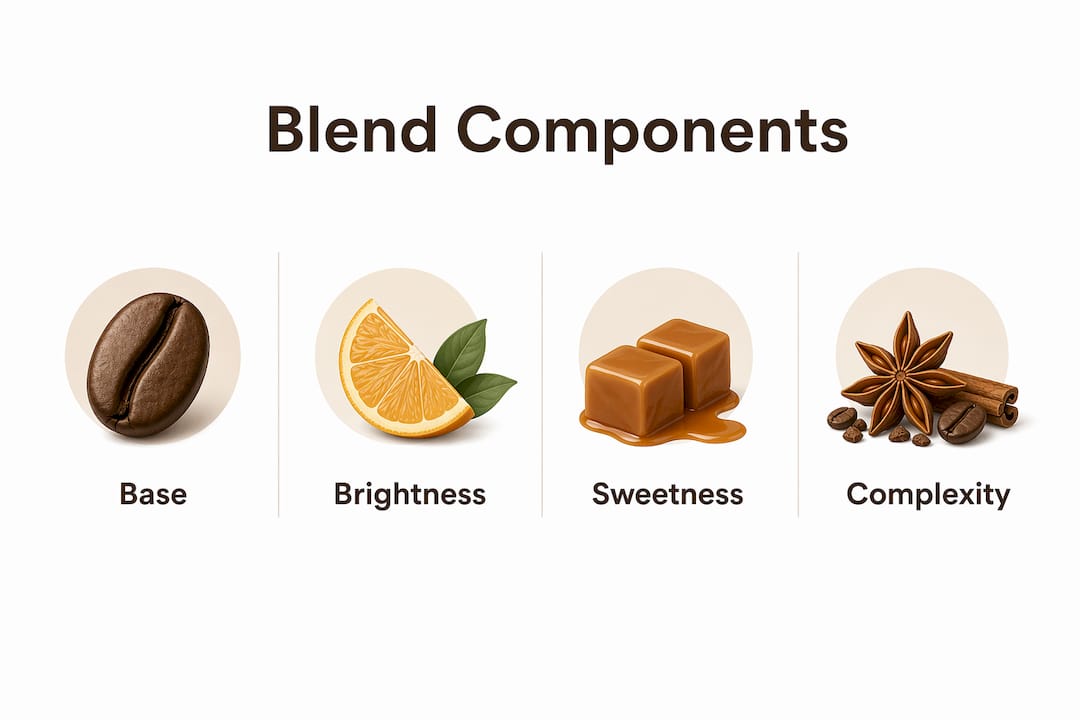
Master blenders balance four core taste attributes: body, acidity, sweetness, and complexity. Each component coffee fills a specific role in that framework. Sweetness acts as the glue that binds acidity and body together. Complexity adds the signature character that makes a blend memorable and distinct.
Blend formulation also solves a commercial problem. Coffee is an agricultural product, and harvests shift every year. A roaster who builds a menu around a single Ethiopian lot faces a real risk when that lot runs out. Blends maintain flavor consistency year-round by swapping origin components as harvest seasons rotate, keeping the overall cup profile stable for cafes and home brewers alike.
What flavor dimensions do blends achieve that single origins can’t?
Single-origin coffees are celebrated for their purity and terroir. A natural-processed Yirgacheffe from Ethiopia can taste like blueberry jam. A washed Kenyan can hit with bright tomato-like acidity. Those qualities are remarkable in isolation, but they can also feel one-dimensional or unforgiving in the cup.
Blends unlock layered flavor by assigning each origin a specific job:
- Body: Coffees from Brazil or Sumatra add weight and a creamy mouthfeel.
- Acidity: Ethiopian or Kenyan lots contribute brightness and fruit-forward lift.
- Sweetness: Colombian or Guatemalan coffees provide caramel and brown sugar notes.
- Complexity: A small percentage of a processed natural or aged coffee adds depth and intrigue.
The result is a cup that moves through multiple flavor stages as it cools. You get brightness on the first sip, sweetness in the middle, and a clean, full finish. That progression is difficult to achieve with a single origin, no matter how exceptional the lot.
Pro Tip: When tasting a blend, let your cup cool from 185°F down to around 140°F. The flavor layers shift noticeably as temperature drops, and you will catch notes that disappear in a too-hot cup.
Blends also perform more consistently across different water temperatures and brew ratios. A single-origin coffee dialed in for one brewing method can taste flat or harsh when you switch methods. A well-formulated blend absorbs those variables and still delivers. That is one of the most underappreciated benefits of blend crafting for everyday coffee drinkers.
How do master blenders create and refine blends?
The process of creating a signature blend is methodical and time-consuming. It follows a repeatable structure that professional roasters have refined over decades.
- Define the flavor target. Before a single bean is roasted, the blender writes a flavor brief. This document describes the intended body, acidity, sweetness, and finish in sensory terms.
- Select candidate coffees. The blender pulls green samples from multiple origins and processing methods that could fill each role in the flavor brief.
- Roast each component separately. Post-roast blending is the industry standard in specialty coffee. Each coffee is roasted to its own optimal profile before the components are combined. Pre-roast blending mixes green beans before roasting, which causes uneven development because different beans carry different densities and moisture levels.
- Run trial batches. Creating a new signature blend involves 15–20 trial batches of 100–200 grams each. These are blind tested using standard cupping protocols to evaluate acidity, body, and sweetness without bias.
- Adjust ratios. After each cupping round, the blender shifts percentages. A blend that reads too bright might drop its Ethiopian component from 30% to 20% and increase the Brazilian base.
- Scale and validate. Once the ratio is locked, the blend is scaled to a full production batch and cupped again to confirm the profile holds.
Pro Tip: Home brewers can apply this same logic. Buy three single-origin coffees with different profiles, brew them separately, then mix them in your cup at different ratios. Start with a 60/40 split and adjust from there.
| Blending method | How it works | Best for |
|---|---|---|
| Post-roast blending | Each component roasted separately, then combined | Specialty and artisan roasters |
| Pre-roast blending | Green beans mixed before roasting | Large-scale commercial production |
| In-cup blending | Brewed coffees mixed after extraction | Home experimentation |
Master blending at a professional level also requires compensating for bean density and moisture variation across origins. A dense Kenyan bean needs more heat and time than a lower-density Brazilian natural. Roasting them together produces an uneven result. Roasting them separately and combining afterward solves that problem entirely.
Blenders also rely on sensory memory. A skilled blender memorizes dozens of flavor profiles simultaneously and anticipates how components will interact before the first trial batch is even brewed. That skill takes years to develop and is one reason blend formulation remains a specialized role in the coffee industry.
Why blends matter for accessibility and brewing versatility
Blends act as an on-ramp to specialty coffee by delivering approachable flavor and consistency without demanding precise brewing technique. A new coffee drinker who slightly over-extracts a single-origin Ethiopian will get a bitter, harsh cup. The same mistake with a well-formulated blend produces a cup that is still enjoyable.
The versatility of blends across brewing methods is a direct result of how they are formulated:
- Espresso: Espresso blends are crafted to perform under pressure extraction, balancing acidity and sweetness while producing thick crema. Most high-end cafes worldwide use blends for espresso for exactly this reason.
- Filter and pour-over: Blends designed for filter brewing emphasize clarity and sweetness, with enough body to hold up through longer extraction times.
- Milk-based drinks: A blend built for lattes and cappuccinos needs enough intensity to cut through milk. Single-origin coffees with delicate floral notes often disappear entirely under steamed milk.
The importance of crafted blends for home brewers goes beyond flavor. Blends reduce the margin for error. You can brew them at a slightly higher or lower temperature, adjust your grind a little coarser or finer, and still get a satisfying result. That forgiveness is built into the formula by design. For a deeper look at how single-origin coffees compare in terms of brewing demands, the single-origin flavor guide at Zscoffee covers the differences clearly.
What are common blend structures and how are components chosen?
Most specialty roasters build blends around a four-role framework. Each component coffee fills one primary role, though some coffees can serve double duty.
Base (body): This component makes up the largest percentage of the blend, typically 40–60%. Brazilian naturals and Sumatran wet-hulled coffees are common choices. They add weight, low acidity, and a smooth, full mouthfeel.
Brightness (acidity): This component adds lift and fruit character. Ethiopian washed coffees and Kenyan AAs are frequent choices. They make up 20–30% of most blends.
Sweetness: Colombian, Costa Rican, and Guatemalan coffees fill this role. They round out the acidity and add caramel or brown sugar notes. They typically represent 15–25% of the blend.
Complexity: A small percentage, often 5–10%, of a processed natural, honey-processed, or aged coffee adds depth. This component gives the blend its signature character.
Designing blends around flavor profiles rather than fixed origins lets roasters adapt to seasonal crop changes while preserving the blend identity. When a specific Colombian lot runs out, the blender finds a replacement with a similar sweetness profile from a different region. The target flavor stays the same even when the components shift.
Seasonal reformulation is one of the most demanding parts of blend management. It requires the blender to source replacement lots, run new trial batches, and validate that the cup profile matches the original before releasing the updated blend. For coffee drinkers, this work happens invisibly. You open a new bag and the blend tastes the same as the last one. That consistency is the result of deliberate, ongoing craft.
Pro Tip: Check the roast date on your blend bag. A well-formulated blend hits its peak flavor window between 7 and 21 days after roasting. Brewing too early or too late shifts the balance noticeably.
Key Takeaways
Coffee blends are crafted to achieve balanced, consistent, and complex flavor profiles that no single origin can reliably deliver on its own.
| Point | Details |
|---|---|
| Blends solve flavor gaps | Each component fills a specific role: body, acidity, sweetness, or complexity. |
| Post-roast blending is the standard | Roasting each component separately gives blenders precise control over flavor. |
| Trial batches drive quality | Signature blends go through 15–20 small trial batches before a ratio is finalized. |
| Blends improve brewing reliability | A well-formulated blend stays enjoyable even when brewing variables shift slightly. |
| Seasonal reformulation preserves identity | Blenders swap origin components as harvests change to keep the cup profile consistent. |
Blending deserves more credit than it gets
Blending is the most underrated skill in specialty coffee. The conversation in enthusiast circles almost always gravitates toward single origins, terroir, and processing methods. Blends get treated as the commercial option, the thing cafes use when they want consistency over character. That framing is wrong, and I think it does real damage to how people approach the category.
The truth is that a great blend requires more skill than sourcing a great single origin. Sourcing is about finding something exceptional. Blending is about building something exceptional from parts that are each incomplete on their own. You have to hold dozens of flavor profiles in your memory simultaneously, anticipate how they will interact under heat and pressure, and then run the math on ratios until the cup matches the vision in your head. That is a genuinely hard thing to do well.
What I find most interesting is how blends reveal the ongoing nature of coffee craft. A single-origin lot is a fixed point. Once it is gone, it is gone. A blend is a living formula that evolves with every harvest cycle. The blender’s job never ends. Every new crop requires evaluation, comparison, and often reformulation. That ongoing commitment to a consistent result is something I deeply respect.
My advice to any coffee drinker who has dismissed blends: buy one from a roaster whose single-origin work you already trust. Brew it the same way you would brew their single-origin offerings. Pay attention to how the flavor moves as the cup cools. You will likely find more going on than you expected. Blends reward attention just as much as single origins do. They just ask you to look for different things. You can also experiment at home with coffee blending tips that apply these same principles at a small scale.
— zachary
Expertly crafted blends, ready to brew
Knowing why blends are crafted is one thing. Tasting the result is another.
Zscoffee carries a curated selection of coffee blends and single origins sourced from specialty-grade lots across multiple growing regions. Each blend in the catalog is built around the same four-role framework described here: body, acidity, sweetness, and complexity working together in a defined ratio. Whether you brew espresso, pour-over, or a simple drip, there is a blend formulated to perform well in your cup. Browse the full Zscoffee product collection to find blends and brewing accessories that match how you like to drink coffee.
FAQ
What does it mean to craft a coffee blend?
Crafting a coffee blend means deliberately combining coffees from different origins, processing methods, or roast profiles to achieve a specific flavor target. The goal is a cup that balances body, acidity, sweetness, and complexity in a way no single coffee can deliver alone.
Are blends lower quality than single-origin coffees?
No. Top blends use the same high-scoring specialty-grade coffees found in single-origin offerings. The difference is intent: blends are formulated for balance and consistency, not to showcase one origin’s unique character.
Why do roasters use post-roast blending instead of mixing green beans?
Post-roast blending lets roasters develop each component to its optimal roast profile before combining. Mixing green beans before roasting causes uneven development because different origins carry different bean densities and moisture levels.
How often do blend formulas change?
Blend formulas are reviewed and often adjusted with each new harvest cycle. Roasters swap out origin components as seasonal lots change, running new trial batches to confirm the cup profile matches the original target before releasing the updated blend.
Can home brewers create their own blends?
Yes. Start by brewing two or three single-origin coffees separately, then combine them in your cup at different ratios. A 60/40 split between a body-forward Brazilian and a bright Ethiopian is a practical starting point for building a balanced home blend.