TL;DR:
- Coffee blends combine multiple origins to create balanced, complex, and consistent flavor profiles.
- High-quality blends can match single origin scores and showcase deliberate craftsmanship.
- Understanding blend structure and experimenting at home enhances appreciation and customization.
Many coffee lovers assume that single origin means superior, and blends are somehow a shortcut. That assumption is worth questioning. Some of the most celebrated cups in specialty coffee history have been carefully constructed blends, engineered for complexity and harmony that no single farm could deliver alone. Understanding what a coffee blend actually is, how it’s built, and how to choose one wisely can completely transform your brewing experience. This article walks you through everything, from the basics of blending to hands-on tips for experimenting at home, so you can make more confident, flavorful choices every time you brew.
Table of Contents
- What is a coffee blend?
- How blends differ from single origins
- The anatomy of a blend: Origins, ratios, and flavor goals
- Choosing and enjoying coffee blends
- The truth about blends: Why complexity beats purity
- Discover your next favorite blend at Z’s Coffee
- Frequently asked questions
Key Takeaways
| Point | Details |
|---|---|
| Blend definition clarified | A coffee blend is a mix of beans from multiple origins designed for flavor complexity and harmony. |
| Expert-crafted blends rival single origins | Specialty blends can achieve top SCA scores and offer balanced, memorable flavors. |
| Blend construction framework | Using base, mid, and high ratios helps enthusiasts experiment and personalize their coffee blends. |
| Flavor exploration encouraged | Tasting blends at different temperatures and pairing methods unlocks deeper enjoyment and learning. |
What is a coffee blend?
A coffee blend is a mix of beans sourced from two or more origins, farms, or processing methods, combined to achieve a specific flavor profile. The goal isn’t to hide flaws. It’s to build something greater than the sum of its parts. A roaster might combine a bold Brazilian base with a bright Ethiopian component to create a cup that’s both rich and lively.
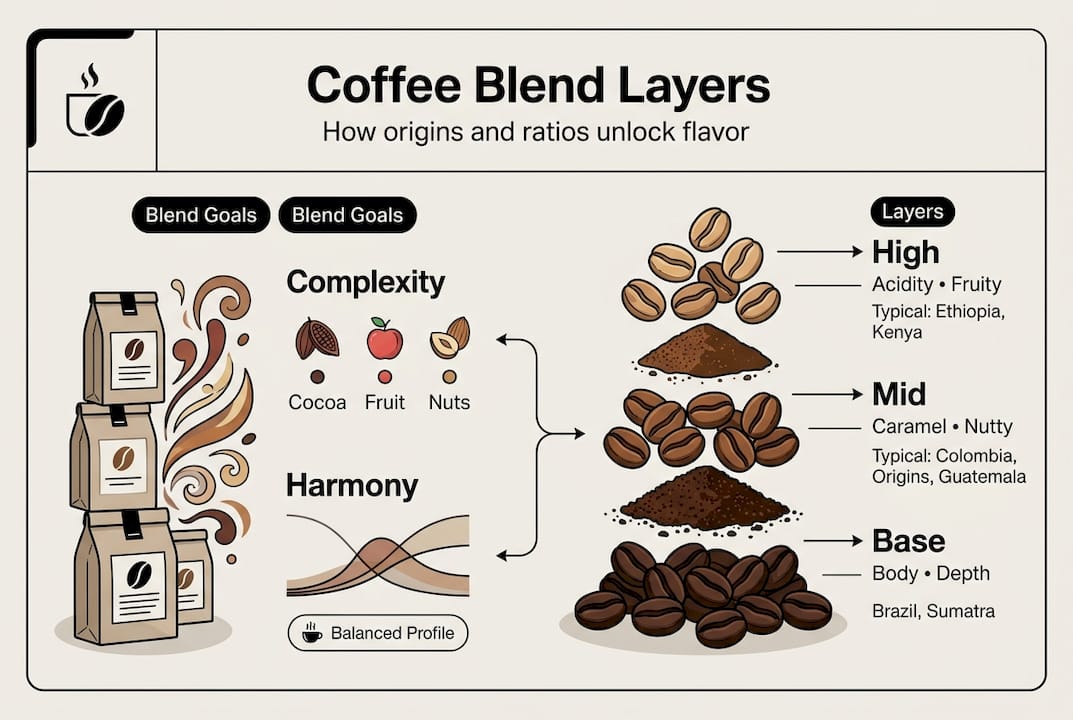
Blends are designed with three core goals in mind: complexity, harmony, and consistency. Complexity means layers of flavor that unfold as you drink. Harmony means those layers don’t fight each other. Consistency means every bag tastes the same, which matters enormously for cafes and home brewers who want a reliable morning cup.
The comparison between blends and single origin coffee differences often comes down to what you’re after. Single origins showcase the unique character of one place, one harvest, one set of conditions. Blends offer broader appeal and intentional layering. Neither is objectively better.
Here’s a quick look at how they compare:
| Feature | Single origin | Blend |
|---|---|---|
| Flavor focus | Terroir, uniqueness | Balance, complexity |
| Consistency | Seasonal variation | Highly consistent |
| Complexity | Singular, pure | Layered, harmonious |
| Best for | Tasting, pour-over | Espresso, daily brew |
When it comes to quality, blends hold their own. Most blends use 2-4 origins to avoid muddiness, and high-quality specialty blends can match single origin quality with SCA scores above 80. More than four or five origins can actually cancel out distinctive traits rather than enhance them.
Understanding coffee flavor profiles is key to appreciating what a well-designed blend is trying to accomplish. Roasters who specialize in types of coffee blends spend months dialing in ratios before a blend ever hits shelves.
Pro Tip: When shopping for blends, stick to those listing two to four origins. More than that often signals a filler-heavy product rather than a thoughtfully crafted one.
- Blends combine 2 or more origins for a targeted flavor result
- They prioritize consistency, making them ideal for espresso and commercial use
- Quality blends can score 80+ on the SCA scale, rivaling single origins
- The best blends are transparent about their component origins
How blends differ from single origins
Single origin coffees have earned a devoted following, and for good reason. They let you taste the terroir, meaning the soil, altitude, rainfall, and processing choices that make one farm’s output distinct from another. A washed Kenyan coffee tastes nothing like a natural Ethiopian, and that contrast is exactly what enthusiasts love.
But here’s where the conversation gets interesting. Some purists favor single origins for purity, but skilled blends create superior harmony and complexity that a single origin simply cannot replicate. A masterfully blended espresso, for example, might offer caramel sweetness, bright citrus acidity, and a lingering chocolate finish all in one shot. That’s nearly impossible from a single farm.
“A great blend isn’t a compromise. It’s a composition, like a chord in music where each note is chosen to make the whole sound richer than any note played alone.”
Quality is not the exclusive territory of single origins. High-quality specialty blends can match SCA scores of single origins, and understanding specialty coffee standards helps you evaluate both categories on equal footing.
The shift in expert opinion is real. More roasters and competition judges now recognize blends as a legitimate expression of craft. If you want to master coffee quality standards and develop a more nuanced palate, learning to evaluate blends is just as important as appreciating single origins.
Key differences at a glance:
- Single origin: Reflects one place, one harvest, often seasonal availability
- Blend: Reflects a roaster’s vision, available year-round with consistent flavor
- Single origin: Best appreciated through methods that highlight clarity, like pour-over or Chemex
- Blend: Excels in espresso, where balance and body matter most
- Both can achieve specialty-grade quality with the right sourcing and roasting
Statistic to know: Specialty grade coffee, whether single origin or blended, must score 80 or above on the 100-point SCA scale. The best blends regularly hit 85 and above.
The anatomy of a blend: Origins, ratios, and flavor goals
Every great blend starts with a blueprint. Roasters think in terms of three layers: the base, the mid, and the high. Each layer serves a different purpose, and the ratios between them shape the final cup.
The base (roughly 50% of the blend) provides body and structure. Brazilian naturals and Sumatran beans are common base choices because they’re low-acid, full-bodied, and consistent. The mid (around 30%) adds character and acidity, often sourced from Central American origins like Guatemala or Colombia. The high (about 20%) contributes aroma, floral notes, or fruit-forward brightness, typically from Ethiopian or Kenyan beans.
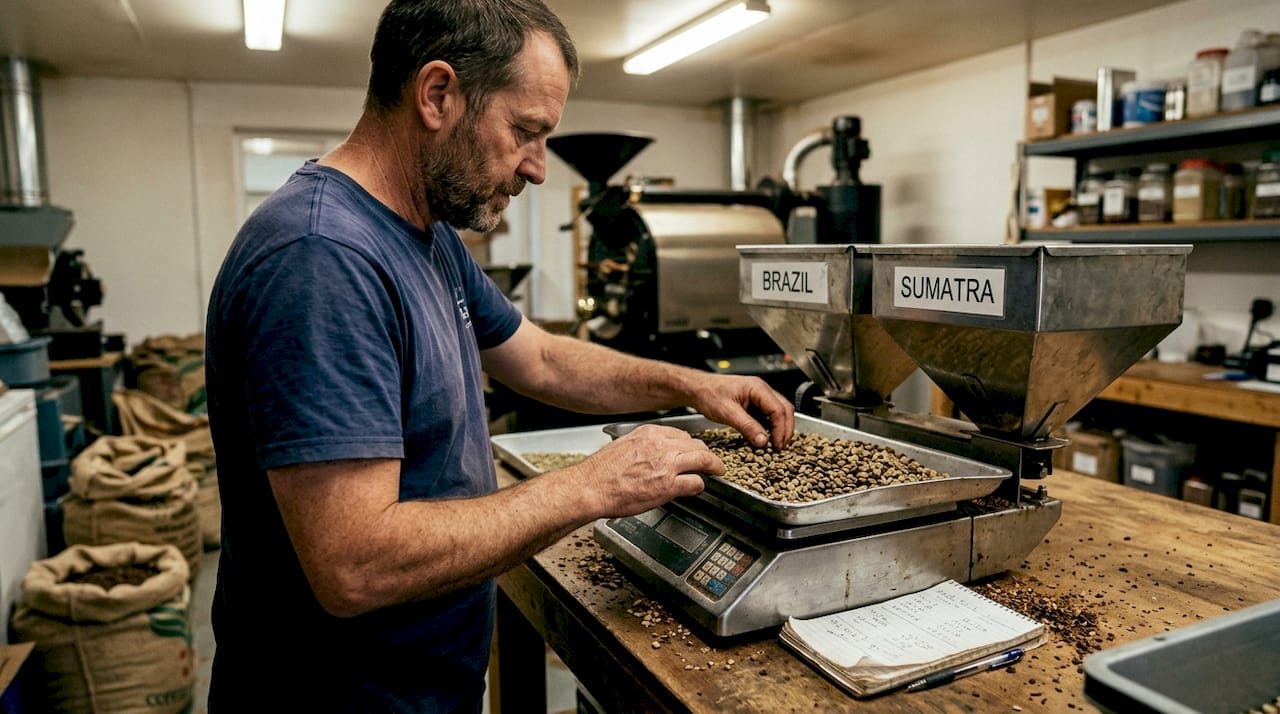
Most blends use 2-4 origins for clarity, and home experimentation works best when you follow this base-mid-high framework with multiple tastings to refine results.
Here’s a sample framework to visualize common blend structures:
| Layer | Ratio | Origin example | Flavor contribution |
|---|---|---|---|
| Base | 50% | Brazil, Sumatra | Body, chocolate, low acidity |
| Mid | 30% | Colombia, Guatemala | Balance, mild acidity, sweetness |
| High | 20% | Ethiopia, Kenya | Fruit, floral, brightness |
Understanding types of coffee beans and how coffee varietals and flavor interact gives you a real advantage when building or evaluating blends.
Pro Tip: Keep a simple tasting journal. Write down the ratio you used, the origins, and what you tasted hot versus as it cooled. Small adjustments, like shifting the high component from 20% to 25%, can noticeably change the cup.
Steps to experiment with blending at home:
- Choose two to three single origin beans you already enjoy
- Start with the 50/30/20 ratio as your baseline
- Brew a small test batch using your usual method
- Taste it hot, then again after five minutes of cooling
- Adjust one variable at a time, never change two ratios simultaneously
- Record every result so you can replicate your best batch
Choosing and enjoying coffee blends
Knowing how blends are built is one thing. Choosing the right one for your palate is another skill entirely. Start by identifying what you actually want from your cup. Are you chasing complexity with multiple flavor layers? Smooth harmony for a daily espresso? Or a distinct note like dark chocolate or stone fruit?
Once you know your goal, look for blends from reputable specialty roasters who are transparent about their component origins. Vague labels like “premium blend” without origin information are a red flag. The best roasters treat their blend recipes with the same pride as a chef treats a signature dish.
Specialty blends can match single origin quality, so cup your chosen blend multiple times, both hot and as it cools, and across different brew methods to fully evaluate its complexity.
Tips for choosing and enjoying blends:
- Read the flavor description carefully and match it to your preferred taste profile
- Check for SCA scores or competition results when available
- Try the same blend as both espresso and filter to see how it transforms
- Explore coffee flavor pairing ideas to enhance your tasting sessions
- Consider how coffee origin and quality influence the blend’s character
- Learn about coffee processing methods to understand why two beans from the same country can taste completely different in a blend
Pro Tip: Taste your blend at three temperatures: right off the brew, after five minutes, and fully cooled. Many blends reveal their most interesting notes as they cool, especially fruit and floral tones that heat can suppress.
Tracking your preferences over time is genuinely useful. After tasting ten or fifteen blends, patterns emerge. You might discover you consistently prefer blends with a Colombian mid component, or that you always gravitate toward natural-processed bases. That self-knowledge makes every future purchase more satisfying.
The truth about blends: Why complexity beats purity
Here’s an opinion worth sitting with: the specialty coffee world spent years elevating single origins as the pinnacle of quality, and in doing so, it accidentally made blends feel like a lesser choice. That framing was never quite accurate, and it’s actively shifting now.
Blends are where a roaster’s full creative vision lives. A single origin shows you what nature produced. A blend shows you what a skilled human made from it. Both are impressive, but only one of them involves deliberate craft at every stage from sourcing to ratio design to roast profiling.
Some of the most celebrated espresso programs in the world run on blends, not single origins. The consistency, the balance, the way a blend holds up through milk or ice, these are features, not compromises.
“Choosing a blend isn’t settling. It’s recognizing that harmony is its own form of excellence.”
If you’re ready to explore what gourmet blend exploration actually looks like in practice, you’ll find that embracing blends opens up a whole new dimension of coffee appreciation that purity-focused thinking tends to close off.
Discover your next favorite blend at Z’s Coffee
You now have a real framework for understanding, evaluating, and even creating coffee blends. The next step is putting that knowledge to work with quality ingredients.
At Z’s Coffee, you’ll find a curated selection of coffee and tea blends sourced from reputable roasters who take blending seriously. If you want to experiment without committing to a full bag, the flavored coffees sample pack is a great way to taste multiple profiles side by side. For those who want convenience without sacrificing quality, explore the instant coffee options that bring blend craftsmanship to your busiest mornings. Your perfect cup is closer than you think.
Frequently asked questions
What makes a high-quality coffee blend?
A high-quality blend uses carefully chosen origins, balanced ratios, and often achieves specialty scores above 80, placing it on equal footing with top single origin coffees.
How many origins should be in a blend?
Most experts recommend 2-4 origins for clarity and harmony, as using more than four or five origins tends to muddle distinctive flavor traits rather than enhance them.
Can coffee blends be as flavorful as single origin coffees?
Yes. Skilled blends create superior harmony and complexity, and many specialty blends regularly score alongside the best single origins in professional evaluations.
How can I experiment with blending coffee at home?
Start with a 50% base, 30% mid, and 20% high ratio, taste your blend both hot and as it cools, then adjust one ratio at a time until you find your preferred flavor balance.