Standing in front of a wall of gourmet coffee blends at your local shop or scrolling through dozens of options online can feel genuinely overwhelming. Every bag promises something extraordinary, yet most of us reach for the same familiar label out of habit. The truth is, understanding what separates a breakfast blend from an espresso blend, or a house blend from a single origin, changes everything about how you shop and brew. This guide breaks down how gourmet blends are built, what each style delivers in the cup, and how you can start experimenting at home with real confidence.
Table of Contents
- How gourmet coffee blends are crafted
- Light, medium, and dark blends: Key flavor profiles
- Popular specialty blends and their unique signatures
- Blending techniques for the home enthusiast
- What most guides miss about blending coffee at home
- Discover gourmet blends and gear at Z’s Coffee
- Frequently asked questions
Key Takeaways
| Point | Details |
|---|---|
| Blend structure basics | A gourmet blend uses base, character, and high note beans to balance body, complexity, and acidity. |
| Roast profiles matter | Choosing between light, medium, or dark blends significantly affects flavor and brewing results. |
| Experiment at home | Home blenders can test ratios and techniques to create a personalized gourmet coffee experience. |
| Popular blend examples | Try well-known options like Breakfast Blend, French Roast, and house blends to discover your preference. |
How gourmet coffee blends are crafted
Not every coffee labeled “gourmet” earns the title. A true gourmet blend starts with specialty-grade beans sourced from specific growing regions, then combines them with intention. The goal is flavor complexity that no single bean can achieve alone. Think of it like cooking: one ingredient rarely makes a dish memorable, but the right combination creates something greater than the sum of its parts.
Blend building follows a layered structure. Most roasters work with three roles: the base, the character bean, and the high note. The base provides body and sweetness, usually making up around 60% of the blend. The character bean adds personality, typically 20 to 30%, contributing flavor notes like chocolate, nuts, or fruit. The high note, at roughly 10 to 20%, lifts the cup with brightness, acidity, or floral qualities. According to blending methodology principles, these ratios give roasters a reliable framework while still leaving room for creativity.
Understanding coffee processing methods also matters here, since washed, natural, and honey-processed beans behave differently in a blend. A natural-processed Ethiopian bean brings fruity sweetness that a washed Colombian cannot replicate.
| Blend component | Typical ratio | Common origins |
|---|---|---|
| Base | 55 to 65% | Brazil, Colombia |
| Character | 20 to 30% | Guatemala, Honduras |
| High note | 10 to 20% | Ethiopia, Kenya |
Roasters also choose when to blend. The two main approaches are:
- Pre-roast blending: Green beans are mixed before roasting, which creates a unified flavor but limits control over individual bean development.
- Post-roast blending: Each bean is roasted separately to its ideal level, then combined. This takes more effort but produces greater precision.
- Batch blending: Multiple roasted lots are combined to maintain consistency across large production runs.
When you choose coffee beans for home brewing, knowing these principles helps you read a bag’s tasting notes with far more accuracy.
With blending basics in mind, let’s explore the diverse world of gourmet blend styles.
Light, medium, and dark blends: Key flavor profiles
Now that you know what goes into a gourmet blend, identifying the right profile matters for home results. The roast level is the single biggest factor shaping what ends up in your cup, and roast categories each deliver a distinct experience.
Light blends preserve the bean’s origin character. Expect bright acidity, floral or fruity notes, and a lighter body. These blends shine in pour-over and drip brewing where clarity is everything.
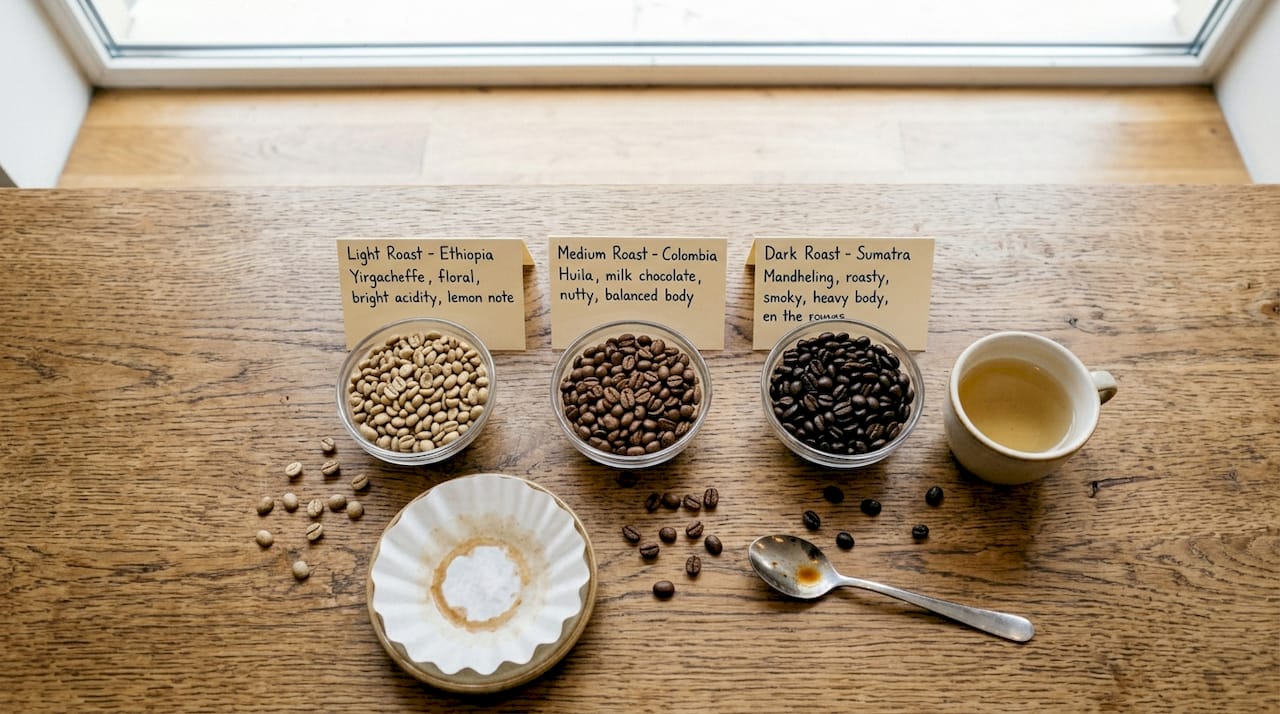
Medium blends balance origin flavor with roast development. You get caramel sweetness, mild acidity, and a rounder mouthfeel. The classic Breakfast Blend lives here, designed to be approachable and crowd-pleasing.
Dark blends push roast flavors to the front. Chocolate, smoke, and bold bitterness define the profile. French Roast and Espresso Blends fall into this category, built for intensity and richness.
| Roast style | Acidity | Body | Signature notes | Best brew method |
|---|---|---|---|---|
| Light | High | Light | Floral, citrus, berry | Pour-over, drip |
| Medium | Balanced | Medium | Caramel, nuts, mild fruit | Drip, French press |
| Dark | Low | Full | Chocolate, smoke, bold | Espresso, French press |
Here is a quick breakdown of what each style brings:
- Light: Delicate, tea-like, origin-forward
- Medium: Versatile, sweet, well-rounded
- Dark: Bold, roasty, low acidity
Pro Tip: If you brew espresso at home, reach for a medium-dark or dark blend. The pressure-based extraction amplifies bitterness in lighter roasts, which can make the cup taste sharp rather than bright. For perfect coffee brewing with a pour-over, a light or medium blend lets the origin flavors speak clearly.
Matching roast to brew method is one of the fastest ways to improve your results without changing anything else.
Popular specialty blends and their unique signatures
Beyond roast level, specialty blends add more character and allow for deeper exploration. These are the blends that carry a story, a purpose, or a distinct identity that sets them apart from generic grocery store options.
Here are the major specialty blend categories worth knowing:
- House blend: A roaster’s signature offering, designed to represent their style. Usually medium roast, balanced, and approachable.
- Breakfast blend: Light to medium, mild and smooth. Built for morning drinking without overwhelming the palate early in the day.
- Espresso blend: Formulated for pressure extraction. Often medium-dark with low acidity and a thick, syrupy body.
- Seasonal blend: Limited releases tied to harvest cycles or holidays. These often feature rare or experimental lots.
- Café-style blend: Designed to replicate the flavor profile of a specific café’s signature drink, often with milk in mind.
Well-known market examples include the Breakfast Blend by Community Coffee, the French Roast by Peet’s, and the classic Espresso Blends from Lavazza. Each of these has built a loyal following precisely because the flavor profile is consistent and intentional.
“The best way to understand what you love in coffee is to try blends from different roasters side by side. Your palate learns faster through contrast than through repetition.” — Specialty Coffee Association education resources
Exploring single origin blends alongside multi-origin blends is a particularly rewarding exercise. Single origins highlight one region’s terroir, while multi-origin blends smooth out extremes and create harmony. Neither is superior. They serve different moments and moods.
Understanding coffee flavor pairing also opens up new ways to enjoy these blends. A chocolatey espresso blend pairs beautifully with almond milk, while a bright breakfast blend complements a citrus pastry in ways that feel almost designed.
Blending techniques for the home enthusiast
Having reviewed classic and specialty blends, let’s help you experiment at home for your ultimate cup. Home blending is more accessible than most people realize, and the rewards are genuinely exciting.
Here is a simple process to get started:
- Pick two or three single-origin coffees that represent different flavor roles. For example, a Brazilian bean for body and an Ethiopian bean for brightness.
- Brew them separately first to understand each bean’s individual character before combining them.
- Test ratios in the cup by mixing already-brewed coffee at different proportions. This is the fastest way to find a direction without wasting whole beans.
- Blend the whole beans once you have a ratio you enjoy, then brew as normal.
- Document everything. Write down your ratios, grind settings, and tasting notes. Memory is unreliable when you are experimenting.
- Adjust gradually. Change one variable at a time so you know exactly what shifted the flavor.
A critical home blending principle is to always test with brewed coffee first before committing to a full bean blend. This saves time, money, and frustration.
Pro Tip: Match your blend profile to your brew method before you start. A blend heavy in natural-processed beans works beautifully in a French press but can taste muddy in a pour-over. Having the right coffee accessories also matters. A quality scale and grinder make ratio testing far more reliable than eyeballing measurements.
Common challenges home blenders face include over-roasted bases that dominate the cup, mismatched grind sizes when combining whole beans of different densities, and inconsistent water temperature. Knowing how to select accessories that support precision brewing solves most of these problems quickly.
What most guides miss about blending coffee at home
Most blending guides hand you a formula and call it done. Follow the ratios, use the right beans, match your brew method, and you will get a great cup. That is true, but it misses something important.
The most satisfying blends we have ever tasted came from breaking the rules. A 70% base instead of 60%. A high note bean used at 30% because the flavor was just too good to hold back. Mistakes that turned out to be discoveries.
Here is the uncomfortable truth: a perfect blend is not perfectly repeatable. Water mineral content, bean age, humidity, even your mood when you are tasting all shift the outcome. Chasing an exact replication of last week’s cup is a recipe for frustration. Chasing the feeling of that cup is far more productive.
Understanding specialty coffee standards gives you a useful foundation, but your palate is the final authority. Trust it. The home enthusiast who experiments freely and notes what they enjoy will always outpace the one who follows instructions without curiosity. Blending is not a formula. It is a conversation between you and the beans.
Discover gourmet blends and gear at Z’s Coffee
Ready to put your new knowledge into action and discover blends suited to your personal taste? At Z’s Coffee, we have curated a selection of gourmet options specifically for home enthusiasts who want to explore beyond the ordinary.
Browse our gourmet blends collection to find options spanning every roast level and flavor profile covered in this guide. If you want something fast and convenient without sacrificing quality, our instant gourmet coffee delivers a rich cup in seconds. And for those mornings when you are on the move, our travel mug with a handle keeps your carefully crafted blend at the perfect temperature wherever you go. Start exploring, start tasting, and let your next favorite blend find you.
Frequently asked questions
What is the main advantage of a gourmet coffee blend versus a single origin coffee?
A gourmet blend combines beans from different regions to create a balanced and complex flavor, while single origin coffee highlights one region’s distinct character. Blending base, character, and high notes achieves a depth no single bean can match alone.
How do I choose the right blend for my brewing method?
Select a darker, fuller blend for espresso or French press and a lighter, brighter blend for pour-over or drip to match extraction style. Matching blend to brew method is one of the most practical ways to improve your cup immediately.
Can I create my own gourmet blend at home with store-bought beans?
Yes, start by testing brewed ratios before committing to whole-bean blending, then adjust based on your tasting notes. Most home blenders find their ideal ratio within three or four experiments.
Are gourmet blends more expensive than regular blends?
Gourmet blends typically cost more because they use higher-quality beans and careful formulation, but they deliver a richer and more nuanced cup. The specialty bean sourcing behind gourmet blends justifies the price difference for most enthusiasts.
Which countries produce beans most commonly used in blend bases?
Brazil is the most common base bean due to its body and natural sweetness, while Ethiopia frequently serves as the high note for its bright acidity and floral character. Brazil for body, Ethiopia for brightness is a pairing you will find in countless professional blends worldwide.