TL;DR:
- In specialty coffee, acidity is a positive attribute that adds brightness, complexity, and fruitiness to the flavor profile.
- Adjusting origin, processing, roast level, and brewing methods allows brewers to control perceived acidity and enhance their coffee experience.
Many coffee lovers shy away from “acidic” coffee, picturing something harsh, sour, or rough on the stomach. That instinct makes sense on the surface, but it misses one of the most exciting elements in specialty coffee. Acidity is not a flaw or a warning sign. In the right balance, it is exactly what makes a great Ethiopian single origin taste of ripe blueberries, or a washed Kenyan burst with bright citrus. This guide breaks down what acidity actually means, where it comes from, and how you can use it to find coffees you will genuinely love.
Table of Contents
- What does acidity in coffee really mean?
- The science behind coffee acidity: pH, perception, and compounds
- What shapes coffee acidity? Origins, roast, and brewing variables
- Enjoying coffee acidity: Tips for tasters and home brewers
- Why embracing acidity can transform your coffee experience
- Explore vibrant coffees with Z’s Coffee
- Frequently asked questions
Key Takeaways
| Point | Details |
|---|---|
| Acidity equals brightness | In coffee, acidity means lively, clean flavors, not sourness or harshness. |
| Taste over pH | Perceived acidity comes from flavor compounds, not just the pH of the brew. |
| Control with roast | Lighter roasts enhance acidity, while darker roasts smooth it out for different palates. |
| Experiment at home | Adjust origin, roast, and brew method to find your unique balance of brightness and smoothness. |
What does acidity in coffee really mean?
Acidity gets a bad reputation because the word carries baggage from chemistry class and digestive health conversations. In the coffee world, though, it describes something completely different and deeply positive. Think of it as the quality that makes a coffee feel alive in your mouth, the sensation that makes you lean forward after the first sip.
As coffee tasting experts explain, “acidity” in coffee usually means a desirable sensory impression of brightness, liveliness, and cleanness on the palate. It is not the same as “sour” or stomach acid.
Professional tasters, called cuppers, treat acidity as one of the most critical indicators of specialty coffee quality. A flat, lifeless cup often scores lower precisely because it lacks the brightness that makes a coffee interesting. In specialty circles, acidity is celebrated, not avoided.
Here is what high-quality acidity actually contributes to a cup:
- Brightness: A lively, clean sensation at the front of the palate
- Complexity: Layers of flavor that unfold as the coffee cools
- Fruitiness: Notes of citrus, apple, berry, or stone fruit
- Balance: When paired with sweetness and body, acidity creates a harmonious, rounded taste
- Length: A pleasantly lingering finish rather than a flat fade
Learning to identify acidity while tasting coffee flavors shifts your entire perception of what “good coffee” means. Instead of looking for a smooth, neutral cup, you start appreciating the dynamic range that bright coffees offer.
The science behind coffee acidity: pH, perception, and compounds
Now that we understand what acidity means, it’s important to separate taste from pure science. Many people assume that pH, which is the standard scale measuring how acidic or alkaline a solution is, directly controls how acidic a coffee will taste. That assumption leads to confusion.
Brewed coffee’s pH typically sits around 5 on the pH scale, which is mildly acidic. For reference, orange juice hovers around pH 3.5 and pure water sits at 7. But here is the counterintuitive part: a coffee with a slightly higher pH can actually taste brighter and more acidic than one with a lower pH. Measured pH simply does not reliably predict how bright or lively a coffee will taste.
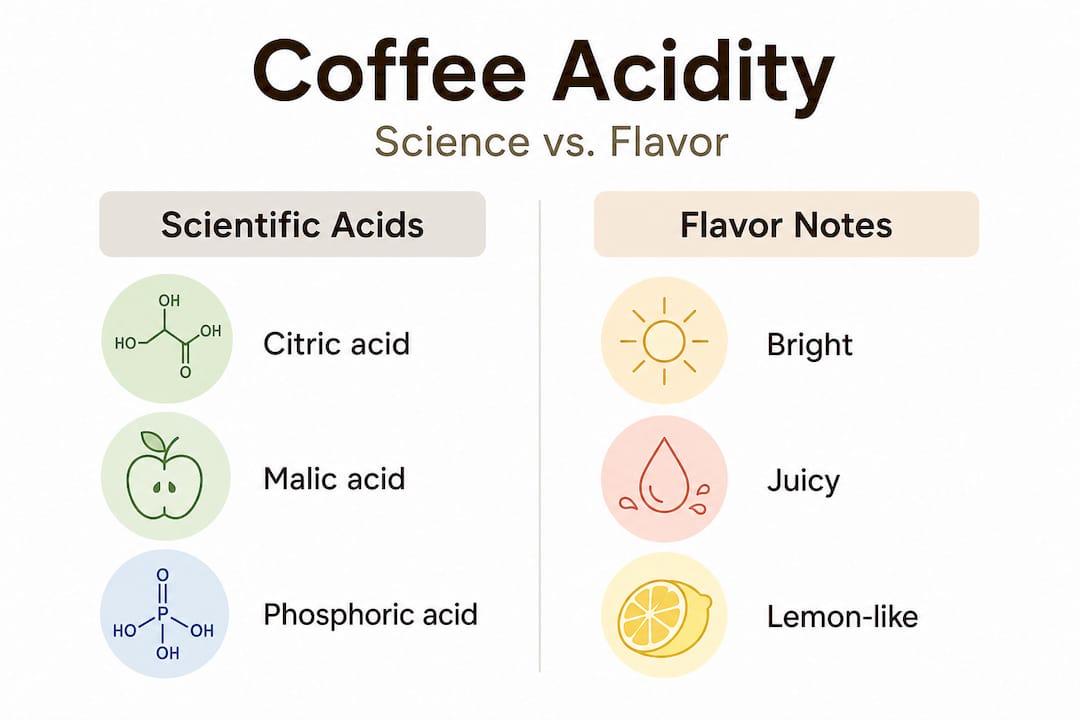
The real story is in the individual acids and aromatic compounds. Coffee contains dozens of organic acids, each contributing differently to flavor. Researchers are developing tools to measure these differences more precisely, and electrochemical sensing methods are now being used to assess acidity profiles in ways that go far beyond simple pH readings.
| Acid | Flavor contribution | Common origin |
|---|---|---|
| Citric acid | Bright, citrus, lemon-like | Light roasts, East African beans |
| Malic acid | Crisp, apple-like, clean | Washed Latin American coffees |
| Phosphoric acid | Juicy, vibrant, almost sweet | Kenyan coffees especially |
| Tartaric acid | Sharp, wine-like | Some natural-processed coffees |
| Acetic acid | Vinegar-like (negative at high levels) | Over-fermented or poorly processed |
Citric, malic, and phosphoric acids are the heroes of bright specialty coffee. When they are present in the right concentrations, they create the fruit-forward, complex flavors that make coffee regions and flavor so endlessly interesting to explore.
Pro Tip: If you want to taste acidity more clearly, let your coffee cool for a minute or two before sipping. Acidity often becomes more distinct and pronounced as temperature drops, just like with wine.
What shapes coffee acidity? Origins, roast, and brewing variables
Having covered the underlying science, let’s explore how these factors shift what’s in your cup. The good news is that acidity is highly adjustable. You have genuine control over it through the beans you choose and the way you brew them.
Origin is the first major variable. Lighter roasts preserve more of the organic acids responsible for fruit-forward brightness, while darker roasts tend to break those acids down, producing a smoother, lower-acidity cup. East African coffees, particularly from Ethiopia and Kenya, are renowned for vibrant, complex acidity. Latin American coffees from Colombia, Guatemala, or Brazil often deliver a softer, more balanced brightness that many drinkers find approachable. If you are curious about why origin matters so much for taste, it comes down to altitude, soil composition, and the varieties grown in each region.
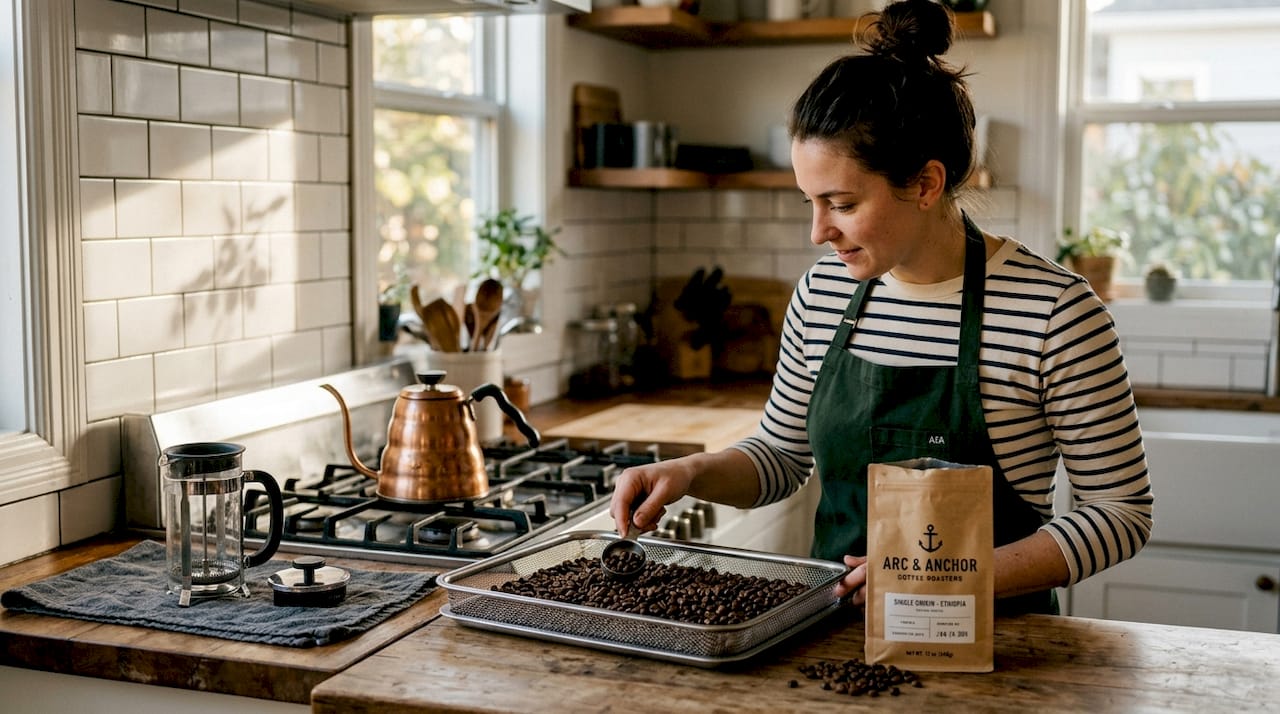
Processing method has a huge impact too. Washed, or wet-processed, coffees strip the fruit from the bean before drying. This creates clean, precise, well-defined acidity. Natural-processed coffees dry with the fruit still on, which adds body and fermented fruit notes but can blur the acidity’s clarity. For the most vivid experience of brightness, processing and flavor clarity work hand in hand, and washed processing often delivers the most transparent expression of a bean’s native acids.
Roast level is probably the most powerful lever most home brewers can pull:
- Light roast: Maximum acidity, preserves citric and malic acids, fruit-forward flavor
- Medium roast: Balanced acidity with more body and sweetness developing
- Dark roast: Significantly reduced acidity, fuller body, bitter and roasty notes dominate
Brewing method also plays a real role in how acidity lands in your cup:
| Method | Acidity expression | Reason |
|---|---|---|
| Pour-over (V60, Chemex) | High, clean, pronounced | Paper filter removes oils; precise extraction |
| AeroPress (short steep) | Moderate to high | Flexible pressure and steep time |
| French press | Softer, more muted | Metal filter retains oils, which buffer acidity |
| Espresso | Concentrated but balanced | High pressure extracts differently |
| Cold brew | Very low acidity | Long, cold extraction dissolves fewer acids |
Pro Tip: When choosing the right beans for a pour-over, go for washed, light-to-medium roasts from East Africa or Central America. That combination will give you the clearest, most vibrant example of acidity working at its best.
Water temperature matters as well. Hotter water (above 200°F or 93°C) extracts acids quickly and prominently. Slightly cooler water pulls a softer, more rounded result. If you are finding your cup too sharp, dropping water temperature by just 5 to 10 degrees can make a meaningful difference.
Enjoying coffee acidity: Tips for tasters and home brewers
With all this in mind, here are practical tips for exploring and enjoying acidity at home. The goal is not to find the most acidic coffee possible but to find the level of brightness that excites your palate.
-
Reframe the word. When you taste a bright coffee, train yourself to think “lively” or “fruity” instead of “sour.” Sourness is an imbalanced, one-dimensional sensation. True acidity in good coffee is layered and pleasant.
-
Taste single origin coffees side by side. Compare an Ethiopian natural with a Colombian washed. The contrast in brightness and fruit character will make acidity much easier to identify and understand.
-
Adjust your grind. A finer grind increases extraction, which can amplify acidity. A coarser grind softens it. If your coffee tastes too sharp, go one step coarser on your grinder and compare the result.
-
Experiment with roast levels. Buy the same origin in two roast levels if possible. Tasting them back to back is one of the fastest ways to understand how roast transforms acidity.
-
Try different coffee bean types. Arabica varieties are generally higher in acidity than Robusta. Within Arabica, heirloom Ethiopian varieties like Heirloom or 74158 are especially bright, while Bourbon or Caturra from Latin America tend toward sweetness with gentler brightness.
For those who find acidity too sharp no matter what, there is real science behind your options. Adjusting roast, origin, and brew style can make a significant difference, because perceived brightness is not tightly coupled to pH alone. It is about the specific acid compounds present and how your palate registers them.
Pro Tip: Add a small pinch of salt to a cup that tastes too sharp. Salt suppresses bitter and sour perceptions without adding any flavor of its own. It’s a barista trick worth knowing.
Why embracing acidity can transform your coffee experience
Having discussed practical tips, here is a fresh perspective worth sitting with: the coffee drinkers who learn to appreciate acidity almost always end up with a richer relationship with the beverage overall. That is not an accident.
Here at Z’s Coffee, we have noticed something consistent. Customers who come in skeptical of bright coffees, often because of one bad experience with an under-extracted shot that tasted sharp and unpleasant, tend to have a turning point the moment they try a well-balanced, fruity Ethiopian or a clean, apple-crisp washed Guatemalan. That one cup rewires something.
The reason avoiding bright coffees can actually limit your enjoyment is that acidity is the vehicle for the most nuanced flavors in coffee. Blueberry, jasmine, peach, black currant, lemon zest, and fresh green apple are all flavors that require acidity to exist. Without it, coffee flattens into roasty, bitter, or simply “coffee-flavored” territory. There is nothing wrong with that preference, but it leaves an enormous and genuinely exciting spectrum unexplored.
The uncomfortable truth is that a lot of what gets labeled as “too acidic” in someone’s home brew is actually under-extraction, not the beans themselves. An under-extracted coffee pulls the sour, sharp acids first and misses the sweetness that follows. That is a brewing problem, not an acidity problem. Understanding coffee cupping gives you the vocabulary and framework to tell the difference between “this is bright and beautiful” and “this is simply not brewed correctly.”
Chasing quality acidity also pushes you toward better sourcing. Coffees with well-developed, complex brightness are almost always grown at higher altitudes, processed with care, and roasted with intention. Following acidity is, in many ways, a shortcut to following quality.
Explore vibrant coffees with Z’s Coffee
Ready to explore coffee acidity for yourself? Understanding acidity is one thing. Tasting it in a cup that genuinely showcases it is another experience entirely.

At Z’s Coffee, we source beans specifically chosen for their distinctive origin profiles, from lively East African naturals to clean, bright washed Central Americans. Whether you want to chase the most vibrant fruit-forward cup you have ever tasted or find a balanced brightness that works perfectly with your morning routine, our curated range gives you real options. Try our curated coffee selection to find your ideal level of brightness, and if you brew on the move, our travel mug with a handle keeps your pour-over hot and ready wherever the day takes you.
Frequently asked questions
Is coffee acidity bad for your stomach?
Most brewed coffee sits at around pH 5, mildly acidic, which is less acidic than orange juice or many sodas. Sensitivity varies from person to person, but most healthy adults tolerate it well.
How can I reduce acidity in my home brew if it tastes too sharp?
Try switching to a darker roast, using a coarser grind, or brewing with a French press, since adjusting roast, brewing method, and origin all reduce perceived brightness without relying on pH adjustments alone.
Does higher pH mean less acidic-tasting coffee?
Not reliably. pH does not predict how bright a coffee tastes, because sensory acidity depends on specific organic compounds, not just hydrogen ion concentration.
Which coffee origins are known for lively acidity?
Ethiopian and Kenyan coffees are celebrated for vibrant, fruit-forward brightness, while Latin American coffees from Colombia and Guatemala typically offer a softer, more balanced acidity that many drinkers find approachable.