TL;DR:
- Boutique coffee is high-quality, fully traceable, and offers transparency about its origin, production, and ethical standards. It exceeds typical specialty coffee scores, emphasizes story and producer relationships, and showcases detailed origin data on labels. Consumers value boutique coffee for its flavor clarity, accountability, and contribution to ethical supply chains.
Boutique coffee is defined as high-quality, fully traceable coffee produced through artisanal methods, meeting strict sensory and ethical standards that separate it from mass-market alternatives. The term “boutique” is not an official industry grade like the Specialty Coffee Association’s formal classifications, but it captures a real and meaningful category. Understanding the definition of boutique coffee means understanding three things: where the bean comes from, how it scores on quality measures, and how transparently that story is told to you.
What is the definition of boutique coffee?
Boutique coffee sits at the top of the quality pyramid, but it shares that space with a closely related term you will encounter constantly: specialty coffee. The specialty coffee definition used by the industry sets a clear floor: coffee must score 80 or higher on a 100-point scale with no more than 5 defects per 350 grams of green beans. That score is the entry ticket. Boutique coffee meets that threshold and then goes further.
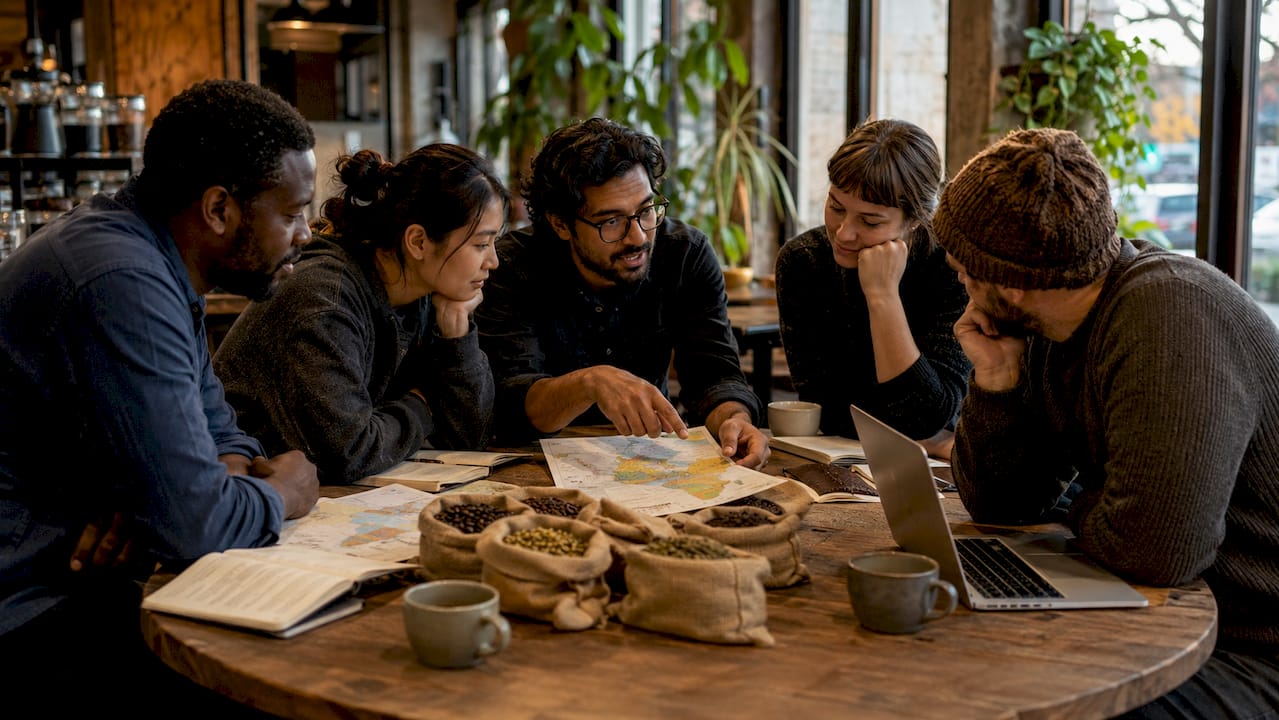
Where boutique coffee diverges from generic specialty coffee is in its emphasis on story, transparency, and producer relationships. A bag of specialty coffee can be blended from multiple traceable sources and still qualify. Boutique coffee, by contrast, typically carries the full identity of its origin: the farm, the region, the altitude, the harvest year, and the processing method. You are not just buying a cup. You are buying a documented journey.
The Specialty Coffee Association recognized in 2025 that quality is multidimensional, replacing its older cupping-only focus with a “Coffee Value Assessment” that incorporates sensory attributes, consistency, sustainability, and social impact. That shift mirrors exactly what boutique coffee has always stood for. Boutique is, in many ways, the consumer-facing expression of that broader value framework.
Boutique vs. commercial vs. specialty coffee
The table below shows where each category stands across the most important quality and transparency criteria.
| Criterion | Commercial coffee | Specialty coffee | Boutique coffee |
|---|---|---|---|
| Cupping score | Below 80 | 80+ | 80+ (often 85+) |
| Traceability | Minimal to none | Partial | Full farm-level detail |
| Defect tolerance | High | Max 5 per 350g | Near zero |
| Roast transparency | Rarely disclosed | Sometimes disclosed | Always disclosed |
| Producer relationship | None | Variable | Central to the product |
| Sustainability focus | Rare | Growing | Standard expectation |
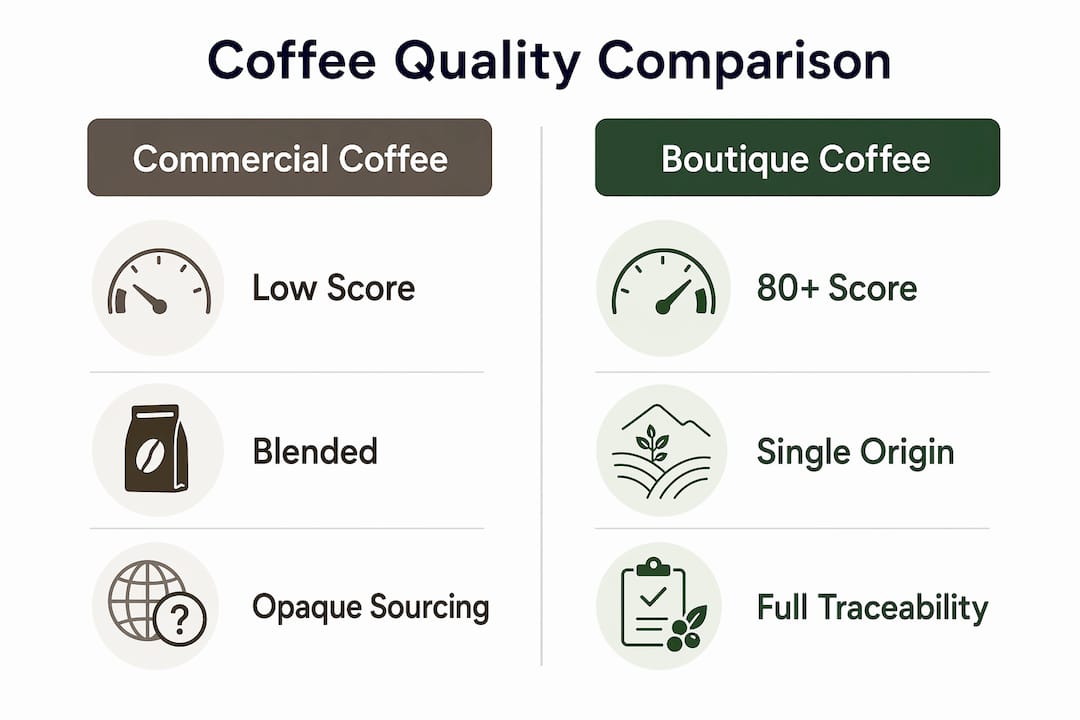
Commercial coffee is commodity coffee. It is blended for consistency and volume, not flavor complexity. Specialty coffee raises the bar on quality scores and sourcing. Boutique coffee adds full transparency, artisanal roasting, and a direct connection to the people who grew the beans.
How does traceability shape the boutique coffee experience?
Traceability is the defining feature that separates boutique coffee from everything else at a similar price point. A true boutique coffee carries what some in the industry call a complete bean passport: origin country, specific farm or cooperative, altitude of cultivation, coffee variety (such as Gesha, Bourbon, or Typica), harvest year, and roast date. Each data point changes how you taste the cup.
Altitude, for example, directly affects bean density and acidity. Beans grown above 1,500 meters tend to develop more complex sugars during the slower maturation at high elevation. When a boutique roaster tells you a coffee comes from a farm at 1,800 meters in Ethiopia’s Yirgacheffe region, that detail predicts flavor. You can expect bright citrus notes and a clean, tea-like finish before you even open the bag.
Traceability also carries ethical weight. When you know the farm name, you can research whether that producer uses fair labor practices or sustainable growing methods. Coffee origin transparency gives consumers real power to support growers who align with their values. Boutique coffee consumers prioritize creativity and ethical values alongside taste, making the purchase a statement as much as a preference.
Here is what full traceability looks like on a boutique coffee label:
- Farm or cooperative name (e.g., Finca El Paraíso, Colombia)
- Altitude (e.g., 1,750 meters above sea level)
- Coffee variety (e.g., Pink Bourbon)
- Processing method (e.g., natural, washed, honey)
- Harvest year (e.g., 2025 crop)
- Roast date (e.g., roasted March 2026)
Pro Tip: When you buy boutique coffee online, look for the roast date on the bag. Freshness matters more than you think. Ground coffee begins losing volatile aromatics within days of roasting, so aim to brew within two to four weeks of the roast date for peak flavor.
Common misconceptions about boutique coffee
Several persistent myths make it harder for consumers to identify genuine boutique coffee. Clearing them up saves you money and frustration.
1. Single-origin means boutique quality
This is the most common error. Single-origin coffee is not automatically specialty grade; quality is determined by cupping scores and defect limits, not geography alone. A single-origin coffee from a poorly managed farm can score below 75 points and still be marketed with beautiful origin story packaging. The origin label tells you where the coffee came from. It does not tell you whether it was grown, processed, or roasted well.
2. Boutique coffee must be light roasted
The assumption that boutique coffee is always pale and acidic is false. Both light and dark roasts can be boutique if the roast preserves the bean’s inherent flavor clarity rather than masking defects with heat. A skilled roaster can take a high-scoring Ethiopian natural and roast it to a medium-dark profile while keeping its fruit-forward character intact. The roast level is a tool, not a quality signal by itself.
3. Boutique is just a branding term
Some cafes use “boutique” as pure aesthetics: exposed brick, minimalist bags, and a high price tag. Genuine boutique coffee is defined by bean quality and handling, not interior design. Ask the barista for the cupping score or the farm name. If they cannot answer, the boutique label is decorative.
4. Price equals boutique quality
Expensive coffee is not always boutique coffee. Rare varietals and exotic origins command high prices regardless of their actual quality scores. Conversely, some boutique roasters offer exceptional value because they source directly from small farms at fair prices without inflating margins for brand prestige.
Pro Tip: Ask your roaster or retailer for the green coffee sourcing notes. Reputable boutique roasters like those certified by the Specialty Coffee Association or Cup of Excellence program publish detailed sourcing reports. That transparency is the real proof of boutique standards.
How can you recognize and enjoy boutique coffee?
Recognizing boutique coffee in a shop or online comes down to a few concrete signals. You do not need to be a trained cupper to spot the real thing.
Boutique coffee shops offer multiple brewing methods, train their baristas to explain origin details, and display sourcing information openly. A shop that offers pour-over, AeroPress, and espresso alongside a printed origin card for each coffee is operating at boutique standards. A shop that lists only “house blend” with no further detail is not.
Here is what to look for when identifying boutique coffee:
- Detailed origin information on the bag or menu (farm, region, variety, altitude)
- Roast date printed on the packaging, not just a best-by date
- Barista knowledge about the coffee’s flavor profile and sourcing story
- Multiple brew methods offered, reflecting respect for how preparation affects flavor
- Cupping score or sourcing notes available on request or on the roaster’s website
To get the most from a boutique cup, slow down. Learning to taste coffee properly means noticing acidity, body, sweetness, and finish as separate sensations. Boutique coffee rewards attention in a way that commercial blends simply cannot.
The table below shows how boutique coffee shops differ from standard cafes in practical terms.
| Feature | Standard cafe | Boutique coffee shop |
|---|---|---|
| Origin information | Blend name only | Farm, region, altitude, variety |
| Brew methods | Espresso machine only | Pour-over, AeroPress, espresso, cold brew |
| Barista training | Basic preparation | Origin knowledge, flavor communication |
| Pricing transparency | Fixed menu price | Explained by quality and sourcing cost |
| Roast date | Rarely displayed | Always on the bag |
The role of baristas in a boutique setting goes well beyond pulling shots. They are educators who connect you to the producer’s story and guide your palate toward what makes each coffee distinct.
Key takeaways
Boutique coffee is defined by traceable origin, high cupping scores, artisanal roasting, and full transparency from farm to cup.
| Point | Details |
|---|---|
| Quality threshold | Boutique coffee scores 80+ on the SCA scale with near-zero defects and full roast disclosure. |
| Traceability standard | A genuine boutique coffee lists farm, altitude, variety, harvest year, and processing method. |
| Single-origin myth | Single-origin labeling does not guarantee boutique quality; cupping scores and defect limits do. |
| Roast level flexibility | Both light and dark roasts qualify as boutique when they preserve the bean’s natural flavor clarity. |
| Consumer recognition | Look for roast dates, barista knowledge, and detailed sourcing notes to confirm boutique standards. |
Why boutique coffee changed how I think about what’s in my cup
I used to buy coffee the way most people buy olive oil: by price and label design. Then I tasted a washed Kenyan from a small roaster in Portland who published the farm name, the altitude, and the cupping score on every bag. That cup tasted like blackcurrant and brown sugar. It was not a coincidence. It was the direct result of a specific farm, a specific altitude, and a roaster who understood how to honor the bean.
What boutique coffee taught me is that traceability is not a marketing feature. It is a quality guarantee. When a roaster can tell you exactly where a bean came from, they are accountable for every decision made between the farm and your cup. That accountability produces better coffee. The 2025 Coffee Value Assessment from the Specialty Coffee Association finally put formal language around what boutique producers have practiced for years: quality is not just a score, it is a system of relationships and responsibilities.
The growing consumer demand for transparency in coffee mirrors what happened in food and wine decades ago. People want to know who grew their food, how it was handled, and whether the people involved were treated fairly. Boutique coffee answers all three questions at once. Supporting it is not just a taste preference. It is a vote for a more honest supply chain.
— zachary
Discover boutique coffee at Zscoffee
Zscoffee curates a selection of high-quality coffees and brewing accessories built around the same standards this article describes: traceable origins, transparent sourcing, and beans that deliver real flavor complexity in the cup. Whether you are starting your boutique coffee journey or deepening an existing passion, the coffee and tea collection at Zscoffee gives you a direct path to the quality you have been reading about. Pair your beans with a travel mug built for the serious coffee drinker, and take that boutique experience wherever you go.
FAQ
What is the simplest definition of boutique coffee?
Boutique coffee is high-quality, fully traceable coffee that scores 80 or higher on the SCA’s 100-point scale and provides complete origin information from farm to cup. It prioritizes flavor clarity, ethical sourcing, and transparency over volume or brand recognition.
Is boutique coffee the same as specialty coffee?
Boutique coffee meets specialty coffee standards but goes further by emphasizing full traceability, producer relationships, and artisanal roasting. Not all specialty coffee qualifies as boutique, but all boutique coffee meets specialty grade thresholds.
Does boutique coffee have to be light roasted?
No. Both light and dark roasts can be boutique quality as long as the roast preserves the bean’s natural flavor rather than masking defects. Roast level is a stylistic choice, not a quality indicator.
How do I know if a coffee shop is truly boutique?
Look for detailed origin cards, a roast date on every bag, baristas who can explain the coffee’s sourcing story, and multiple brewing methods on the menu. These signals confirm that quality and transparency are the shop’s actual priorities.
Why does traceability matter in boutique coffee?
Traceability connects flavor to origin and holds producers accountable for quality at every step. Knowing the farm, altitude, and harvest year lets you predict flavor characteristics and verify that ethical sourcing standards were followed.